15th-Century Burgundian Gown Guide: Textiles & Fit 2026
Introduction to the Burgundian Silhouette
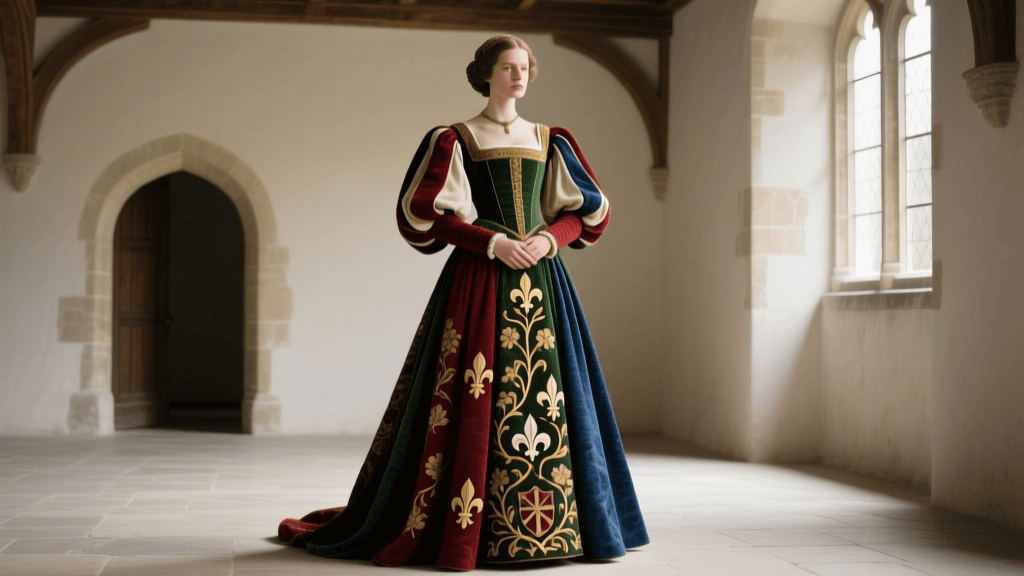
The Burgundian court of the 15th century represented the absolute zenith of European fashion, characterized by its dramatic vertical lines, opulent textiles, and striking silhouettes. As we navigate the historical costuming and reenactment landscape in 2026, the demand for museum-quality accuracy has never been higher. Modern makers are no longer satisfied with theatrical approximations; instead, they seek to understand the intricate drape, structural engineering, and material culture of the medieval era. According to the Metropolitan Museum of Art's overview of 15th-century fashion, the Burgundian style was defined by its extreme elongation, achieved through towering headdresses and floor-sweeping, fur-trimmed gowns. This comprehensive guide will walk you through the precise anatomy, textile sourcing, and pattern drafting required to recreate an authentic 15th-century Burgundian court gown today.
Anatomy of the 15th-Century Ensemble
Understanding the layers is crucial for any historical dressmaker. The Burgundian silhouette is not achieved through a single garment, but rather through a carefully engineered system of layers that work together to support the bust, shape the torso, and create the iconic flowing lines. The Victoria and Albert Museum's guide to Medieval Fashion emphasizes that the interplay between the fitted undergarments and the voluminous outer layers is what gives the period its distinct visual weight.
The Chemise and Kirtle
The foundation of the ensemble begins with the linen chemise, a simple, loose-fitting undergarment designed to protect the outer wool layers from body oils and sweat. Over the chemise sits the kirtle. In the mid-to-late 15th century, the kirtle evolved into a highly fitted, supportive garment. It features a low, wide neckline and is tailored tightly through the bust and torso to provide structural support, effectively acting as the medieval equivalent of a corset. The sleeves of the kirtle are typically long and fitted, ending at the wrist, and are often visible beneath the outer gown.
The V-Neck Surcote (Outer Gown)
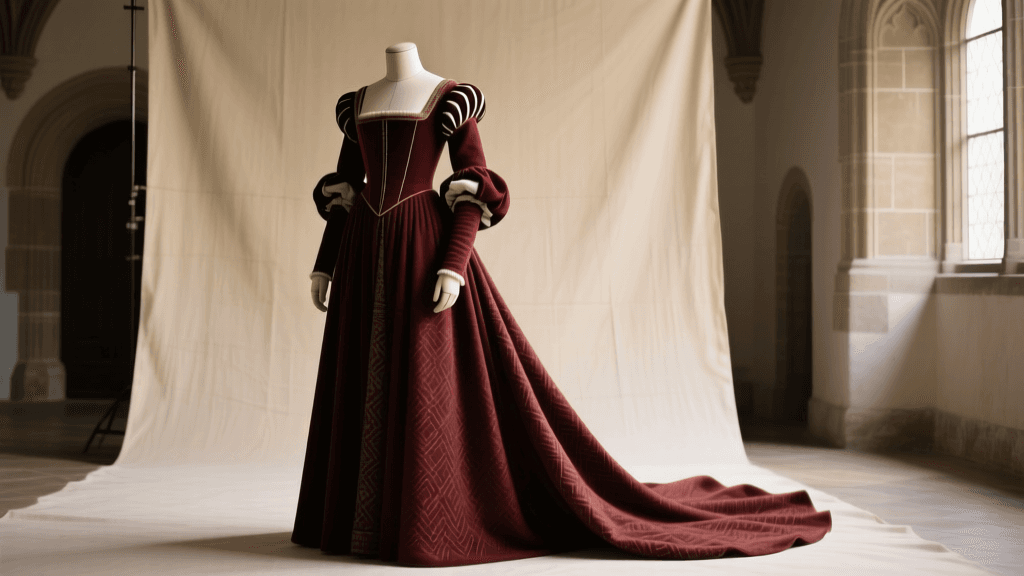
The defining garment of the era is the surcote, or outer gown. This garment features a deep, dramatic V-neckline that reveals the contrasting fabric of the kirtle beneath. The V-neck is frequently bordered by a wide band of fur or velvet. The bodice is fitted, but the skirt is cut with generous gores or circular panels to create a voluminous, sweeping train that pools elegantly on the floor. The sleeves of the surcote are often wide and bell-shaped, lined with contrasting silk or fur, and turned back to showcase the luxurious interior.
The Hennin and Veil
No Burgundian ensemble is complete without the towering hennin. This conical or steeple-shaped headdress is constructed from a rigid base of buckram or wire, covered in silk or velvet, and draped with a sheer linen or silk veil. The height and angle of the hennin were strictly regulated by sumptuary laws, with the tallest steeple hennins reserved for the highest nobility. In 2026, modern millinery techniques and lightweight, breathable buckram alternatives have made constructing these dramatic headdresses significantly more comfortable for extended wear at historical festivals.
Sourcing Heritage Textiles in 2026
Sourcing authentic textiles in 2026 requires navigating a global market that values both historical accuracy and modern ethical standards. The days of relying on flimsy, synthetic costume fabrics are long gone for serious reenactors. Today's makers have access to heritage mills that produce historically accurate weaves using traditional methods.
Wool Broadcloth and Worsted
Wool is the undisputed king of medieval outerwear. For the surcote, you must source a high-quality wool broadcloth. Broadcloth is heavily milled and fulled, resulting in a dense, felted fabric that drapes beautifully, resists fraying, and holds sharp pleats. In 2026, heritage mills in the United Kingdom and Italy continue to produce broadcloths that closely mimic the weight and finish of 15th-century archaeological textiles. Look for a fabric weight between 12 and 16 ounces per yard. Avoid modern suit wools, which are often too lightweight, overly processed, and lack the necessary structural body to support the heavy fur trims and deep folds of the Burgundian skirt.
Linen for Foundations and Linings
Linen is essential for the chemise, the kirtle, and the lining of the surcote. The Encyclopedia Britannica's section on 15th-century dress notes that fine, bleached linens were highly prized by the nobility and used extensively for visible linings and veils. For the chemise, select a lightweight, semi-sheer linen (around 3.5 oz). For the kirtle and gown lining, opt for a medium-weight linen (5 to 6 oz) that provides durability and breathability. In 2026, Eastern European linen mills offer exceptional long-staple flax linens that soften beautifully after washing while maintaining their historical slub and texture.
Ethical Faux Furs and Trims
The most significant advancement in 2026 historical costuming is the availability of high-pile, ethically manufactured faux furs. Historically, the Burgundian elite utilized ermine, miniver (white squirrel belly), and marten. Today, advanced textile engineering has produced faux furs that perfectly replicate the dense undercoat and guard hairs of these historical pelts without the ethical concerns or the prohibitive costs and import restrictions associated with real vintage furs. When selecting faux fur, look for a dense base cloth and varied fiber lengths to mimic natural animal pelts, avoiding the uniform, overly shiny synthetics that can ruin the historical illusion.
Pattern Drafting and Measurements
Pattern drafting for the fitted kirtle and surcote requires a departure from modern slopers. The 15th-century silhouette relies on a straight, conical torso rather than the curved, darted shaping of modern bodices. The most accurate method for achieving the supportive fit of the kirtle is through direct draping on the body or a custom dress form.
Begin by draping unbleached cotton muslin directly over the chemise. The grainline must run perfectly straight down the center front and center back. The side seams are pinned tightly to lift and support the bust, creating the smooth, conical line characteristic of the era. The armscye (armhole) should be cut high and tight into the armpit to allow for full mobility, a crucial feature for historical fencing and dance reenactment. Once the kirtle is fitted, the surcote pattern can be drafted by adding ease to the kirtle block and flaring the skirt panels from the waist or hip to achieve the desired volume and train length.
Fabric Yardage and 2026 Cost Estimates
Budgeting for a historically accurate Burgundian gown requires careful planning. The table below outlines the recommended yardage and estimated costs for a complete, high-quality ensemble based on 2026 heritage textile pricing.
| Garment Component | Recommended 2026 Textile | Estimated Yardage | Average 2026 Cost (USD) |
|---|---|---|---|
| Chemise | Lightweight Linen (3.5 oz) | 3 - 4 yards | $60 - $90 |
| Fitted Kirtle | Medium-weight Linen or Wool | 4 - 5 yards | $120 - $180 |
| Surcote (Outer Gown) | Heavy Wool Broadcloth (14 oz) | 6 - 8 yards | $240 - $360 |
| Surcote Lining | Medium Linen or Silk Blend | 6 - 8 yards | $150 - $250 |
| Fur Trim (V-Neck & Hem) | Premium Ethical Faux Fur | 2 - 3 yards | $100 - $180 |
| Hennin Base & Veil | Buckram, Silk, and Sheer Linen | 1 yard total | $50 - $80 |
Historically Accurate Sewing Techniques
While modern sewing machines can be used for the long structural seams of the skirt to save time, the visible seams, bodice construction, and finishing details should be executed by hand to maintain historical integrity. The running stitch, backstitch, and prick stitch are the workhorses of medieval tailoring.
For the bodice of the kirtle, use a tight backstitch to ensure the seams can withstand the immense tension required for bust support. The seam allowances should be flat-felled or bound with linen strips to prevent fraying and add structural rigidity to the torso. When attaching the heavy wool skirt to the bodice, cartridge pleating is the preferred method. Cartridge pleating allows you to gather a massive amount of heavy broadcloth into a small waistband without adding bulk, creating the distinct, rounded bell shape that cascades from the hips. Finally, when applying the faux fur trim to the V-neckline, use a catch stitch to secure the edges invisibly, ensuring the fur rolls naturally over the seam line just as it would on a historical garment.
Conclusion
Recreating a 15th-century Burgundian court gown in 2026 is a deeply rewarding endeavor that bridges the gap between historical research and tangible craftsmanship. By prioritizing heritage textiles, utilizing direct draping techniques, and embracing ethical advancements in faux furs, modern makers can achieve a level of accuracy and elegance that honors the master tailors of the medieval era. Whether you are preparing for a high-level historical symposium, a museum exhibition, or an immersive reenactment event, the time invested in understanding the anatomy and construction of this iconic garment will result in a breathtaking, historically grounded masterpiece.