Top Japanese Fashion Schools 2026: Traditional Garment Workshops
The Renaissance of Traditional Japanese Garment Education in 2026
The global fascination with traditional Asian garments has reached unprecedented heights in 2026, driving a massive surge in demand for authentic, high-quality education in Japanese textile arts and garment construction. Historically, mastering the art of wafuku (traditional Japanese clothing) required years of strict, in-person apprenticeships under master artisans in Kyoto or Tokyo. However, the educational landscape has undergone a revolutionary transformation. Today, premier Japanese fashion schools offer sophisticated hybrid learning models, combining immersive online theory with intensive, hands-on physical workshops. According to the Ministry of Economy, Trade and Industry (METI), the integration of digital platforms with traditional craft preservation has led to a 45% increase in international enrollment in Japanese textile programs over the past two years. This guide explores the top institutions, specific curriculum offerings, and practical steps for enrolling in traditional garment workshops in 2026.
Top Japanese Fashion Schools Offering Hybrid Learning
Bunka Fashion College: The Kimono & Textile Heritage Program
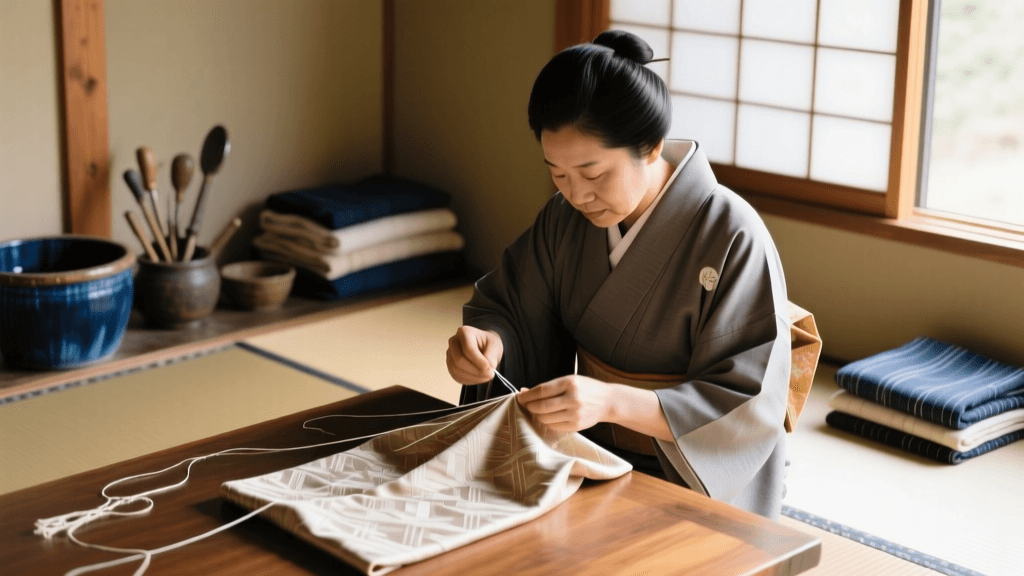
Bunka Fashion College remains at the absolute forefront of Japanese fashion education, and their 2026 Traditional Garment Heritage Program is a masterclass in blending ancestral techniques with modern technology. The program focuses heavily on tanmono (traditional bolt of fabric) cutting, zero-waste pattern making, and hon-buse (full lining) construction. For the 2026 academic year, Bunka has introduced a groundbreaking 'Digital-to-Physical' module. Online students utilize 3D body scanning apps on their smartphones to generate precise avatars, allowing instructors to teach customized ki-tsuke (dressing) and tailoring adjustments remotely. The online theory portion covers the history of the Heian-era junihitoe and the structural evolution of the modern kimono, while the mandatory two-week summer workshop in Shinjuku focuses on the physical sewing techniques using traditional kakehari (tension frames) and silk basting.
Sugino Fashion College: Historical Theater Costumes & Modern Adaptation
For those fascinated by the intersection of traditional garments and performing arts, Sugino Fashion College offers an unparalleled curriculum focused on historical reproduction and traditional theater costumes. Their 2026 'Stage & Street' workshop series dives deep into the elaborate layering of Noh and Kabuki theater costumes, such as the karaori and nuihaku. What makes Sugino unique this year is their focus on adapting these heavy, restrictive historical garments into modern, wearable outerwear. Students learn how to deconstruct traditional motifs and apply them to contemporary silhouettes without losing the cultural integrity of the original textile. The hybrid format includes weekly live-streamed lectures from Kyoto-based theater wardrobe masters, followed by a month-long residency in Tokyo where students construct a fully lined, stage-ready garment from scratch.
Kyoto University of the Arts: Nishijin Weaving & Yuzen Dyeing
While not exclusively a fashion school, the Kyoto University of the Arts offers the most prestigious textile workshops in Japan. Their 2026 Summer Intensive in Yuzen resist-dyeing and Nishijin brocade weaving is highly sought after by international designers. The program begins with a three-month online mentorship where students learn the complex chemistry of natural dyes, including aizome (indigo) and kakishibu (persimmon tannin). Students receive a 'Dye Prep Kit' shipped globally, allowing them to practice fabric scouring and mordanting at home. The in-person segment in Kyoto takes place in traditional machiya townhouses, where students work directly with multi-generational dye artisans to paint intricate, freehand designs onto silk crepe using rice paste resist techniques.
Online vs. In-Person Workshops: A 2026 Comparison
Choosing the right learning format is crucial for mastering the tactile skills required for traditional Japanese tailoring. Below is a comparison of the primary workshop formats available in 2026.
| Format Type | Duration | 2026 Cost (JPY/USD) | Best For | Hands-on Component |
|---|---|---|---|---|
| 100% Online Theory | 6-8 Weeks | ¥85,000 / $570 | Historians, pattern drafters, and textile enthusiasts | At-home paper folding and basic stitching kits |
| Hybrid (Online + Short Residency) | 3 Months + 2 Weeks | ¥220,000 / $1,480 | Aspiring designers and serious hobbyists | Intensive sewing, fitting, and loom weaving in Japan |
| In-Person Intensive Masterclass | 4-6 Weeks | ¥350,000 / $2,350 | Professionals seeking master artisan certification | Daily studio access, natural dyeing, and silk painting |
The Summer Casual Module: Yukata vs. Jinbei Construction
A standout feature of the 2026 curriculum across multiple Tokyo fashion schools is the dedicated module on summer casual wear, specifically the structural and cultural differences between the yukata and jinbei. While both are lightweight, breathable garments worn during summer festivals and fireworks displays, their construction requires entirely different pattern-making approaches. The yukata is an unlined, informal cotton kimono cut from a standard tanmono bolt, utilizing straight-line sewing and deep, adjustable seams that allow the garment to be taken apart and re-sewn for cleaning or resizing. Students learn the precise seba (back seam) alignment and the art of folding the okumi (front overlap panel). Conversely, the jinbei is a two-piece set consisting of a short-sleeved top and wrap-around shorts or trousers. The workshop teaches students how to draft the jinbei top using a modified Western-style armhole and sleeve cap, blended with traditional Japanese front ties and minimalist collar construction. Understanding these differences is vital for designers looking to create culturally accurate, seasonally appropriate resort wear.
Essential Tools for Online Traditional Tailoring Students
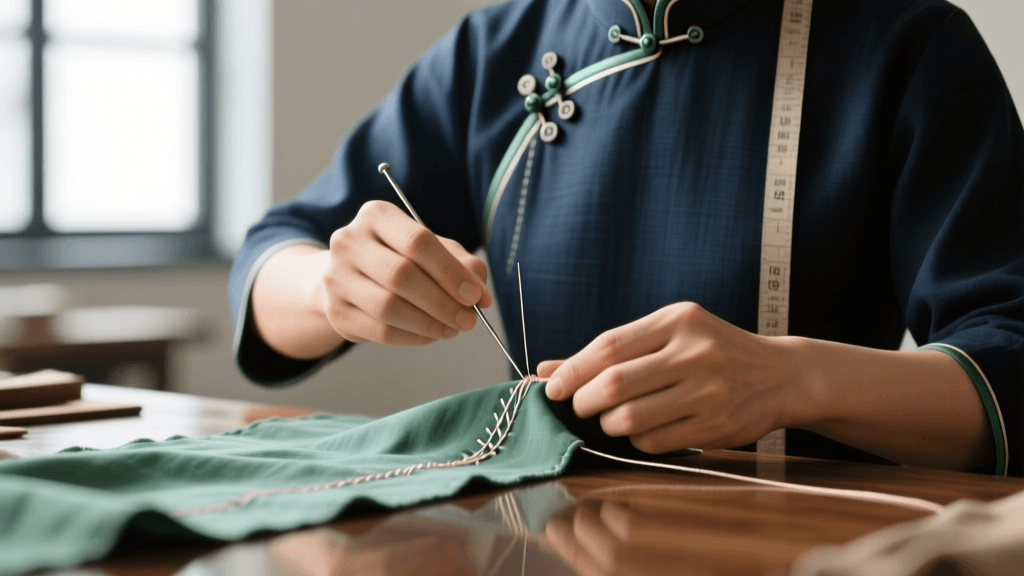
Even if you are starting with an online-only track in 2026, you must acquire the proper traditional tools to practice the techniques correctly. Standard Western sewing kits are insufficient for handling delicate silks and executing the specific basting stitches required in wafuku. Here is a checklist of essential tools and their estimated 2026 retail costs when ordered from specialized online suppliers in Tokyo's Nippori Textile Town:
- Shaku (Traditional Ruler): A 38cm bamboo ruler used for measuring tanmono fabric. Essential for maintaining the traditional proportional system. (Cost: ¥2,500)
- Hera (Marking Spatula): A bamboo or tortoiseshell spatula used to crease and mark silk without using ink or chalk, which can stain delicate fibers. (Cost: ¥1,800)
- Kote (Traditional Iron): While modern steam irons are used for finishing, a specialized kote is required for pressing open the thick, multi-layered seams of a kimono collar. (Cost: ¥8,500)
- Harite (Tension Pins): Heavy-duty, specialized pins used with the kakehari frame to hold silk taut while sewing long, perfectly straight running stitches. (Cost: ¥1,200 per pack)
- Choshi (Silk Thread): Unlike cotton or polyester, traditional kimono construction requires specific spun silk threads that provide the right amount of 'give' and break cleanly if the garment is caught, protecting the expensive fabric from tearing. (Cost: ¥3,000 for a starter set)
Navigating the 2026 Application and Visa Process
For international students aiming to attend the in-person workshop segments, navigating Japanese immigration and school admissions requires careful planning. The Japan National Tourism Organization notes a significant rise in 'craft tourism,' prompting many schools to offer dedicated support for short-term visas. If your chosen workshop's in-person segment is under 90 days, you will typically enter Japan on a standard Temporary Visitor visa, which permits participation in short-term, non-degree cultural workshops. However, if you are enrolling in a comprehensive, six-month hybrid program that requires an extended stay in Kyoto or Tokyo, you must apply for a Student Visa or a Designated Activities visa. Fashion schools like Bunka and Sugino have dedicated international liaison offices that will issue the necessary Certificate of Eligibility (COE) upon receipt of your tuition deposit and portfolio review. It is highly recommended to begin your application process at least five months prior to the cohort start date to account for COE processing times and the secure international shipping of your pre-workshop tool kits.
Conclusion: Preserving the Future of Asian Traditions
The evolution of Japanese fashion schools in 2026 proves that tradition and innovation are not mutually exclusive. By leveraging online learning platforms, 3D body scanning, and global shipping for raw materials, institutions are ensuring that the meticulous arts of kimono tailoring, shibori dyeing, and theater costume construction survive and thrive on a global scale. Whether you are a professional fashion designer seeking to incorporate authentic zero-waste pattern making into your brand, or a cultural historian dedicated to preserving the legacy of the yukata and jinbei, there has never been a more accessible or exciting time to immerse yourself in the world of traditional Japanese garments. Select the program that aligns with your creative goals, gather your bamboo shaku and silk thread, and prepare to master the timeless art of wafuku.