Top Japanese Garment Craft Workshops & Online Classes 2026
The Evolution of Traditional Japanese Fashion Education in 2026
The landscape of traditional Japanese fashion education has undergone a radical transformation by 2026. As global interest in wafuku (traditional Japanese clothing) and sustainable, zero-waste garment construction reaches an all-time high, premier institutions have adapted to meet international demand. No longer confined to multi-year, in-person residencies in Tokyo or Kyoto, aspiring designers and textile artisans can now access rigorous, hybrid learning models. These programs seamlessly blend high-fidelity digital draping simulations with intensive, hands-on workshop residencies, allowing students to master the geometry of the tanmono (traditional fabric bolt) from anywhere in the world before stepping into a physical studio.
Whether you are looking to understand the structural nuances of a formal uchikake, the casual comfort of summer yukata and jinbei, or the intricate textile manipulation of shibori and sashiko, the 2026 academic year offers unprecedented access to Japan's master artisans. Below, we explore the most prestigious hybrid workshops and online learning pathways available this year, detailing costs, curriculum structures, and the essential tools you will need to succeed.
Bunka Fashion College: The 2026 Wafuku Hybrid Certificate
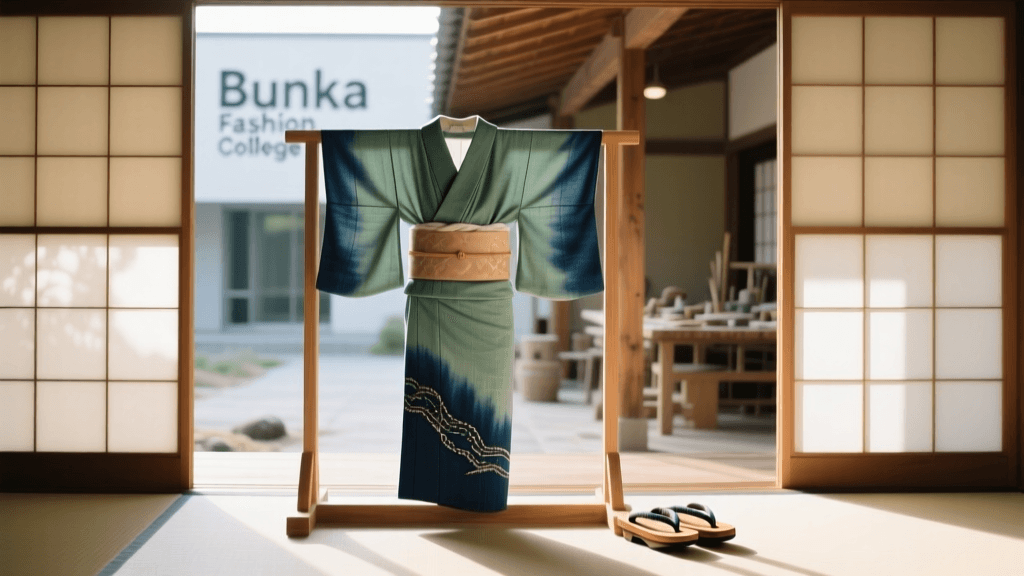
Renowned globally for producing avant-garde pioneers, Bunka Fashion College has significantly expanded its Traditional Garment Department for the 2026 academic calendar. Recognizing that international students often struggle with the visa and financial burdens of a full two-year diploma in Tokyo, Bunka introduced the 'Wafuku Construction & Heritage Hybrid Certificate'. This 15-week program is meticulously designed to bridge the gap between ancient tailoring techniques and modern digital fashion workflows.
The first 10 weeks are conducted entirely online. Students engage in asynchronous video modules covering the history of Japanese dress, textile science, and the complex mathematics of flat-pattern drafting unique to Japanese garments. Unlike Western tailoring, which relies heavily on darts and curved seams to contour the body, traditional Japanese pattern making utilizes straight lines and rectangular panels. The online modules teach students how to calculate panel widths based on the standard 36-centimeter width of a tanmono bolt, ensuring zero fabric waste.
The final five weeks require students to travel to Bunka's Shinjuku campus for an intensive, in-person workshop residency. Here, under the watchful eyes of master wasai (kimono tailors), students learn the physical arts of kakehari (fabric stretching), heraz (spatula creasing), and the meticulous basting techniques required to assemble a fully reversible haori jacket. The 2026 tuition for this hybrid certificate is set at 480,000 JPY (approximately $3,200 USD), which includes all physical materials, studio access, and a digital license for specialized pattern-making software.
Kyoto Seika University: Digital to Analog Kimono Draping
While Tokyo focuses on structural innovation, Kyoto remains the undisputed heart of textile dyeing and weaving. Kyoto Seika University has leveraged its deep connections with local artisan guilds to launch the 'Digital to Analog' summer intensive. This program is uniquely tailored for fashion designers who want to integrate traditional Kyoto textiles—such as Nishijin-ori brocades and Kyo-yuzen dyed silks—into contemporary global collections.
The online portion of the Kyoto Seika program utilizes the newly released 2026 Wafuku physics module in CLO3D. This specialized software update accurately simulates the distinct drape, weight, and stiffness of various traditional Japanese fabrics, from heavy silk crepe (chirimen) to crisp hemp (asa). Students spend eight weeks digitally drafting, draping, and rendering garments, receiving weekly feedback from Kyoto-based professors via live-streamed critiques.
The analog component is a mandatory three-week residency in Kyoto during the humid summer months, aligning with the traditional season for yukata and jinbei wear. Students visit active dyeing houses in the Fushimi district, learning the resist-dyeing processes firsthand. The residency culminates in a collaborative project where students physically construct a modern, casual summer garment using the traditional chaku (hand-sewing) methods they observed in the workshops. The 2026 program fee is 350,000 JPY, excluding accommodation, which the university assists in arranging through local homestay networks.
Independent Artisan Micro-Workshops: Kanazawa & Tokyo
For those who may not have the time or budget for a university-level certificate, 2026 has seen a boom in independent, artisan-led micro-workshops. Platforms supported by the Japan Kogei Association have enabled master craftspeople in regional hubs like Kanazawa to offer live-streamed, mentor-led workshops accompanied by physical material kits shipped globally.
A standout example is the Kanazawa Kaga-Yuzen Virtual Atelier. Students receive a physical kit containing pre-drafted silk panels, specialized rice-paste resist cones, and natural botanical dyes. Over a series of six live weekend sessions, a master dyer guides the international cohort through the painstaking process of applying resist paste and painting intricate floral motifs. These micro-workshops typically range from 80,000 to 120,000 JPY, making them highly accessible entry points for textile artists and hobbyists looking to authenticate their traditional techniques.
2026 Program Comparison Chart
| Institution / Program | Format & Duration | Primary Focus | 2026 Cost (JPY) | Language Support |
|---|---|---|---|---|
| Bunka Fashion College (Hybrid Certificate) | 10 weeks online + 5 weeks in Tokyo | Flat-pattern drafting, zero-waste tailoring, haori construction | 480,000 JPY | English & Japanese |
| Kyoto Seika University (Digital to Analog) | 8 weeks online + 3 weeks in Kyoto | 3D digital draping, Nishijin-ori textiles, summer casual wear | 350,000 JPY | English & Japanese |
| Kanazawa Kaga-Yuzen Virtual Atelier | 6 live weekend sessions (Fully Remote) | Resist dyeing, botanical pigments, silk painting | 95,000 JPY | Japanese (with live AI translation) |
| Tokyo Sashiko & Boro Intensive | 4 weeks online + 1 week in Tokyo | Historical mending, geometric running stitches, upcycling | 220,000 JPY | English & Japanese |
Essential Tools for the 2026 Online Learner
Transitioning from Western garment construction to traditional Japanese methods requires a fundamental shift in your toolkit. If you are enrolling in any of the 2026 hybrid or online programs, you will need to acquire specific tools that are rarely found in standard Western sewing kits. Fortunately, most universities now partner with global logistics firms to ship these toolkits directly to international students before the online modules begin.
- Shozui Shears (Hasami): Traditional Japanese fabric shears feature a unique loop handle and a heavy, carbon-steel blade designed to cut through multiple layers of thick silk and hemp without fraying the edges. Expect to invest around 15,000 JPY for a professional-grade pair.
- Bamboo Rulers (Sashigane): Unlike rigid plastic rulers, the flexible bamboo sashigane allows students to measure and mark the gentle, sweeping curves required for the okumi (front overlap panel) of a kimono or yukata.
- Heraz (Bamboo Spatula): Used extensively in the Bunka curriculum, the heraz is a smooth bamboo tool used to crease fabric sharply without the need for a hot iron, which can damage delicate, naturally dyed silks.
- Kakehari (Fabric Stretchers): Essential for the dyeing and painting micro-workshops, these wooden frames with metal needles hold the tanmono taut, ensuring the fabric remains perfectly flat while applying resist pastes or stitches.
Application Requirements and Preparation
Securing a spot in these highly sought-after 2026 programs requires strategic preparation. For university-backed certificates like those at Bunka and Kyoto Seika, applicants must submit a digital portfolio demonstrating foundational sewing skills and an understanding of basic pattern manipulation. While fluency in Japanese is no longer a strict barrier—thanks to advanced real-time translation integrations in 2026's virtual classrooms—a basic understanding of Japanese textile terminology (such as mi-goro for the main body panel and sode for sleeves) is highly recommended to maximize your learning experience.
Applications for the autumn 2026 intakes typically close by late May. Prospective students are advised to begin assembling their portfolios and securing their digital draping software licenses at least three months in advance. By embracing these hybrid educational models, the next generation of global designers is ensuring that the meticulous, sustainable, and profoundly beautiful traditions of Japanese garment construction continue to thrive and evolve on the world stage.