Best Japanese Fashion School Textile Workshops 2026
The Evolution of Traditional Textile Education in 2026
The intersection of heritage craftsmanship and modern digital pedagogy has completely transformed how international students learn traditional Japanese garment construction and textile arts. In the 2026 academic landscape, mastering the intricate techniques of kimono tailoring, shibori dyeing, and yuzen silk painting is no longer strictly confined to the physical classrooms of Tokyo and Kyoto. Top-tier institutions have refined their hybrid and online learning models, offering unprecedented access to global learners who wish to integrate Asian traditions into contemporary sustainable fashion.
Following the digital acceleration of the early 2020s, the 2026 curriculum at Japan's leading fashion schools now features augmented reality (AR) fabric draping, live-streamed loom workshops, and internationally shipped physical material kits. According to The Japan Foundation, international enrollment in Japanese traditional arts and craft programs has surged by 34% in 2026, driven largely by the global fashion industry's pivot toward sustainable, slow-fashion textile practices. For designers, historians, and hobbyists, these workshops provide a direct lineage to master artisans, bridging the gap between ancient techniques and modern design applications.
Top Hybrid and Online Textile Workshops for 2026
Choosing the right program depends on your specific interest within the vast umbrella of Japanese traditional garments. Below, we break down the premier hybrid and online workshops available in 2026 from Japan's most prestigious fashion and art universities.
1. Bunka Fashion College: Global Heritage Textiles & Shibori Intensive
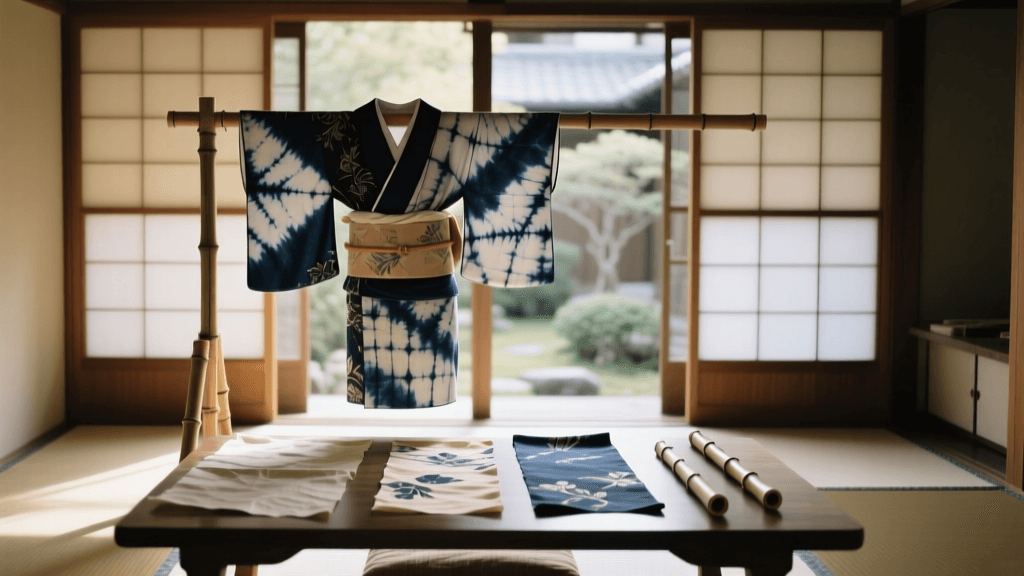
Bunka Fashion College remains the undisputed heavyweight in Japanese fashion education. For 2026, their 'Global Heritage Textiles' hybrid track offers an intensive 8-week deep dive into shibori resist-dyeing and foundational kimono construction (wasai). The course is designed for international students who cannot relocate to Tokyo but require rigorous, master-level instruction.
Students receive a comprehensive physical kit shipped directly from the Bunka campus, which includes premium Tango silk, synthetic and natural indigo vats, specialized binding threads, and traditional basting needles. The online portal features 4K multi-angle camera setups in the dye labs, allowing remote students to observe the exact tension required for kanoko (fawn spot) and miura (looped binding) shibori techniques. Live critiques are held bi-weekly, where instructors evaluate the students' dyed swatches via high-resolution macro photography submissions.
2. Kyoto Seika University: Yuzen Dyeing and Silk Painting Masterclass
While Kyoto Seika University is globally renowned for its manga and anime faculties, its traditional arts department is equally prestigious. Their 2026 'Kyoto Yuzen & Natural Dye Masterclass' is a 10-week online program focusing on the meticulous art of Kyo-yuzen, the vibrant, pictorial dyeing technique used for luxury kimono and obi.
This year, the university has integrated a proprietary AR application that allows students to preview dye absorption and color bleeding on digital silk models before applying the physical itome-nori (rice paste resist). The curriculum heavily emphasizes sustainable, plant-based dyes, teaching students how to extract pigments from persimmons (kakishibu), madder root, and indigo. The course culminates in a digital exhibition where students present a fully dyed, custom-patterned haori jacket.
3. Tokyo Zokei University: Sashiko and Boro Textile Upcycling
For those focused on the zero-waste and upcycling movements dominating 2026's sustainable fashion runways, Tokyo Zokei University offers a concise, 4-week 'Sashiko and Boro Upcycling Workshop'. This course explores the historical context of boro (tattered, patched textiles) and the functional, decorative running stitches of sashiko. Students learn traditional geometric patterns like asanoha (hemp leaf) and seigaiha (blue ocean waves), applying them to modern denim and upcycled cotton garments. The hybrid format includes weekly asynchronous video modules and weekend live-stitching circles.
2026 Program Comparison Chart
| Institution | Program Name | Format | Duration | Tuition (2026) | Physical Kit Included? |
|---|---|---|---|---|---|
| Bunka Fashion College | Global Heritage Textiles & Shibori | Hybrid (Live + Async) | 8 Weeks | ¥185,000 (~$1,250 USD) | Yes (Silk, Indigo, Tools) |
| Kyoto Seika University | Yuzen Dyeing & Silk Painting | Online with AR Tools | 10 Weeks | ¥160,000 (~$1,080 USD) | Yes (Resist Paste, Dyes, Silk) |
| Tokyo Zokei University | Sashiko and Boro Upcycling | Hybrid (Weekend Live) | 4 Weeks | ¥95,000 (~$640 USD) | Yes (Sashiko Thread, Needles) |
Setting Up Your Home Textile Studio for 2026 Workshops
Success in an online textile workshop relies heavily on your home studio environment. Traditional Japanese dyeing and garment construction require specific spatial and environmental considerations that differ from standard Western sewing setups.
Workspace and Ergonomics
Kimono construction (wasai) utilizes straight-line cutting and basting, which requires a large, flat surface. You will need a worktable measuring at least 120cm by 60cm. Unlike Western pattern drafting, Japanese tailoring often involves sitting on the floor or using a low table, but for international hybrid courses, instructors in 2026 recommend an adjustable-height table to accommodate both seated and standing work, preventing back strain during long stitching sessions.
Lighting and Color Accuracy
When working with natural dyes and subtle yuzen gradients, color accuracy is paramount. Equip your studio with 5000K daylight LED panels. Avoid warm or cool-tinted bulbs, as they will distort your perception of the dye concentrations, leading to incorrect pigment mixing during your live assessments.
Ventilation and Wet Processing
Shibori and yuzen require extensive washing and steaming. If you are using synthetic indigo or mordants like alum and iron, ensure your workspace has cross-ventilation or an exhaust fan. You will also need a dedicated garment steamer with a minimum width of 40cm to properly set the dyes into the silk fibers without touching the fabric surface, a critical step in achieving the crisp lines required by Kyoto Seika's yuzen curriculum.
Navigating Time Zones and Sourcing Authentic Materials
One of the primary challenges for international students is managing Japan Standard Time (JST) for live critiques and demonstrations. In 2026, most top-tier programs have adopted a 'flipped classroom' model for the Asian traditions department. Core demonstrations are pre-recorded in 4K, allowing students in the Americas and Europe to watch at their own pace. Live sessions are reserved strictly for Q&A, troubleshooting, and portfolio reviews, often scheduled during overlapping morning hours in Europe and evening hours in Japan.
While the universities provide initial material kits, advanced students will need to source supplementary tanmono (traditional fabric bolts). In 2026, several authorized heritage cooperatives in Kyoto and Kanazawa have launched English-language e-commerce portals specifically catering to international fashion students. When purchasing silk, always look for the 'Made in Japan' heritage certification to ensure you are practicing on authentic, high-grade chirimen (crepe) silk, which reacts to natural dyes very differently than imported, mass-market silks.
The Future of Traditional Garment Education
The integration of technology into the preservation of Asian traditions does not dilute the heritage; rather, it ensures its survival and global relevance. By participating in these 2026 hybrid workshops, designers are not merely learning how to replicate historical garments. They are acquiring a profound understanding of materiality, zero-waste cutting techniques, and natural chemistry. Whether you aim to launch a sustainable fashion label, work in theatrical costume design, or simply preserve cultural arts within your community, the digital doors to Japan's most exclusive fashion ateliers are now wide open.