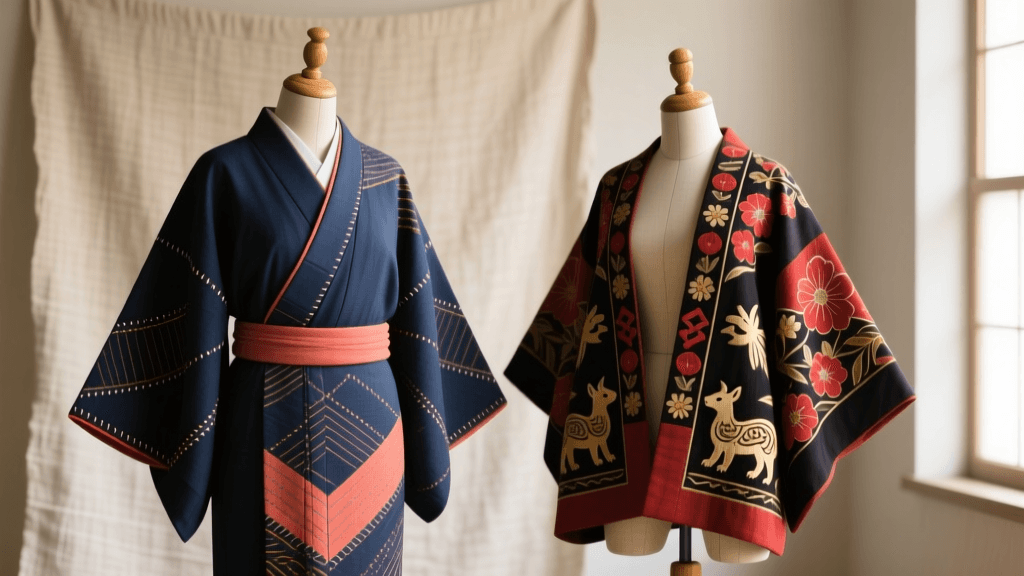
Top Japanese Kimono Schools & Apprenticeships in 2026
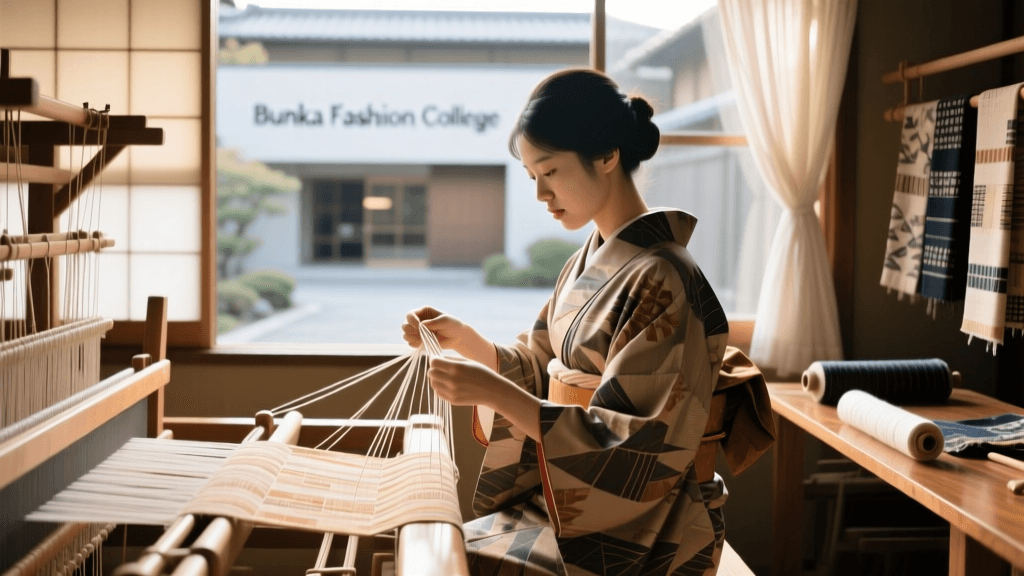
The Renaissance of Wafuku Education in 2026
The landscape of traditional Japanese garment education has undergone a profound transformation as we navigate through 2026. Driven by a global resurgence of interest in sustainable, slow fashion and a fierce domestic initiative to preserve intangible cultural heritage, Japanese fashion schools and artisan apprenticeships are experiencing unprecedented enrollment. For international and domestic students alike, mastering the intricate arts of wafuku (traditional Japanese clothing)—from Nishijin weaving to Kaga Yuzen dyeing—now requires navigating a hybrid educational ecosystem that honors Edo-period techniques while embracing 2026's technological advancements.
Whether you aspire to become a master kimono tailor, a textile conservator, or a contemporary designer integrating heritage textiles into modern silhouettes, understanding the current academic and apprenticeship pathways is crucial. This comprehensive guide explores the premier institutions, the modernized deshi (apprenticeship) system, and the practical steps to immerse yourself in Japan's sartorial traditions this year.
Premier Institutions for Traditional Garment Mastery
Bunka Fashion College: Blending Heritage with Modern Tech
Located in the heart of Shinjuku, Tokyo, Bunka Fashion College remains the undisputed titan of Japanese fashion education. While globally renowned for its avant-garde apparel design, Bunka's Department of Traditional Garment Studies has been radically updated for the 2026 academic year. The curriculum now seamlessly integrates 3D body scanning and AI-assisted pattern drafting with the meticulous hand-stitching techniques of wasai (Japanese tailoring).
Students in the 2026 cohort spend their first semester mastering the geometry of the kimono, learning how the straight-line cutting method (chokusen-dachi) minimizes fabric waste and allows for complete disassembly and re-dyeing. By the second semester, students are drafting patterns for complex formal wear, such as the furisode and montsuki hakama, utilizing digital looms to simulate textile drape before cutting into precious silk.
- Program Focus: Kimono tailoring, textile conservation, and contemporary wafuku design.
- 2026 Tuition: Approximately ¥1,450,000 for the first year (excluding materials and atelier fees).
- Language of Instruction: Primarily Japanese, though a specialized English-track masterclass series was introduced in 2026 for international post-graduates.
Kyoto University of the Arts: The Heart of Textile Dyeing
For those drawn to the vibrant, narrative-driven world of textile dyeing, the Kyoto University of the Arts (Kyoto Dento Geijutsu Daigaku) offers an unparalleled environment. Situated near the historic Higashiyama district, the university's Department of Japanese Traditional Arts provides deep-dive specializations in Yuzen (resist dyeing), Shibori (tie-dyeing), and Kata-zome (stencil dyeing).
In 2026, the university has expanded its botanical dyeing laboratories, focusing on the sustainable harvesting of indigenous plants like ai (indigo), kariyasu (yellow grass), and benibana (safflower). Students learn the precise fermentation chemistry required to maintain a living indigo vat, a sensory experience defined by the sharp, earthy aroma of sukumo and the mesmerizing oxidation process as fabric emerges green and magically turns deep blue upon hitting the air.
The Modern Deshi (Apprenticeship) System
Historically, the deshi system demanded years of unpaid, grueling labor under a strict master. In 2026, the system has evolved to address Japan's critical artisan shortage. The Ministry of Economy, Trade and Industry (METI), in conjunction with the Association for the Promotion of Traditional Craft Industries, now heavily subsidizes registered apprenticeships, ensuring apprentices receive a livable stipend while they learn.
Nishijin-Ori Weaving Apprenticeships in Kyoto
Nishijin weaving, famous for its opulent, multi-layered brocades used in luxury obi sashes, requires immense mathematical precision and physical endurance. Apprentices in the Nishijin Textile Industrial Association's 2026 intake begin by learning to prepare the silk threads, a process involving twisting, dyeing, and spooling. The sensory environment of a Nishijin workshop is unforgettable: the deafening, rhythmic clack of the battan (weaving shuttle) and the tactile tension of the warp threads.
Modern apprentices must master both the traditional hand-operated Jacquard looms and the computerized equivalents. A typical apprenticeship lasts three to five years. By year three, an apprentice is expected to independently calculate the soroban (abacus) or digital punch-card sequences required to weave complex motifs like the kiku (chrysanthemum) or matsu (pine).
Kaga Yuzen Masterclasses in Kanazawa
Kaga Yuzen, characterized by its hyper-realistic, painterly depictions of nature and its signature kanoko (fawn spot) shading, offers a more solitary, meditative apprenticeship. Apprentices spend their first year solely on itome-nori (applying the resist paste along the outlines of the design). The precision required is measured in millimeters. Only after mastering the resist application do apprentices advance to the irosashi (coloring) stage, learning to blend the five canonical Kaga colors: indigo, crimson, ochre, ancient purple, and grass green.
2026 Cost and Duration Comparison
Planning your financial and temporal investment is critical. Below is a structured comparison of the primary educational and apprenticeship pathways available in 2026.
| Institution / Pathway | Primary Focus | Duration | 2026 Est. Annual Cost / Stipend (JPY) | Format |
|---|---|---|---|---|
| Bunka Fashion College (Tokyo) | Tailoring & Contemporary Wafuku | 2 - 4 Years | ¥1,450,000 (Tuition) | Academic / Studio |
| Kyoto Univ. of the Arts | Textile Dyeing & Weaving | 4 Years (BFA) | ¥1,850,000 (Tuition) | Academic / Lab |
| Nishijin Weaving Deshi | Brocade Obi Weaving | 3 - 5 Years | ¥2,400,000 (Stipend received) | Full-time Apprenticeship |
| Kaga Yuzen Deshi | Resist Dyeing & Painting | 5 - 7 Years | ¥2,100,000 (Stipend received) | Full-time Apprenticeship |
| Edo Komon Stencil Carving | Katagami (Paper Stencil) Cutting | 5+ Years | ¥1,900,000 (Stipend received) | Full-time Apprenticeship |
How to Apply as an International Student in 2026
For non-Japanese citizens, entering the world of traditional garment making requires careful logistical planning. The Japanese immigration framework has been updated for 2026 to better accommodate foreign artisans, recognizing the vital role international talent plays in preserving these crafts.
Visa Requirements and Language Proficiency
If you are enrolling in an academic institution like Bunka or Kyoto University of the Arts, you will apply for a Student Visa. This requires a Certificate of Eligibility (COE) sponsored by the school, proof of financial stability (typically around ¥2,000,000 in savings), and a high school diploma or equivalent bachelor's degree.
For those entering directly into a deshi apprenticeship under a master artisan, the Designated Activities Visa (Traditional Artisan Category) is the appropriate route. To qualify in 2026, you must have a formal contract with a registered workshop and demonstrate a baseline understanding of the craft. Crucially, a minimum JLPT (Japanese Language Proficiency Test) N2 certification is universally required for apprenticeships, as the nuanced, highly technical vocabulary of traditional textiles—such as the difference between itate (warp) and yonoko (weft)—cannot be navigated through translation apps.
Building Your Portfolio
Whether applying to a university or seeking a master to apprentice under, your portfolio must demonstrate a profound respect for materials. In 2026, selection committees are looking for:
- Material Sensitivity: Evidence of working with natural fibers (silk, hemp, ramie, cotton) and an understanding of their structural properties.
- Process Documentation: Detailed sketchbooks showing your dyeing processes, loom threading drafts, or tailoring seam allowances.
- Cultural Context: A written statement articulating your understanding of the kimono's role in Japanese life stages, from the miyamairi (shrine visit) to the seijin-shiki (coming-of-age ceremony).
The Sensory and Spiritual Discipline of the Atelier
Beyond the technical skills, studying traditional Japanese fashion is an exercise in Zen spirituality and sensory refinement. The concept of shokunin kishitsu (the artisan spirit) permeates every school and workshop. You will learn to read the humidity in the air, as it dictates how silk threads will behave on the loom or how quickly the resist paste will dry on the fabric. You will learn the meditative rhythm of the hari-kuyō (needle memorial service), honoring the tools that have served your craft.
'To wear a kimono is to wrap oneself in the seasons, the landscape, and the countless unseen hours of the artisan's devotion. To make one is to surrender your ego to the thread.' — Master Weaver of the Nishijin Guild, 2026 Symposium.
Conclusion
The year 2026 represents a golden era for aspiring traditional Japanese garment makers. With government subsidies stabilizing the apprenticeship model and top-tier fashion colleges integrating cutting-edge technology with ancient handcrafts, the barrier to entry has never been more structured or supportive. Whether you find yourself tracing a delicate pine branch onto silk in a quiet Kanazawa studio, or calculating the complex weave structures of a Nishijin brocade, the path of the wafuku artisan offers a lifelong journey of mastery, preservation, and profound cultural connection.