Top Japanese Traditional Fashion Workshops & Courses 2026
The Global Resurgence of Wafuku Education in 2026
The global fascination with wafuku (traditional Japanese clothing) has reached unprecedented heights in 2026. As sustainable fashion and slow-craft movements dominate the global apparel industry, designers, tailors, and hobbyists are increasingly looking toward the centuries-old techniques of Japanese garment construction. Unlike Western tailoring, which relies heavily on complex curved pattern drafting and structured interfacing, traditional Japanese garments like the kimono, yukata, and haori are celebrated for their geometric precision, straight-line cutting, and zero-waste philosophy. This year, the demand for authentic education in these techniques has surged, prompting premier Japanese fashion schools and artisan guilds to expand their workshop offerings and digital learning platforms.
Whether you are a professional fashion designer seeking to incorporate sashiko mending into your contemporary collections, or a dedicated hobbyist wanting to sew your own summer yukata from a standard bolt of tanmono fabric, 2026 offers more accessible pathways than ever before. Institutions are now blending heritage craftsmanship with modern pedagogical tools, including multi-angle 4K video tutorials, virtual reality loom simulations, and hybrid learning models that allow international students to complete theoretical modules online before arriving in Japan for intensive, hands-on studio work.
The 2026 Landscape of Traditional Garment Education
Historically, mastering the art of the kimono required a multi-year apprenticeship under a licensed kitsuke (dressing) master or a specialized tailor. Today, the educational landscape has democratized. According to the Agency for Cultural Affairs, Government of Japan, there has been a concerted push in 2026 to preserve intangible cultural properties by subsidizing educational outreach programs aimed at international students. This initiative has allowed legendary institutions to translate their archives, offer bilingual instruction, and ship specialized tool kits globally.
Furthermore, the integration of digital body-scanning technology in 2026 has revolutionized how students learn to calculate ki-jitsu (garment measurements). While the physical sewing remains entirely manual and deeply meditative, students now use digital tools to map the drape of silk crepe (chirimen) and linen before making their first cut with traditional shears. This fusion of ancient technique and modern precision is the hallmark of this year's top-tier programs.
Premier In-Person Workshops in Japan
Bunka Fashion College: Kimono Construction & Sashiko Intensive (Tokyo)
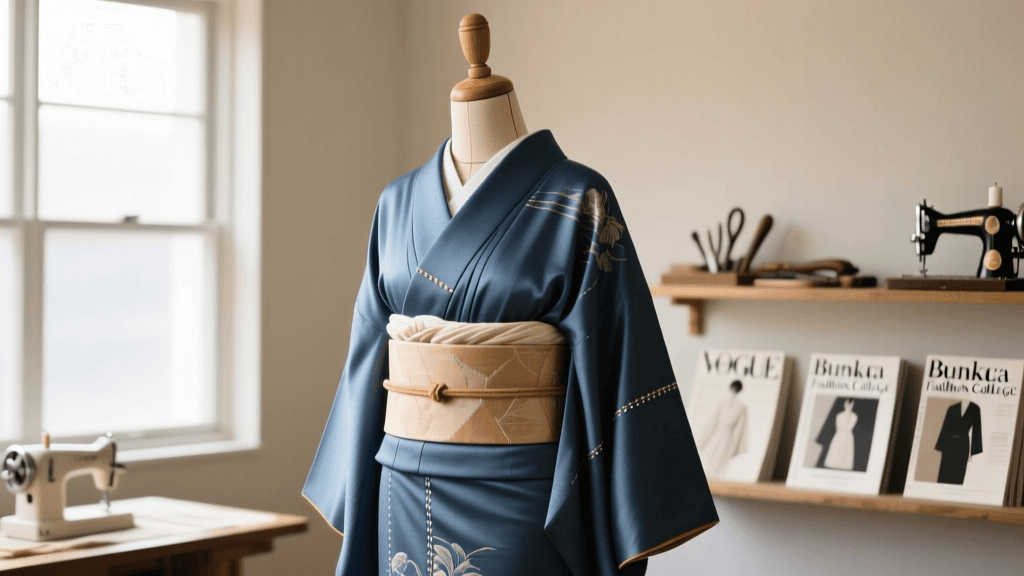
As Asia's most prestigious fashion institution, Bunka Fashion College in Shinjuku, Tokyo, remains the gold standard for garment education. In 2026, their highly sought-after 'Traditional Wafuku Construction Intensive' is a four-week, full-immersion program designed specifically for international designers and advanced sewists. The curriculum covers the complete lifecycle of a lined kimono (awase), from unrolling and inspecting the tanmono (a standard 38cm wide, 12-meter long bolt of fabric) to executing invisible blind stitches (kagari-nui) and reinforcement stitches (chikara-nui).
The 2026 tuition for this intensive is approximately 380,000 JPY (around $2,500 USD), which includes access to Bunka's world-class textile archives and a personalized set of traditional tailoring tools. Students also participate in a weekend module on sashiko and boro mending, learning how to structurally reinforce indigo-dyed cottons using running stitches that follow geometric and organic patterns.
Kyoto Traditional Arts Super College: Nishijin Weaving & Yuzen Dyeing (Kyoto)
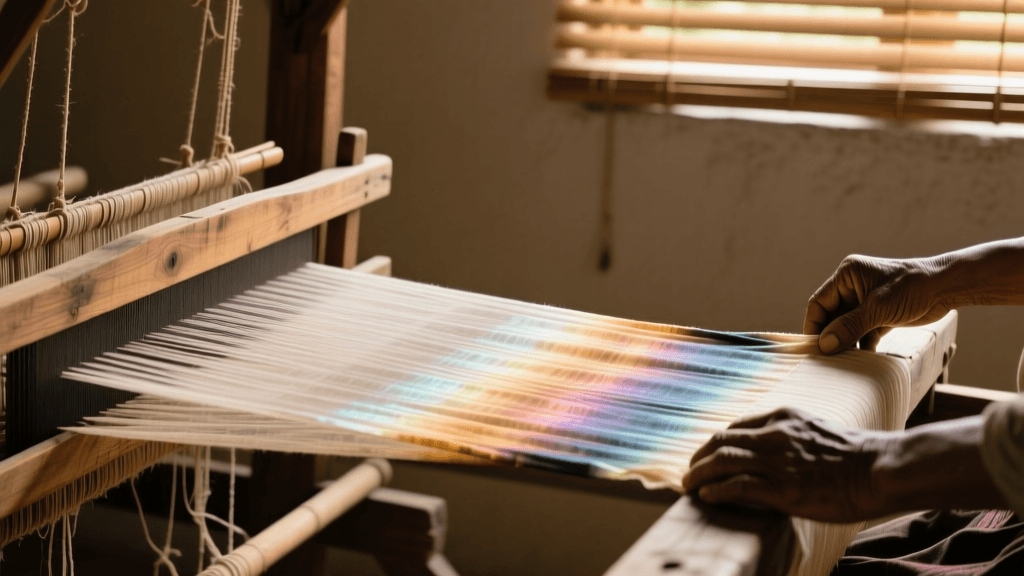
For those more interested in textile creation than garment assembly, Kyoto remains the undisputed heart of Japanese fabric arts. The Kyoto Traditional Arts Super College offers a two-week summer residency focusing on the precursors to the garment: Nishijin brocade weaving and Kyo-Yuzen resist dyeing. According to the Japan National Tourism Organization, Kyoto's artisan workshops have seen a 40% increase in international enrollment for 2026, driven by designers wanting to understand the chemical and mechanical processes behind Japan's most luxurious silks. Students learn to apply rice-paste resist (itome-nori) to silk before painting intricate, multi-colored motifs that will eventually become the obi (sash) or the lower hem (suso) of a formal kimono.
Top Online Learning Platforms for Global Students
Not everyone can commit to a month-long residency in Tokyo or Kyoto. Fortunately, 2026 has seen a massive upgrade in the quality of online wafuku education. Specialized platforms and university extensions now offer high-definition, multi-camera courses that capture the minute details of hand-stitching and fabric manipulation.
- Bunka Digital Extension Modules: Bunka Fashion College now offers a modular online certificate in 'Modern Yukata Tailoring.' Priced at 85,000 JPY, this self-paced course includes bilingual video lectures, downloadable PDF patterns scaled for Western and Asian body types, and monthly live Q&A sessions with master tailors via video conference.
- Sashiko & Boro Masterclasses (Domestika & Craftsy):strong> While general craft platforms have historically offered superficial overviews, their 2026 rosters feature courses taught by recognized Japanese heritage artisans. These courses focus heavily on the tension control required for sashiko stitching on heavy denim and canvas, bridging traditional Japanese mending with contemporary streetwear customization.
- Kyoto Artisan Guild Virtual Loom Access: A groundbreaking 2026 initiative allowing students to remotely operate digital Jacquard looms in Kyoto, programming traditional Nishijin patterns and having the physical woven samples shipped to their home studios for study.
Comparison Chart: 2026 Traditional Garment Programs
| Program / Institution | Format | Duration | Est. Cost (2026) | Primary Focus |
|---|---|---|---|---|
| Bunka Fashion College Intensive | In-Person (Tokyo) | 4 Weeks | 380,000 JPY | Full Kimono Construction & Sashiko |
| Kyoto Arts Super College Residency | In-Person (Kyoto) | 2 Weeks | 220,000 JPY | Nishijin Weaving & Yuzen Dyeing |
| Bunka Digital Extension | Online (Live + VOD) | 8 Weeks | 85,000 JPY | Yukata Tailoring & Pattern Drafting |
| Heritage Artisan Sashiko Course | Online (Self-Paced) | 12 Hours | $120 USD | Boro Mending & Running Stitches |
Essential Tools for Your 2026 Home Studio
If you are embarking on an online course or preparing for your arrival at a Japanese workshop, you must familiarize yourself with the traditional toolkit. Western sewing supplies are often inadequate for the specific demands of silk and narrow-loom cottons. Here are the essential tools required for authentic wafuku construction in 2026:
- Shaku (Traditional Ruler): The Japanese shaku is approximately 37.9 cm, slightly longer than a standard Western ruler. Traditional patterns and vintage kimono measurements are still calculated using this metric. A bamboo shaku is essential for accurate fabric mapping.
- Hera (Crease Maker): Instead of using a hot iron for every seam allowance, Japanese tailors use a hera—a smooth, spatula-like tool made from bamboo, ivory, or agate. It is used to press seams flat and mark fabric without leaving permanent creases or risking heat damage to delicate silks.
Sanbon-Hari (Three-Needle Set): Japanese hand-sewing needles are distinctly different from Western sharps. They are longer, have larger eyes for thick silk threads, and lack the sharp taper, featuring instead a slightly rounded point that pushes through the weave of the fabric rather than piercing and breaking the delicate fibers.- Kake-Hari (Tension Device): A traditional wooden clamp and weight system used to hold fabric taut while sewing or mending. While modern tailors sometimes use heavy magnetic weights, the kake-hari remains the superior tool for maintaining even tension during intricate sashiko work.
- Kote (Traditional Iron): Modern Japanese tailoring utilizes specialized, narrow-tipped irons designed to press the deep, narrow seam allowances (often just 1.5 cm to 2 cm) typical of kimono construction without scorching the adjacent fabric.
Navigating Language Barriers and Material Sourcing
One of the most significant challenges for international students in 2026 remains the language barrier and the sourcing of authentic materials. While top-tier schools like Bunka and Mode Gakuen provide English translation headsets and bilingual teaching assistants, smaller, specialized artisan guilds in rural Kyoto or Kanazawa may only offer instruction in Japanese. It is highly recommended to utilize real-time AI translation earbuds, which have become incredibly accurate for technical crafting terminology in 2026, allowing for seamless communication regarding stitch tension and fabric grain.
Material sourcing is another hurdle. Authentic tanmono bolts are rarely sold in Western fabric stores. However, the rise of specialized cross-border e-commerce platforms in 2026 has made it easier to import deadstock silk, indigo-dyed cotton, and hemp directly from wholesalers in the Nihonbashi district of Tokyo. When enrolling in an online course, verify whether the tuition includes a 'starter kit' of fabric and tools, as international shipping rates for heavy silk bolts can be prohibitive.
Conclusion: Investing in Heritage Craftsmanship
Whether you choose to immerse yourself in the bustling studios of Tokyo's Bunka Fashion College or master the meditative art of sashiko via a high-definition online masterclass, studying traditional Japanese garment construction is an investment in the future of sustainable fashion. The zero-waste patterns, the reverence for textile integrity, and the meticulous hand-finishing techniques learned in these 2026 programs offer profound lessons that transcend the kimono itself, providing a masterclass in mindfulness, precision, and enduring design.