Xiangyunsha: Mastering China's Intangible Silk Craft
The Legacy of Gambiered Guangdong Gauze
Xiangyunsha, literally translating to 'fragrant cloud silk,' is one of the most prestigious and labor-intensive textile crafts in Chinese history. Originating from the Shunde district of Foshan in Guangdong province, this extraordinary fabric is officially recognized as a National Intangible Cultural Heritage. Unlike mass-produced modern textiles, authentic Xiangyunsha is a testament to the harmony between human craftsmanship and the natural environment. According to The Metropolitan Museum of Art, the evolution of Chinese silk weaving and dyeing represents centuries of refined technological and artistic achievement, and Xiangyunsha stands at the pinnacle of this regional specialization. For enthusiasts of traditional Chinese garments, from the flowing Hanfu to the tailored Republic-era Qipao, understanding the roots of this fabric is essential to appreciating its value.
The Alchemy of Shulang and River Mud
The magic of Xiangyunsha lies in a unique, naturally occurring chemical reaction. The base fabric, typically a high-grade mulberry silk gauze or heavy crepe de chine, is repeatedly dyed using the tannin-rich juice of the Dioscorea cirrhosa tuber, locally known as Shulang. However, the plant dye alone only produces a yellowish-brown hue. The true transformation occurs when the dyed silk is spread on the grass and coated with iron-rich mud harvested from the unpolluted riverbeds of the Pearl River Delta. The tannins in the plant juice react with the iron ions in the mud, creating a striking, deep black or dark brown surface on one side, while the reverse remains a rich, earthy rust color. This dual-toned effect is a hallmark of the craft. The safeguarding of such complex, region-specific knowledge is exactly what is championed by UNESCO's Convention for the Safeguarding of the Intangible Cultural Heritage, ensuring that these ancestral techniques are not lost to industrialization.
The 13-Step Artisan Process
Creating authentic Xiangyunsha is not a factory process; it is an agricultural and artisanal ritual that involves over a dozen meticulous steps:
- Preparation of the Shulang Juice: The tubers are crushed and soaked in water to extract the tannin-rich liquid.
- Initial Dyeing (Jin Shui): The silk is dipped into the juice and dried in the sun. This dipping and drying cycle is repeated up to 30 times to build color depth.
- Boiling: The silk is boiled in the Shulang juice to set the color and soften the fibers.
- Mud Coating (Guo Ni): The crucial step where river mud is evenly applied by hand to one side of the fabric at dawn.
- Washing and Final Drying: The mud is washed off in the river, revealing the deep black color, and the fabric is stretched on the grass to dry under the sun.
Timing and Environmental Constraints
One of the most critical aspects of Xiangyunsha production is its strict reliance on weather. Artisans can only produce this silk between April and October. The intense sunlight and specific humidity levels of the Guangdong summer are required to properly cure the Shulang dye and facilitate the chemical reaction with the river mud. If it rains during the mud-coating phase, the batch can be ruined. This environmental dependency severely limits the annual yield, making authentic Xiangyunsha a rare and highly sought-after commodity in the world of traditional Asian fashion.
Sourcing Authentic Xiangyunsha: A Buyer's Guide
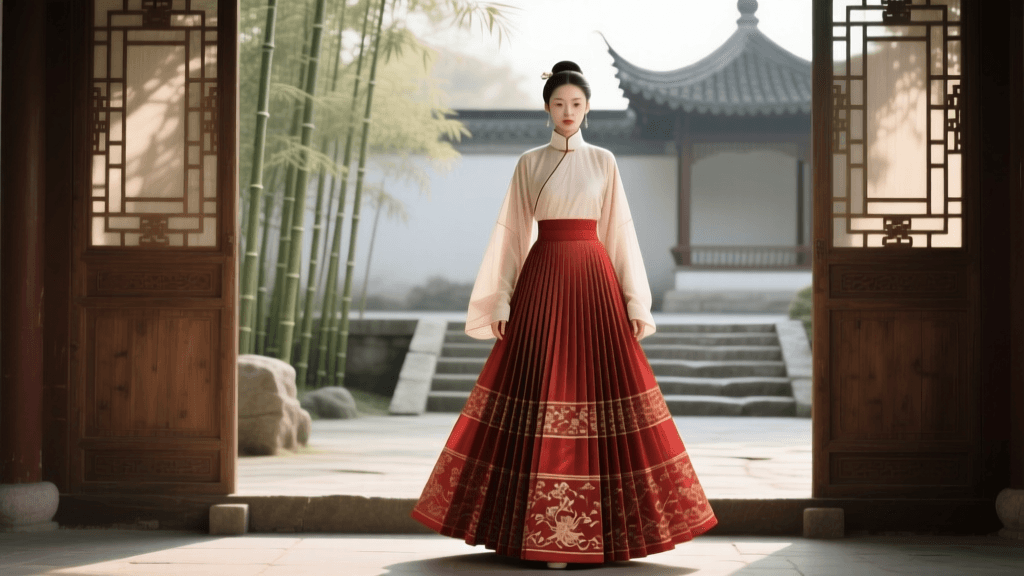
When commissioning a traditional Hanfu, a Ming dynasty-style Mamianqun (horse-face skirt), or a luxury Qipao, understanding the metrics and costs of Xiangyunsha is vital to avoid counterfeits.
Cost, Measurements, and Yield
Authentic, hand-dyed Xiangyunsha is a luxury investment. Prices typically range from $150 to $450 USD per meter, depending on the weight of the base silk and the complexity of the weave. If a vendor is selling 'Xiangyunsha' for $30 a meter, it is almost certainly a chemically printed imitation. The fabric usually comes in standard widths of 114 cm (45 inches) or 140 cm (55 inches). For garment planning, a standard Mamianqun requires about 4.5 to 6 meters of fabric, while a tailored Qipao requires 2.5 to 3.5 meters, depending on the wearer's height and the pattern matching required.
Authentic vs. Imitation: A Comparison Chart
Because of its high market value, chemical imitations are common. Use this guide to verify your fabric:
| Feature | Authentic Xiangyunsha | Chemical Imitation |
|---|---|---|
| Surface Texture | Slightly crisp, with a subtle, natural crackle effect that softens beautifully over time. | Uniformly smooth or artificially stiffened with chemical resins. |
| Color Reversibility | Deep black/brown on the front; distinct rust/reddish-brown on the reverse. | Often the same color on both sides, or the reverse is artificially painted. |
| Scent | Faint, earthy scent of dried grass and river mud when new; dissipates over time. | Chemical, synthetic, or completely odorless. |
| Water Reaction | Water beads up slightly on the mud-coated side due to the natural mineral finish. | Absorbs water immediately or repels it unnaturally due to synthetic coatings. |
| Price per Meter | $150 - $450+ USD | $20 - $50 USD |
Historical Significance and Modern Revival
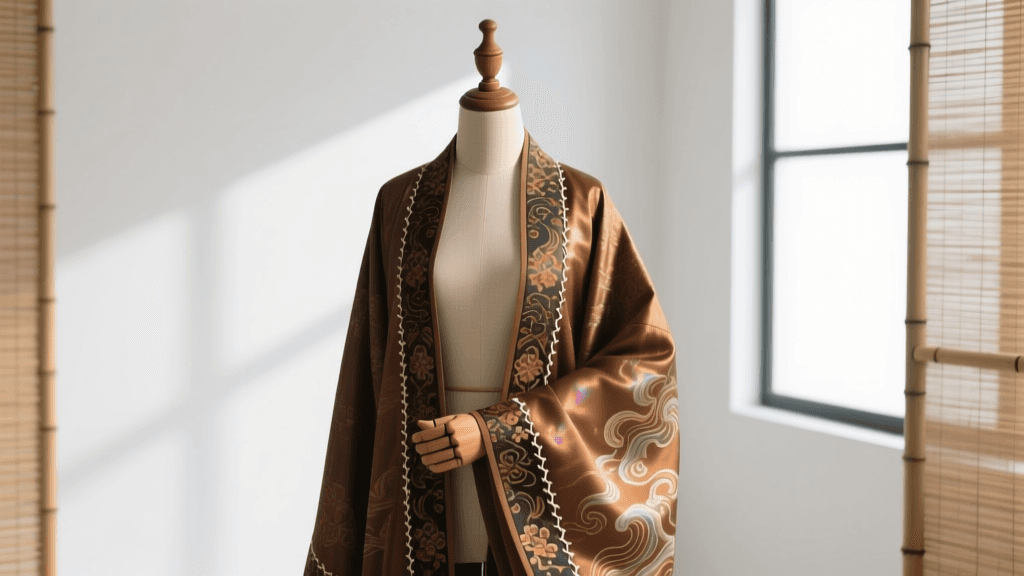
During the Republic of China era, Xiangyunsha was the fabric of choice for intellectuals, dignitaries, and high-society women. The iconic political figure Soong Ching Ling was famously fond of Qipaos made from gambiered gauze, appreciating its breathability in the humid southern summers and its understated, elegant sheen. Today, the Hanfu revival movement has brought Xiangyunsha back into the spotlight. Modern designers are utilizing the fabric to create structured Song dynasty-style Beizi (open-front jackets) and lightweight summer Ruqun sets, bridging the gap between historical accuracy and contemporary luxury.
Caring for Your Intangible Heritage Garments
Owning a garment made from Xiangyunsha requires specific care to maintain its structural integrity and natural finish. Because the color is derived from plant tannins and river minerals, it is highly sensitive to alkaline substances.
Never use standard laundry detergents, bleach, or soap on Xiangyunsha. The alkalinity will strip the tannins, causing the deep black color to fade into a patchy, uneven brown.
Instead, hand wash the garment in cool water (below 30°C) using a specialized neutral silk detergent or simply plain water if the garment is not heavily soiled. Do not wring or twist the fabric; gently press out the water and hang it to dry in a shaded, well-ventilated area. Direct sunlight during the drying phase of a finished garment can cause the fibers to become brittle over time. With proper care, the fabric will develop a beautiful patina, becoming softer and more lustrous with each wear.
Supporting the Artisans of Shunde
The survival of Xiangyunsha relies entirely on the master dyers and weavers of Shunde. As highlighted by the Victoria and Albert Museum's Asian collections, the preservation of regional textile variations is crucial for maintaining the diverse tapestry of global material culture. When purchasing Xiangyunsha, seek out certified workshops that carry the 'National Intangible Cultural Heritage' label. By investing in authentic pieces, collectors and garment enthusiasts directly fund the apprenticeships and environmental conservation efforts required to keep this magnificent, centuries-old alchemy alive for future generations.