Guide to Ainu Traditional Clothing: Attush and Moreu
The Indigenous Sartorial Heritage of the Ainu
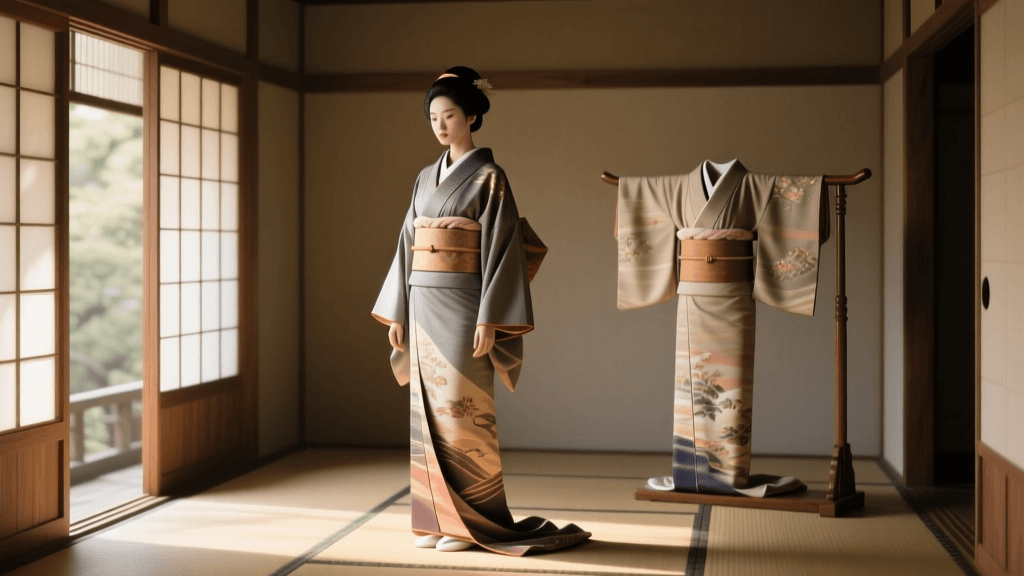
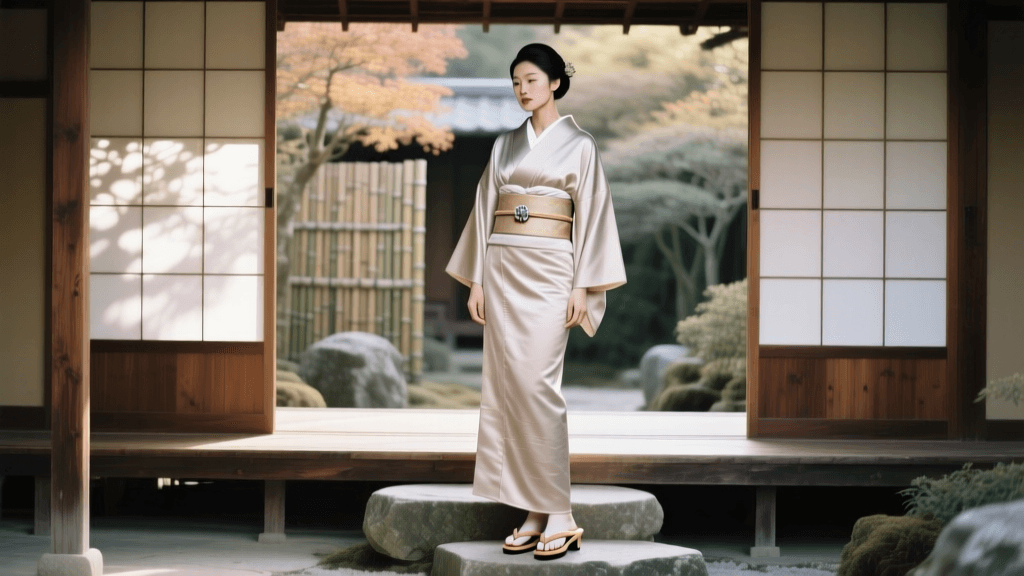
When discussing traditional Japanese clothing, the global imagination almost exclusively turns to the silk kimono of the Wajin (mainland Japanese). However, the Japanese archipelago is home to rich, distinct indigenous and ethnic minority sartorial traditions that predate and exist parallel to mainland customs. Chief among these is the traditional clothing of the Ainu, the indigenous people of Hokkaido, Sakhalin, and the Kuril Islands. Ainu garments are not merely functional items designed to withstand the harsh northern winters; they are deeply spiritual artifacts, intricately tied to the animistic belief system of the Kamuy (spirits). For textile enthusiasts, cultural historians, and conscious travelers, understanding Ainu dress—specifically the elm-bark Attush and the embroidered Kaparamip—offers a profound window into a resilient and deeply connected culture.
Attush: The Masterpiece of Elm Bark Weaving
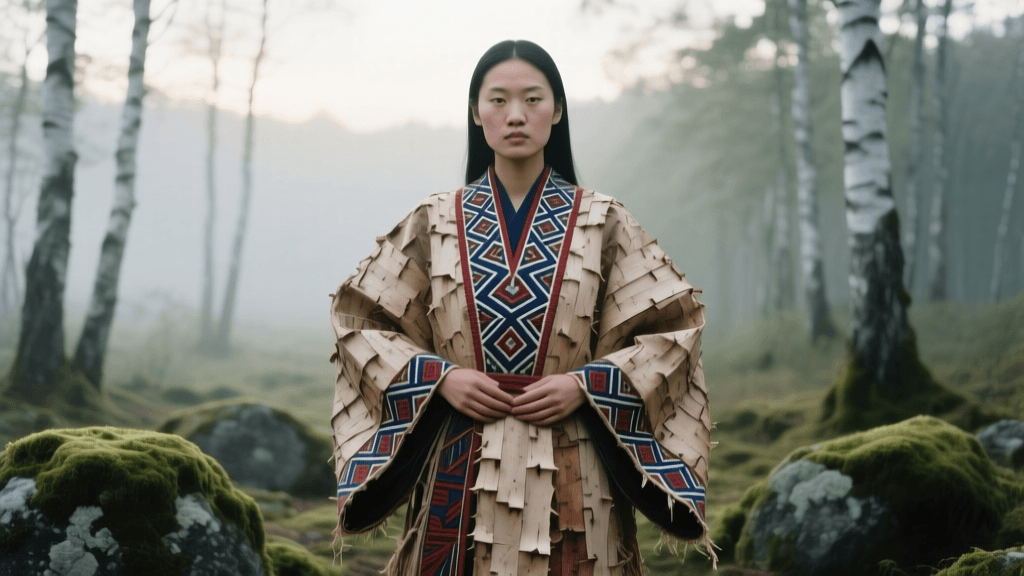
The foundation of traditional Ainu clothing is the Attush, a robust, breathable, and water-resistant fabric woven from the inner bark of the Japanese elm (ohyo) or linden tree. The creation of Attush is a masterclass in sustainable, slow fashion, requiring immense physical labor and precise timing.
The harvesting of the bark occurs strictly in early summer (June to July), when the sap flows freely, and the bark can be peeled from the felled tree in long, continuous sheets. The outer bark is stripped away using a specialized curved sword called a maccu, revealing the precious inner layers. These layers are then soaked in running river water for one to two weeks to soften the fibers and remove tannins. Once dried, the fibers are split by hand into fine threads.
Weaving is done on a backstrap loom, which dictates the fabric's dimensions. A standard bolt of Attush is typically 40 to 50 centimeters wide and woven in continuous lengths of 10 to 12 meters. The weaver uses their body weight to maintain tension, resulting in a textile with a slightly uneven, organic texture that softens beautifully with age and wear. Historically, Attush was worn as a wrap-around robe or tunic, fastened with a simple woven belt. Today, authentic vintage Attush robes are highly sought after by collectors and museums, with pristine examples fetching between ¥150,000 and ¥400,000 at specialized antique auctions in Sapporo and Tokyo.
Kaparamip and the Protective Power of Moreu
As trade with the Wajin and the Chinese expanded during the Edo period, the Ainu acquired cotton and silk. They repurposed these imported textiles to create the Kaparamip, a lighter cotton robe worn over the Attush. However, the most striking element of the Kaparamip—and of Ainu textiles in general—is the Moreu (embroidery and appliqué).
Ainu embroidery is not purely decorative; it is fundamentally protective. In Ainu cosmology, evil spirits can enter the body through the openings of garments, such as the collar, cuffs, and hem. To prevent this, Ainu women meticulously applied cotton appliqué and chain-stitch embroidery in swirling, thorn-like patterns known as aiushi (thorns) or moreu (swirls) over these vulnerable areas. The sharp, continuous lines of the embroidery were believed to tangle and ward off malevolent forces.
The color palette of traditional Moreu is striking and deliberate, primarily utilizing deep indigo, stark white, black, and occasionally red. The contrast of the white cotton appliqué against a dark indigo background creates a bold, graphic aesthetic that has heavily influenced modern Hokkaido-based fashion designers.
Comparative Analysis: Ainu, Wajin, and Ryukyuan Dress
To fully appreciate the uniqueness of Ainu garments, it is helpful to compare them with the traditional dress of the Wajin (mainland Japanese) and the Ryukyuan people of Okinawa. Each reflects its distinct climate, social structure, and spiritual worldview.
| Feature | Ainu (Attush / Kaparamip) | Wajin (Kimono) | Ryukyuan (Ryusou) |
|---|---|---|---|
| Primary Material | Elm bark, nettle, traded cotton | Silk, hemp, cotton | Bashofu (banana fiber), silk, cotton |
| Silhouette | Straight, T-shaped, loose fit | T-shaped, wrapped, secured with wide Obi | Loose, wide sleeves, tied with a thin sash |
| Motif Placement | Hems, cuffs, collar (protective borders) | Asymmetrical crests, seasonal all-over patterns | Large, bold patterns across the entire garment |
| Spiritual Function | Ward off evil spirits at garment openings | Indicate social status, season, formality | Reflect local nature, rank, and island identity |
| Climate Adaptation | Heavy, wind-resistant, layered for snow | Adaptable via silk (summer) or padded cotton (winter) | Highly breathable, sheer layers for subtropical heat |
While the Wajin kimono evolved into a highly codified system of social signifiers, and the Ryukyuan Ryusou prioritized airflow and vibrant dyeing techniques suitable for a subtropical climate, the Ainu Attush remained fiercely utilitarian and spiritually protective, perfectly adapted to the sub-arctic environment of Hokkaido.
Practical Guide: Sourcing, Experiencing, and Wearing Ainu Garments
For those looking to immerse themselves in Ainu textile culture, acquire authentic pieces, or support contemporary Ainu artisans, careful planning is required. Here is an actionable guide to experiencing and sourcing Ainu dress.
1. Immersive Experiences and Museums
The absolute best starting point for understanding Ainu clothing is the Upopoy National Ainu Museum and Park in Shiraoi, Hokkaido. Upopoy features extensive, climate-controlled exhibits of historical Attush and Kaparamip. Visitors can also watch live demonstrations of backstrap weaving and embroidery. Admission is ¥1,200 for adults, and the park is easily accessible via a 10-minute bus ride from Shiraoi Station.
For a more hands-on experience, travel to Nibutani (Biratori), a town renowned as a hub for Ainu craftsmanship. The Nibutani Ainu Culture Museum offers workshops where visitors can learn basic Moreu embroidery or try their hand at weaving Attush. A standard 2-hour weaving workshop costs approximately ¥5,500 and results in a small coaster or mat you can take home.
2. Sourcing Authentic Vintage and Antique Pieces
Purchasing a vintage Ainu robe requires navigating specialized antique markets. Mainstream vintage kimono shops rarely stock authentic Attush. Instead, visit specialized antique dealers in Sapporo, particularly around the Tanuki Koji shopping arcade, or attend the annual Hokkaido Antique Fairs. When evaluating a piece, check the flexibility of the elm bark; authentic, well-processed Attush will feel almost like soft linen, whereas poorly processed or degraded bark will snap or feel excessively brittle. Expect to pay between ¥80,000 and ¥150,000 for a mid-20th-century cotton Kaparamip with heavy appliqué, and upwards of ¥250,000 for a fully intact, pre-war Attush robe.
3. Supporting Contemporary Ainu Artisans
Rather than buying mass-produced souvenirs, seek out certified Ainu artisans. The Ainu Association of Hokkaido maintains directories of recognized craftspeople. Contemporary artisans are creating stunning, wearable adaptations of traditional motifs. You can purchase modern silk scarves, cotton tote bags, and embroidered neckties featuring authentic aiushi patterns. These items typically range from ¥4,000 to ¥25,000 and provide direct financial support to indigenous creators keeping the tradition alive.
Modern Adaptations and Contemporary Ainu Fashion
In recent years, there has been a powerful resurgence of Ainu pride, leading to the integration of traditional motifs into modern streetwear and high fashion. Young Ainu designers and allies are collaborating to produce clothing that honors the Moreu patterns without appropriating sacred ceremonial garments. Brands based in Sapporo are now screen-printing traditional thorn motifs onto heavy-weight cotton hoodies, denim jackets, and canvas sneakers. This contemporary movement ensures that Ainu sartorial heritage is not relegated merely to museum glass cases, but is worn as a living, breathing expression of indigenous identity in the 21st century.
Conclusion
The traditional clothing of the Ainu is a testament to human ingenuity and spiritual depth. From the grueling, months-long process of harvesting and weaving elm bark into Attush, to the meticulous, protective stitches of the Moreu embroidery, every thread tells a story of survival and reverence for the natural world. By understanding the distinctions between Ainu, Wajin, and Ryukyuan textiles, and by choosing to engage with authentic cultural institutions and artisans, we can help preserve and celebrate one of Asia's most fascinating and underrepresented sartorial traditions.
For further reading on indigenous crafts and cultural preservation, the Foundation for Research and Promotion of Ainu Culture provides extensive English-language resources, academic papers, and historical archives detailing the evolution of Ainu textiles.