Top Japanese Fashion Schools vs Kimono Apprenticeships 2026
The Crossroads of Japanese Garment Education in 2026
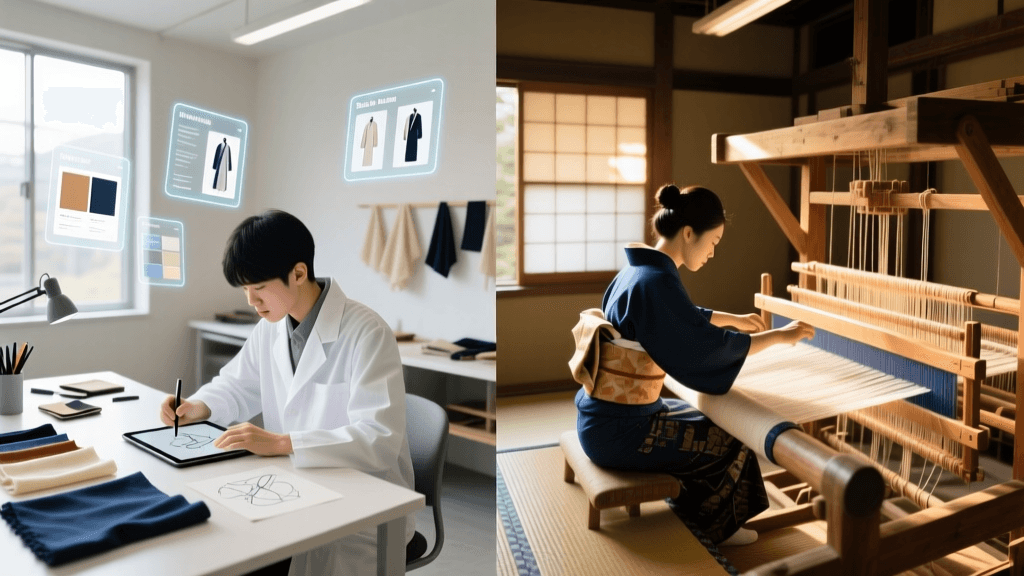
For aspiring designers and textile artists, Japan represents the ultimate crucible of garment creation. The nation seamlessly blends centuries-old sartorial traditions with cutting-edge, avant-garde fashion. However, as we navigate the 2026 academic and professional landscape, students face a critical dichotomy: should they pursue institutional education at prestigious fashion academies, or immerse themselves in the grueling, deeply rewarding deshi (apprentice) system of traditional shokunin (artisans)?
The choice between a modern fashion school and a traditional kimono-making apprenticeship is not merely a matter of curriculum; it is a decision about lifestyle, career trajectory, and one's relationship with the garment itself. With the aging population of master artisans accelerating, the Japanese government and private institutions have radically restructured funding, visas, and educational pathways in 2026 to preserve these heritage crafts. This guide breaks down the realities of both paths, helping you decide where to invest your time, talent, and resources.
Institutional Excellence: Bunka Fashion College and Beyond
When discussing institutional fashion education in Japan, Bunka Fashion College in Tokyo remains the undisputed titan. Founded in 1923, Bunka has shaped the global fashion landscape, producing legends like Yohji Yamamoto and Kenzo Takada. In 2026, Bunka’s Garment Creation Department continues to be the premier destination for those seeking a comprehensive, globally recognized fashion education.
Curriculum and Technological Integration
Bunka’s 2026 curriculum is a masterclass in hybridization. Students begin with rigorous training in traditional Japanese flat-pattern drafting and the precise geometry of wafuku (Japanese clothing) construction. However, the modern Bunka experience is heavily augmented by technology. By their second year, students utilize AI-driven trend forecasting software and 3D digital prototyping tools like CLO 3D to visualize complex kimono layering and drape before cutting a single piece of silk.
Despite this digital leap, the tactile foundation remains. Students spend hundreds of hours mastering the tanmono (traditional bolt of cloth) cutting techniques, learning how to create zero-waste garments—a concept inherent to kimono making that is now highly sought after in sustainable global fashion.
Costs and Student Life in 2026
Attending Bunka is a significant financial investment. For the 2026 academic year, tuition and fees for the standard two-year Garment Creation course hover around 1,450,000 JPY (approximately $9,800 USD) annually. Living expenses in Tokyo's Shibuya district, where the campus is located, add another 1,800,000 JPY per year. International students must also navigate the highly competitive student visa process and demonstrate a minimum JLPT N2 (Japanese Language Proficiency Test) level to thrive in the fast-paced, critique-heavy studio environment.
The Deshi System: Nishijin-ori and Kyo-Yuzen Apprenticeships
On the other end of the spectrum is the traditional apprenticeship model. For those whose passion lies strictly in the preservation and creation of traditional Japanese textiles, entering a workshop in Kyoto or Kanazawa as a deshi offers an education that no classroom can replicate. Two of the most highly sought-after apprenticeship tracks in 2026 are Nishijin-ori (Kyoto’s elite jacquard weaving) and Kyo-Yuzen (resist-dyeing for kimono).
The Sensory and Technical Reality of the Workshop
An apprenticeship in Nishijin-ori is an exercise in extreme patience and sensory mastery. A 2026 apprentice does not touch the main sorobata (hand-operated jacquard loom) for the first year. Instead, the deshi learns the foundational steps: boiling and degumming the raw silk, twisting threads, and programming the digital punch cards that guide modern Nishijin looms. The workshop environment is loud, rhythmic, and demands intense physical stamina to manage the tension of thousands of warp threads.
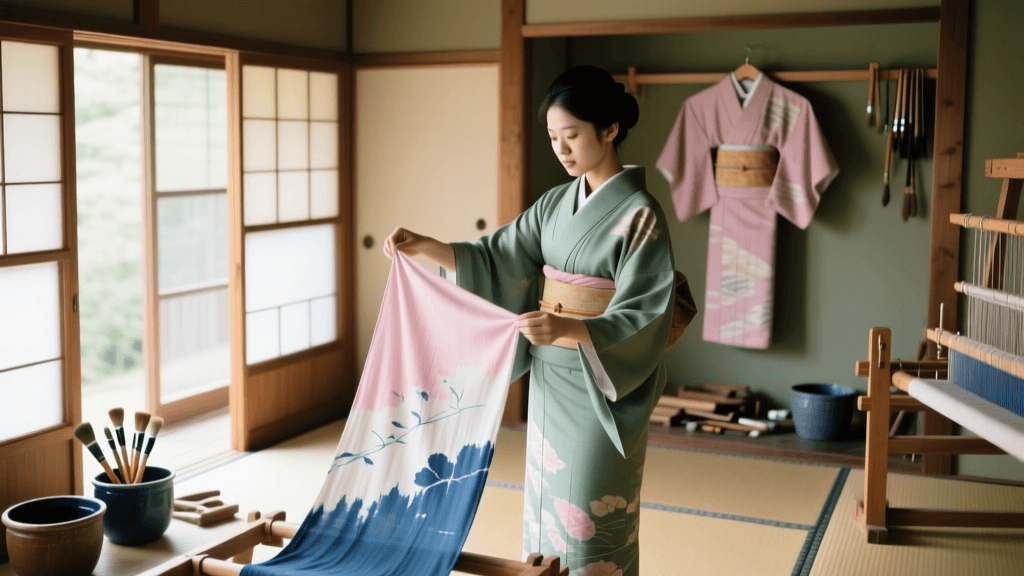
Conversely, a Kyo-Yuzen apprenticeship in Kyoto’s dyeing districts is a study in chemistry and brushwork. Apprentices spend years mastering the application of itome-nori (rice paste resist) using delicate brass cones, a skill that requires a completely steady hand. They learn to read the humidity and temperature of the air to determine how quickly the dyes will set during the steaming process. According to resources curated by Kogei Japan, the mastery of these environmental variables is what separates a technician from a true artisan.
Stipends, Duration, and the Aging Artisan Crisis
Historically, apprenticeships lasted a decade and offered little to no pay. In 2026, the reality has shifted out of sheer necessity. With the average age of a master weaver surpassing 70, workshops are desperate for young blood. Modern apprenticeships typically last 3 to 5 years. Furthermore, apprentices now receive a monthly living stipend ranging from 150,000 to 180,000 JPY, often supplemented by free or heavily subsidized housing in rural or semi-rural Kyoto wards.
2026 Comparison Chart: Fashion School vs. Artisan Apprenticeship
To help visualize the stark differences between these two educational pathways, refer to the comparison table below.
| Feature | Bunka Fashion College (Institutional) | Nishijin-ori / Yuzen (Apprenticeship) |
|---|---|---|
| Primary Focus | Global fashion design, pattern making, brand creation | Textile mastery, heritage preservation, specialized craft |
| Duration | 2 to 4 years (Degree/Diploma programs) | 3 to 5 years (Master-Disciple contract) |
| Financial Model | High tuition (~1.45M JPY/yr), self-funded living | No tuition, monthly stipend (150k-180k JPY/mo) |
| 2026 Tech Integration | High (AI forecasting, 3D CLO, digital printing) | Low to Medium (Digital looms, but hand-finishing focus) |
| Language Requirement | JLPT N2 (N1 recommended for advanced theory) | JLPT N1 mandatory (nuanced dialects and master communication) |
| Career Output | Independent designer, corporate pattern maker, stylist | Independent artisan, workshop successor, textile supplier |
Financial Realities, Visas, and Government Subsidies
One of the most significant developments in 2026 is the aggressive intervention of the Japanese government to save traditional crafts. The Ministry of Economy, Trade and Industry (METI) has expanded its Traditional Crafts initiatives to include robust subsidies for foreign and domestic apprentices. The 'Next-Generation Artisan' grant, updated for the 2026 fiscal year, provides workshops with up to 3,000,000 JPY to offset the costs of training a new deshi, covering materials, tooling, and stipend bonuses.
For international students, the visa landscape has also adapted. While fashion school attendees enter on a standard 'Student' visa, those accepted into recognized traditional craft apprenticeships can now apply for the 'Designated Activities (Traditional Craft Artisan)' visa pathway introduced in late 2025. This allows foreign apprentices to remain in Japan for up to seven years, with a clear track toward permanent residency if they establish their own workshop or become a recognized successor.
How to Choose Your Path: Actionable Advice for 2026
Deciding between the neon-lit studios of Tokyo and the quiet, indigo-scented workshops of Kyoto requires deep self-reflection. Here is a practical checklist to guide your next steps:
- Assess Your End Goal: If you want to launch a contemporary fashion label that uses Japanese aesthetics, choose Bunka or a similar institution. If your dream is to weave the silk for a museum-grade obi sash, seek an apprenticeship.
- Language Preparation: Do not underestimate the language barrier. Fashion schools offer some English support, but a traditional master will likely speak in regional dialects (such as Kyoto-ben). Achieving JLPT N1 is non-negotiable for a successful apprenticeship.
- Build a Tactile Portfolio: When applying for an apprenticeship, digital portfolios are useless. Masters want to see your hand-stitching, your understanding of fiber tension, and your patience. Spend six months practicing basic sashiko (decorative reinforcement stitching) and natural dyeing before your interview.
- Leverage Cultural Hubs: Visit the Kyoto Museum of Traditional Crafts (Fureaikan) and attend the annual Nishijin Textile Industry Association exhibitions. Networking in person remains the primary way to secure an introduction to a master weaver or dyer in 2026.
Conclusion
The landscape of Japanese fashion education in 2026 is a testament to a culture fighting to preserve its soul while simultaneously pushing the boundaries of modern design. Whether you choose the structured, innovative halls of a Tokyo fashion college or the demanding, deeply spiritual path of a Kyoto weaving workshop, you are participating in a vital continuum. The garments you will learn to create are not just clothing; they are wearable archives of Asian history, engineered for the future.