The Enduring Heritage of Brocade Weaving: Craftsmanship, Culture, & Legacy
Brocade is far more than a mere textile; it is a woven chronicle of human civilization, a fabric that speaks the universal language of luxury, artistry, and cultural identity. Derived from the Italian word broccato, meaning 'embossed cloth,' brocade is characterized by its rich, raised patterns that appear almost embroidered, though they are intricately woven directly into the fabric. For centuries, the shimmering surfaces and heavy, tactile drape of brocade have been synonymous with royalty, religious reverence, and the highest echelons of society. To understand the heritage of brocade weaving is to embark on a journey across ancient trade routes, through the workshops of master artisans, and into the heart of the world's most storied cultural traditions.
The creation of brocade is a triumph of human ingenuity, requiring a mastery of the loom that borders on the mathematical and the magical. Unlike printed fabrics or surface embroidery, the elaborate motifs of brocade—ranging from delicate floral vines to majestic mythical dragons—are born from the very structure of the weave. This in-depth exploration delves into the profound cultural significance, the meticulous craftsmanship, the stunning regional variations, and the vital modern preservation efforts that keep the heritage of brocade weaving alive in the contemporary world.
The Cultural Significance of Brocade Across Civilizations
Throughout history, the possession and wearing of brocade have been potent symbols of power, wealth, and divine favor. In many ancient and medieval societies, the complexity and cost of producing brocade meant that it was inherently exclusive. Monarchs and emperors utilized the fabric to project authority, draping themselves in heavy silks interwoven with precious metals to visually separate themselves from the common populace. The Silk Road textile trade played a pivotal role in disseminating these luxurious fabrics across continents, turning brocade into a highly sought-after diplomatic gift and a form of currency in international relations.
Sumptuary laws in various historical eras strictly regulated who was permitted to wear brocade. In Elizabethan England, for instance, only the highest ranks of nobility and the royal family were legally allowed to don cloth of gold or silver brocade. Similarly, in feudal Japan and imperial China, specific motifs and colors woven into brocade were reserved exclusively for the emperor and his immediate court. These legal restrictions underscored the fabric's role as a visual marker of the social hierarchy.
Beyond the royal court, brocade holds immense significance in religious and spiritual contexts. The heavy, ornate nature of the fabric makes it ideal for ceremonial vestments, altar cloths, and temple hangings. In the Catholic Church, brocaded chasubles and copes have been used for centuries to reflect the glory of the divine during high holy days. In Buddhist and Hindu traditions, brocade is frequently used to adorn deities, line sacred spaces, and craft garments for temple priests, signifying devotion and the offering of one's finest materials to the divine.
The Intricate Craftsmanship Behind Brocade Weaving
The defining characteristic of brocade is its use of a supplementary weft. In a basic weave, the warp (longitudinal threads) and the weft (transverse threads) interlace to create the foundation of the fabric. In brocade weaving, an additional, non-structural weft thread is introduced to create the ornamental patterns. This supplementary thread is woven into the fabric only where the pattern requires it, floating over the surface to create the raised, embossed effect, and then hidden or bound within the foundation when not in use. This technique requires an extraordinary level of precision and foresight, as the weaver must essentially program the pattern into the loom before a single thread is thrown.
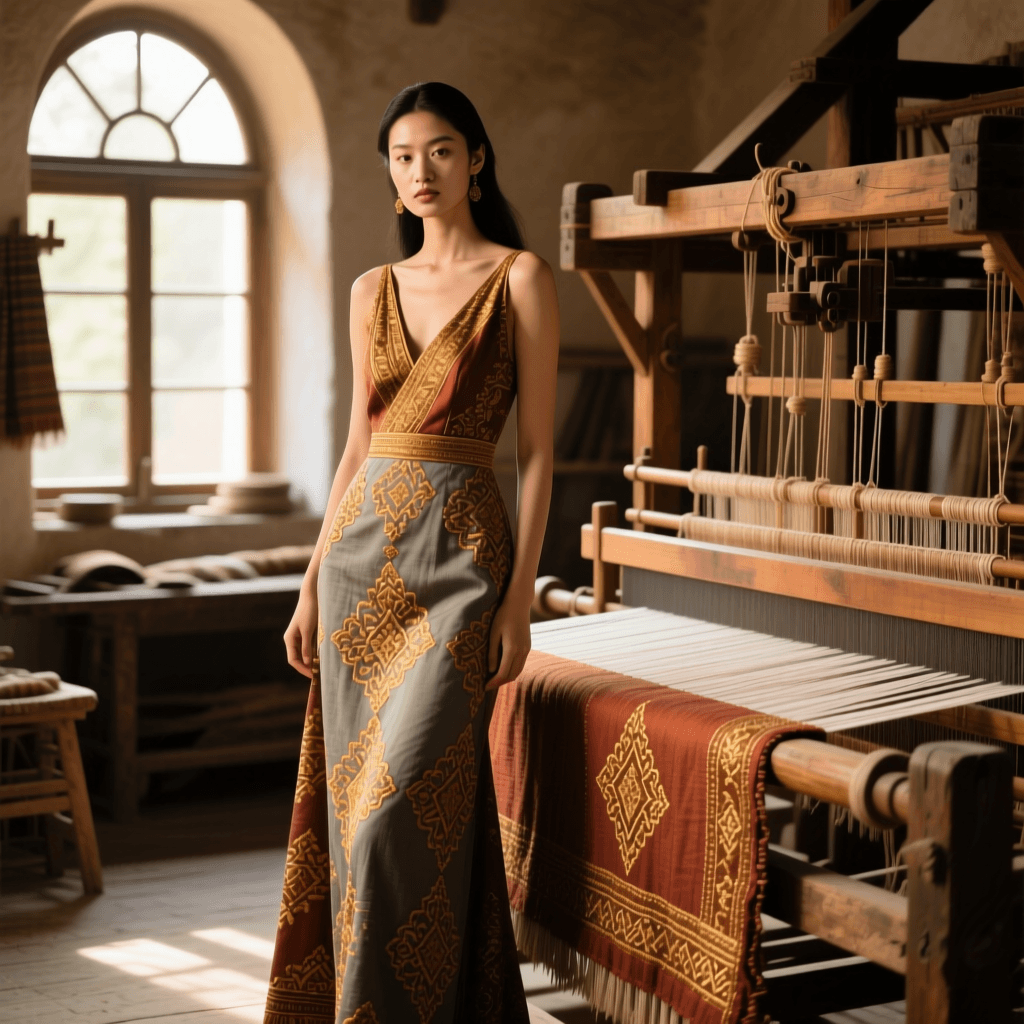
Historically, this was achieved using the drawloom, a massive and complex apparatus that required two people to operate: the weaver, who managed the shuttles and the foundation weave, and the 'drawboy,' who sat atop the loom and manually pulled the cords to lift specific warp threads according to the pattern. The physical toll and the sheer time required to produce even a few inches of brocade a day contributed to its astronomical value. For a deeper dive into the mechanics of textile creation, our guide on understanding fabric weaves offers further technical insights.
The advent of the Jacquard loom revolutionized brocade weaving. By utilizing a system of punched cards to control the lifting of the warp threads, the Jacquard mechanism automated the work of the drawboy, allowing for vastly more complex patterns and significantly faster production. While modern computerized Jacquard looms can now produce synthetic brocades at rapid speeds, traditional artisans still rely on handlooms and traditional drawlooms to create heritage brocades, preserving the subtle irregularities and soulful imperfections that define true handcrafted textiles.
The materials used in heritage brocade are equally significant. While silk is the most common foundation, the supplementary weft often incorporates metallic threads. In India, this is known as zari, traditionally made from fine strips of gold or silver wrapped around a silk core. In Europe, gilt threads were spun to catch the candlelight in grand ballrooms. The interplay of light on these metallic threads against the matte or glossy background of the silk foundation is what gives brocade its signature, breathtaking luminosity.
Regional Variations: A Global Tapestry of Brocade
While the fundamental technique of supplementary weft weaving is shared globally, different cultures have developed distinct styles, motifs, and traditions, resulting in a rich tapestry of regional brocade variations.
Asian Brocades: Threads of the East
In China, the city of Nanjing is world-renowned for Yunjin, or 'cloud brocade.' Recognized by UNESCO as an Intangible Cultural Heritage, Yunjin is characterized by its vibrant colors and the extensive use of gold and silver threads, often featuring motifs of dragons, phoenixes, and clouds. The weaving process is so complex that it is said to take two artisans a full day to produce just a few centimeters of authentic Yunjin.
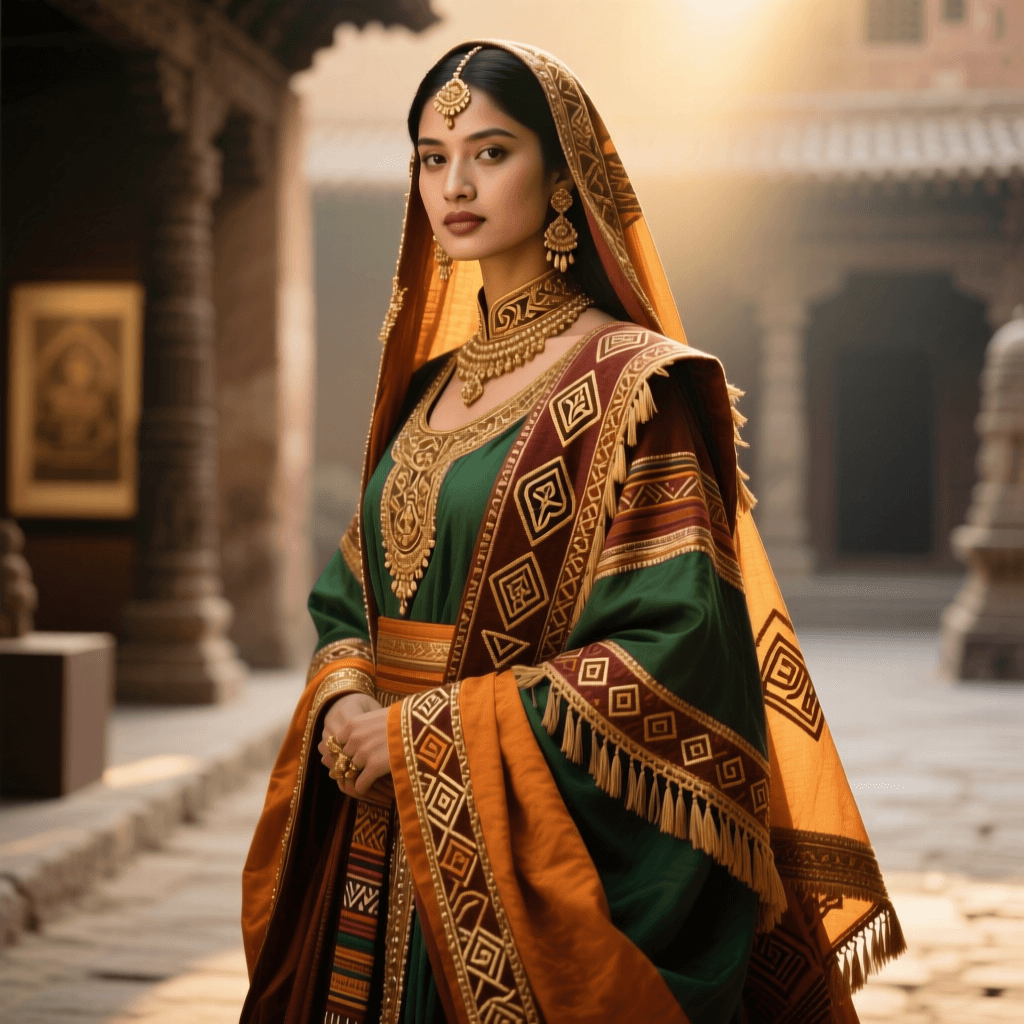
India's contribution to brocade heritage is perhaps most famously embodied in Banarasi silk heritage. Woven in the holy city of Varanasi, Banarasi brocades are a staple of Indian bridal trousseaus. Heavily influenced by Mughal artistry, these fabrics feature intricate kalga (paisley) and bel (vine) motifs, woven with brilliant zari work. The heavy, opulent drape of a Banarasi sari is a testament to centuries of unbroken weaving traditions passed down through generations of artisan families.
Japan boasts the exquisite Nishijin-ori of Kyoto. Originally developed to supply the imperial court and the samurai class, Nishijin brocade is celebrated for its understated elegance, meticulous dyeing of the threads before weaving, and motifs drawn from nature and seasonal changes. It remains highly prized for the creation of luxury kimonos and the wide, stiff obi sashes that secure them.
European Brocades: Renaissance Opulence
Europe's love affair with brocade was heavily influenced by the Byzantine Empire and the subsequent Islamic conquests, which brought advanced silk-weaving techniques to the Mediterranean. During the Renaissance, Italian city-states like Florence, Venice, and Lucca became the epicenters of European brocade production. Italian weavers mastered the 'pomegranate motif,' a stylized, symmetrical design that became the hallmark of Renaissance luxury and was highly sought after by nobility across the continent.
Later, the French city of Lyon emerged as the silk capital of Europe. Lyon's master weavers, known as canuts, pushed the boundaries of brocade design, creating incredibly lifelike floral patterns and elaborate scenic tapestries. The legacy of Lyon's silk industry continues to influence haute couture and high-end interior design today.
Mesoamerican Brocades: The Backstrap Loom Tradition
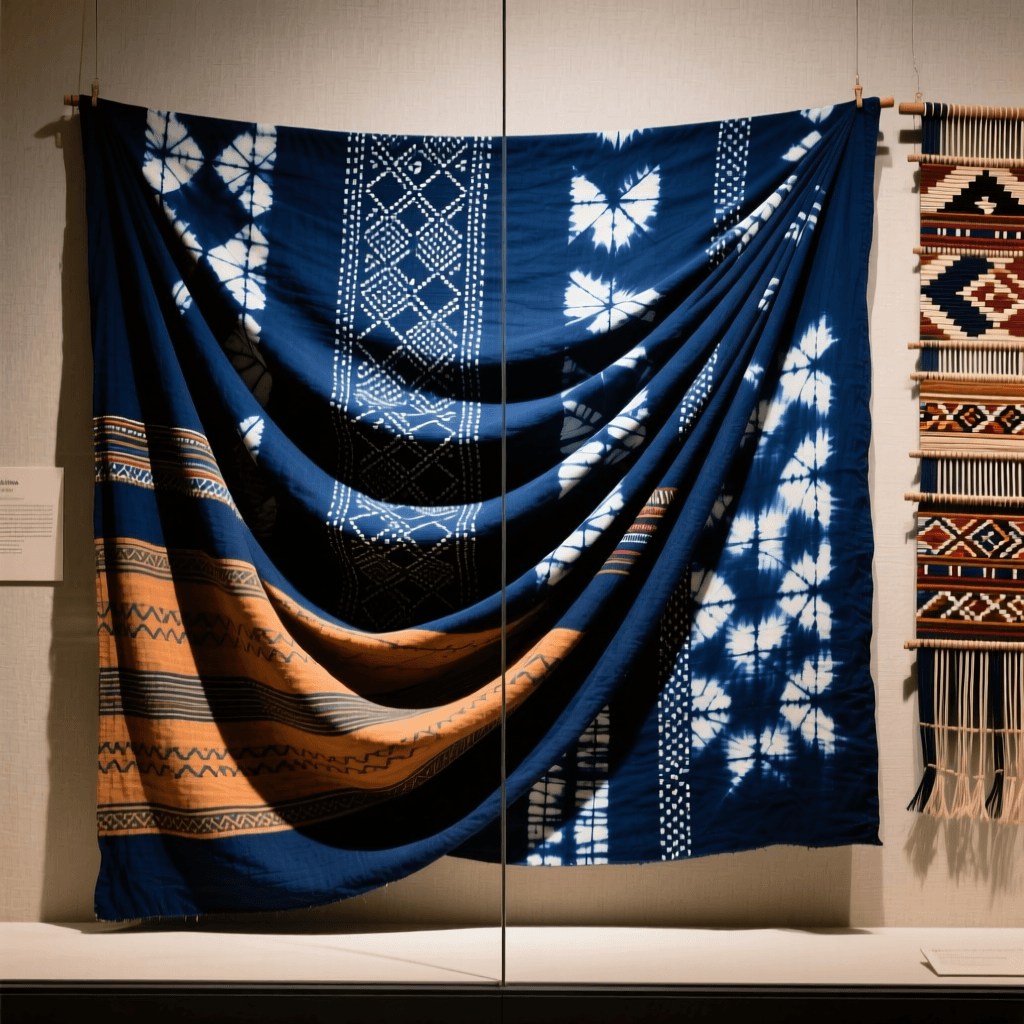
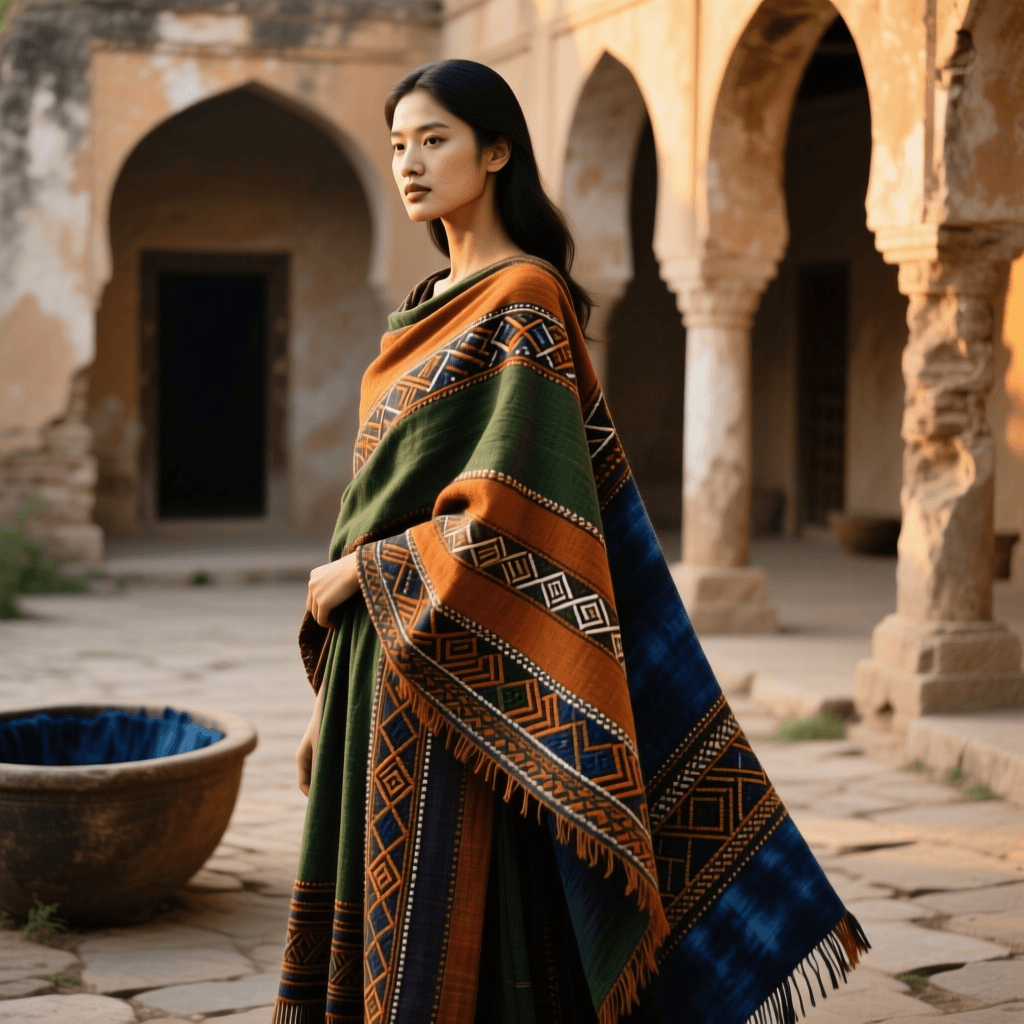
In the Americas, particularly among the Mayan communities of Guatemala, brocade takes on a vastly different form. Woven on the traditional backstrap loom, indigenous weavers use a technique where the supplementary weft is wrapped around the warp threads, creating a pattern that looks identical on both sides of the fabric. These brocades are deeply symbolic, featuring geometric representations of the cosmos, local flora and fauna, and ancestral deities. For the Maya, weaving is not merely a craft but a spiritual practice, and the brocaded huipiles (traditional blouses) serve as a visual language denoting the wearer's specific village and social status.
Preserving the Heritage of Brocade Weaving in the Modern Era
Despite its glorious history, the traditional craft of handwoven brocade faces significant threats in the modern era. The rise of fast fashion and the mass production of synthetic, machine-made imitations have flooded the market with cheap 'brocades' made from polyester and metallicized plastics. These imitations lack the breathability, drape, and longevity of true silk brocade, and their prevalence undermines the livelihoods of traditional artisans who dedicate their lives to mastering this demanding craft.
However, a robust movement dedicated to the preservation of textile heritage is fighting back. Geographical Indication (GI) tags have been instrumental in protecting regional brocades. For example, the GI status for Banarasi brocade ensures that only fabrics woven in the specific districts of Varanasi, using traditional methods and materials, can legally bear the name, protecting both the artisans and the consumers from counterfeit goods.
Artisan cooperatives and fair-trade organizations are also playing a crucial role. By connecting master weavers directly with global markets and high-end fashion houses, these organizations ensure that artisans receive fair compensation for their labor. Furthermore, the integration of traditional brocade into evening wear styling and contemporary haute couture has introduced the fabric to a new generation of consumers who value sustainability, slow fashion, and the unique story behind their garments.
Preservation also extends to the physical care of these garments. Heritage brocades are investment pieces that require meticulous maintenance. Understanding how to properly store, clean, and handle these textiles is vital for collectors and enthusiasts. Consulting a comprehensive silk fabric care guide is essential to ensure that the metallic threads do not tarnish and the silk fibers do not degrade over time, allowing these woven masterpieces to be passed down as heirlooms.
Frequently Asked Questions About Brocade Heritage
What is the fundamental difference between brocade and damask?
While both are jacquard-woven fabrics with intricate patterns, the primary difference lies in how the pattern is created and its visual effect. Damask relies on the contrast between warp-faced and weft-faced satin weaves to create a pattern that is reversible and generally flat, with a subtle, tone-on-tone elegance. Brocade, on the other hand, utilizes a supplementary weft thread that creates a raised, embossed, and often multi-colored or metallic pattern that is distinctly distinct from the background fabric. Brocade is generally heavier, more ornate, and not reversible.
How should vintage or heritage brocade garments be cared for?
Heritage brocade, especially those woven with silk and real metallic threads, requires specialized care. It should never be machine washed or submerged in water, as this can cause the silk to shrink and the metallic threads to tarnish or lose their luster. Dry cleaning by a specialist who understands historical textiles is recommended. When storing, brocade garments should be padded with acid-free tissue paper to prevent hard creases, which can permanently break the delicate fibers, and kept in a cool, dark, and dry environment to prevent moisture damage and fading.
Is authentic brocade always woven from silk?
Historically, the most luxurious and highly prized brocades were woven from silk, as its natural sheen and strength provided the perfect foundation for heavy metallic threads and complex patterns. However, authentic brocade can also be woven from other natural fibers such as cotton, wool, or linen. Cotton brocade, for instance, is popular in warmer climates and for upholstery, offering a more matte finish and a lighter weight while still maintaining the structural complexity of the supplementary weft technique.
Why does handwoven brocade command such a high price?
The high cost of handwoven brocade is a direct reflection of the time, skill, and materials required for its creation. Setting up a traditional drawloom for a complex brocade pattern can take weeks of meticulous preparation. The actual weaving process is incredibly slow, with an artisan producing only a few inches of fabric per day. When you factor in the cost of high-grade mulberry silk and precious metal-wrapped threads, alongside the generational expertise required to execute the weave without errors, the premium price becomes a necessary reflection of the artisan's labor and the fabric's intrinsic value.
How can consumers support traditional brocade weavers?
Consumers can support traditional weavers by prioritizing quality over quantity and seeking out transparent, ethical brands that work directly with artisan cooperatives. Look for certifications like Geographical Indication (GI) tags or fair-trade labels that guarantee the authenticity of the fabric and ensure fair wages for the weavers. Investing in heritage pieces, such as a handwoven Banarasi sari or a Yunjin silk scarf, and treating them as lifelong garments rather than fleeting trends, helps sustain the economic viability of these ancient crafting communities.