Best Breathable Hanfu Styles for Tai Chi and Qigong 2026
The Intersection of Hanfu and Mindful Movement in 2026
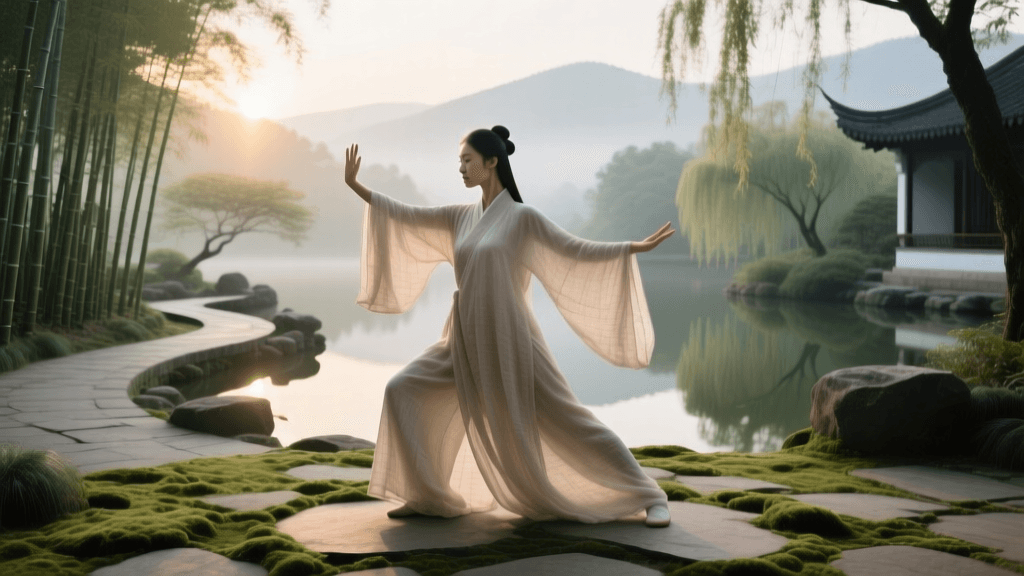
The Xin Zhongshi (new Chinese style) movement has evolved dramatically by 2026, moving beyond mere fashion statements to deeply integrate with holistic lifestyle practices. For the millions of global practitioners of Tai Chi and Qigong, the quest for the perfect practice garment has led them back to their cultural roots: Hanfu. Unlike modern synthetic activewear, which often traps heat and restricts the body's natural energy lines, traditional Chinese garments were historically designed with a profound understanding of human kinetics, fabric drape, and the philosophical flow of Qi (vital energy).
Practicing Tai Chi requires deep stances, sweeping arm extensions, and a relaxed, grounded center of gravity. The flat-cut tailoring and generous fabric allowances inherent in Hanfu naturally support these biomechanical demands. According to Harvard Health Publishing, Tai Chi is often described as 'meditation in motion,' offering immense benefits for balance, flexibility, and cardiovascular health. To fully embrace these benefits, practitioners in 2026 are curating specialized Hanfu wardrobes that prioritize breathability, structural drape, and historical authenticity, ensuring that their clothing enhances rather than hinders their wellness journey.
Top Fabric Choices for 2026 Wellness Practitioners
When selecting a Hanfu for Qigong or Tai Chi, the fabric is just as important as the silhouette. The year 2026 has seen a massive resurgence in heritage textile weaving techniques, combined with modern eco-friendly processing, resulting in fabrics that are ideal for active, mindful movement.
1. Ramie and Linen Blends (Xia Bu)
Known historically as 'summer cloth,' ramie is a bast fiber that has been used in China for millennia. In 2026, heritage-loom ramie blended with soft European linen has become the gold standard for summer Qigong practice in humid climates. Ramie is naturally antibacterial, highly breathable, and possesses a crisp drape that holds its shape beautifully during slow, deliberate Tai Chi forms. It wicks moisture away from the skin, keeping the practitioner cool during intensive outdoor park sessions.
2. Mulberry Silk Crepe
While heavy brocades are unsuitable for movement, lightweight mulberry silk crepe offers unparalleled temperature regulation. As noted by The Metropolitan Museum of Art, silk has been a cornerstone of Chinese textile history for thousands of years, prized for its unique luster and adaptability. Modern 2026 silk crepe weaves provide a subtle matte finish and a slight mechanical stretch, allowing for deep lunges without the risk of tearing. Silk's natural protein structure also helps soothe the skin, aligning with the holistic wellness ethos of Qigong.
3. Bamboo-Cotton Intersections
For beginners or those practicing high-repetition martial Qigong, bamboo-cotton blends offer a sustainable, highly elastic alternative. Bamboo viscose processed through closed-loop 2026 eco-manufacturing yields a fabric that is buttery soft, heavily absorbent, and drapes fluidly over the body, mimicking the flow of water—a central metaphor in Tai Chi philosophy.
Recommended Hanfu Silhouettes for Tai Chi and Qigong
Not all Hanfu styles are created equal when it comes to physical exertion. Courtly, heavily layered garments are best left for ceremonies. For the wellness practitioner, the following historical silhouettes offer the perfect balance of elegance and kinetic freedom.
| Garment Style | Historical Era | Best Season | Mobility Rating | Recommended Fabric |
|---|---|---|---|---|
| Beizi (Open Jacket) | Song Dynasty | Spring/Autumn | Excellent | Linen-Ramie Blend |
| Banbi (Half-Sleeve) | Tang Dynasty | Summer | Superior | Lightweight Mulberry Silk |
| Zhiduo (Straight Robe) | Ming Dynasty | Winter | Good | Wool-Blend Crepe |
| Ruqun (Top & Skirt) | Tang/Song | Year-Round | Moderate | Bamboo-Cotton |
The Song Dynasty Beizi
The Beizi is an open-front jacket that became wildly popular during the Song Dynasty. For Tai Chi practitioners, the Beizi is arguably the most functional outer layer. Because it is left unfastened at the front, it allows for unrestricted chest expansion during deep diaphragmatic breathing (Tu Na). The side slits typically extend to the hip or waist, ensuring that the fabric does not bunch up when the practitioner drops into a low Ma Bu (horse stance).
The Ming Dynasty Zhiduo
For cooler weather or outdoor winter Qigong, the Zhiduo offers excellent coverage. Characterized by its wide sleeves and structured collar, the Zhiduo features strategic underarm gussets and deep side vents. This specific tailoring was historically used by scholars and martial artists alike, providing a dignified silhouette that moves flawlessly with the body's rotation and weight-shifting mechanics.
Sizing and Fit: The Principle of 'Song' (Looseness)
In Tai Chi, the concept of 'Song' translates to active relaxation or purposeful looseness. Your Hanfu must reflect this principle. When ordering or tailoring a garment for wellness practice in 2026, standard fashion measurements are insufficient. You must account for the extreme ranges of motion required in traditional forms.
- The Ma Bu Test: When measuring the hem width of a robe or the inseam of traditional Ku (trousers), ensure you can drop into a full horse stance without feeling tension across the thighs or the crotch gusset.
- Sleeve Length: While ceremonial Hanfu sleeves often extend past the fingertips, Tai Chi sleeves should ideally end at the wrist bone or the base of the thumb. This prevents the fabric from obscuring hand forms (Shou Xing) or catching on the practitioner's body during rapid movements like 'Part the Wild Horse's Mane.'
- Shoulder Drop: Hanfu utilizes a flat, dropped-shoulder construction rather than the set-in sleeves of Western clothing. Ensure the shoulder seam drops at least two inches past your natural shoulder line to allow for overhead arm extensions without the collar riding up and choking the neck.
Color Theory and the Five Elements (Wu Xing)
A fascinating trend in the 2026 wellness community is the alignment of Hanfu colors with the Traditional Chinese Medicine (TCM) concept of the Five Elements (Wu Xing). Practitioners are intentionally selecting garment colors based on the specific health benefits they seek from their Qigong routine:
- Water (Black/Deep Blue): Associated with the kidneys and vital essence (Jing). Worn during grounding, meditative winter practices to conserve energy.
- Wood (Green/Teal): Associated with the liver and the smooth flow of Qi. Ideal for springtime Tai Chi to encourage flexibility and detoxification.
- Fire (Red/Crimson): Associated with the heart and circulation. Often utilized in dynamic, Yang-style forms to boost cardiovascular engagement.
- Earth (Yellow/Ochre): Associated with the spleen and digestion. Worn during transitional seasons to promote stability and centeredness.
- Metal (White/Silver): Associated with the lungs and breath. The most popular choice for morning Qigong, emphasizing respiratory health and mental clarity.
Footwear Pairings: Traditional Cloth Shoes
A Hanfu ensemble is incomplete without the proper footwear. Modern running shoes, with their thick, elevated heels and aggressive arch support, completely disrupt the biomechanics of Tai Chi, which requires the practitioner to feel the earth and grip the ground with their toes. In 2026, the market for traditional Kung Fu and Tai Chi shoes has seen incredible innovation. Artisans are now crafting shoes with organic cotton canvas uppers and ultra-thin, vulcanized natural rubber soles. These soles provide the necessary tactile feedback for balance work while offering modern anti-slip properties for practicing on dewy park grass or smooth studio hardwood. The traditional 'thousand-layer' stitched cotton sole is still available for indoor, climate-controlled studio practice, offering unparalleled breathability for the feet.
Care and Maintenance for Activewear Hanfu
Wellness garments require specific care to maintain their structural integrity and skin-soothing properties. After a rigorous Qigong session, natural fibers like ramie and silk will have absorbed perspiration and environmental salts.
- Immediate Airing: Never leave a damp silk or linen Hanfu balled up in a gym bag. Hang it immediately in a well-ventilated, shaded area to prevent mildew and fiber degradation.
- Washing Ramie and Linen: Hand wash in cool water with a pH-neutral, enzyme-free detergent. Ramie softens beautifully over time, but harsh chemicals will break down the bast fibers. Never wring the fabric; instead, press the water out between two clean towels.
- Silk Maintenance: Mulberry silk should be washed sparingly. Utilize a specialized silk wash and avoid direct sunlight when drying, as UV rays will yellow and weaken the protein fibers. Store your silk practice garments flat or rolled to prevent permanent creasing along the fold lines.
Conclusion: Embracing the 2026 Wellness Wardrobe
The fusion of Hanfu and mindful movement represents a profound return to the holistic roots of Asian traditions. By thoughtfully selecting breathable, historically informed garments tailored for the specific biomechanics of Tai Chi and Qigong, practitioners in 2026 are elevating their wellness routines from mere physical exercise to a fully immersive cultural and spiritual experience. Whether you are flowing through a Tai Chi form in a crisp linen Song Dynasty Beizi or grounding your Qi in a bamboo-cotton Ruqun, the right traditional garment becomes an extension of your body, allowing your energy to move as freely as the fabric itself.