Top Hanfu Silhouettes for Tai Chi & Qigong in 2026
The Intersection of Xin Zhongshi and Wellness
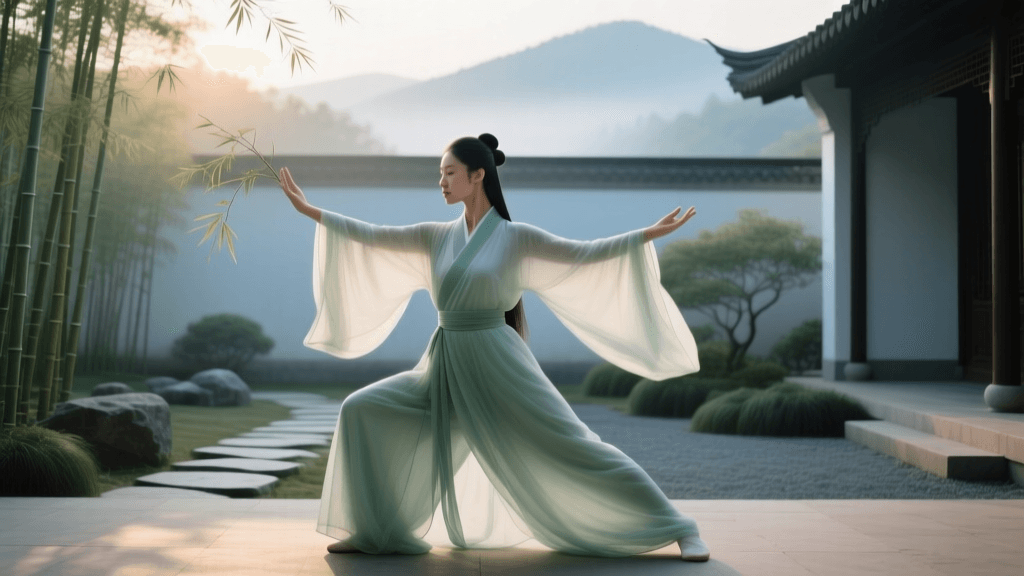
By 2026, the Xin Zhongshi (新中式) movement has matured far beyond mere aesthetic revival, deeply integrating with holistic lifestyle practices. Among the most prominent intersections of traditional Chinese garments and modern wellness is the use of Hanfu for Tai Chi and Qigong. As practitioners seek deeper cultural immersion during their routines, the demand for historically rooted yet biomechanically functional clothing has surged. According to the UNESCO Intangible Cultural Heritage registry, Taijiquan is recognized globally not just as a martial art, but as a vital practice for physical and mental well-being. Dressing in traditional attire enhances the meditative aspect of these practices, grounding the practitioner in centuries of philosophical heritage while they cultivate their Qi (vital energy).
Why Standard Fashion Hanfu Restricts Qi Flow
While the streets of major Asian metropolises are filled with stunning Mamianqun (horse-face skirts) and Daxiushan (large-sleeved robes), these fashion-forward silhouettes are entirely unsuitable for wellness practices. Standard Hanfu often features heavy pleating, rigid brocades, and expansive sleeves that catch the wind and obscure the practitioner's hand forms. In Tai Chi, visual feedback of your own wrist and finger alignments during movements like 'Cloud Hands' is crucial. Furthermore, deep stances such as Ma Bu (horse stance) require unrestricted hip and knee mobility. Heavy, floor-sweeping skirts pose a tripping hazard and restrict the necessary grounding connection to the earth. Therefore, selecting the correct functional silhouette is paramount for safe and effective practice.
Top Functional Hanfu Silhouettes for 2026
Duanda (短打) for Dynamic Tai Chi
Historically worn by martial artists, laborers, and travelers, the Duanda consists of a short, fitted jacket paired with tapered or wide-leg trousers. In 2026, contemporary Xin Zhongshi wellness brands have reimagined the Duanda using ergonomic 3D tailoring. The jacket typically features a crossed collar (Jiaoling Youren) but is cut shorter at the hip to prevent bunching during deep lunges. The trousers are designed with a reinforced gusset, allowing for high kicks and deep sweeps without seam tension. This silhouette provides maximum proprioceptive awareness, ensuring your limbs move freely without fabric drag.
Modified Yuanlingpao (圆领袍) for Flowing Qigong
For slower, more meditative Qigong routines like Ba Duan Jin (Eight Brocades), the Yuanlingpao (round-collar robe) offers a beautiful, flowing drape that accentuates the body's circular movements. To make it functional for wellness, 2026 designs incorporate hidden inner ties at the wrists. This allows practitioners to secure the wide sleeves when necessary, or let them drape elegantly during gentle, sweeping arm extensions. The round collar also prevents the choking sensation that tightly wrapped crossed collars can cause during deep diaphragmatic breathing exercises.
Songku (宋裤) for Grounding Stances
The Songku, characterized by its multi-layered, wide-leg trouser design, has become a staple in the wellness Hanfu market. Modern iterations feature a split-side seam at the ankle and a high, elasticized waistband hidden beneath a traditional fabric tie. This allows the fabric to billow gracefully during transitions while keeping the lower legs cool and unrestricted. The wide cut mimics the traditional aesthetic of a skirt but provides the safety and mobility of trousers, making it ideal for static stance training (Zhan Zhuang).
2026 Fabric Innovations: Blending Heritage and Performance
The textile landscape for traditional garments has seen remarkable advancements in 2026, focusing on moisture management and thermal regulation. The National Center for Complementary and Integrative Health (NCCIH) notes that practices like Qigong can induce deep states of relaxation and subtle thermogenic shifts in the body. Managing sweat and body heat is essential to prevent the 'dampness' that traditional Chinese medicine warns against.
- Bamboo-Ramie Blends: Ramie has been used in China for millennia due to its breathability. Modern 2026 weaving techniques blend ramie with bamboo viscose, resulting in a fabric that retains the crisp, structured drape of traditional linen but offers the soft, moisture-wicking properties of modern athletic wear.
- Lightweight Xiangyunsha (Scented Cloud Silk): Traditionally a heavy, expensive silk dyed with river mud and yam juice, new ultra-lightweight weaves of Xiangyunsha have hit the market. It is naturally antibacterial, repels insects, and feels cool against the skin, making it the ultimate luxury fabric for summer morning Tai Chi in humid climates.
- Washed Cotton-Linen (Shuixi Mianma): For daily, rigorous practice, pre-washed cotton-linen blends offer durability, ease of care, and a soft, muted aesthetic that aligns perfectly with the understated elegance of the Xin Zhongshi philosophy.
Comparative Guide: Silhouette, Practice, and Fabric
| Silhouette | Best Practice Type | Recommended 2026 Fabric | Mobility Rating |
|---|---|---|---|
| Duanda (Short Jacket & Trousers) | Dynamic Tai Chi, Martial Qigong | Bamboo-Ramie Blend | High (Unrestricted) |
| Modified Yuanlingpao (Round Robe) | Slow Qigong, Meditation, Ba Duan Jin | Lightweight Xiangyunsha Silk | Medium (Flowing Drape) |
| Songku (Wide-Leg Trousers) | Zhan Zhuang (Standing Post), Grounding | Washed Cotton-Linen | High (Lower Body Focus) |
Footwear: Modernizing the Traditional Bu Xie
No wellness outfit is complete without proper footwear. The traditional Bu Xie (cloth shoe) features a soft cotton upper and a flat, multi-layered cloth sole. While historically accurate, flat soles lack the arch support required for modern practitioners who spend hours on hard surfaces like concrete or polished wood. In 2026, leading heritage footwear brands have introduced the 'Ergonomic Bu Xie'. These shoes maintain the classic black cotton upper and traditional white stitching but incorporate a hidden, contoured cork and memory foam insole. The outsole is crafted from a flexible, non-marking natural rubber that provides essential grip during weight-shifting movements like 'Parting the Wild Horse's Mane', preventing slips while maintaining the vital sensory connection to the ground that thick running shoes destroy. Research highlighted by Harvard Health Publishing emphasizes the importance of proper balance and foot stability in Tai Chi to maximize its fall-prevention and cardiovascular benefits, making supportive yet minimalist footwear a non-negotiable asset.
Care and Maintenance for Wellness Hanfu
Because wellness Hanfu is subjected to sweat, stretching, and frequent washing, proper maintenance is crucial to preserve both the garment and its functional properties.
- Washing: Always hand-wash Xiangyunsha silk in cool water with a pH-neutral detergent. Bamboo-ramie blends can typically withstand a gentle machine cycle in a mesh laundry bag, but avoid harsh spin cycles that can warp the natural fibers.
- Drying: Never dry traditional fabrics in direct sunlight, as UV rays will rapidly degrade natural dyes and weaken ramie fibers. Air dry in a shaded, well-ventilated area.
- Storage: Store your practice garments flat or rolled. Hanging heavy, wet cotton-linen garments can cause the shoulders to stretch out of their ergonomic 3D tailoring shape over time.
Conclusion
The integration of Hanfu into Tai Chi and Qigong is more than a sartorial choice; it is a profound embodiment of cultural continuity. By selecting functional silhouettes like the Duanda and Songku, and leveraging 2026's advanced natural textile blends, practitioners can honor the aesthetic beauty of the Xin Zhongshi movement without compromising the biomechanical integrity of their wellness routines. Whether you are flowing through a Qigong sequence at dawn or holding a deep Tai Chi stance in the park, the right traditional garment will act as a seamless extension of your body, allowing your Qi to circulate freely and your mind to remain perfectly anchored in the present moment.