Borshchiv Black Vyshyvanka Embroidery Guide 2026: Revival & Sourcing
The Enigma of the Borshchiv Black Vyshyvanka
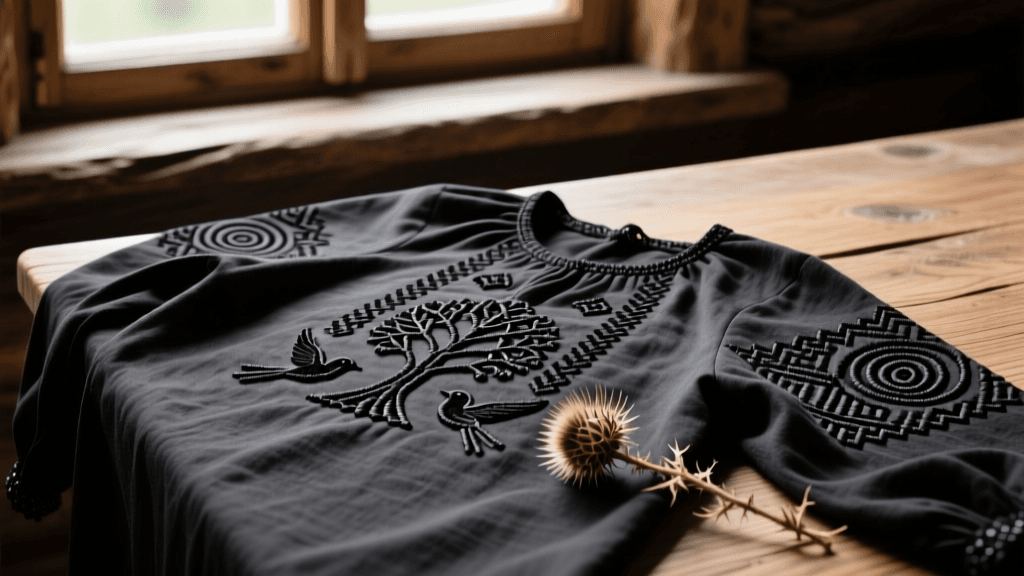
When discussing the rich tapestry of Eastern European folk dress, few garments command as much reverence and intrigue as the Borshchiv black vyshyvanka. Originating from the Borshchiv Raion in the Ternopil Oblast of Ukraine, this traditional peasant blouse (sorochka) is globally renowned for its striking, somber aesthetic: intricate black wool embroidery on pristine white linen. As we navigate the cultural landscape of 2026, the Borshchiv black vyshyvanka has transcended its regional roots to become a global symbol of resilience, elegance, and profound historical memory. For collectors, textile enthusiasts, and cultural historians, understanding the nuances of this garment is essential.
Unlike the vibrant, multi-colored geometric and floral patterns found in other Ukrainian regions, the Borshchiv style relies entirely on the interplay of texture, shadow, and negative space. In 2026, the revival of this specific embroidery tradition has reached new heights, driven by a renewed global interest in slow fashion, heritage textiles, and the preservation of Eastern European folk dress. This comprehensive guide will explore the history, technical construction, and modern sourcing of the Borshchiv black vyshyvanka.
Historical Context: Mourning, Myth, and Mastery
The origins of the black-on-black embroidery are steeped in both historical tragedy and local legend. According to regional folklore, the tradition began in the 17th century following a devastating Tatar and Turkish invasion. The men of the Borshchiv region were either killed or taken into captivity, leaving the women in deep mourning. To honor their lost husbands, fathers, and sons, the women dyed their embroidery threads black using natural alder bark and oak galls, stitching their grief into the very fabric of their daily garments.
While the mourning legend is the most widely cited origin, textile historians offer a more pragmatic perspective. According to the archives at the National Museum of Ukrainian Folk Decorative Art, black wool was highly valued for its durability and the striking visual contrast it provided against hand-woven hemp and linen. Furthermore, black was historically associated with the earth, fertility, and protection against evil spirits in ancient Slavic pagan traditions, long before it became exclusively associated with mourning in Western Europe.
By the late 19th and early 20th centuries, the Borshchiv vyshyvanka had evolved into a marker of regional pride. The density of the black stitching on the cuffs, collar, and chest insertions (ustavka) became a direct indicator of a family's wealth and the wearer's skill. Today, cultural preservation initiatives highlighted by the Ukrainian Institute emphasize how these historical garments serve as vital links to pre-industrial Slavic life, with modern 2026 exhibitions showcasing the sheer mathematical precision required to execute these dense patterns.
Technical Breakdown: Stitches of the Ternopil Region
The visual weight of the Borshchiv vyshyvanka is achieved through a combination of highly specific, dense stitching techniques. Master artisans in 2026 continue to use traditional hand-spun black wool, which possesses a matte texture that absorbs light differently than modern mercerized cotton or synthetic threads.
Nizynka (The Low Stitch)
The nizynka is a foundational stitch in the Borshchiv repertoire. It is executed on the reverse side of the fabric, with the artisan counting threads to ensure perfect symmetry. The result on the front is a dense, solid block of color that resembles woven fabric rather than surface embroidery. This stitch is primarily used for the heavy geometric bands on the sleeves and the lower hem of the blouse.
Zavolikannya (The Gathering Stitch)
Often translated as a 'gathering' or 'darning' stitch, zavolikannya creates a ribbed, textured effect. By passing the black wool thread over and under varying numbers of warp and weft threads, the artisan creates intricate, stepped geometric motifs—often resembling stylized ferns, hops, or ancient solar symbols. The density of the zavolikannya in authentic Borshchiv pieces is staggering; a single square inch can contain hundreds of individual thread passes.
Krestyk (Cross-Stitch)
While cross-stitch is ubiquitous across Eastern Europe, the Borshchiv variation is notably smaller and tighter. In 2026, authentic revivalists insist on using 18-count or 22-count hand-woven linen, requiring a magnifying glass and exceptional eyesight to execute the micro-cross-stitches that form the delicate transitional borders between the heavy nizynka bands.
Regional Comparison: Borshchiv vs. Other Ukrainian Styles
To truly appreciate the Borshchiv black vyshyvanka, it is helpful to compare it with other prominent regional styles of Eastern European folk dress. The table below outlines the primary distinctions in materials, colors, and motifs.
| Regional Style | Primary Thread Color | Base Fabric | Dominant Stitch Technique | Primary Motifs |
|---|---|---|---|---|
| Borshchiv (Ternopil) | Black (Wool) | White Linen/Hemp | Nizynka, Zavolikannya | Dense geometric bands, stylized ferns |
| Hutsul (Carpathians) | Polychrome (Orange, Green, Black) | White Linen | Cross-stitch, Satin stitch | Stars, rhombuses, tree of life |
| Poltava (Central) | White-on-White, Soft Grey | White Linen | Cut-work, Satin stitch, Hemstitching | Floral vines, delicate geometric borders |
| Bukovyna (Southwest) | Black, Red, Gold/Orange | White Linen | Cross-stitch, Seed stitch | Large floral rosettes, horn-like motifs |
The 2026 Sourcing Guide: Where to Buy Authentic Pieces
Sourcing an authentic, hand-embroidered Borshchiv vyshyvanka in 2026 requires navigating a market that has thankfully moved away from the mass-produced, machine-embroidered imitations that flooded the internet in the early 2020s. Today, buyers prioritize provenance, artisan cooperatives, and sustainable material sourcing.
Pricing and Provenance in 2026
Due to the immense labor required—often taking a master embroiderer between 80 to 150 hours to complete a single blouse—authentic handmade pieces command premium prices. As of 2026, you can expect the following market rates for genuine Borshchiv garments:
- Vintage/Antique (Early to Mid-20th Century): $400 to $1,200 USD. These are highly sought after by collectors and museums. Condition varies, and the linen often shows natural aging.
- Modern Artisan Handmade (Custom Commission): $250 to $600 USD. Commissioned directly from cooperatives in the Ternopil region or verified diaspora artisans. These pieces use historically accurate black wool and hand-woven linen.
- Semi-Artisan/Small Batch (Machine-Assisted Borders): $80 to $150 USD. While not strictly traditional, some modern ethical brands use machine embroidery for the heavy borders and hand-stitch the delicate cuffs, offering an accessible entry point for casual wearers.
When purchasing, always look for digital provenance tags. In 2026, many reputable Ukrainian artisan cooperatives have integrated NFC or QR-coded tags into the garment's side seam, linking the buyer to a digital certificate that names the specific artisan, the village of origin, and the exact hours spent on the embroidery.
Identifying Authentic Black Thread
The most critical factor in authenticating a Borshchiv piece is the thread. Traditional black thread is spun from sheep's wool and dyed with natural tannins. It has a slightly fuzzy, matte appearance. If the black thread is highly reflective, perfectly uniform, and smooth, it is likely mercerized cotton or polyester, which alters the historical accuracy and drape of the garment. Authentic wool thread will also feel slightly warm to the touch and will have a faint, natural lanolin scent when the garment is first unwrapped.
Care and Maintenance for Black Wool Embroidery
Caring for a Borshchiv vyshyvanka requires specific attention, primarily because washing black wool and white linen together carries the inherent risk of color bleeding. Even with modern color-fast dyes, natural black wool can release tannins when exposed to heat or harsh detergents.
- Washing: Never machine wash an authentic piece. Hand wash in cool water (below 20°C or 68°F) using a pH-neutral wool wash. Do not soak the garment for more than five minutes.
- Drying: Never wring or twist the linen, as this will distort the dense nizynka stitches and cause the linen warp threads to shift. Roll the blouse in a clean, dry white towel to absorb excess moisture, then lay it flat on a mesh drying rack out of direct sunlight.
- Ironing: Iron the garment while it is still slightly damp. Always iron on the reverse side, placing a clean white cotton pressing cloth between the iron and the embroidery. This prevents the iron from crushing the textured wool stitches and protects the white linen from any potential heat-induced dye transfer.
- Storage: Store the vyshyvanka flat in a breathable cotton bag. Avoid wire hangers, which can stretch the heavy embroidered sleeves and cause the shoulder seams to pucker over time.
Conclusion
The Borshchiv black-on-black vyshyvanka is far more than a regional variation of Eastern European folk dress; it is a masterclass in textile engineering, a historical document woven in wool, and a profound expression of cultural endurance. As the global appreciation for heritage garments continues to mature in 2026, the demand for these striking, somber blouses ensures that the artisans of the Ternopil region will continue to pass down their intricate counting stitches to the next generation. Whether you are a dedicated collector of Slavic antiquities or a modern enthusiast seeking to incorporate meaningful, slow-fashion heritage pieces into your wardrobe, understanding the history, technique, and proper sourcing of the Borshchiv vyshyvanka is the first step in honoring this remarkable tradition.