Japanese Boro and Sashiko in 2026 Global Fashion Collabs
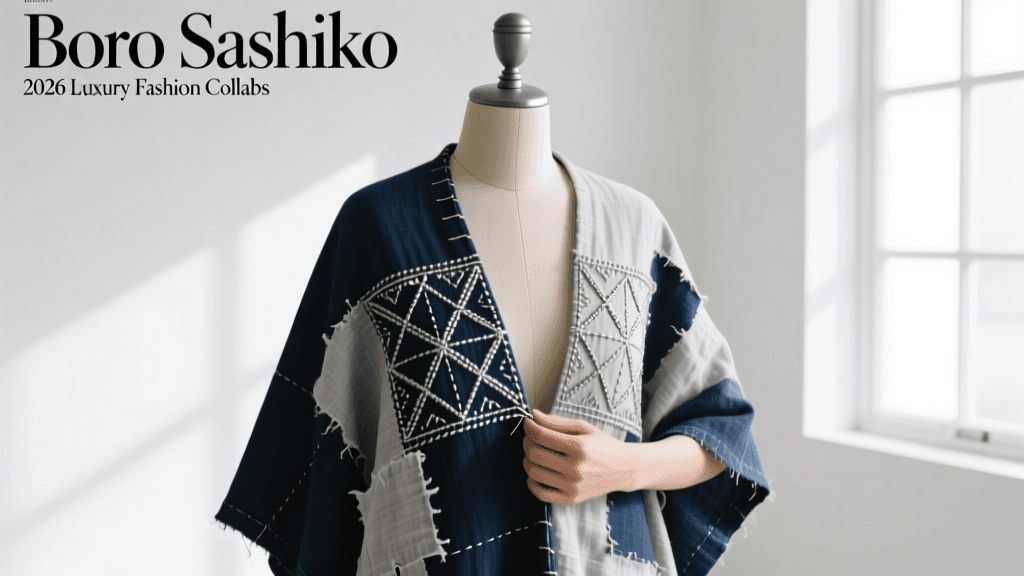
The Renaissance of Mending: Boro and Sashiko in 2026
In the ever-evolving landscape of global fashion, the year 2026 has cemented a profound shift toward heritage, authenticity, and sustainable luxury. At the forefront of this movement is the integration of traditional Japanese mending techniques—specifically Boro and Sashiko—into high-profile international design collaborations. Once born out of rural necessity in the Edo and Meiji periods, these intricate textile practices have transcended their utilitarian origins to become some of the most coveted elements in modern luxury streetwear and avant-garde haute couture.
As international fashion houses face increasing pressure to adopt circular design principles, the collaboration between Western luxury conglomerates and multi-generational Japanese artisans has never been more vital. According to the Ellen MacArthur Foundation's Circular Fashion initiative, the luxury sector's pivot toward 'regenerative aesthetics' has made hand-mended, upcycled textiles a primary focal point for the Spring/Summer and Autumn/Winter 2026 collections. By merging the architectural silhouettes of European tailoring with the deeply philosophical textile arts of Japan, designers are creating hybrid garments that command premium prices and tell a compelling story of global craftsmanship.
The Philosophy of Imperfection in Modern Luxury
To understand the dominance of Boro and Sashiko in 2026's international collaborations, one must first understand the Japanese aesthetic of wabi-sabi—the acceptance and appreciation of transience and imperfection. In an era dominated by AI-generated designs and hyper-symmetrical mass production, luxury consumers are actively seeking the 'human touch.' The slight irregularities in a hand-stitched Sashiko pattern or the faded, overlapping patches of a Boro jacket serve as a certificate of authenticity that machines simply cannot replicate.
Historically, Boro (meaning 'rags' or 'tattered cloth') was utilized by the peasant classes in northern Japan, particularly in Aomori prefecture, where cotton was scarce and hemp was the primary textile. Garments were patched, repatched, and passed down through generations. Today, as documented by the Metropolitan Museum of Art's Asian Art department, these historical textiles are treated as masterpieces of folk art. In 2026, luxury brands are not merely mimicking this look; they are directly employing master artisans to apply these historical mending techniques to modern, high-end base fabrics like Japanese selvedge denim, cashmere blends, and technical nylons.
Anatomy of a 2026 Luxury Collaboration
The modern application of these techniques differs significantly from their historical counterparts, primarily in the materials used and the intended lifespan of the garment. Below is a comparison of how traditional rural practices have been adapted for the 2026 luxury market.
| Feature | Traditional Rural Boro (19th Century) | 2026 Luxury Collaboration |
|---|---|---|
| Base Fabric | Hand-woven hemp, ramie, or recycled cotton scraps | Heavyweight selvedge denim, technical Gore-Tex, virgin cashmere |
| Thread | Hand-spun cotton, naturally dyed with indigo | Mercerized cotton, metallic blends, or naturally fermented indigo |
| Stitching Purpose | Structural reinforcement, thermal insulation, extreme frugality | Aesthetic embellishment, tactile contrast, storytelling, exclusivity |
| Production Time | Decades of continuous mending and patching | 40 to 120 hours of dedicated artisanal hand-stitching per garment |
| Market Price Point | Priceless family heirlooms (Historical) | $2,500 to $18,000+ USD for limited-edition 2026 releases |
Key Techniques Redefining Modern Silhouettes
Hitomezashi Sashiko: The Geometric Grid
Hitomezashi, or 'single-stitch' Sashiko, relies on a simple running stitch executed in a grid pattern. In 2026 international collaborations, this technique is frequently used to add structural rigidity to otherwise fluid garments. European fashion houses have adopted Hitomezashi to create structured, quilted linings for oversized bomber jackets and wide-leg trousers. The geometric precision of the stitch provides a striking visual contrast when executed in stark white thread against deep, naturally dyed indigo fabrics.
Moyozashi Sashiko: Curvilinear Storytelling
Unlike the rigid grids of Hitomezashi, Moyozashi allows for free-form, curved patterns that often depict natural motifs like waves, pine needles, or chrysanthemums. In recent cross-cultural collaborations, we have seen Moyozashi used to trace the topographical maps of the brand's home cities onto the back panels of denim jackets. This technique requires an exceptionally high level of dexterity and is often reserved for the brand's 'capsule' or 'grail' tier releases.
Kaketsugi: The Art of Invisible and Visible Patching
While traditional Boro celebrates the visible patch, modern luxury collaborations often blend Boro with Kaketsugi (invisible mending) to create a hybrid aesthetic. Artisans will seamlessly weave the frayed edges of a patch into the base fabric, leaving only the decorative Sashiko stitching visible on the surface. This technique is heavily featured in 2026's luxury knitwear collaborations, where cashmere sweaters are intentionally distressed and then 'healed' with contrasting silk-thread Sashiko, creating a garment that looks both ancient and futuristic.
A Buyer’s Guide: Investing in 2026 Artisanal Collaborations
As the demand for authentic Japanese craft has surged, so too has the market for factory-made imitations. For collectors and enthusiasts looking to invest in genuine 2026 collaborative pieces, distinguishing between hand-crafted heritage and mass-produced approximations is essential. The Japanese Government's Agency for Cultural Affairs has been instrumental in promoting and protecting these traditional crafts, but the onus of authentication still falls on the educated consumer.
- Examine the Reverse Side: True Sashiko is a running stitch that should look nearly as neat on the inside of the garment as it does on the outside. If the back features a chaotic web of loose threads or a machine-embroidered backing, it is not authentic hand-stitched Sashiko.
- Look for Stitch Irregularity: Human hands are not machines. Authentic pieces will feature microscopic variations in stitch length and tension, particularly at the curves and corners of a pattern. Perfect uniformity is a hallmark of computerized embroidery.
- Verify the Indigo: Many 2026 luxury collaborations pride themselves on using natural, fermented indigo (sukumo) from Tokushima. Natural indigo has a distinct, earthy scent and will fade with a complex, multi-tonal patina over time, whereas synthetic indigo fades flat and uniformly.
- Check the Provenance: Genuine collaborations will explicitly name the artisan studio or the specific prefecture (e.g., Aomori, Okayama, Tokushima) where the stitching was completed. Vague descriptions like 'Asian-inspired embroidery' are immediate red flags.
Care and Preservation of Luxury Boro Garments
Investing in a luxury Boro or Sashiko garment requires a commitment to specialized care. The very nature of these textiles—layered, patched, and heavily stitched—makes them susceptible to tension damage if laundered incorrectly. In 2026, the standard recommendation from heritage textile conservators is to avoid machine washing entirely.
Instead, luxury Boro denim and cotton pieces should be spot-cleaned or submerged in cold water with a pH-neutral, enzyme-free detergent. Agitation should be minimal; gently press the water through the fibers rather than wringing or twisting the garment, which can snap the delicate cotton threads. Drying must be done flat, away from direct sunlight, to prevent the natural indigo from oxidizing too rapidly or the base fabric from shrinking unevenly against the patches.
For storage, avoid wire hangers, which can distort the heavy, layered shoulders of a Boro jacket. Use padded, wide-shouldered wooden hangers and store the garments in breathable cotton garment bags. Incorporating natural cedar blocks will help repel moths and absorb excess ambient moisture, ensuring the garment remains a wearable heirloom for decades to come.
The Future of Heritage in Global Design
The integration of Japanese Boro and Sashiko into 2026's global fashion collaborations represents more than just a passing trend; it is a fundamental realignment of luxury values. As the fashion industry continues to grapple with its environmental impact, the philosophy of mending, repairing, and elevating existing materials offers a viable, beautiful path forward. By honoring the ancestral techniques of Japanese artisans, international design houses are not only preserving a vital cultural heritage but are also redefining what it means to create garments of true, enduring value in the modern era.