Top Online Marketplaces for Custom Hanbok in 2026
The Evolution of Hanbok E-Commerce in 2026
The global appreciation for traditional Korean garments has reached unprecedented heights in 2026. Driven by a sustained interest in Korean cultural heritage and the modernization of traditional silhouettes, the demand for authentic, custom-tailored Hanbok has surged. However, navigating the online marketplace can be daunting. The internet is flooded with mass-produced, synthetic costumes that misrepresent the intricate craftsmanship of genuine Korean dress. For serious collectors, cultural enthusiasts, and those seeking ceremonial wear for weddings or milestone celebrations, knowing where to source authentic Hanbok online is crucial.
As of 2026, the e-commerce landscape for traditional Asian garments has matured significantly. Cross-border logistics are faster, and many heritage artisans in South Korea have embraced digital storefronts, offering direct-to-consumer bespoke services. Furthermore, the integration of AI-assisted sizing tools on specialized platforms has drastically reduced the error rate in custom measurements, making international bespoke orders more reliable than ever before. According to Britannica's comprehensive guide to Hanbok, the traditional silhouette relies heavily on precise proportions and the natural drape of high-quality textiles, meaning that off-the-rack fast fashion simply cannot replicate the authentic experience.
Essential Hanbok Terminology for Online Shoppers
Before adding items to your cart, it is vital to understand the terminology used by Korean artisans and specialized marketplaces. Searching with the correct terms will filter out costume shops and connect you with heritage tailors.
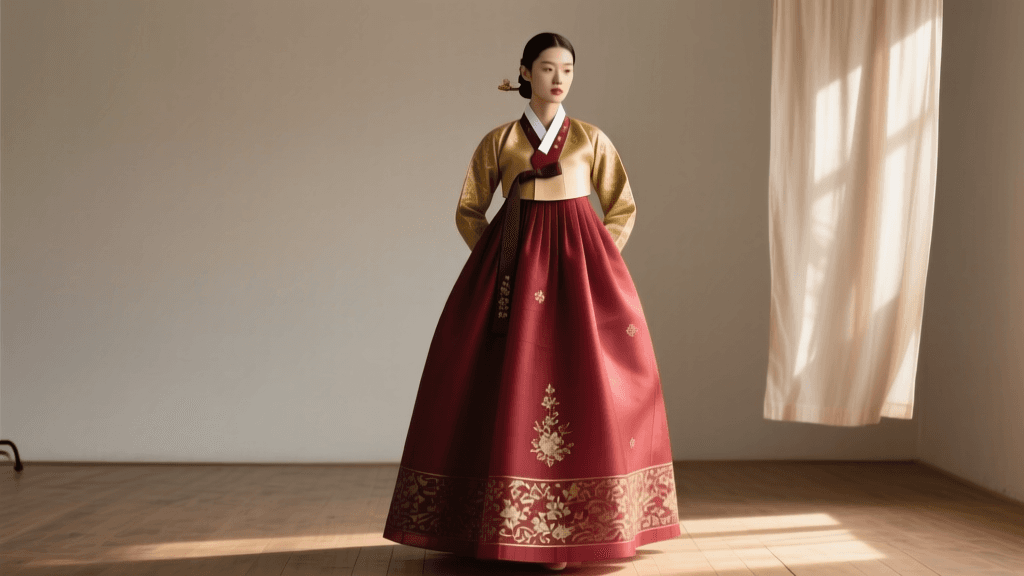
- Jeogori (저고리): The upper garment or jacket, worn by both men and women. It features a distinctive curved collar and is fastened with ties.
- Chima (치마): The women's full, wrap-around skirt that sits high on the chest, just below the bust line.
- Baji (바지): The men's roomy, comfortable trousers, traditionally designed for ease of movement and floor-sitting.
- Durumagi (두루마기): The traditional overcoat worn for formal occasions, ceremonies, and cold weather.
- Goreum (고름): The long, flowing ribbons used to tie the Jeogori closed. In 2026, modern designers often experiment with Goreum lengths and embellishments.
- Dongjeong (동정): The crisp, white, detachable paper or fabric collar that frames the face and provides a sharp contrast to the colorful Jeogori.
Top Online Marketplaces for Authentic Custom Hanbok
1. Pinkoi: The Premier Hub for Asian Artisan Design
Pinkoi has solidified its position in 2026 as the leading marketplace for independent Asian designers and traditional craftspeople. Unlike global mass-market sites, Pinkoi curates its sellers, ensuring a high baseline of authenticity. When searching for Hanbok on Pinkoi, you will find independent studios based in Seoul, Jeonju, and Busan offering semi-custom and fully bespoke options. The platform's built-in translation and consolidated shipping features make it incredibly user-friendly for international buyers. Prices here reflect true artisan labor, with custom silk sets typically starting around $450 USD.
2. Etsy: Navigating the Global Craft Market
Etsy remains a massive repository for Hanbok, but it requires a discerning eye in 2026. The platform is heavily saturated with dropshippers selling polyester costumes. To find authentic custom Hanbok on Etsy, you must filter your search by 'Shop Location: South Korea' and scrutinize the seller's review history. Look for shops that show behind-the-scenes photos of their sewing studios, offer fabric swatch mailings, and provide detailed measurement forms. Authentic Etsy sellers will often communicate directly via messaging to discuss fabric weights and color palettes before cutting the silk.
3. Direct Heritage Boutiques (e.g., Sonjjang Hanbok, Hanbok114)
For those seeking museum-quality garments or certified master-crafted pieces, buying directly from established Korean heritage boutiques is the best route. Sites like Sonjjang Hanbok have fully localized English interfaces as of 2026, bridging the gap between traditional Dongdaemun artisans and global clientele. These specialized sites offer the highest degree of customization, allowing you to select specific grades of Myeongju (traditional Korean silk) and request historically accurate embroidery motifs. The Metropolitan Museum of Art's overview of Korean traditional arts highlights the historical significance of these specific weaving and embroidery techniques, which direct boutiques strive to preserve.
2026 Marketplace Comparison Chart
| Platform | Avg. Custom Price (USD) | Lead Time | Silk Options | Authenticity Guarantee |
|---|---|---|---|---|
| Pinkoi | $450 - $800 | 3 - 5 Weeks | High (Independent Artisans) | Platform Vetted |
| Etsy (Korea Filtered) | $300 - $600 | 2 - 4 Weeks | Medium (Varies by Shop) | Buyer Beware (Review Dependent) |
| Direct Heritage Boutiques | $600 - $1,500+ | 4 - 8 Weeks | Very High (Master Weavers) | Certified Heritage Studios |
| Fast Fashion / Costume Sites | $40 - $90 | 1 - 2 Weeks | None (Polyester Blends) | None (Costume Grade) |
How to Measure Yourself for a Custom Hanbok
The beauty of the Hanbok lies in its structural geometry. Unlike Western tailoring, which clings to the body's contours, traditional Korean dress relies on the drape and volume of the fabric. However, precise anchor measurements are still required to ensure the garment sits correctly on the body. In 2026, many sellers will send you a digital measurement guide or use an AI-scanning app, but knowing how to take manual measurements with a soft tape measure remains essential.
Measuring for the Jeogori (Jacket)
- Bust/Chest: Measure around the fullest part of your chest, keeping the tape measure level and snug but not tight.
- Shoulder Width: Measure from the edge of one shoulder bone to the other across the upper back.
- Sleeve Length: With your arm slightly bent, measure from the base of your neck (center back) over the shoulder, down to your wrist bone.
- Jeogori Length: For women, measure from the base of the neck down to just above the bust line. For men, measure down to the hip bone.
Measuring for the Chima (Skirt) and Baji (Pants)
- Chima Waist (Empire Line): The Chima does not sit on your natural waist. Measure the circumference of your ribcage, directly under your bust. This is where the skirt's waistband will anchor.
- Chima Length: Measure from the empire waistline down to your ankle bone. Traditional Chima should hover just above the floor to prevent tripping and soiling the silk.
- Baji Waist and Inseam: For men's trousers, measure the natural waist and the inseam from the crotch to the ankle. Baji are intentionally baggy, so the tailors will add the necessary volume based on your height and waist.
Sourcing Authentic Silk: What to Look for in 2026
The fabric is the soul of the Hanbok. Traditional Korean silk, known as Myeongju, is renowned for its subtle sheen, breathable weave, and crisp drape. When shopping online in 2026, be wary of terms like 'silky polyester' or 'satin blend.' Authentic listings will specify '100% Mulberry Silk' or 'Traditional Myeongju.'
Price is a strong indicator of authenticity. A genuine, custom-tailored Myeongju silk Hanbok set will rarely cost less than $400 USD due to the labor-intensive sericulture and weaving processes preserved by Korean artisans. If a listing offers a 'silk' Hanbok for $80, it is undoubtedly a synthetic imitation. Additionally, reputable sellers will offer a 'burn test' guarantee or provide a small fabric swatch upon request so you can verify the material before the final garment is cut.
Navigating International Shipping, Customs, and Care
Ordering bespoke garments from South Korea involves international shipping. In 2026, most heritage boutiques utilize EMS (Express Mail Service) or premium couriers like DHL and FedEx. EMS is generally more cost-effective and offers reliable tracking, with delivery to North America and Europe typically taking 7 to 14 business days. Be prepared to pay local customs duties upon arrival, as textile garments often exceed duty-free thresholds in many Western countries.
Once your custom Hanbok arrives, proper care is paramount. Authentic silk should never be machine washed or exposed to harsh detergents. Spot clean minor stains with a damp cloth and seek a professional dry cleaner who specializes in delicate heritage textiles when a full clean is required. Store your Hanbok in a breathable cotton garment bag, away from direct sunlight, to prevent the natural dyes from fading. By investing time in researching the right marketplace and understanding the nuances of traditional Korean tailoring, you can acquire a breathtaking, authentic garment that honors centuries of Asian sartorial tradition.