Bespoke Geta And Zori Craft: Sustainable Footwear 2026
The Renaissance of Traditional Japanese Footwear in 2026
In 2026, the global fashion industry's pivot toward sustainable, artisanal craftsmanship has placed a renewed spotlight on traditional Japanese footwear. Once viewed primarily as ceremonial accessories or seasonal staples for summer festivals, geta (wooden clogs) and zori (flat woven sandals) are experiencing a profound renaissance. Modern consumers and heritage enthusiasts alike are seeking out bespoke pairs that marry centuries-old woodworking and weaving techniques with contemporary eco-conscious materials. This surge in demand has empowered master artisans in regions like Nara, Shizuoka, and Niigata to innovate without compromising the soul of their craft. According to the Ministry of Economy, Trade and Industry (METI), the designation and support of traditional crafts have increasingly emphasized sustainable material sourcing, ensuring that the ancient arts of footwear making thrive in a modern ecological landscape.
The Anatomy of Geta and Zori
To appreciate the craftsmanship, one must first understand the architecture of these iconic garments. While they share the iconic hanao (the Y-shaped thong that secures the foot), their bases differ fundamentally.
The Geta Base (Dai and Ha)
The geta is characterized by its elevated wooden base, known as the dai. Traditionally carved from a single piece of wood, the dai is supported by one or two 'teeth' (ha) underneath. The distinct 'clack' produced by the wooden teeth striking the pavement is a cherished auditory hallmark of Japanese summers. In 2026, the most prized geta are carved from sustainably harvested Yoshino cedar, renowned for its rich grain, lightweight properties, and natural resistance to moisture and insects. The use of FSC-certified Yoshino cedar ensures that the ancient forests of Nara are preserved while providing artisans with premium, resonant timber.
The Zori Sole
Unlike the elevated geta, the zori is flat. Historically woven from rice straw (wara), modern artisanal zori soles are often crafted from compressed natural fibers, igusa (soft rush), or high-density woven hemp. The flat profile makes zori the preferred choice for formal occasions, particularly when wearing high-end silk kimono, as they provide a stable, elegant foundation that complements the sweeping hemlines of formal attire.
The Art of Hanao: Weaving the Thong
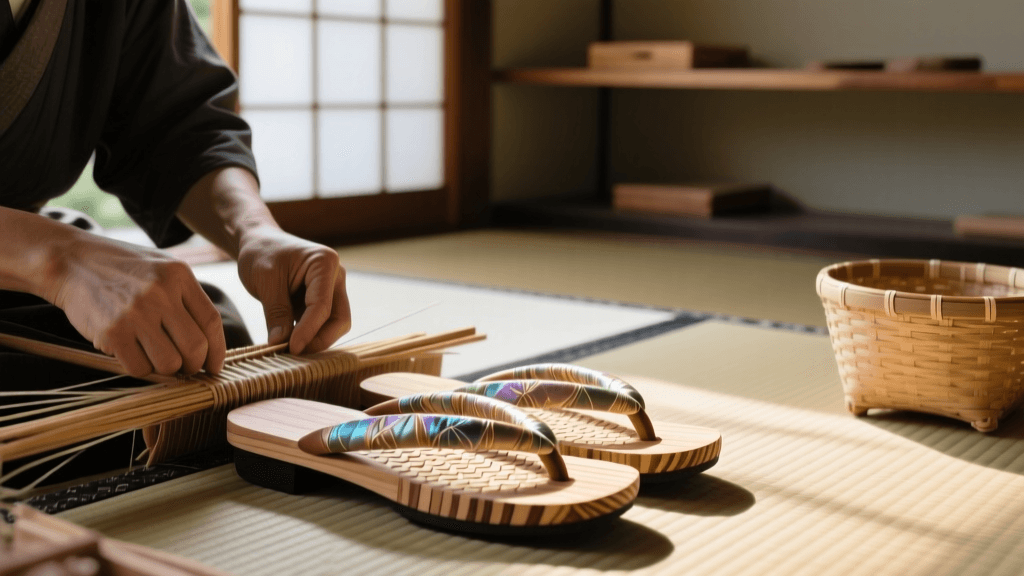
The hanao is arguably the most critical component for both comfort and aesthetics. In traditional mass-market footwear, the hanao is often made from synthetic velvet or vinyl. However, the 2026 bespoke market demands authenticity and luxury. Master weavers now utilize upcycled silk from vintage kimono, hand-dyed using botanical pigments like indigo (ai) and madder root (akane). The weaving process requires immense tactile sensitivity. The inner core of the hanao must be tightly twisted hemp or cotton cord to provide structural integrity and prevent stretching, while the outer wrapping must be soft enough to prevent friction burns between the toes. Artisans use a specialized tensioning rack to ensure the left and right thongs are perfectly symmetrical, a hallmark of true bespoke craftsmanship.
Material Comparison: Traditional vs. Modern Sustainable Fibers
As the industry adapts to the climate realities and ecological standards of 2026, material innovation has become a cornerstone of the craft. Below is a comparison of the materials currently favored by master cobblers.
| Material | Application | Sustainability Rating (2026) | Durability | Best For |
|---|---|---|---|---|
| Yoshino Cedar | Geta Dai (Base) | High (FSC Certified) | Excellent | Everyday wear, festivals |
| Upcycled Silk | Hanao (Thong) | Very High (Circular) | Moderate | Formal Zori, Bespoke Geta |
| Igusa (Soft Rush) | Zori Sole Cover | High (Renewable Crop) | Good | Summer Zori, Tea Ceremony |
| Compressed Hemp | Zori Core | Very High | Excellent | Structural base for woven Zori |
| Natural Urushi Lacquer | Wood Finishing | Moderate (Slow Harvest) | Superior | Premium weatherproofing |
Step-by-Step: Crafting a Bespoke Zori Sole
The creation of a high-end zori sole is a meticulous, multi-day process that requires profound patience and physical strength.
- Core Preparation: The artisan compresses layers of recycled hemp and cotton into a dense, oval-shaped core, utilizing a heavy wooden press to achieve the correct arch support.
- Warping the Loom: Heavy cotton warp threads are strung tightly across a specialized zori weaving bench. The tension must be perfectly balanced to prevent the sole from warping over time.
- Weaving the Weft: Dampened igusa rush or woven fabric strips are passed back and forth through the warp threads. The artisan uses a wooden beater to pack each row tightly against the last.
- Shaping the Nose: The front of the zori requires a specialized looping technique to create the maetsubo, the primary anchor point where the hanao will eventually be inserted.
- Binding the Edge: Once the weaving is complete, the edges are bound with a durable cotton or silk braid to protect the structural integrity of the sole and provide a finished, elegant aesthetic.
The Sensory Experience: Sound, Scent, and Stride
Wearing traditional Japanese footwear is a multi-sensory experience that grounds the wearer in their environment. The auditory feedback of geta creates a rhythmic cadence that dictates the pace of a walk, encouraging a mindful, deliberate stride. Olfactorily, a newly crafted pair of igusa zori releases a soothing, grassy aroma reminiscent of fresh tatami mats, a scent scientifically proven to lower heart rates and reduce stress. In 2026, bespoke artisans are experimenting with infusing the wooden dai with subtle hinoki cypress oils, enhancing the sensory footprint of the wearer and creating an immersive atmosphere with every step.
Sizing and Fitting: The Rule of the Heel Overhang
Western footwear sizing dictates that the foot should rest entirely within the boundaries of the sole. Japanese traditional footwear operates on a fundamentally different ergonomic principle. When properly fitted, the wearer's heel should extend slightly beyond the back edge of the dai or zori sole—typically by about one to two centimeters. This 'heel drop' serves a vital functional purpose. When walking in a kimono, the hem is highly susceptible to being stepped on or soiled. By allowing the heel to overhang, the wearer naturally adjusts their gait, taking shorter, more deliberate steps and keeping the center of gravity slightly forward. This prevents the back of the sandal from catching the kimono hem. In 2026, bespoke artisans utilize 3D foot scanning alongside traditional visual measurements to carve the dai to the exact millimeter of the client's foot arch, ensuring the overhang is perfectly calibrated for their specific stride.
Preservation and Intangible Cultural Heritage
The techniques required to weave igusa and carve dai by hand are classified as vital cultural assets. The Agency for Cultural Affairs, Government of Japan actively monitors and supports the transmission of these skills to younger generations. In 2026, apprenticeship programs have integrated digital archiving, allowing the precise hand movements and tension metrics of master weavers to be recorded and studied, ensuring that the tactile knowledge of zori crafting is never lost to time. This fusion of heritage preservation and modern documentation guarantees that the soul of Japanese footwear craft will endure for centuries to come.
Caring for Your Handcrafted Footwear
Proper maintenance is essential to extend the life of natural materials. Geta should be stored in a well-ventilated area away from direct sunlight, which can cause the Yoshino cedar to crack. If the wood becomes damp, wipe it gently with a dry, soft cloth and allow it to air dry naturally; never use artificial heat sources. The hanao can be spot-cleaned with a mild, pH-neutral soap and a soft brush, taking care not to soak the inner core. By treating these garments with respect and understanding their material origins, wearers participate in the ongoing story of Asian traditions, honoring the artisans who bring these masterpieces to life.