Bespoke Geta and Zori Craft: Hanao Fitting Guide 2026
The Renaissance of Japanese Footwear Craft in 2026
In 2026, the global appreciation for slow fashion and artisanal heritage has sparked a remarkable renaissance in traditional Japanese footwear. Once relegated to festival wear or historical reenactments, bespoke geta (wooden clogs) and zori (flat woven sandals) are now being embraced by a new generation of sartorial enthusiasts who value sustainability, craftsmanship, and cultural depth. According to the Ministry of Economy, Trade and Industry (METI), designated traditional crafts have seen a surge in international bespoke orders, driven by a desire for garments and accessories that tell a story of meticulous handcraft.
Unlike mass-produced synthetic alternatives, authentic geta and zori are masterclasses in ergonomic design and natural material utilization. For the modern wearer, understanding the nuances of these garments—from the selection of the wooden base to the precise tying of the hanao (thongs)—is essential. This comprehensive guide explores the anatomy, material innovations, and fitting techniques required to master traditional Japanese footwear in the contemporary era.
Anatomy of Traditional Footwear: Geta and Zori
To appreciate the craft, one must first understand the structural differences between the two primary forms of traditional Japanese footwear. While both utilize the hanao thong system, their bases serve entirely different functional and aesthetic purposes.
Geta: The Elevated Wooden Clog
Geta are characterized by their wooden base, known as the dai, and the wooden 'teeth' or ha attached to the bottom. Historically, the elevated teeth kept the wearer's kimono hem clean from the mud and snow of unpaved streets. Today, the karankoron sound of geta striking the pavement remains one of the most evocative sensory experiences of Japanese street culture. Modern artisans in 2026 often apply discreet tsuke-ishi (rubber or leather pads) to the bottom of the teeth to provide grip and dampen the sound for indoor or quiet urban environments.
Zori: The Formal Flat Sandal
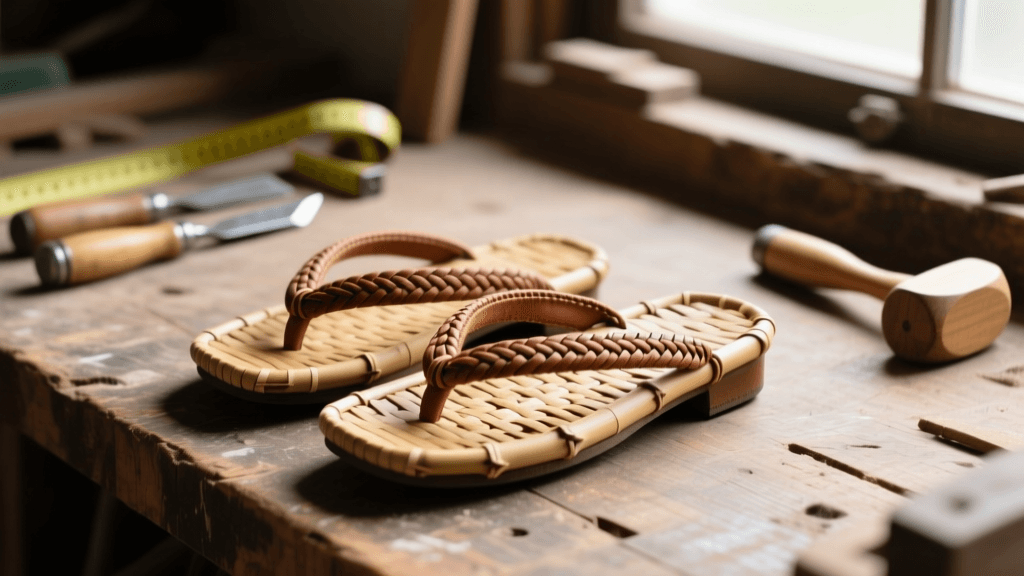
Zori feature a flat base with no teeth, making them the more formal and versatile option. They are the mandatory footwear for formal kimono ensembles, such as those worn at tea ceremonies, weddings, and coming-of-age ceremonies. The base of a zori can be crafted from woven rush (tatami-omote), lacquered wood, or modern eco-resins, and is often covered in luxurious silk brocade or vegan leather for formal occasions.
Material Innovations: Sustainability Meets Tradition
The year 2026 has brought significant advancements in how traditional materials are sourced and processed, aligning ancient techniques with modern ecological standards. The Japan Kogei Association has been instrumental in promoting these sustainable practices among master artisans.
- Paulownia Wood (Kiri): The gold standard for geta bases. Paulownia is lightweight, resistant to rot, and possesses natural antimicrobial properties. In 2026, certified sustainably harvested domestic Paulownia from the Tohoku region is highly prized, ensuring that the wood is lightweight yet durable enough to withstand years of wear.
- Recycled Tatami Facing: For zori, the traditional igusa (soft rush) covering is now frequently supplemented with upcycled rush from retired tatami mats, reducing agricultural waste while maintaining the breathable, moisture-wicking properties that keep the foot cool in humid summers.
- Upcycled Silk Hanao: The thongs are increasingly being crafted from boro (vintage patched textiles) and upcycled silk kimono scraps, offering a bespoke, zero-waste aesthetic that appeals to eco-conscious consumers.
The Art of the Hanao: Selection and Fitting
The hanao is the soul of the footwear. It consists of three parts: the mae-tsubo (the front post that goes between the big and second toe) and the two ko-tsubo (the side straps that connect to the base). A poorly fitted hanao will cause blisters and fatigue, while a masterfully tied one feels like an extension of the foot.
Step-by-Step Hanao Tying Technique
While most ready-to-wear footwear comes with pre-tied hanao, bespoke pairs allow for custom adjustment. The traditional artisan's knot is designed to be secure yet adjustable from underneath the base.
- Thread the Front Post: Insert the mae-tsubo through the front hole of the dai. Secure it underneath with a specialized wooden or bamboo plug, or a tightly bound fabric knot, ensuring it sits flush so it does not irritate the sole of the foot.
- Measure the Side Straps: Pull the ko-tsubo through the side holes. The length must be measured while the wearer is standing, bearing weight. The thong should hold the foot securely without pulling the toes upward.
- The Artisan's Knot: Underneath the base, cross the side straps over the front post. Wrap them tightly in a figure-eight pattern, then pull them through the loop to create a slip-knot. This allows the artisan to pull the straps tighter or looser based on the wearer's instep height.
- Seal and Trim: Once the perfect tension is achieved, the excess fabric is trimmed, and the knot is sealed with a drop of natural rice starch glue or hidden beneath a decorative fabric cover.
Sizing and Etiquette: The 'Overhang' Rule
One of the most common mistakes made by international buyers is selecting a size that matches their exact foot length. In Western footwear, the toes should not touch the edge. In traditional Japanese footwear, the opposite is true.
According to cultural guidelines promoted by the Japan National Tourism Organization (JNTO) for visitors engaging in traditional dress, the heel should slightly overhang the back of the dai by about 1 to 2 centimeters. This overhang ensures that the foot is positioned correctly over the center of gravity, allowing the wearer to easily grip the mae-tsubo with their toes. If the shoe is too long, the wearer will drag the back of the base, ruining the wood and causing an awkward, shuffling gait. Furthermore, the overhang prevents the hem of a kimono from catching on the heel of the footwear.
2026 Material Comparison Chart
When commissioning bespoke geta or zori, selecting the right base material is crucial for your intended use. Below is a comparison of the most popular materials available from master craftsmen in 2026.
| Material | Best Use Case | Weight | Water Resistance | 2026 Eco-Impact |
|---|---|---|---|---|
| Paulownia (Kiri) | Everyday Geta, Summer Festivals | Ultra-Light | Moderate (Requires oiling) | High (Fast-growing, sustainable) |
| Cypress (Hinoki) | Premium Geta, Onsen Resorts | Medium | High (Naturally rot-resistant) | Medium (Slow-growing timber) |
| Woven Rush (Igusa) | Summer Zori, Casual Indoor | Light | Low (Strictly dry environments) | High (Biodegradable, upcycled options) |
| Bio-Resin Composite | Modern Urban Zori, Rainy Weather | Medium-Heavy | Very High | High (Plant-based polymers) |
| Lacquered Wood (Shikki) | Formal Zori, Ceremonial Wear | Medium | High | Medium (Natural urushi sap, but labor-intensive) |
Care, Maintenance, and Repair
Authentic geta and zori are not disposable items; they are meant to be maintained, repaired, and passed down. The concept of mottainai (a sense of regret concerning waste) is deeply embedded in their lifecycle.
Wood Care for Geta
Raw Paulownia wood will absorb moisture and dirt over time. To preserve the wood in 2026's varied urban climates, artisans recommend treating the base with kiri-abura (paulownia oil) or pure tung oil twice a year. Apply a thin layer with a soft cotton cloth, let it penetrate for an hour, and buff away the excess. This deepens the wood's grain, repels water, and prevents cracking during dry winter months.
Hanao Replacement
The hanao is considered a consumable component. Depending on usage, a cotton or silk hanao may need replacement every two to three years. A key advantage of bespoke footwear is that the base (dai) can last a lifetime. When the thongs fray, simply take the footwear to a specialist hanaya (footwear shop) to have new hanao threaded and tied. This modular approach to fashion is a cornerstone of the sustainable wardrobe.
Storage Best Practices
Never store wooden geta or rush zori in airtight plastic containers, as this traps moisture and invites mold. Instead, keep them in a well-ventilated area, ideally wrapped in a breathable cotton furoshiki or placed in a dedicated wooden shoe box with a small packet of silica gel or natural charcoal to regulate humidity.
Conclusion: Stepping into the Future with Tradition
The landscape of traditional Japanese footwear in 2026 is a beautiful synthesis of ancestral wisdom and modern ecological consciousness. Whether you are navigating the bustling streets of Tokyo in a pair of eco-resin zori or attending a summer matsuri in sustainably harvested Paulownia geta, you are participating in a living craft. By understanding the anatomy, respecting the fitting rules, and committing to the proper care of your footwear, you ensure that the rhythmic karankoron of the geta and the elegant silhouette of the zori will continue to grace the world for generations to come.