Bavarian Tracht & Norwegian Bunad: 2026 Sourcing Guide
Introduction to Regional European Folk Dress in 2026
As we move through 2026, the global appreciation for authentic European folk dress has transitioned from mere festival wear to a serious pursuit of sartorial heritage and artisanal investment. Discerning collectors, diaspora communities, and cultural enthusiasts are increasingly turning away from mass-produced 'costumes' and seeking out genuine, historically accurate garments. Two of the most prestigious and highly regulated traditional garment traditions in Europe are the Norwegian Bunad and the Bavarian Tracht. Both represent centuries of regional identity, meticulous handcraft, and significant financial investment.
Whether you are preparing for Norway's Syttende Mai (Constitution Day) celebrations or attending a traditional Schützenfest in Upper Bavaria, understanding the nuances of these garments is critical. This comprehensive guide explores the regional variations, 2026 market pricing, artisanal sourcing methods, and strict authenticity standards for both the Norwegian Bunad and the Bavarian Tracht.
The Norwegian Bunad: Heritage, Regions, and 2026 Pricing
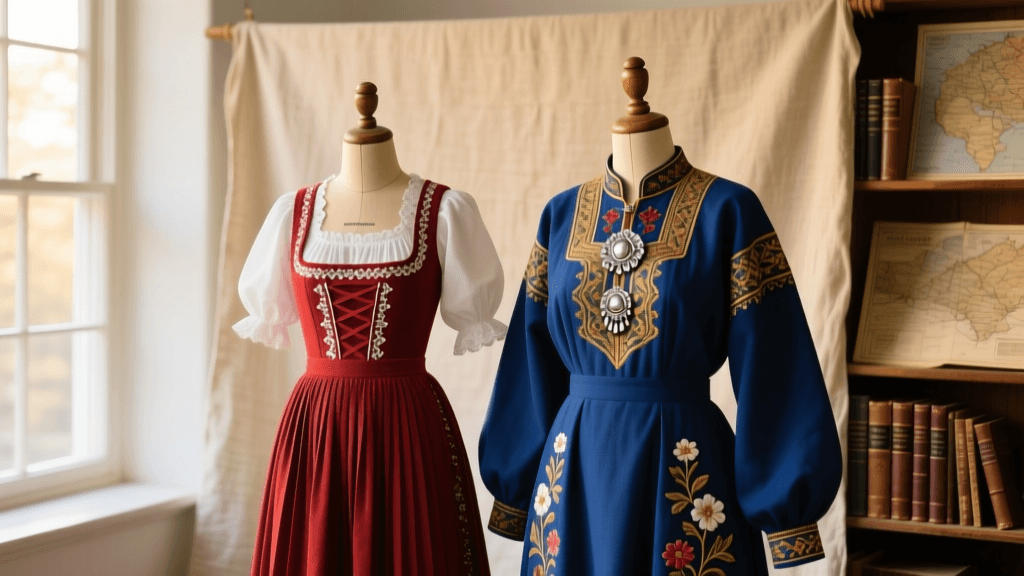
The Norwegian Bunad is far more than a folk costume; it is a deeply ingrained national symbol tied to regional ancestry and family heritage. Unlike theatrical costumes, a genuine Bunad is governed by strict historical guidelines to ensure accuracy in cut, fabric, and embroidery. According to the Norsk institutt for bunad og folkedrakt (Norwegian Institute for Bunad and Folk Costumes), there are over 450 distinct regional variations documented today.
Key Regional Variations
When sourcing a Bunad in 2026, buyers typically select a design based on their ancestral hometown or a region where they have a deep personal connection. Three of the most prominent and historically significant variations include:
- Hardangerbunad: Often referred to as the 'first' Bunad, originating from the Hardanger fjord region. It is characterized by its striking black wool base, intricate white linen cross-stitch embroidery (often in red, black, and blue), and elaborate silver jewelry.
- Setesdalsbunad: Hailing from the isolated Setesdal valley, this design preserves medieval textile traditions. It features heavy, dark wool with distinctive 'klaff' (flap) openings and striking geometric silver filigree buttons that are entirely unique to the region.
- Telemarksbunad: Known for its vibrant, nature-inspired embroidery featuring stylized flowers and vines, typically set against a deep black or rich red wool background. The Telemark designs are highly prized for their complex crewelwork.
Sourcing and Tailoring a Bunad in 2026
Acquiring a genuine Bunad is a slow-fashion endeavor. In 2026, the waitlist for a fully hand-embroidered, custom-tailored women's Bunad from authorized retailers like Husfliden averages between 8 to 14 months. The cost reflects the immense labor involved. A complete women's ensemble, including the wool skirt, bodice, linen shirt, silk cape, and the essential silver jewelry (sølv), currently ranges from $4,500 to $6,500 USD. The silver alone, impacted by 2026 precious metal market fluctuations, can account for $1,500 to $2,500 of the total price.
'A true Bunad is never bought off the rack. It is measured, stitched, and fitted to the individual, serving as a wearable archive of a specific Norwegian valley's history.'
The Bavarian Tracht: Dirndl and Lederhosen Beyond Oktoberfest
While the global market is flooded with cheap, synthetic 'Oktoberfest costumes,' the authentic Bavarian Tracht is a living, breathing tradition governed by historical accuracy and regional pride. The term 'Tracht' refers to traditional, regional dress that evolved over centuries, whereas 'Trachtenmode' refers to modern, commercialized fashion inspired by it. Serious collectors and locals strictly adhere to Tracht standards.
Authentic Materials and Miesbach Standards
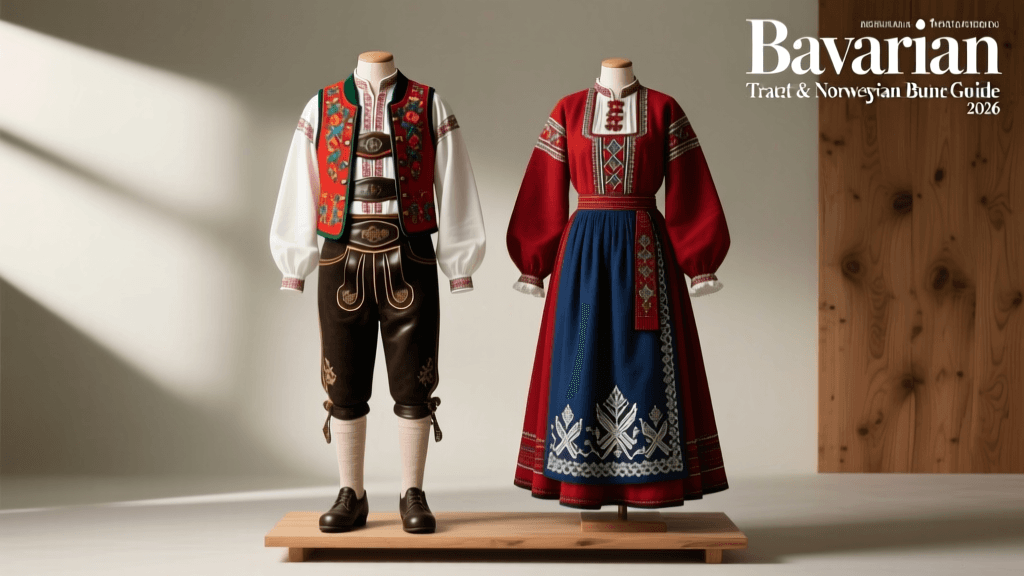
The gold standard for Bavarian Tracht is the Miesbacher Tracht, originating from the Alpine region south of Munich. For men, the centerpiece is the Lederhosen. In 2026, authentic Lederhosen must be crafted from Hirschleder (deerskin) or Sämischleder (chamois), tanned using traditional brain-tanning or sustainable Alpine bark methods. The leather is then hand-embroidered with the iconic 'Säckler' stitch, a raised, intricate floral and hunting motif that takes master artisans weeks to complete.
For women, the authentic Dirndl consists of a structured bodice, a high-quality cotton or linen blouse, a mid-calf length skirt, and a silk or hand-woven linen apron. The placement of the apron bow remains a strict cultural code in 2026: left for single, right for married/taken, center for virgins (rarely used today), and back for widows or waitresses.
2026 Pricing and Artisan Sourcing
Sourcing authentic Tracht requires visiting specialized ateliers in Munich, such as Lodenfrey, or commissioning directly from village tailors in Upper Bavaria. As of 2026, a pair of bespoke, hand-embroidered Hirschleder Lederhosen costs between $1,200 and $2,200 USD. A high-end, bespoke Miesbacher Dirndl, featuring hand-stitched silk bodices and antique horn buttons, ranges from $900 to $1,800 USD. The Bayerisches Nationalmuseum frequently hosts exhibitions highlighting these historical garments, serving as a vital reference point for buyers seeking to verify the historical accuracy of their bespoke commissions.
Comparative Analysis: Bunad vs. Tracht
Understanding the structural and market differences between these two iconic European folk dresses is essential for collectors and cultural enthusiasts. Below is a 2026 market comparison:
| Feature | Norwegian Bunad | Bavarian Tracht |
|---|---|---|
| Primary Materials | Wool, Linen, Silk, Sterling Silver | Deerskin, Loden Wool, Silk, Horn |
| 2026 Avg. Cost (Women) | $4,500 - $6,500 USD | $900 - $1,800 USD |
| 2026 Avg. Cost (Men) | $3,000 - $4,500 USD | $1,500 - $2,800 USD |
| Production Lead Time | 8 - 14 Months | 3 - 6 Months |
| Regulatory / Advisory Body | Bunad- og folkedraktrådet | Bayerischer Trachtenverband |
| Primary Embroidery | Cross-stitch, Crewelwork, Filigree | Säckler Stitch, Floral Leather Tooling |
How to Verify Authenticity in 2026
With the rise of sophisticated e-commerce platforms, distinguishing between a genuine heritage garment and a high-end reproduction has become more challenging. Here are actionable steps to verify authenticity when purchasing in 2026:
- Check the Label of Origin: Genuine Bunads will often come with documentation from the local Husflidlag (craft association). Authentic Tracht will feature labels from recognized Bavarian guilds or specific master tailors (Meister).
- Inspect the Hardware: Norwegian Bunad silver must be stamped with the maker's mark and the silver content (typically 925S). Bavarian Lederhosen should feature genuine horn or bone buttons, never plastic or resin, and the suspenders (Hosenträger) must be made of matching leather with hand-carved cross-pieces.
- Examine the Seams and Linings: Mass-produced costumes use serged, machine-finished edges. Authentic Bunads and Tracht feature hand-felled seams, cotton or linen linings (never polyester), and generous seam allowances to allow for future alterations as the wearer's body changes over decades.
Care, Maintenance, and Storage for Heritage Garments
Investing thousands of dollars into European folk dress requires meticulous care. The heavy wools, delicate silks, and untreated leathers used in 2026's authentic garments are highly susceptible to environmental damage if stored improperly.
For the Norwegian Bunad, dry cleaning is generally discouraged unless absolutely necessary, as harsh chemicals can strip the natural lanolin from the wool and fade the natural dyes used in regional embroidery. Spot cleaning with a damp cloth and mild wool wash is preferred. The silver jewelry must be removed before storage and kept in anti-tarnish cloth bags. The wool garment should be stored in a breathable cotton garment bag with natural cedar blocks to deter moths—never use chemical mothballs, which will permanently taint the wool fibers.
For Bavarian Lederhosen, water is the enemy. The natural oils in the deerskin keep it supple and water-resistant. If the leather becomes soiled, it should be brushed with a specialized suede brush or cleaned with a traditional leather sponge. Never wash Lederhosen in a machine. When storing, keep them in a cool, dark, and well-ventilated area, stuffed with acid-free tissue paper to maintain the shape of the legs and prevent deep creasing that could eventually crack the leather.
Conclusion
The landscape of traditional European folk dress in 2026 is one of profound respect for heritage, artisanal mastery, and slow fashion. Whether you are commissioning a silver-clad Hardangerbunad to honor your Norwegian lineage or investing in hand-stitched Miesbacher Lederhosen for a lifetime of Alpine festivals, these garments are wearable heirlooms. By understanding the regional nuances, respecting the strict material guidelines, and working directly with authorized artisans, you ensure that these magnificent textile traditions continue to thrive for generations to come.