Bavarian Schuhplattler Dance Tracht: 2026 Festival Guide
The Engineering Behind the Stomp: Why Schuhplattler Tracht is Unique
As we enter the 2026 European folk festival season, the vibrant world of traditional Alpine dance is experiencing a massive resurgence. Among the most physically demanding and visually striking of these traditions is the Schuhplattler, a traditional Bavarian and Tyrolean folk dance characterized by rhythmic stomping, thigh-slapping, and shoe-striking. While many tourists associate Bavarian clothing merely with Oktoberfest party wear, the authentic Tracht worn by traditional dance clubs (Trachtenvereine) is a highly engineered garment system designed specifically for kinetic movement, acoustic resonance, and durability.
Preparing for the 2026 Gaufeste (regional folk festivals) requires a deep understanding of how these garments interact with the dancer's body. Unlike static museum pieces, a genuine Schuhplattler costume must withstand immense friction, repetitive impact, and the centrifugal force of rapid spinning. In this comprehensive guide, we break down the anatomy of the male and female dance ensembles, explore the latest 2026 sustainable sourcing trends, and provide a buyer’s comparison for festival-grade attire.
The Male Ensemble (Buam): Built for Impact and Acoustics
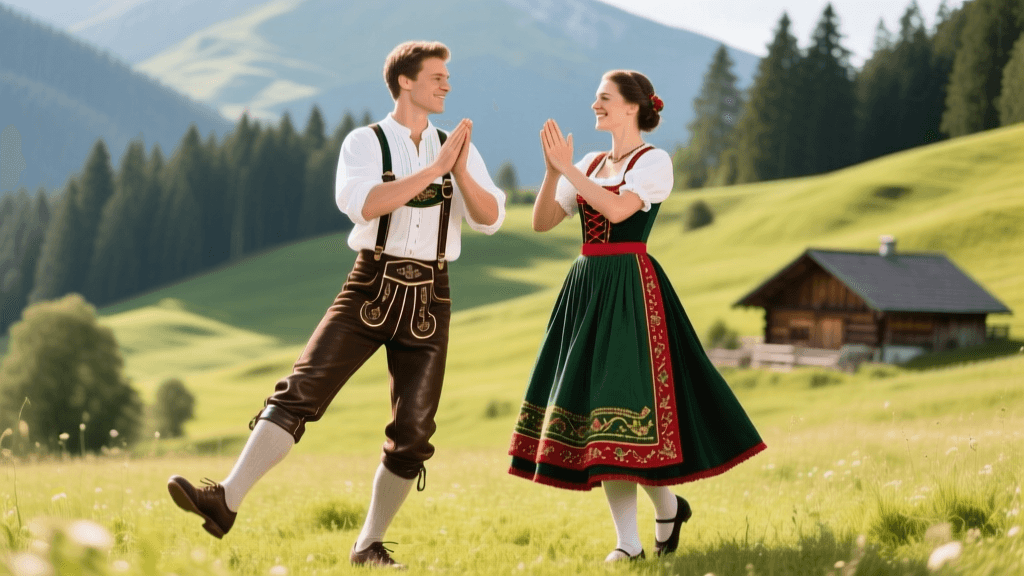
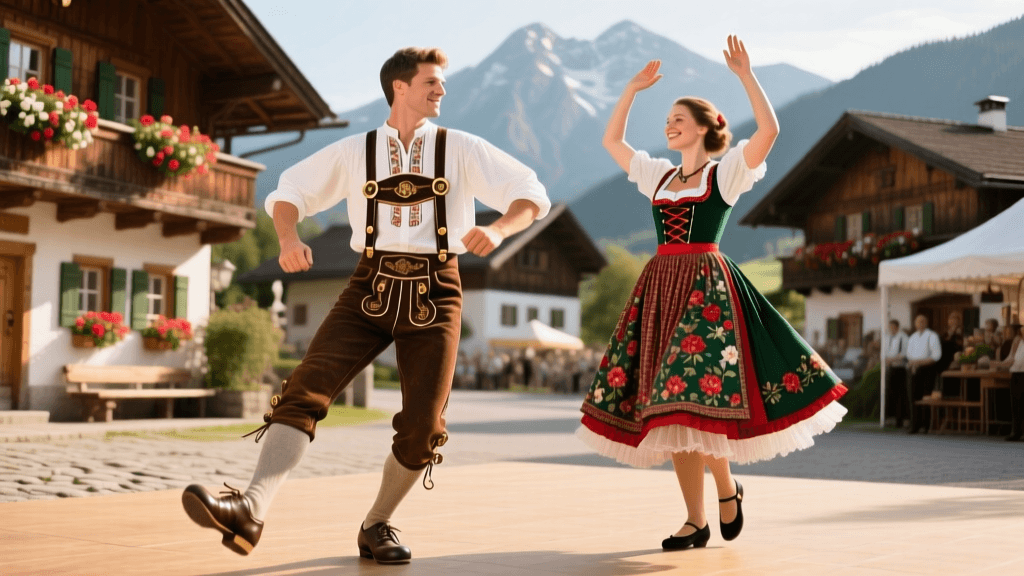
The male Schuhplattler costume is essentially a percussive instrument. The dancer (Bua) uses his hands to strike his thighs, knees, and shoes in complex polyrhythms. Therefore, the clothing must not only survive the beating but actually enhance the sound.
Lederhosen: The Canvas of the Dance
For the Schuhplattler, the Lederhose is typically the Kurze Lederhose (short leather breeches) ending just above the knee. This specific length is non-negotiable for the dance, as it leaves the knee and upper calf exposed for the Platteln (slapping) sequences. In 2026, top-tier dance clubs are increasingly mandating Sämischleder—a traditional brain-tanned or oil-tanned deer or chamois leather. This leather is exceptionally soft, breathable, and washable, yet it possesses a dense fiber structure that produces a sharp, resonant 'crack' when struck by the palm. Modern synthetic leathers or cheap suede simply absorb the impact, resulting in a dull thud that fails to project across the festival grounds.
Crucially, the inner thighs and the lower leg cuffs are often reinforced with hidden double-stitching. The embroidery (Stickerei), typically featuring regional motifs like the Edelweiß or Hirsch (stag), is done with thick, waxed linen thread that adds a slight textural ridge, further amplifying the acoustic feedback during a performance.
Haferlschuhe: The Acoustic Footwear
No element of the male Tracht is more vital to the Schuhplattler than the Haferlschuh. Originating from the Alpine working class, these shoes feature a distinctive side-lacing system and a heavily reinforced toe box. For folk dance, the soles are the secret weapon. In 2026, master cobblers in Upper Bavaria are still hand-forging and nailing the soles using traditional Zwiebelnaht (double-stitched welt) techniques combined with brass or steel hobnails.
When a dancer strikes the wooden stage floor, the nailed sole creates a sharp, percussive report that cuts through the sound of the brass band. The side-lacing ensures the ankle is locked in place, preventing lateral rolling during the aggressive Watscheltanz (waddling dance) sequences. According to the Bayerischer Trachtenverband, maintaining the proper tension of the side-laces is critical for injury prevention during the high-impact stomps of the 2026 competition season.
The Alpine Hat and Gamsbart
The Trachtenhut is typically made of waterproof loden wool or fur felt, adorned with a Gamsbart (chamois hair tuft) or a hand-tied feather. During the more acrobatic figures of the Schuhplattler, the hat must remain secured. Dancers often use a discreet leather chin strap or a specialized hatpin anchored to the hair, ensuring the hat stays perfectly level even during deep squats and leaps.
The Female Ensemble (Deandl): Grace, Spin, and Structure
The female counterpart to the Schuhplattler is the Deandl (or Dirndl). While the male dance focuses on percussive aggression, the female dance focuses on grace, precise footwork, and the mesmerizing geometry of the spinning skirt. The 2026 festival regulations heavily emphasize historical accuracy, moving away from the commercialized 'costume' look back to the structured Miesbacher or Inntaler Tracht.
The Physics of the Tellerrock (Skirt)
The most critical component for the female dancer is the skirt. A festival-grade Dirndl skirt is a Tellerrock or a heavily pleated Faltenrock, cut from a full circle or multiple panels of high-density wool or cotton damask. When the dancer executes the Drehen (spinning) sequences, centrifugal force causes the skirt to flare out into a perfect, horizontal disc.
To achieve this 'plate' effect in 2026, tailors are utilizing a hidden, weighted hem tape made of dense cotton or lead-free brass threading. This weighting pulls the skirt outward during spins, preventing it from collapsing against the legs. The length is strictly regulated by most traditional clubs; for the 2026 season, the hem must rest precisely at the mid-calf, allowing the intricate footwork and stamping to remain visible to the judges while maintaining modesty and historical accuracy.
The Mieder (Bodice) and Posture
The Mieder is heavily structured with internal boning (often synthetic whalebone or flexible steel in modern 2026 iterations) to support the dancer's posture. Unlike fashion corsets, the Tracht bodice is designed to allow full diaphragmatic breathing while preventing the torso from slouching during the rapid, repetitive stamping sequences. The front lacing or hook-and-eye closures are reinforced with metal Miederschnüre (silver or brass chains) that add a subtle, rhythmic jingling sound that complements the male's percussive slapping.
Trachtenschuhe: Stamping with Elegance
Female dancers wear specialized Trachtenschuhe featuring a sturdy, block heel (typically 3 to 4 centimeters) and a reinforced toe cap. The female stamping sequences require a shoe that can absorb shock while producing a clean, sharp sound on the wooden stage. The 2026 trend leans heavily toward vegetable-tanned leather uppers with natural rubber-infused leather soles, providing a balance between traditional aesthetics and modern shock absorption to protect the dancers' joints during multi-day festival marathons.
Festival Grade vs. Competition Grade: A 2026 Buyer’s Comparison
Investing in authentic Tracht is a significant financial commitment. Whether you are joining a local Trachtenverein or preparing for the grand parades at the Munich Oktoberfest and regional Gaufeste, understanding the tiers of quality is essential. Below is a comparison of the current market standards for 2026.
| Feature | Festival Grade (Vereins-Tracht) | Competition Grade (Festtags-Tracht) |
|---|---|---|
| Leather Type | Standard deer split, chrome-tanned | Premium chamois/deer, Sämisch (oil-tanned) |
| Embroidery | Machine-assisted, standard cotton thread | 100% hand-stitched, waxed linen/silk thread |
| Footwear Soles | Standard leather with basic hobnails | Hand-welted, double-nailed for max acoustics |
| Skirt Material | Cotton blend, standard pleating | Pure Alpine wool damask, weighted hem |
| 2026 Avg. Cost (Male) | €850 - €1,200 | €2,500 - €4,000+ |
| 2026 Avg. Cost (Female) | €600 - €900 | €1,800 - €3,500+ |
| Best For | Parades, general club dancing, festivals | Gaufest competitions, stage performances |
2026 Sourcing and Sustainability in Alpine Tracht
A major shift in the 2026 Tracht landscape is the aggressive push toward regional sustainability. Historically, the demand for cheap festival wear led to mass production in overseas factories using synthetic dyes and poorly sourced leathers. Today, organizations like the Information Center for Tracht in Bavaria are championing the 'Von der Region für die Region' (From the region, for the region) initiative.
For the 2026 season, discerning buyers and dance clubs are prioritizing garments certified with the Bayerisches Bio-Siegel for wool and leather. This ensures that the sheep and deer are raised in Alpine environments, the wool is spun in regional Bavarian mills, and the leather is tanned using eco-friendly chestnut or oak bark extracts rather than heavy metals. Furthermore, the sourcing of Gamsbart (chamois hair) is now strictly regulated, with ethical hunters providing hair only from managed Alpine populations, ensuring the preservation of local wildlife while maintaining the visual authenticity of the dancer's hat.
Preparing for the 2026 Gaufest Season: Maintenance Tips
A competition-grade Schuhplattler costume is an heirloom investment that requires meticulous care, especially given the sweat, friction, and physical stress of folk dancing.
- Leather Care: Never use commercial shoe polish on Sämischleder. After a festival, brush off dirt with a soft bristle brush. If the leather becomes stiff from sweat, wash it gently with a specialized Lederwaschmittel (leather wash), knead it by hand while damp, and let it dry away from direct heat. This restores the soft, slapping-optimized texture.
- Skirt Steaming: The heavy wool skirts of the Deandl must be steamed, not ironed, to preserve the sharp pleats required for the spinning sequences. Use a professional standing steamer and hang the skirt on a specialized wide-clamp hanger to let gravity reset the pleats overnight.
- Footwear Maintenance: The brass hobnails on the Haferlschuhe will dull and flatten over a season of stomping. Before the 2026 summer competitions, take your shoes to a traditional cobbler to have the nails re-filed or replaced to ensure the acoustic 'crack' remains sharp and consistent.
- Silver and Metal Polish: The silver chains, hat pins, and Charivari (traditional jewelry) will tarnish from sweat. Polish them with a non-abrasive silver cloth after every performance to maintain the brilliant flash that catches the stage lights during group choreography.
Conclusion
The Schuhplattler is far more than a simple folk dance; it is a living, breathing exhibition of Alpine engineering, acoustic design, and regional pride. As the 2026 festival season unfolds across Bavaria, Austria, and South Tyrol, the dancers taking the stage will be wearing garments that represent centuries of evolution, refined for the exact moment the hand meets the leather, and the nailed sole strikes the wood. Whether you are a seasoned member of a Trachtenverein or a cultural enthusiast attending your first Gaufest, understanding the profound functionality behind these beautiful garments will forever change how you experience the rhythm of European folk traditions.