Schuhplattler Dance Costumes: 2026 Alpine Festival Guide
The Intersection of Heritage and Kinetics: The Schuhplattler in 2026
When attending an Alpine Gaufest (regional folk festival) in Bavaria, Tyrol, or Salzburg in 2026, the undisputed highlight is the Schuhplattler. This traditional folk dance, characterized by its rhythmic stomping, leaping, and the striking of thighs, knees, and shoes, is a masterclass in kinetic energy. However, the spectacle is not solely about the dancers' athleticism; it is equally about the meticulous construction of their garments. Traditional European folk dress in this region is not merely decorative—it is highly engineered activewear designed to withstand extreme physical stress while amplifying the acoustic and visual impact of the dance.
As of the 2026 festival season, the standards for competitive and exhibition dance costumes are strictly regulated by heritage organizations like the Bayerischer Trachtenverband (Bavarian Tracht Association). Mass-produced tourist garments are entirely unsuitable for the rigors of the Wettplatteln (competitive dance). This guide explores the precise construction, materials, and functional requirements of the male and female costumes that define the Schuhplattler today.
The Male Dancer: Functional Lederhosen and Haferlschuhe
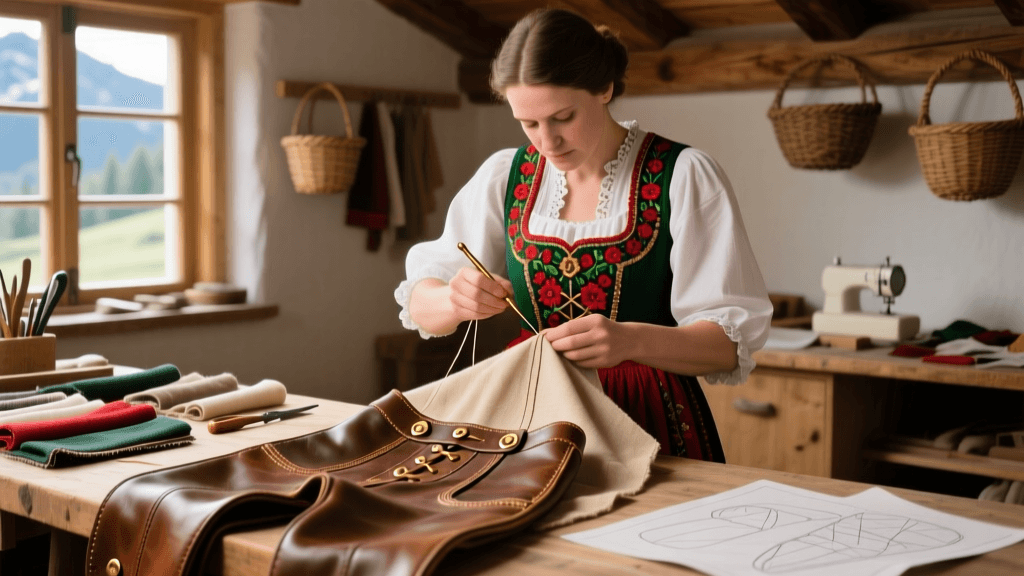
The male costume for the Schuhplattler centers on the Kurze Lederhosen (short leather breeches) and the Haferlschuh (traditional Alpine shoe). The mechanics of the dance require the dancer to execute high kicks, deep squats, and forceful slaps against his own legs. The garment must therefore offer a unique combination of durability, acoustic resonance, and unrestricted mobility.
Leather Selection and Tanning Trends in 2026
Authentic dance Lederhosen are crafted from Sämischleder (oil-tanned leather), typically sourced from alpine deer (Hirsch) or chamois (Gams). This specific tanning process uses fish oils and natural fats, resulting in a leather that is exceptionally soft, breathable, and capable of producing a sharp, resonant 'crack' when slapped. In 2026, there is a strong movement among top-tier artisans like Meindl Tracht toward fully traceable, sustainably hunted alpine game, ensuring the leather is not only historically accurate but environmentally responsible. The leather is usually cut to a thickness of 1.2mm to 1.4mm—thick enough to endure thousands of impacts without tearing, yet supple enough to move like a second skin.
The cut of the breeches features a high waistband and a gusseted crotch, essential for the extreme range of motion required during the Holzhacker (woodcutter) dance variations. The suspenders (Hosenträger) are heavily embroidered with floral motifs like the Edelweiss and Alpenrose using colorfast mercerized cotton threads, and they are crossed at the back to prevent them from slipping off the shoulders during vigorous movement.
Footwear: The Crucial Haferlschuh
The Haferlschuh is the engine of the Schuhplattler. Characterized by its distinctive side or front lacing and a slightly upturned toe, this shoe provides the ankle flexibility needed for complex footwork. For the 2026 festival circuit, competitive dancers utilize hand-welted soles reinforced with specific hobnails (Nagelschuhe). These nails are strategically placed to provide grip on grassy outdoor stages and to generate a sharp, percussive acoustic feedback when striking the wooden floors of traditional festival tents.
The Female Dancer: The Vereinsdirndl
While the male costume relies on leather and percussive strikes, the female costume—the Vereinsdirndl (association dirndl)—is a study in fluid dynamics and structural engineering. The female role in the Schuhplattler involves rapid, continuous 360-degree spins and intricate, gliding footwork. The dress must flare perfectly to create a visual bell shape while remaining securely anchored to the dancer's body.
Skirt Width and the Physics of the Spin
The most critical distinction between a fashion Dirndl and a Vereinsdirndl is the skirt circumference. To achieve the iconic, gravity-defying horizontal flare during a spin, the skirt must contain a minimum of 3.5 to 4.5 meters of fabric. In 2026, specialized dirndl makers found via heritage retailers like Lodenfrey utilize lightweight, high-thread-count cotton poplins or fine merino wool blends. These fabrics offer the necessary volume without the crushing weight that would exhaust the dancer over a ten-minute performance.
The hem of the skirt is finished with a specialized velvet or braided tape (Besatzband). This tape serves a dual purpose: it protects the hem from the wear and tear of scuffing against the floor and shoes, and it acts as a subtle weight, using centrifugal force to pull the skirt outward into a perfect circle during spins. The bodice (Mieder) is heavily structured with reed or synthetic boning to maintain perfect posture and prevent the garment from shifting during rapid directional changes.
2026 Comparison: Fashion Tracht vs. Dance Tracht
Understanding the difference between commercial festival wear and authentic dance costumes is vital for anyone studying European folk dress. Below is a comparison of the garments seen at modern Alpine festivals.
| Feature | Fashion Dirndl (Commercial) | Vereinsdirndl (Dance Festival) |
|---|---|---|
| Skirt Circumference | 1.5 to 2.5 meters | 3.5 to 4.5+ meters |
| Skirt Length | Mini or Midi (above knee) | Mid-calf to ankle (Wadenlang) |
| Bodice Structure | Lightweight, minimal boning | Heavily boned, rigid support |
| Apron Fabric | Silk, chiffon, or lace | Heavy cotton or linen (to stay grounded) |
| Primary Function | Aesthetic, social drinking | Kinetic mobility, competitive spinning |
The Opening March: The Trachtenjanker
Before the dancing begins, every Gaufest opens with the Einmarsch (grand march). During this procession, both male and female dancers wear the Trachtenjanker, a traditional Alpine wool jacket. In 2026, the most prized Jankers are woven from the wool of heritage alpine sheep breeds, such as the Tiroler Steinschaf. This wool is naturally rich in lanolin, making it highly water-resistant and durable. The jacket is tailored with high armholes and a pleated back, allowing dancers to swing their arms freely during the march without the fabric bunching at the shoulders. The lapels and cuffs are adorned with intricate embroidery that denotes the specific valley or village the dance troupe represents.
Care and Maintenance of Dance Costumes
Maintaining a competitive Schuhplattler costume requires specialized knowledge. The Sämischleder of the male breeches must never be washed with water or standard detergents, which would strip the natural oils and cause the leather to stiffen and crack. Instead, dancers in 2026 use specialized, pH-balanced leather milks and store the garments in climate-controlled environments to prevent mold. For the Vereinsdirndl, the massive volume of pleated fabric requires careful storage. Dancers hang the skirts on specialized multi-clamp hangers that distribute the weight evenly, preventing permanent crease damage to the pleats and ensuring the skirt is ready for the next festival.
Conclusion
The traditional costumes of the Bavarian and Alpine Schuhplattler are a testament to the deep connection between European folk dress and the physical culture of the region. As we navigate the 2026 festival season, the dedication to authentic materials, historical construction techniques, and functional design remains unwavering. Whether it is the resonant crack of oil-tanned deer leather or the sweeping, centrifugal flare of a four-meter dirndl skirt, these garments are not just worn; they are actively performed, keeping centuries of Alpine heritage vibrantly alive.