Bavarian Schuhplattler Dance Costumes: 2026 Festival Guide
The Resurgence of Alpine Folk Dance in 2026
As we navigate the vibrant European festival season of 2026, the cultural renaissance of regional Trachtenfeste (traditional costume festivals) has reached new heights across Bavaria, Tyrol, and the broader Alpine region. At the heart of these celebrations is the Schuhplattler, a highly athletic, percussive folk dance that mimics the mating ritual of the Auerhahn (capercaillie). Unlike static parade costumes, garments worn for the Schuhplattler and the accompanying Ländler waltzes must be masterpieces of functional engineering. They must withstand high-friction impacts, allow for extreme ranges of motion, and maintain their structural elegance during rapid spins and deep squats. This comprehensive guide explores the biomechanics, material innovations, and specific tailoring requirements for traditional Bavarian dance costumes in 2026.
Biomechanics of the Plattler: Why Garment Engineering Matters
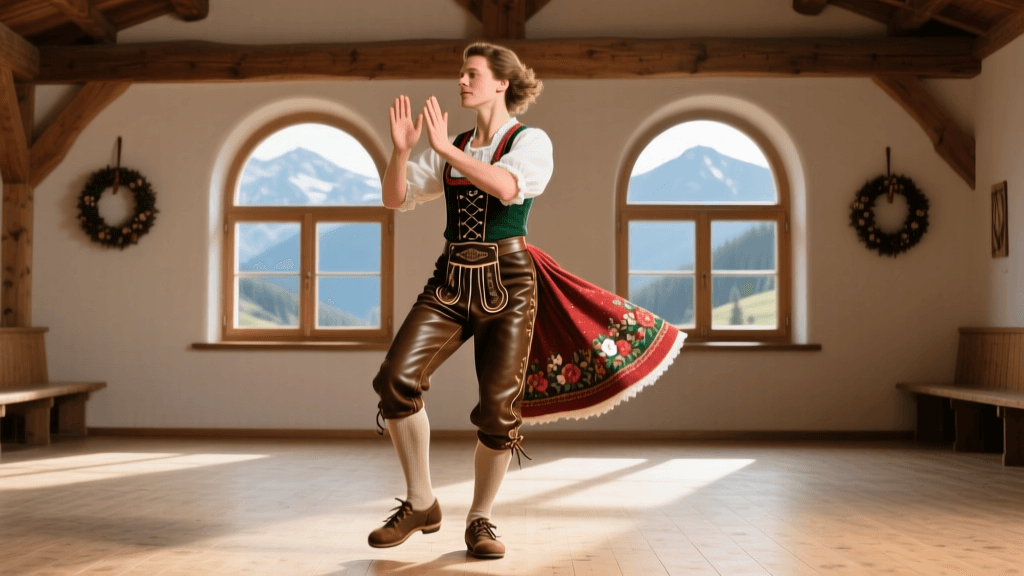
The Schuhplattler is not merely a dance; it is a rigorous physical discipline. The male dancers (Buam) perform high leaps, deep squats, and rhythmically slap their thighs, knees, calves, and shoes in rapid succession. The female dancers (Diandln) execute continuous, fast-paced waltz turns that require the skirt to flare outward in a perfect, unbroken circle. If a garment is too tight, it will restrict movement or tear at the seams. If it is too loose, it will tangle, disrupt the visual rhythm, or fail to provide the necessary acoustic resonance when slapped. According to the Bayerischer Trachtenverband (Bavarian Folk Costume Association), authentic regional variations must balance historical accuracy with the kinetic demands of the dancer, a philosophy that has driven significant tailoring innovations in 2026.
Men's Festival Lederhosen: 2026 Specifications for Dancers
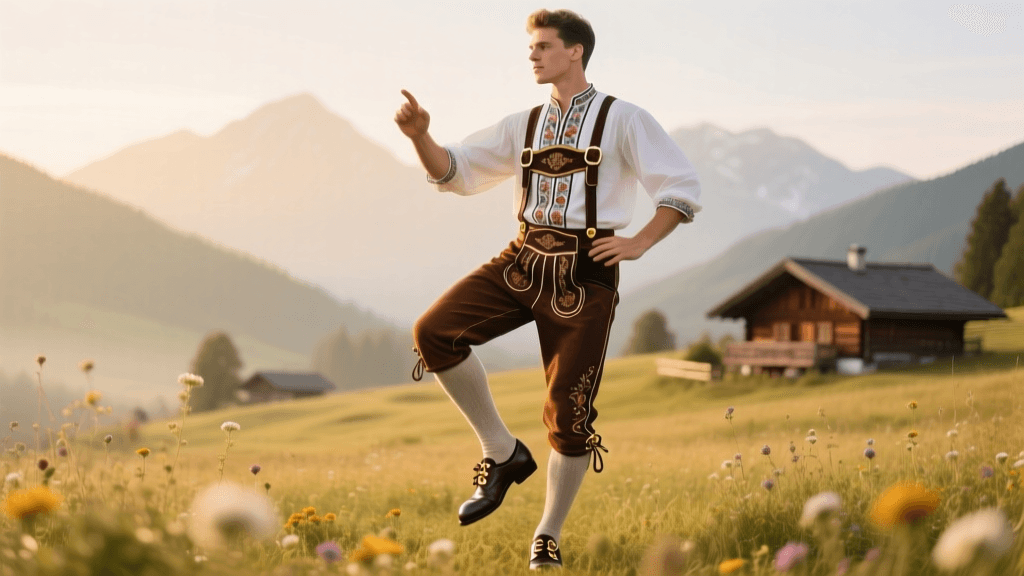
For the Schuhplattler, the Kurze Lederhose (short leather breeches) is mandatory. Knee-breeches (Kniebundhosen) restrict access to the calves and knees, which are primary targets for the percussive slapping (Plattln). The leather must be supple enough to allow a full deep squat without binding, yet durable enough to endure thousands of high-velocity slaps.
Leather Selection and Mobility Matrix
| Leather Type | Weight & Thickness | Stretch & Mobility | Dance Suitability (2026) |
|---|---|---|---|
| Hirsch (Deerskin) | Medium (1.2 - 1.5mm) | High natural elasticity | Professional Plattler; molds to the body, absorbs impact beautifully. |
| Reh (Roe Deer) | Lightweight (0.8 - 1.0mm) | Ultra-soft, high stretch | Exhibition dancers; highly delicate, requires careful maintenance. |
| Ziege (Goatskin) | Medium (1.2mm) | Moderate, breaks in well | Festival Goers & Beginners; durable, offers good acoustic slap. |
| Rind (Cowhide) | Heavy (1.8mm+) | Low, stiff, restrictive | Not recommended for active Plattler; limits high kicks and deep squats. |
The Drop-Front and Embroidery Reinforcement
The traditional drop-front (Latz) of the Lederhosen is heavily embroidered with floral or hunting motifs. In 2026, bespoke tailors are utilizing high-tensile, waxed linen threads for this embroidery. Standard cotton threads will snap when the thigh is repeatedly struck during the dance. Furthermore, the gussets placed at the base of the drop-front and the side seams are now being cut on the bias to provide an extra two inches of lateral stretch during wide stances.
Suspenders (Hosenträger)
Suspenders are not optional; they are a critical suspension system. For dancers, the Quersteg (the horizontal cross-piece across the chest) must be wide and securely anchored. During vigorous arm raises and leaps, narrow suspenders will slip off the shoulders, causing the heavy leather trousers to drop and disrupt the dance. Modern 2026 dance-specific suspenders feature subtle elasticized inserts hidden beneath the traditional felt or leather exterior to maintain constant upward tension without restricting chest expansion.
Women's Dirndl Dynamics: Skirt Swing and Bodice Support
The Dirndl worn for folk dance is fundamentally different from the fashion-oriented garments sold in tourist shops. A true Tanzdirndl or Trachtenkleid is engineered for momentum, breathability, and postural support. The Bavarian Tourism Board highlights that preserving the authentic silhouette of the Dirndl during motion is a key focus for contemporary Trachten designers.
The Physics of the Schwung (Skirt Swing)
The visual hallmark of the female dancer in the Ländler is the Schwung—the centrifugal flaring of the skirt during turns. To achieve the perfect bell shape, the skirt circumference must be a minimum of 3 meters, with many professional dancers opting for 4 meters.
- Box Pleats (Kellerfalten): Provide a structured, uniform flare that looks exceptional during synchronized group waltzes.
- Cartridge Pleats: Offer a denser gathering at the waistband, allowing for a massive volume of fabric that creates a dramatic, floating effect during rapid pivots.
Bodice (Mieder) and Blouse (Bluse) Mobility
The bodice must provide rigid spinal support to maintain an upright, regal posture during fast turns, but it cannot impede breathing. Contemporary 2026 dance bodices utilize flexible steel boning encased in moisture-wicking cotton-linen blends. The accompanying blouse must also accommodate movement. Traditional puff sleeves can restrict the arms when raised above the head for partnered turns. Therefore, dance-specific blouses feature gusseted underarms or slightly tailored cap sleeves that maintain the romantic Alpine aesthetic while allowing full shoulder articulation.
Footwear: Haferlschuhe and Character Shoes
Footwear is the primary instrument of percussion and stability in Alpine folk dance. The wrong shoe will not only ruin the acoustic performance but can lead to severe joint injuries.
Men's Haferlschuhe
The traditional Bavarian Haferlschuh is characterized by its side-lacing, which keeps the top of the foot clear for deep ankle flexion. For the Schuhplattler, the sole is paramount. In 2026, the standard for professional dancers is a hybrid sole: a thick, shock-absorbing cork midsole layered beneath a durable leather or high-grip rubber outsole. This combination protects the dancer's knees and lower back from the repetitive impact of stamping on hard wooden festival floors while providing the necessary acoustic 'crack' when the heel strikes the ground.
Women's Trachtenschuhe
Female dancers require Spangenschuhe (strap shoes) with a sturdy, low block heel. Stiletto or high heels are entirely impractical and dangerous for the pivoting required in the Ländler. The ankle strap must be secured with a reinforced buckle to ensure the shoe does not fly off during the vigorous kicks and spins that characterize the dance's finale.
Essential Accessories for the Dancer
Accessories in folk dress are rarely purely decorative; they serve vital functions in the context of the dance.
- Loferl (Calf Sleeves): Worn by men, these knitted or woven calf warmers are essential. They protect the skin from bruising during the aggressive Wadln (calf-slapping) sequence of the Plattler and provide a distinct visual contrast that highlights the leg movements.
- The Tirolerhut and Gamsbart: The traditional felt hat adorned with a Gamsbart (chamois beard) or eagle feather must be secured for dance. Dancers often use hidden hat pins or internal elastic bands to ensure the hat remains perfectly level on the head despite the centrifugal forces of spinning.
- The Schürze (Apron): For dancers, the apron is tied slightly shorter than the skirt hem to prevent tripping. The bow is tied securely at the front, but the tails are often discreetly tacked down with a single hidden stitch to prevent them from whipping into the dancer's face during turns.
2026 Sourcing, Sustainability, and Preparation Timeline
The 2026 festival season has seen a massive shift toward sustainable, traceable materials. Discerning dancers and Trachten enthusiasts are now demanding Lederhosen made from locally sourced, ethically hunted Alpine deer, tanned using traditional vegetable-based methods rather than harsh chromium salts. This not only supports regional ecology but results in a leather that breathes better and develops a richer patina over years of festival use.
Preparation for the major summer and autumn Gaufeste (regional costume festivals) must begin months in advance. A bespoke pair of Hirschlederhosen requires a minimum of six to eight weeks for tailoring, followed by a crucial two-week 'break-in' period. Dancers are advised to wear their garments during light chores or short walks to allow the leather to stretch and mold to their specific musculature. Similarly, Dirndl skirts should be steamed and hung to allow the pleats to set perfectly before the first rehearsal.
Conclusion
The intersection of traditional European folk dress and kinetic folk dance is a testament to the ingenuity of Alpine garment makers. The Lederhosen and Dirndl of 2026 are not museum relics; they are highly specialized, performance-driven garments that honor centuries of cultural heritage while embracing modern material science and ergonomic design. Whether you are a seasoned Plattler preparing for the Gaufest or a cultural enthusiast attending your first Trachtenfest, understanding the functional anatomy of these costumes will profoundly deepen your appreciation for the living, breathing art of Bavarian folk tradition.