2026 Guide To 15th-Century Burgundian Kirtle Construction
The Resurgence of Medieval Reenactment in 2026
As we navigate the 2026 historical reenactment and European folk dress festival season, the demand for meticulous, historically accurate garment construction has never been higher. Among the most coveted and visually striking garments of the late Middle Ages is the 15th-century Burgundian kirtle. Originating from the wealthy and influential Duchy of Burgundy, this garment represents a pivotal shift in European tailoring, moving away from the loose, draped silhouettes of the early medieval period toward structured, fitted bodices and elegant, flowing skirts. For modern historical tailors and folk dress enthusiasts, recreating the Burgundian kirtle requires a deep understanding of period-specific pattern drafting, authentic textile sourcing, and traditional hand-sewing techniques. This comprehensive guide will walk you through the exact steps required to construct a museum-quality kirtle, utilizing the most current 2026 textile market data and historical research.
Anatomy of the Burgundian Kirtle Silhouette
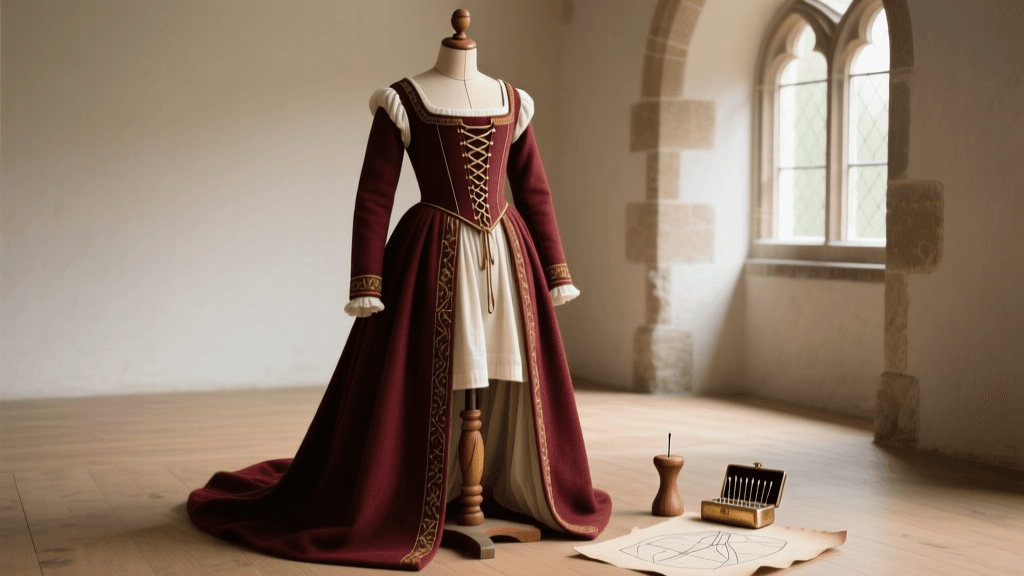
The defining characteristics of the Burgundian kirtle include a deeply scooped or V-shaped neckline, a highly fitted bodice that provides structural support without the need for modern corsetry, and a high-waisted appearance achieved through the cut of the skirt and the placement of the belt. The sleeves are typically long, fitted to the forearm, and sometimes feature decorative cuffs or tippets. According to the Metropolitan Museum of Art's Medieval Art department, the transition of Burgundian court dress in the 15th century heavily influenced the broader European fashion landscape, establishing the fitted kirtle as a foundational layer for both noblewomen and the affluent merchant class. The garment was usually worn over a linen chemise and beneath a fuller surcote or houppelande when outdoors or in formal settings.
Sourcing Historically Accurate Textiles in 2026
The foundation of any authentic European folk dress is the textile. In 2026, the historical tailoring community has largely moved away from synthetic blends and modern, machine-finished wools, favoring heritage-milled textiles that replicate the drape, weight, and finish of medieval broadcloths and linens. When sourcing materials for a Burgundian kirtle, you must prioritize natural fibers: 100% wool for the outer layer and 100% linen for the lining and undergarments.
The 2026 supply chain for heritage textiles has stabilized, with several specialized mills in the UK, Estonia, and Romania offering historically accurate weaves. For the outer kirtle, a medium-to-heavy weight wool twill or tabby weave (between 280gsm and 400gsm) is ideal. The fabric must be heavily fulled (felted) so that raw edges do not fray, a crucial requirement for medieval seam finishing techniques. For the lining, a medium-weight linen (around 200gsm) in a natural or bleached white provides the necessary breathability and structural backing.
2026 Heritage Textile Comparison Chart
| Fabric Type | Weave & Finish | Historical Accuracy | 2026 Avg. Price (Per Yard) | Best Application |
|---|---|---|---|---|
| Heritage Wool Broadcloth | Twill, Heavily Fulled | Excellent | $45 - $65 | Outer Kirtle, Surcotes |
| Medium-Weight Linen | Tabby, Semi-Bleached | Excellent | $22 - $35 | Kirtle Lining, Chemises |
| Wool-Linen Linsey-Woolsey | Mixed Warp/Weft | Good (Peasant/Lower Class) | $30 - $45 | Everyday Working Kirtles |
| Silk Taffeta | Plain Weave, Crisp | Excellent (High Nobility) | $85 - $120 | Festival Gowns, Trims |
| Modern Melton Wool | Plain, Machine Finished | Poor (Too Stiff/Drape) | $25 - $40 | Not Recommended for Accuracy |
Drafting the Pattern: Measurements and Gores
Unlike modern commercial patterns that rely heavily on darts to achieve a fitted bust, the 15th-century kirtle relies on the bias stretch of the fabric and strategic seam placement. The bodice is typically constructed from four main panels (two front, two back) with curved seams that follow the natural contours of the body. The skirt is flared using triangular gores inserted into the side and back seams, allowing for a sweeping hemline without adding bulk to the waist.
Before drafting your pattern, you must take precise measurements while wearing your foundational linen chemise and any historical bust support garments you intend to wear beneath the kirtle. Record the following measurements in inches or centimeters:
- Bust Circumference: Measured at the fullest point, ensuring the tape is snug but not compressing.
- Underbust Circumference: Crucial for drafting the supportive lower bodice seam.
- Natural Waist: Measured at the narrowest point of the torso, typically just above the navel.
- Hip Circumference: Measured at the widest point to ensure the gores provide adequate movement.
- Shoulder to Underbust: Determines the length of the fitted bodice.
- Underbust to Floor: Determines the starting point for the skirt gores and overall hem length.
- Bicep, Elbow, and Wrist Circumferences: For drafting the tightly fitted sleeves.
Authentic Hand-Stitching Techniques
To achieve true historical accuracy, the kirtle should be sewn entirely by hand. While machine sewing is sometimes tolerated in lower-tier reenactment categories, the 2026 competition standards for 'Authentic' and 'Master' tiers strictly require hand-finished seams. The primary stitches used in medieval garment construction are the running stitch, the backstitch, and the whip stitch.
For the main structural seams of the bodice, which endure significant tension, use a backstitch. Aim for a density of 8 to 10 stitches per inch using a heavily waxed linen thread (35/2 or 50/2 weight). The wax, typically beeswax, prevents the thread from tangling and increases its tensile strength. For the long, straight seams of the skirt and gores, a fine running stitch is historically appropriate and significantly faster to execute. Once the main seams are joined, they must be finished to prevent fraying and to lay flat against the body. The most common medieval finish is the flat-felled seam or the overcast edge, where the raw edges are folded inward and whipped down to the lining using a fine silk or linen thread.
Constructing the Signature V-Neckline
The deep V-neckline of the Burgundian kirtle is perhaps its most recognizable feature, but it also presents a structural challenge. If cut too deep without proper stabilization, the neckline will gape and stretch out of shape. To prevent this, historical tailors utilized a technique involving a facing or a sturdy linen interlining.
Cut a facing piece from your lining linen that mirrors the exact curve of the V-neck, extending about two inches inward and down the center front. Baste this facing to the wool outer layer before sewing the shoulder seams. When you turn the facing to the inside, use a tiny prick stitch or a blind hem stitch along the very edge of the neckline. This secures the layers together invisibly from the outside while maintaining a crisp, sharp edge. For the center front closure, the kirtle is typically laced rather than buttoned. Sew hand-bound eyelets using a heavy linen buttonhole thread, spacing them approximately one inch apart to ensure the bodice pulls together evenly without creating tension ripples.
Dyeing and Color Fastness in Modern Historical Garments
Color played a massive role in 15th-century sumptuary laws and social signaling. The Burgundian court was famous for its deep, rich blacks, vibrant madder reds, and woad blues. In 2026, natural dyeing has seen a massive renaissance, with many folk dress artisans cultivating their own dye gardens. If you are dyeing your own wool, ensure you use proper mordants like alum and tannin to achieve colorfastness. However, if you are purchasing pre-dyed heritage wool, verify that the mill uses lightfast and washfast dyes. For high-level historical accuracy, avoid modern synthetic colors like neon or overly uniform chemical blacks; instead, seek out 'living black' or 'madder brown' shades that possess the subtle, organic variations characteristic of medieval dye vats. For further study on the evolution of these silhouettes and color trends, the Victoria and Albert Museum's extensive fashion archives provide invaluable visual references and textile analyses that can guide your color choices.
Final Fitting and Accessorizing the Ensemble
Once the kirtle is constructed, the final fitting must be done with all undergarments, shoes, and the intended belt in place. The kirtle should be hemmed to just brush the floor when worn with your historical leather turnshoes or pattens. To complete the Burgundian look, the kirtle is accessorized with a woven silk or leather belt worn high on the waist, often featuring a decorative brass or pewter buckle and a long, trailing tail. The ensemble is traditionally crowned with a Hennin or a padded bourrelet headdress, which frames the face and draws the eye upward, completing the elongated, elegant silhouette that defined 15th-century European high fashion.
Constructing a 15th-century Burgundian kirtle is a labor-intensive but deeply rewarding endeavor. By adhering to historical pattern drafting, investing in high-quality heritage textiles, and mastering traditional hand-sewing techniques, you contribute to the living preservation of European folk dress. As the historical tailoring community continues to grow and evolve in 2026, the commitment to authenticity ensures that these magnificent garments will continue to be studied, worn, and celebrated for generations to come.