Alpine Folk Dress 2026: Bavarian, Austrian & Swiss Tracht Guide
The 2026 Alpine Tracht Revival: Beyond the Beer Tents
As we navigate the cultural landscape of 2026, the European folk dress renaissance has reached new heights of authenticity and sustainability. Nowhere is this more evident than in the Alpine regions of Germany, Austria, and Switzerland. The term Tracht (derived from the German verb tragen, meaning 'to wear' or 'to carry') encompasses far more than the mass-produced, synthetic costumes seen at international beer festivals. True Alpine Tracht is a living, breathing textile tradition that reflects regional identity, marital status, and a deep connection to the natural environment. According to the Bavarian National Museum, contemporary interest in historically accurate, locally sourced folk garments has surged, driven by a 2026 consumer shift toward slow fashion, heritage craftsmanship, and regional pride.
This comprehensive guide explores the distinct folk costumes of the Alpine corridor, breaking down the anatomy of the garments, the cultural nuances between neighboring regions, and how to source and care for authentic pieces in today's market.
Bavaria: The Anatomy of the Classic Dirndl and Lederhosen
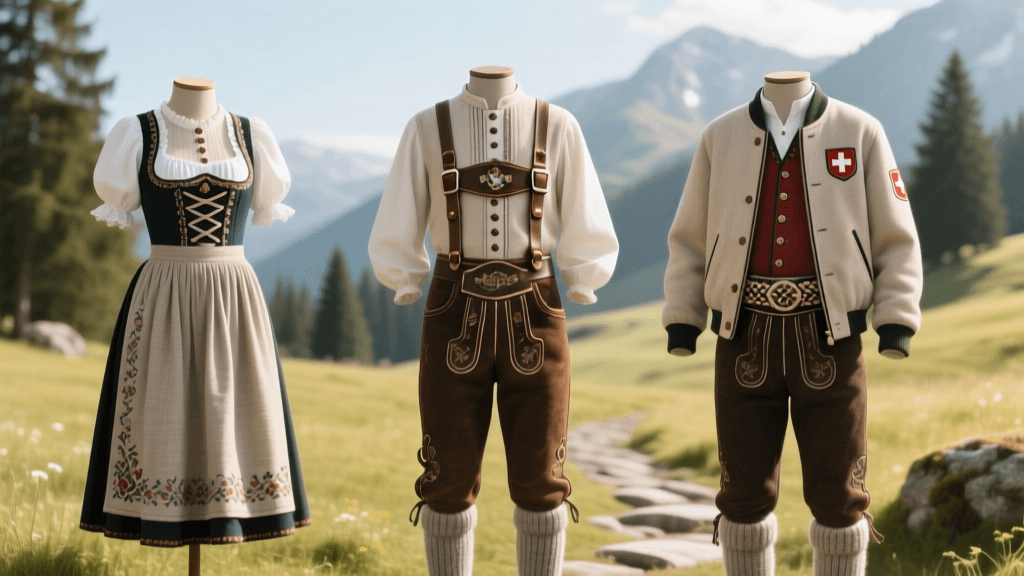
When discussing Bavarian folk dress, the Dirndl and Lederhosen are the undisputed icons. However, a genuine Bavarian Tracht is defined by strict tailoring rules, high-quality natural materials, and specific regional variations such as the Miesbacher Tracht or the Werdenfelser Tracht.
The Dirndl: Four Essential Components
A traditional Dirndl is not a single dress, but a four-piece ensemble that must be tailored to the wearer's exact measurements. In 2026, the finest Dirndls are crafted from GOTS-certified organic linen, raw silk, and sustainably sheared Alpine wool.
- Mieder (Bodice): The bodice is heavily structured, often reinforced with natural fibers or lightweight steel boning to provide a flattering silhouette without the discomfort of historical corsetry. It is typically fastened with a chain laced through silver or horn hooks, or with decorative silk ribbons.
- Rock (Skirt): The skirt is heavily pleated and gathered at the waist. The traditional length falls exactly at the mid-calf (the 'Dirndl-Delle' or ankle bone), though modern fashion Tracht occasionally experiments with midi lengths. The width of the hem can require up to four meters of fabric to achieve the proper swing.
- Bluse (Blouse): Worn beneath the bodice, the blouse is typically made of fine white cotton batiste or silk. The neckline varies by region and occasion, ranging from high-collared everyday blouses to deep, lace-trimmed necklines for festive occasions.
- Schürze (Apron): The apron is the most communicative piece of the Dirndl. Worn over the skirt, it is traditionally made of silk, brocade, or fine cotton. The placement of the bow on the apron tie serves as a traditional relationship status indicator: tied on the left means single, on the right means married or taken, in the center traditionally signifies a virgin (though less commonly used today), and tied at the back indicates widowhood or that the wearer is a working waitress.
Lederhosen: The Art of the Säckler
Authentic Bavarian Lederhosen (leather breeches) are the domain of the Säckler (master leatherworker). The gold standard is Hirschleder (deer leather), prized for its breathability, durability, and soft texture. In 2026, ethical sourcing is paramount; top-tier Säcklers use leather from culled Alpine deer populations, tanned using traditional vegetable oils and bark extracts rather than harsh chromium salts. The embroidery, known as Weißstickerei (white embroidery), features motifs of edelweiss, oak leaves, and alpine roses. A bespoke pair of Kniebundhosen (knee-breeches) requires up to 40 hours of hand-stitching and represents a significant investment.
Austria: Tyrolean Nuances and the Ausseer Dirndl
Crossing the border into Austria, the Tracht landscape shifts. While the basic silhouettes remain similar to Bavaria, Austrian folk dress is deeply tied to specific valleys and historical hunting traditions. The Bavarian and Alpine Tracht Associations note that Austrian Tracht often features more subdued, earth-toned palettes for everyday wear, reserving vibrant colors for specific regional festivals.
The Ausseer Dirndl
Originating from the Salzkammergut lake region, the Ausseer Dirndl is one of the most recognizable and strictly codified folk dresses in Austria. Unlike the heavily patterned Dirndls of Bavaria, the traditional Ausseer Dirndl relies on bold, solid color-blocking: a vibrant pink or rose-colored skirt, a deep green bodice, and a black silk apron. This specific color combination was historically popularized by the Viennese aristocracy who summered in the Ausseerland in the 19th century. Today, it remains a symbol of high cultural status and is worn with a distinct, hand-woven silk scarf rather than a traditional apron bow.
The Steireranzug
For men, the Steireranzug (Styrian suit) from the state of Styria is the pinnacle of Austrian male Tracht. Unlike the rustic leather of Bavarian Lederhosen, the Steireranzug is a sophisticated wool suit, typically in a grey-green or slate color, featuring contrasting green piping along the lapels, cuffs, and pockets. It is worn with a crisp white shirt, a silk cravat, and a traditional Styrian hat adorned with a tuft of chamois hair (Gamsbart). In 2026, the Steireranzug has seen a revival among young Austrian professionals as an acceptable, highly elegant alternative to the standard business suit for formal events and weddings.
Switzerland: Bernese Velvet and Appenzeller Silver
Swiss folk dress, or Trachten, is incredibly diverse, with the Swiss Federal Commission on Folk Costumes recognizing over 700 distinct regional variations. Swiss Tracht is generally more conservative and heavily influenced by Protestant modesty in the cantons, though festive Sunday dresses feature breathtaking metalwork and lace.
The Bernese Sonntagskleid
The Berner Sonntagskleid (Bernese Sunday Dress) is widely considered the most elegant of all Swiss folk costumes. The bodice is crafted from black velvet, heavily embellished with silver filigree chains and rosettes. The shirt features intricate Ajour (drawn-thread) embroidery at the cuffs and collar. The skirt is typically a heavy, pleated black wool or deep crimson, worn over a white petticoat. The silver jewelry, known as Filigran, is handcrafted by specialized Swiss silversmiths and often passed down through generations as family heirlooms. According to the Swiss National Museum, the preservation of these 18th and 19th-century silversmithing techniques is a major focus of contemporary Swiss cultural heritage initiatives.
The Appenzeller Sennentracht
In the northeastern canton of Appenzell, the Sennentracht (herdsman's dress) is a striking display of rural pride. For men, the Sunday best includes bright yellow leather breeches, a red vest with silver embroidery, and a distinctive black hat adorned with a miniature silver spoon and a tiny painted scene of Alpine cattle drives. Women wear the Sonntagskleid, characterized by a winged lace headdress called a Schlotte, which frames the face like a delicate halo, paired with a silver-buckled belt and elaborate gold and silver chain necklaces.
2026 Buyer’s Guide: Authentic Tracht vs. Fast Fashion
The market in 2026 is sharply divided between 'Dirndl-Mode' (fast-fashion party costumes made of polyester) and genuine 'Tracht' (heritage garments made of natural fibers). When investing in European folk dress, understanding the price-to-quality ratio is essential. Below is a comparison of average 2026 market prices for authentic, locally manufactured garments.
| Region | Primary Garment | Key Textile / Material | 2026 Avg. Investment (EUR/CHF) |
|---|---|---|---|
| Bavaria (Germany) | Dirndl Ensemble | Raw Silk, Organic Linen, Horn | €600 - €1,200 |
| Bavaria (Germany) | Lederhosen (Kniebund) | Vegetable-Tanned Hirschleder | €800 - €1,800 |
| Styria (Austria) | Steireranzug | Virgin Wool, Silk Piping | €900 - €1,500 |
| Salzkammergut (Austria) | Ausseer Dirndl | Heavy Cotton, Woven Silk Scarf | €500 - €900 |
| Bern (Switzerland) | Sonntagskleid | Black Velvet, Silver Filigree | CHF 2,500 - CHF 5,000+ |
| Appenzell (Switzerland) | Sennentracht (Men) | Yellow Suede, Silver Spoons | CHF 1,800 - CHF 3,000 |
Sourcing Advice: To ensure authenticity, look for the Trachten-Qualitätssiegel (Tracht Quality Seal) or buy directly from registered master tailors (Trachtenschneidereien) in Munich, Salzburg, or Bern. Avoid garments with exposed plastic zippers; authentic Dirndls utilize hidden side zippers or traditional hook-and-eye closures.
Garment Care: Preserving Heritage Textiles
Maintaining Alpine folk dress requires specialized care, particularly when dealing with natural leathers and delicate silks.
- Hirschleder Care: Never wash authentic deer leather in water. In 2026, master Säcklers recommend using pH-neutral, beeswax-based leather balms to maintain the hide's suppleness. If the Lederhosen become stained, allow the dirt to dry completely and brush it out with a soft-bristled suede brush. The natural oils from the wearer's skin actually improve the leather's patina over time.
- Silk Aprons and Scarves: Silk Schürzen should never be hung on wire hangers, as this distorts the delicate weave. Store them rolled in acid-free tissue paper inside a breathable cotton garment bag to prevent light damage and moisture buildup.
- Silver Filigree: The silver chains on Bernese and Appenzeller bodices will tarnish with exposure to humidity. Polish them gently with a microfiber cloth designed for precious metals, avoiding liquid dips that can damage the surrounding velvet or cotton threads.
Conclusion
The Alpine Tracht of 2026 is a testament to the enduring power of regional identity in a globalized world. Whether it is the structured elegance of a Bavarian Dirndl, the color-blocked heritage of the Ausseerland, or the breathtaking silverwork of the Swiss cantons, these garments are not relics of the past. They are meticulously crafted, sustainable, and deeply meaningful expressions of European folk culture that continue to evolve while honoring their ancestral roots.