Bata De Cola Flamenco Dance Dress: Feria De Abril Guide 2026
The Living Heritage of Andalusian Festival Dress
When discussing European folk dress, few garments command the immediate visual recognition and dynamic energy of the Andalusian Traje de Flamenca. Unlike many regional costumes across Europe that remain frozen in time as museum pieces or strictly ceremonial attire, the flamenco dress is a living, breathing entity that evolves with contemporary fashion while retaining its deep cultural roots. Recognized globally and intrinsically linked to the art form inscribed on the UNESCO Intangible Cultural Heritage list, this garment is the undisputed centerpiece of Spain’s vibrant spring festival season.
As we approach the Spring 2026 festival calendar, the Feria de Abril in Seville remains the ultimate showcase for these magnificent textiles. Among the various silhouettes worn in the casetas (festival tents) and on the professional stage, the Bata de Cola—the iconic dress featuring a long, sweeping train—stands as the pinnacle of festival dance attire. This comprehensive guide explores the construction, 2026 textile trends, and dance mechanics of the Bata de Cola, providing enthusiasts and dancers with everything needed to navigate the upcoming season.
Anatomy of the Bata de Cola: Construction and Silhouette
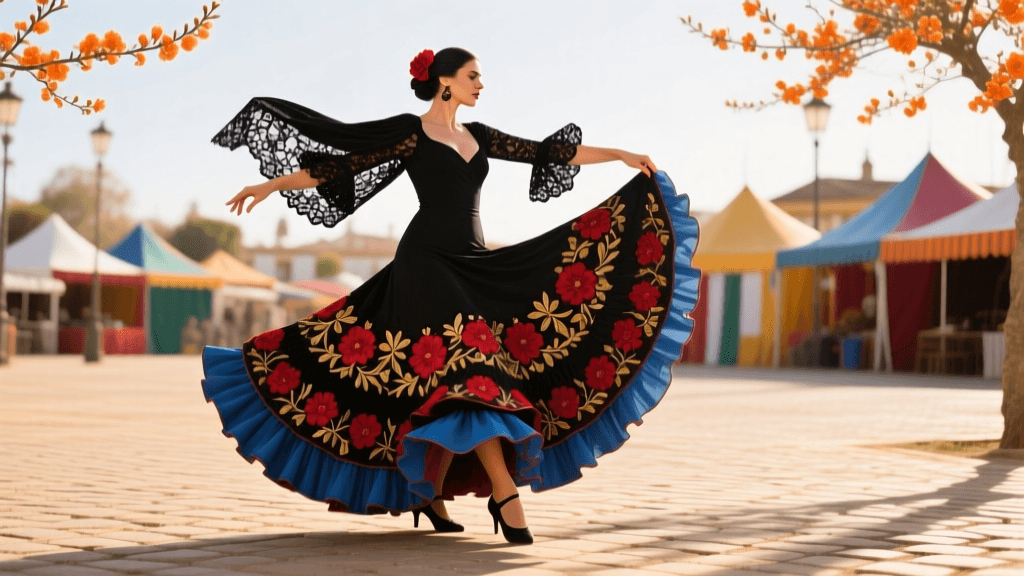
The term Bata de Cola translates roughly to 'dress with a tail.' While a standard festival dress might end at the ankle or calf to allow for easy walking through the crowded fairgrounds, the Bata de Cola is explicitly designed for the dance floor. The train typically measures between 1.5 and 2 meters in length from the back of the waist, requiring immense skill to manipulate during performance.
The Canesú and the Bodice
The upper portion of the dress, known as the canesú, is tailored to fit like a second skin. In 2026, master dressmakers in Seville’s Triana district are utilizing advanced 3D body-scanning technology during initial fittings to ensure the bodice provides maximum support without restricting the dancer's ribcage expansion during intense zapateado (footwork). The bodice is heavily boned and often features a sweetheart or plunging V-neckline, trimmed with intricate lace or entredós (insertion lace).
The Volantes (Ruffles) and Train Mechanics
The true magic of the Bata de Cola lies in its volantes (ruffles). The skirt is cut on the bias to allow for fluid, circular movement. The train is not merely an afterthought; it is engineered with internal weights and strategic gathering. When a dancer executes a coleo (the technique of kicking the train backward or to the side), the ruffles must bloom outward like a flower before settling gracefully back onto the floor. In 2026, the trend leans toward asymmetrical ruffle placements, creating a cascading waterfall effect that highlights the dancer's footwork.
2026 SIMOF Trends: Sustainability and Digital Textiles
The Salón Internacional de la Moda Flamenca (SIMOF) sets the annual tone for festival fashion. The 2026 collections have introduced a fascinating juxtaposition of hyper-traditional silhouettes with cutting-edge, sustainable textile innovations. As environmental consciousness reshapes European fashion, Andalusian designers are leading the charge in eco-friendly folk dress.
- Organic Cotton Poplins: Locally milled in Andalusia, these breathable, GOTS-certified cottons are replacing synthetic blends, offering superior comfort during the sweltering late-April heat of the Feria.
- Biodegradable Sequins: For evening performances and high-end casetas, designers are utilizing plant-based, biodegradable sequins that catch the lantern light without contributing to microplastic pollution.
- Digital Print Organza: Traditional polka dots (lunares) are being reimagined through high-definition digital printing on silk organza, allowing for subtle, watercolor-like gradients that were previously impossible to achieve with traditional dyeing methods.
- Upcycled Vintage Mantones: A major trend for 2026 is the integration of restored, antique silk shawls directly into the bodice and sleeve construction, promoting circular fashion within the flamenco community.
Comparative Guide: Choosing Your 2026 Festival Dress
Selecting the right garment depends heavily on your role at the festival. Are you attending as a guest, dancing casually in the tents, or performing on a professional stage? The table below outlines the key differences between the primary styles of Andalusian folk dress available this season.
| Dress Type | Skirt Length & Train | Best Use Case | Estimated 2026 Custom Price (EUR) | Mobility Level |
|---|---|---|---|---|
| Traje Corto | Calf-length, no train | Casual fairground walking, daytime socializing | €350 - €600 | High (Easy walking) |
| Traje de Flamenca (Standard) | Ankle-length, floor-grazing ruffles | Dancing in casetas, evening Feria events | €600 - €1,200 | Medium (Requires skirt management) |
| Bata de Cola (Festival) | 1.5m train, weighted ruffles | Advanced amateur dancing, local competitions | €1,200 - €2,000 | Low (Requires specific dance technique) |
| Bata de Cola (Stage/Professional) | 2m+ train, heavily structured | Theatrical performances, professional tablaos | €2,500 - €4,500+ | Specialized (Strictly for stage choreography) |
Mastering the Dance: Footwork and Skirt Manipulation
To truly appreciate the Bata de Cola, one must understand its relationship with the dancer's body. The Museo del Baile Flamenco in Seville frequently hosts workshops demonstrating the physics of this garment. The dress is effectively an extension of the dancer's limbs.
The foundational technique for managing the train is the marcaje (marking the beat). As the dancer shifts weight from one foot to the other, the hips must articulate in a way that naturally sweeps the train across the floor. When the tempo accelerates into a bulería, the dancer employs the floreo (intricate wrist and hand rotations) while simultaneously using the instep of the foot to hook and kick the ruffles backward. This requires specialized footwear; the shoes must have a precise heel height (usually 5 to 7 centimeters) and a reinforced toe box to withstand the percussive impact while providing the leverage needed to lift the heavy skirt.
Essential Accessories for the Feria Floor
No traditional European costume is complete without its accompanying accessories, and the Andalusian ensemble is no exception. The styling for 2026 emphasizes heritage craftsmanship and bold, structural statements.
- El Mantón de Manila: The large, embroidered silk shawl. In 2026, there is a resurgence of the mantón de media luna (half-moon shawl), which is draped and pinned tightly around the torso to accentuate the waistline without the bulk of traditional square folding.
- La Peineta: The decorative tortoiseshell or acrylic comb. This year's trend favors oversized, architectural combs that provide a dramatic silhouette against the updo, often adorned with subtle metallic veining.
- Los Pendientes: Flamenco earrings are famously large and heavy. To combat earlobe fatigue during long festival nights, 2026 accessory designers have introduced lightweight, hollow-resin alternatives that mimic the look of heavy brass and coral without the physical strain.
- El Clavel: The fresh carnation or rose tucked into the hair. While fresh flowers remain the gold standard, high-end silk botanical replicas are gaining popularity for their durability through multi-day festivals.
Sourcing and Commissioning Your Garment in 2026
If you intend to wear a custom Bata de Cola for the Feria de Abril in late April 2026, time is of the essence. The premier ateliers in Seville—particularly those clustered around Calle Sierpes and the Triana neighborhood—book their spring commissions months in advance.
The standard timeline for a bespoke festival dress requires an initial consultation and fabric selection by early January 2026. The first fitting, where the canesú and basic skirt structure are evaluated, typically occurs in late February. The final fitting, which involves adjusting the precise weight and drape of the volantes, must be completed by the first week of April. For international buyers, many top-tier Andalusian designers now offer virtual consultation services and ship muslin mock-ups for remote fitting adjustments, ensuring a flawless silhouette upon arrival in Spain.
Conclusion: A Tradition in Perpetual Motion
The Bata de Cola is far more than a mere costume; it is a masterclass in textile engineering and a profound expression of regional identity. As the 2026 festival season approaches, the fusion of sustainable fabrics, modern tailoring techniques, and centuries-old dance traditions ensures that the Andalusian folk dress remains one of the most dynamic and captivating garments in the European cultural lexicon. Whether you are a seasoned dancer preparing for the stage or a cultural enthusiast attending your first Feria, understanding the intricate mechanics and rich heritage of the Bata de Cola will profoundly deepen your appreciation for this spectacular art form.