Banarasi vs Kanchipuram Silk: 2026 Bridal Fabric Guide
The Ultimate South Asian Bridal Textile Showdown
When it comes to South Asian bridal wear, few textiles command the reverence, heritage, and sheer visual impact of handwoven silk saris. As we navigate the bridal season of 2026, the conversation among designers, weavers, and brides has shifted dramatically. The era of overly stiff, mass-produced synthetic blends is firmly in the past. Today's discerning brides are prioritizing 'quiet luxury,' focusing on heirloom-quality fabrics, sustainable weaving practices, and the revival of pure, unadulterated silk. At the very pinnacle of this textile hierarchy sit two undisputed giants: the Banarasi silk of Varanasi and the Kanchipuram silk of Tamil Nadu.
Choosing between these two legendary fabrics is not merely a matter of color preference; it is a decision rooted in textile engineering, regional climate, draping mechanics, and cultural symbolism. Both textiles hold Geographical Indication (GI) status, protecting their unique manufacturing processes from cheap imitations. Yet, their structural differences dictate how they move, how they catch the light, and how they endure through generations. In this comprehensive 2026 fabric guide, we dissect the anatomy of Banarasi and Kanchipuram silks to help you make an informed, investment-grade decision for your bridal trousseau.
Banarasi Silk: Varanasi’s Brocade Masterpiece
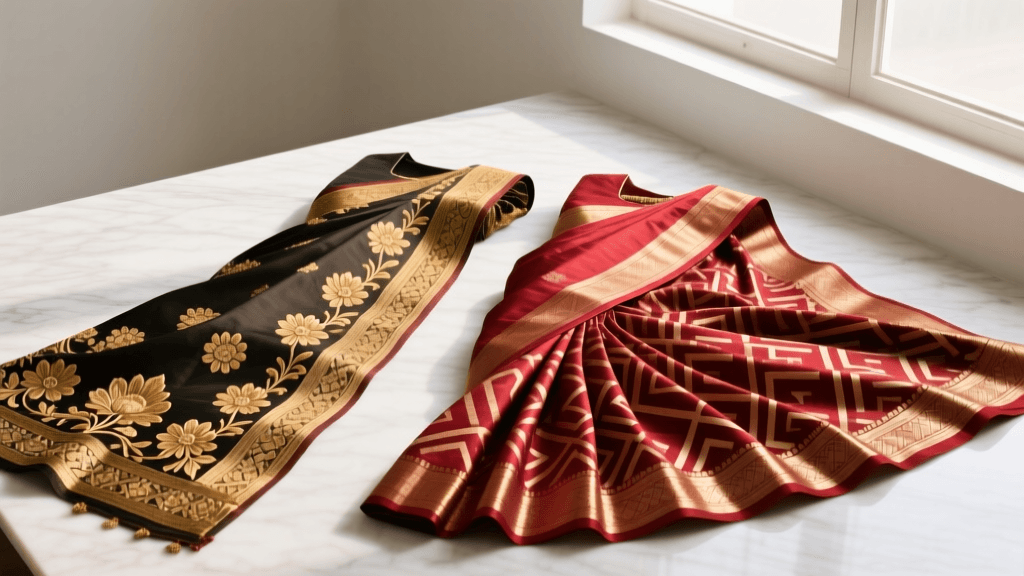
Originating from the ancient ghats of Varanasi in Uttar Pradesh, Banarasi silk is celebrated for its intricate brocade work, Mughal-inspired motifs, and luxurious fluidity. The quintessential Banarasi bridal sari is woven from Katan silk—a pure, twisted mulberry silk yarn that provides a smooth, lustrous base. However, 2026 has seen a massive surge in the popularity of Tissue and Organza Banarasis, where silk warps are interwoven with pure zari wefts to create a lightweight, translucent, and ethereal fabric that appeals to modern minimalist brides.
The magic of the Banarasi weave lies in its supplementary weft technique. Using traditional wooden jacquard looms and jala (a system of knotted cords that act as punch cards), weavers introduce metallic threads (zari) and colorful silk yarns into the base fabric to create raised, embossed patterns. This results in the signature jaal (trellis), kalga (paisley), and bel (creeper vine) motifs that cascade across the body and heavily concentrate on the pallu (the decorative end of the sari).
From a tactile perspective, a pure Katan Banarasi is surprisingly supple. Despite the heavy metallic thread work, the twisted silk base allows the fabric to mold beautifully to the body, creating a fluid, waterfall-like drape. This makes it an exceptional choice for brides who prefer a garment that moves with them during lengthy ceremonial rituals, offering both opulence and physical comfort.
Kanchipuram Silk: Tamil Nadu’s Interlocking Marvel
Journeying south to the temple town of Kanchipuram in Tamil Nadu, we encounter a textile of a completely different structural lineage. Kanchipuram silk (often anglicized as Kanjeevaram) is renowned for its formidable weight, crisp texture, and striking color contrasts. Woven from heavy, multi-ply mulberry silk—typically a 3-ply warp and a 2-ply weft—the fabric possesses a structural rigidity that holds pleats with architectural precision.
The defining technical marvel of the Kanchipuram sari is the korvai technique. Unlike fabrics where the border is printed or embroidered onto the base, the border and the body of a Kanchipuram sari are woven separately and then interlocked with microscopic precision. This requires the simultaneous operation of three shuttles by the weaver and an assistant. The resulting joint is so strong that even if the sari tears, the border will not detach. Similarly, the petni or benth technique is used to join the contrasting pallu to the main body, creating a seamless yet visually distinct transition.
In 2026, the Kanchipuram bridal aesthetic is dominated by 'Ganga-Jamuna' borders (featuring dual-toned gold and silver zari) and heritage motifs like the yali (mythical beast), temple borders, and traditional Madras checks. The fabric's inherent stiffness gives it a regal, statuesque silhouette, making it the preferred choice for brides who desire a structured, commanding presence and a sari that drapes in sharp, immaculate folds.
2026 Head-to-Head Fabric Comparison
To visualize the distinct characteristics of these two heritage textiles, refer to the comparison table below. This data reflects the current market realities, weaving trends, and pricing for authentic, pure-zari bridal pieces in 2026.
| Feature | Banarasi Silk (Varanasi) | Kanchipuram Silk (Tamil Nadu) |
|---|---|---|
| Primary Silk Base | Katan (Twisted Mulberry), Tissue, Organza | Heavy Mulberry (3-ply warp, 2-ply weft) |
| Weaving Technique | Jacquard, Supplementary Weft (Brocade) | Korvai (Interlocking border & body) |
| Drape & Structure | Fluid, supple, molds to the body | Crisp, structured, holds sharp pleats |
| Signature Motifs | Jangla, Butidar, Mughal florals, Jaal | Temple borders, Yali, Peacocks, Checks |
| 2026 Bridal Trend | Pastel Tissue, Lightweight Heirloom Weaves | Dual-tone (Shot Silk), Heritage Revival |
| Climate Suitability | Excellent for cooler, northern winter weddings | Ideal for tropical, humid southern climates |
| Avg. Pure Zari Price | $800 – $3,500+ USD | $600 – $2,800+ USD |
The Zari Factor: Navigating Pure vs. Tested in 2026
The soul of both Banarasi and Kanchipuram silks lies in their zari—the metallic thread that creates the shimmering motifs. However, the zari market is fraught with misinformation. Historically, zari was made from pure silver wire flattened and wrapped around a silk core, then electroplated in pure gold. Today, this is known as 'Pure Zari' or 'Real Zari.' Due to the skyrocketing costs of precious metals in 2026, genuine pure zari saris are considered ultra-luxury investments.
Conversely, 'Tested Zari' (which uses a copper or synthetic core with silver and gold plating) and 'Plastic Zari' (metallic polyester yarns) dominate the lower and mid-tier markets. While tested zari offers a brilliant initial shine, it is prone to tarnishing, oxidizing, and turning black within a few years if not stored meticulously. Plastic zari, while durable and cheap, lacks the subtle, warm luster of real metal and can feel abrasive against the skin.
For a 2026 bride building an heirloom trousseau, investing in pure zari is highly recommended. You can identify pure zari through a simple burn test: when a thread is burned, the silk core turns to ash, while the pure silver wire remains intact as a white, powdery residue. Tested zari will leave a hard, black metallic bead, and plastic zari will melt into a hard synthetic lump. Furthermore, reputable weavers in 2026 are increasingly providing digital hallmarks and XRF (X-ray fluorescence) testing certificates to verify the precious metal content of their bridal pieces.
Authenticity: Silk Mark and GI Tags
With the rise of sophisticated power-loom replicas flooding the market, verifying the authenticity of your handwoven silk is paramount. The Ministry of Textiles, Government of India enforces strict Geographical Indication (GI) parameters for both Varanasi brocades and Kanchipuram silks, ensuring that only textiles woven in these specific regions using traditional methods can bear the name.
When shopping, always look for the 'Silk Mark'—a holographic label issued by the Silk Mark Organisation of India (SMOI) that guarantees 100% natural silk. Additionally, artisanal cooperatives and NGOs supported by organizations like the Crafts Council of India have been instrumental in 2026 in connecting brides directly with master weavers, bypassing middlemen and ensuring that the artisans receive fair compensation for their grueling, months-long labor. Purchasing directly from weaver cooperatives not only guarantees authenticity but also supports the survival of these endangered handloom communities.
Styling, Drape, and Climate Considerations
The structural differences between these silks dictate how they should be styled. According to historical textile archives and contemporary analyses by institutions like the Victoria and Albert Museum (V&A), the drape of a garment is intrinsically linked to its regional climate and cultural utility. The heavy, porous nature of Kanchipuram silk allows for air circulation, making it surprisingly comfortable in the humid, tropical heat of South Indian weddings. Its stiffness ensures that the heavy gold jewelry traditionally worn by South Indian brides rests perfectly against the fabric without pulling it out of shape.
Conversely, the fluid Katan Banarasi is a winter wedding staple in North India. Its supple nature allows for intricate, modern draping styles—such as the dhoti-pant drape or the mermaid silhouette—without adding unnecessary bulk. In 2026, many brides are also repurposing their mothers' vintage Banarasi saris into contemporary lehenga skirts or structured corsets, a feat made possible by the fabric's forgiving, malleable weave.
Care and Maintenance for Heavy Silks
Owning a pure silk and pure zari sari is akin to owning a piece of fine art; it requires meticulous conservation. Never attempt to wash these garments at home. Always rely on professional dry cleaners who specialize in heritage textiles, and ensure they use mild, non-chlorinated solvents that will not strip the gold plating from the zari.
Storage is equally critical. Never store silk in plastic covers, as this traps moisture and accelerates the oxidation of the zari. Instead, wrap the sari in unbleached, breathable muslin or pure cotton cloth. Avoid using naphthalene balls or chemical moth repellents, as their harsh fumes can permanently discolor the silk and degrade the metallic threads. Finally, to prevent the zari from cracking or the silk from developing permanent crease lines, you must remove the sari from storage and refold it along different lines every three to four months.
Conclusion: Choosing Your Heirloom
The choice between Banarasi and Kanchipuram silk ultimately comes down to a harmony of personal aesthetic, body type, and wedding climate. If you envision a bridal look defined by fluid grace, intricate Mughal motifs, and a lightweight, ethereal drape, the Banarasi Katan or Tissue silk is your unparalleled match. If you desire a statuesque, regal silhouette with sharp pleats, bold color contrasts, and architectural temple borders, the formidable Kanchipuram silk stands alone in its majesty.
As you navigate the 2026 bridal market, prioritize authenticity over convenience. Seek out pure zari, demand the Silk Mark, and engage directly with the weaving communities that keep these ancient looms alive. By doing so, you are not just purchasing a garment for a single day; you are acquiring a woven chronicle of Asian history, ready to be passed down as a cherished heirloom for generations to come.