Banarasi vs Kanchipuram Silk Sarees: 2026 Fabric Guide
The Titans of Traditional Asian Silk: Banarasi vs. Kanchipuram
When it comes to Asian traditional garments, few textiles command the reverence, historical weight, and sheer visual impact of Indian silk sarees. As we navigate the fashion landscape of 2026, the debate between Banarasi and Kanchipuram silk remains at the forefront of bridal trousseaus, festive wear, and heritage textile collecting. Both fabrics are masterpieces of the weaver's loom, yet they offer vastly different drape, weight, and aesthetic experiences. Understanding the nuanced fabric and textile choices between these two giants is essential for anyone looking to invest in authentic Asian traditional wear this year. According to the Victoria and Albert Museum's Asian textile archives, the evolution of these regional weaves reflects centuries of trade, royal patronage, and indigenous innovation. In 2026, with raw silk prices fluctuating and a renewed global interest in sustainable, slow-fashion heritage garments, making an informed choice between Banarasi and Kanchipuram silk is more critical than ever.
Banarasi Silk: The Art of Brocade and Jacquard Weaving
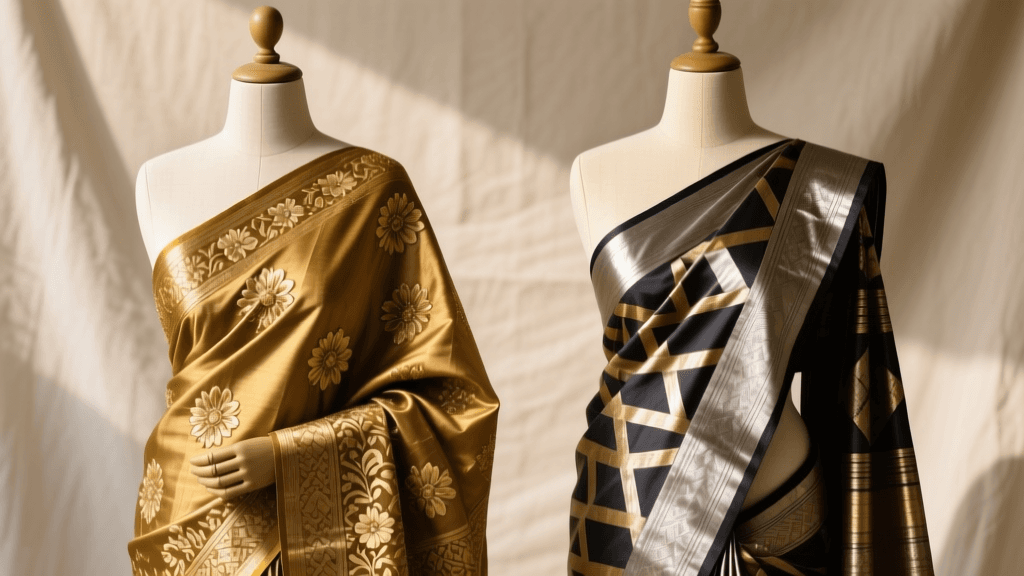
Originating from the holy city of Varanasi (Banaras) in Uttar Pradesh, Banarasi silk is globally celebrated for its intricate brocade work, opulent zari (metallic thread), and Mughal-inspired motifs. The fabric is traditionally woven on jacquard looms, which allow for the creation of complex, raised patterns that look almost like embroidery but are actually integral to the textile structure. According to Britannica's comprehensive guide on silk production, the interplay of silk warp and metallic weft threads creates a luminous, textured surface that catches the light beautifully.
In 2026, the Banarasi textile industry has seen a massive surge in 'lightweight heritage' fabrics. While traditional pure silk Banarasi sarees (often weighing between 600 to 900 grams) remain a staple for winter weddings, modern weavers are increasingly utilizing tissue silk, organza, and georgette bases interwoven with fine zari. This 2026 trend caters to contemporary styling preferences, allowing for fluid draping and greater comfort during long ceremonial events. The motifs typically feature intricate 'jaal' (trellis) patterns, paisleys (ambi), and floral vines. The zari used in premium 2026 Banarasi sarees often incorporates tested silver threads electroplated with gold, ensuring a bright, untarnished shine that lasts for decades when stored correctly.
Kanchipuram Silk: The Structural Marvel of Mulberry and Korvai
Hailing from the temple town of Kanchipuram in Tamil Nadu, Kanchipuram (or Kanjeevaram) silk is the undisputed heavyweight champion of South Indian textiles. Woven from pure mulberry silk, this fabric is renowned for its incredible durability, rich luster, and structural stiffness. The defining technical characteristic of a genuine Kanchipuram silk saree is the 'Korvai' technique—an intricate interlocking method where the border and the pallu (the decorative end piece) are woven separately and then interlocked with the main body of the saree with such precision that the joint is nearly invisible and incredibly strong.
The motifs in Kanchipuram silk are deeply rooted in Dravidian temple architecture, featuring checks, peacocks, temple borders, and mythological narratives. In 2026, the market has seen a rise in 'soft-finish' Kanchipuram silks. Historically, the heavy gumming (sericin) left on the mulberry threads gave the saree a stiff, paper-like drape. Today, advanced, eco-friendly degumming processes allow the pure mulberry silk to retain its legendary strength while offering a much softer, more pliable drape, making it highly sought after by younger demographics and global fashion enthusiasts who prioritize comfort alongside tradition. The zari in authentic Kanchipuram sarees is traditionally made of pure silver dipped in gold, making these garments not just clothing, but tangible financial assets.
2026 Fabric Comparison Chart: Banarasi vs. Kanchipuram
To help you make an informed textile choice for your 2026 wardrobe, we have compiled a detailed comparison of the physical and economic attributes of both fabrics.
| Feature | Banarasi Silk (Pure Brocade) | Kanchipuram Silk (Pure Mulberry) |
|---|---|---|
| Base Material | High-twist silk, tissue, or organza | Pure heavy mulberry silk |
| Weaving Technique | Jacquard loom, continuous weft brocade | Pit loom, Korvai (interlocking) technique |
| Weight (Avg) | 450g - 800g (Lightweight variants available) | 600g - 1.2kg (Naturally heavier) |
| Drape & Feel | Fluid, textured, soft to the touch | Structured, crisp, heavy fall |
| Primary Motifs | Mughal florals, jaal, paisleys, kalga | Temple borders, checks, peacocks, yali |
| 2026 Price Range (USD) | $180 - $900+ (depending on zari purity) | $250 - $1,500+ (heavy investment pieces) |
| Best Climate | Adaptable; organza/tissue for summer, pure for winter | Cooler climates or air-conditioned venues |
How to Choose the Right Silk for Your 2026 Wardrobe
Selecting between Banarasi and Kanchipuram silk ultimately depends on your body type, the climate of the event, and your personal styling preferences. If you are attending a daytime outdoor ceremony in a humid climate, a heavy Kanchipuram silk might become uncomfortable. Instead, opt for a 2026 Banarasi tissue silk or a lightweight georgette Banarasi, which offers the regal look of zari brocade without the suffocating weight. The fluid drape of Banarasi silk is also highly forgiving and flattering for those who prefer a silhouette that skims the body rather than adding volume.
Conversely, if you are looking for a garment that holds its shape, creates a majestic, structured silhouette, and serves as a generational heirloom, Kanchipuram silk is unmatched. The stiffness of the mulberry silk ensures that the pleats of the saree remain razor-sharp throughout the event. For brides in 2026, the trend is heavily leaning towards dual-wardrobes: a structured, heavily zari-woven Kanchipuram for the primary morning rituals, followed by a fluid, shimmering Banarasi organza for the evening reception, allowing for ease of movement and dancing.
Caring for Your Silk Investments in 2026
Both Banarasi and Kanchipuram silks are protein-based fibers that require meticulous care to maintain their luster and structural integrity. The days of using harsh chemical naphthalene balls are over. In 2026, textile conservationists strongly recommend wrapping your silk sarees in unbleached, acid-free muslin cotton cloth. This allows the fabric to breathe while protecting it from dust and light exposure, which can fade the vibrant dyes and weaken the silk fibers over time.
When it comes to cleaning, dry cleaning remains the gold standard for heavily zari-woven pieces, as water can tarnish the metallic threads and cause the silk to shrink unevenly. However, for lighter, everyday-wear silks, the 2026 market offers specialized, pH-neutral organic silk washes. If you must iron your garments, always use a steam iron on the lowest 'silk' setting, and place a protective cotton cloth between the iron and the saree to prevent scorching the delicate zari work. Store your folded silks in a cool, dark, and dry cedarwood chest, which naturally repels moths without introducing toxic chemicals to the fabric.
Authenticity: Navigating GI Tags and the Silk Mark
With the rise of powerloom replicas and synthetic blends flooding the market, verifying the authenticity of your Asian traditional garments is paramount. The Government of India's Geographical Indication (GI) registry protects both 'Banaras Brocades and Sarees' and 'Kanchipuram Silk'. When purchasing in 2026, always look for the official GI holographic tag attached to the saree, which includes a unique serial number that can be verified online.
Furthermore, insist on the 'Silk Mark', a certification issued by the Silk Mark Organisation of India. This label guarantees that the base fabric is 100% pure natural silk and not a polyester or viscose blend. A traditional, albeit destructive, method to test authenticity is the burn test: burning a few loose threads from the tassel. Pure silk will burn slowly, self-extinguish, and smell like burnt hair, leaving behind a crushable black ash. Synthetic blends will melt, smell like burning plastic, and form a hard bead. By prioritizing certified, authentic textiles, you not only secure a high-quality garment but also support the livelihoods of master weavers preserving Asia's rich sartorial heritage.