Banarasi Silk Sari Zari Restoration & Care Guide 2026
The Legacy of Banarasi Silk and the Challenge of Zari
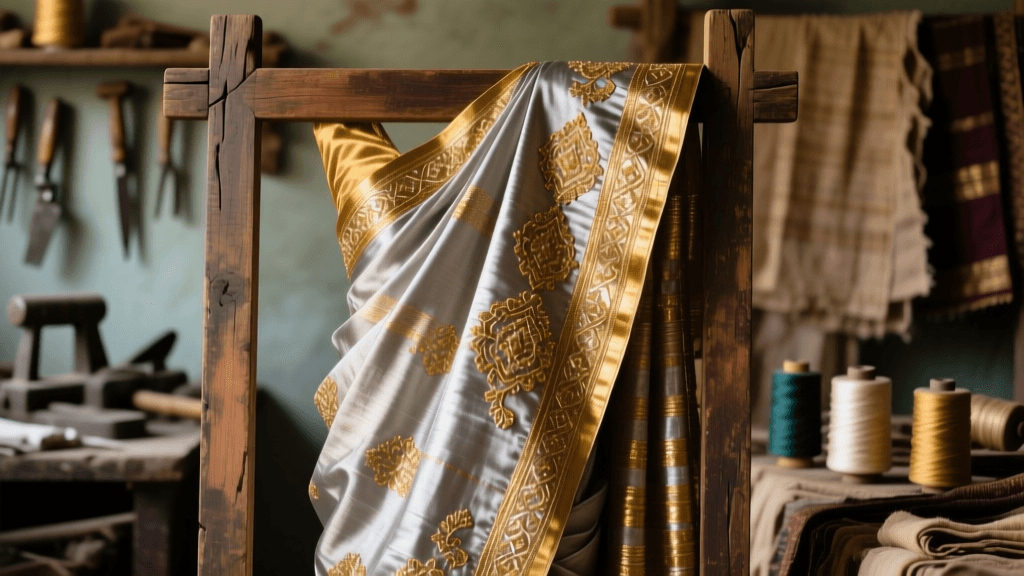
The Banarasi silk sari is more than just a garment; it is a woven tapestry of South Asian history, representing centuries of artisanal mastery originating from the sacred city of Varanasi. Characterized by their opulent gold and silver brocade work, these saris are traditionally passed down through generations as heirloom pieces. However, as we navigate the textile preservation landscape in 2026, collectors and families face a persistent enemy: the degradation and tarnishing of zari, the intricate metallic thread that gives the Banarasi sari its signature luminous sheen.
Preserving these masterpieces requires moving beyond traditional folding and storing methods. Modern textile conservation has evolved significantly, integrating advanced material science with time-honored artisanal repair techniques. Whether you are a vintage textile collector, a museum curator, or a custodian of a family heirloom, understanding the precise chemistry, storage protocols, and restoration methodologies for Banarasi zari is essential for ensuring these garments survive for another century.
Understanding Zari: Pure, Tested, and Synthetic
Before attempting any preservation or restoration, it is critical to identify the type of zari used in your sari. The composition of the metallic thread dictates its vulnerability to environmental factors and the appropriate restoration methods. In 2026, the market recognizes three primary categories of zari, each with distinct conservation needs.
| Zari Type | Composition | Tarnish Risk | 2026 Restoration Approach | Approximate Market Value Impact |
|---|---|---|---|---|
| Pure Zari (Asli Zari) | Silver core electroplated with real gold, wrapped around silk. | High (Silver sulfide tarnish) | Micro-vacuuming, specialized chemical reduction, expert re-weaving. | Extremely High (Investment grade) |
| Tested Zari | Copper or silver alloy core with synthetic metallic coating. | Medium (Oxidation and flaking) | Gentle surface cleaning, consolidation of flaking layers. | Moderate (Vintage collector grade) |
| Imitation/Synthetic Zari | Polyester or nylon core with metallic powder or plastic film. | Low (But prone to UV degradation) | Thread replacement, UV-blocking storage. | Low to Moderate (Sentimental value) |
The Chemistry of Tarnish: Why Zari Degrades
The most common issue afflicting vintage Banarasi saris is the blackening of pure zari. This is not merely 'dirt'; it is a chemical reaction. The core of traditional pure zari is made of flattened silver wire. When exposed to atmospheric sulfur compounds, humidity, and the natural acids present in human skin or wooden storage trunks, the silver reacts to form silver sulfide, resulting in a dull, black tarnish.
According to guidelines published by the Victoria and Albert Museum, metallic threads in historic textiles are highly susceptible to corrosive off-gassing from poor-quality storage materials. In 2026, conservators emphasize that attempting to polish zari with commercial silver dips or abrasive cloths is catastrophic. These methods strip the microscopic layer of gold plating, exposing the silver core to rapid re-tarnishing and permanently destroying the thread's structural integrity.
2026 Standards for Archival Storage and Preservation
Preventative conservation remains the gold standard for textile care. The Canadian Conservation Institute outlines rigorous protocols for storing composite textiles (silk combined with metal threads). To adapt these museum-grade standards for home and private collection use in 2026, follow these precise storage steps:
1. The Buffer Layer
Never fold a Banarasi sari directly against itself. The friction between the zari motifs and the silk ground can cause micro-abrasions. Use unbleached, washed muslin or 100% acid-free, unbuffered archival tissue paper. (Note: Unbuffered tissue is preferred for silk, as the alkaline buffer in standard acid-free tissue can degrade protein-based fibers over time).
2. The Rolling Method
Folding creates permanent stress lines where the metallic threads will eventually snap. The modern 2026 standard is to roll the sari. Use an archival-quality honeycomb cardboard tube, wrap it in a layer of Mylar (polyester film), then a layer of washed muslin, and gently roll the sari with the zari-heavy side facing outward to prevent crushing the motifs.
3. Climate and Desiccant Control
Fluctuating humidity causes the silk to expand and contract, leading to the 'slipping' of the zari thread. Maintain a stable environment of 45-55% relative humidity. Instead of traditional silica gel packets which can leak or over-dry the air, utilize modern Prosorb silica cassettes, which are pre-conditioned to maintain a precise 50% RH equilibrium within an archival storage box.
Professional Restoration: The Rafu Technique
When zari threads have snapped, frayed, or severely tarnished beyond surface cleaning, restoration requires the intervention of a master artisan. The traditional technique used in Varanasi for repairing intricate brocade work is known as Rafu (invisible darning and re-weaving).
Assessment and Micro-Cleaning
Before any needle touches the fabric, the sari undergoes a thorough assessment under UV and magnified light to map areas of silk shattering and zari loss. Surface dust is removed using a micro-vacuum with a HEPA filter, protected by a fine nylon mesh screen to prevent accidental suction of loose metallic threads.
The Re-Weaving Process
If a section of the jaal (trellis pattern) or buti (motif) is missing, the Rafugar (master darners) will source matching vintage zari or commission newly spun pure zari that has been artificially antiquated to match the patina of the original garment. Using a specialized curved needle, they meticulously warp and weft the new threads into the existing silk grid, anchoring the repair without pulling the fragile surrounding silk.
"True restoration of a Banarasi sari is not about making it look brand new. It is about stabilizing the history of the garment. When we perform Rafu on a 1970s pure zari sari, we must respect the oxidation and the age of the silver. We heal the tears, but we do not erase the time it has lived."
— Master Artisan Weaver, Varanasi Heritage Textile Cooperative (2026 Interview)
Sourcing Artisans and 2026 Pricing
Finding authentic restoration services requires bypassing standard commercial dry cleaners, which often use harsh solvents like perchloroethylene that strip the gold plating from zari. In 2026, specialized textile conservation labs in major global cities (such as London, New York, and Mumbai) work in tandem with master weavers from Varanasi for structural repairs.
- Basic Archival Cleaning & Re-packaging: $150 - $300 USD. This includes micro-vacuuming, specialized aqueous or solvent testing, and rolling in archival materials.
- Minor Zari Consolidation & Darning: $400 - $800 USD. For stabilizing loose threads and repairing small tears (up to 5 square inches) using the Rafu technique.
- Major Heirloom Restoration: $1,500 - $3,500+ USD. Extensive re-weaving of large pallu (drape) sections, complete border replacement, and silk shattering stabilization using sheer silk crepeline backing.
Conclusion: Stewardship for the Future
The preservation of a Banarasi silk sari is an act of cultural stewardship. As textile conservation technology advances in 2026, we are better equipped than ever to halt the degradation of these magnificent garments. By understanding the specific chemistry of zari, investing in proper archival storage environments, and relying on the masterful hands of traditional Rafugar artisans for repairs, we ensure that the luminous heritage of Varanasi continues to drape future generations in unparalleled elegance.