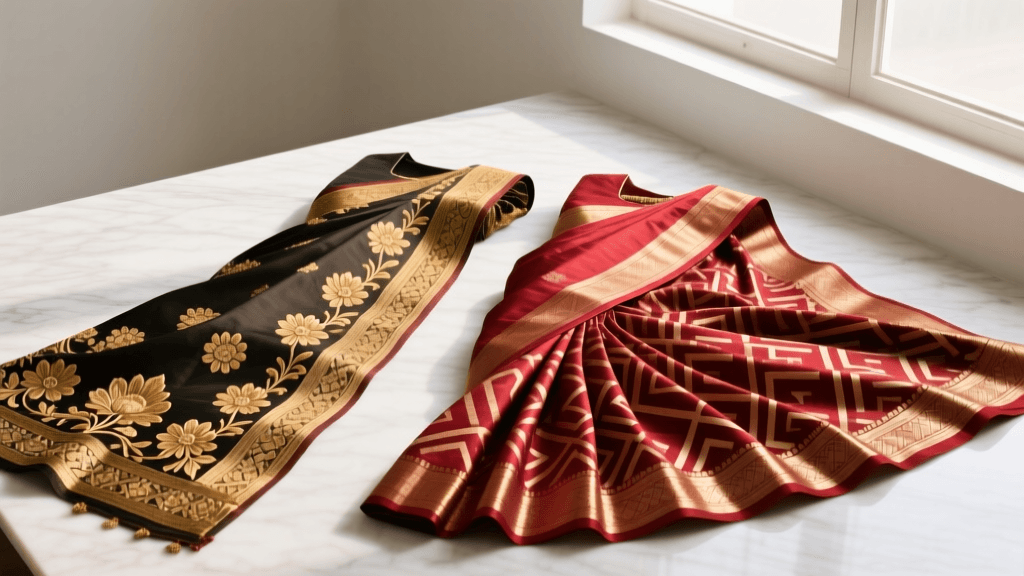
Banarasi Silk Sari Zari Tarnish Restoration Tips 2026
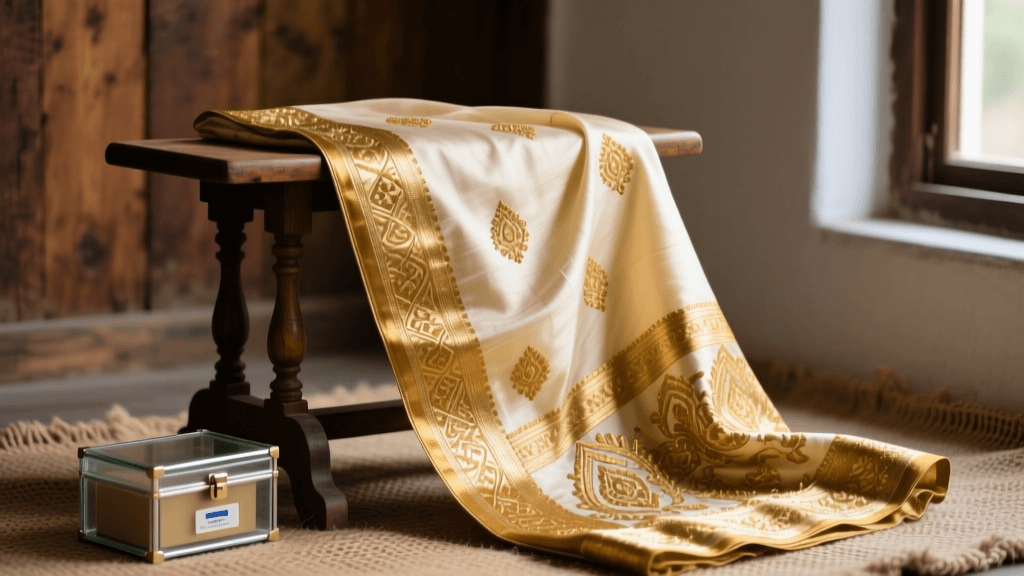
Preserving the Golden Thread: Banarasi Sari Care in 2026
The Banarasi sari is a masterpiece of South Asian textile heritage, renowned for its opulent silk base and intricate Zari work. However, as we navigate the shifting microclimates of 2026, with unseasonal humidity spikes and increased atmospheric pollutants across many regions, preserving these heirloom garments has become more challenging than ever. The metallic threads that give Banarasi saris their signature luminosity are highly susceptible to oxidation, leading to unsightly black or green tarnish that can permanently stain the delicate silk ground if left untreated.
This comprehensive guide explores the latest museum-grade conservation techniques, 2026 smart-storage technologies, and actionable restoration protocols to help you protect, clean, and store your heirloom Banarasi silk saris for future generations.
The Science of Zari Tarnish
To effectively restore and preserve Zari, one must first understand its composition. Traditional pure Zari consists of a silk core wrapped with flattened silver wire, which is then electroplated with gold. Tarnish occurs when the protective gold layer develops micro-fractures over decades of wear and folding, exposing the silver core to sulfur compounds and moisture in the air. This chemical reaction creates silver sulfide, manifesting as a dark, brittle tarnish. In 2026, conservationists emphasize that liquid silver polishes must never be used on Zari, as the harsh solvents will instantly degrade the natural silk proteins and cause irreversible dye bleeding.
Categorizing Your Zari: A Care Guide
Before beginning any restoration, identify the type of Zari used in your sari. The care protocol varies drastically depending on the metallic composition.
| Zari Type | Composition | Tarnish Risk | 2026 Conservation Protocol |
|---|---|---|---|
| Pure Zari (Real) | Silk core, pure silver, gold plating | High (Black/Dark Brown) | Dry micro-abrasion only; professional humidification; strict RH control. |
| Tested Zari | Cotton/silk core, copper alloy, silver/gold wash | Medium (Green/Verdigris) | Gentle dry brushing; localized pH-neutral swabbing; anti-tarnish tissue storage. |
| Plastic/Synthetic | Polyester core, metallic powder coating | Low (Fading/Flaking) | Surface dusting; avoid all moisture and chemical treatments to prevent flaking. |
Step-by-Step Zari Restoration Protocol
If your pure or tested Zari has developed localized tarnish, follow these dry-cleaning and micro-abrasion steps recommended by textile conservators. Always test on a small, inconspicuous area of the pallu first.
Step 1: Dry Surface Dusting
Before addressing tarnish, remove all surface particulate matter. Use a soft, natural-hair Hake brush (available from conservation suppliers). Lay the sari flat on a clean, acid-free surface. Gently brush the Zari motifs in the direction of the thread twist to dislodge trapped dust and atmospheric soot, which can hold moisture against the metal and accelerate oxidation.
Step 2: Micro-Abrasion for Silver Sulfide Removal
For pure Zari exhibiting dark silver sulfide tarnish, conservators utilize a grated Staedtler Mars Plastic eraser. Grate the eraser into fine crumbs using a clean microplane. Sprinkle the eraser crumbs lightly over the tarnished Zari motif. Using a clean, soft makeup brush or a cotton swab, gently roll the crumbs over the metallic thread. The micro-abrasive action lifts the tarnish without introducing moisture or chemicals to the surrounding silk. Vacuum the crumbs away using a HEPA-filter vacuum with a low-suction upholstery attachment covered by a fiberglass screen.
Step 3: Relaxing Creases via Humidification
Decades of tight folding cause the silk warp and Zari weft to become brittle, leading to shattered metallic threads. To relax the fibers without direct wetting, create a localized humidification chamber. Place the sari in a clean plastic bin alongside a damp (not wet) cotton towel. Ensure the towel does not touch the silk. Seal the bin for 24 hours at a stable room temperature of 20°C (68°F). The ambient moisture will relax the silk proteins and the Zari core, allowing you to gently unroll and refold the garment along new, alternating lines to prevent permanent crease damage.
2026 Archival Storage and Humidity Control
Proper storage is the cornerstone of preventative conservation. According to guidelines from the Canadian Conservation Institute, maintaining a stable relative humidity (RH) between 45% and 55% is critical for mixed-media textiles like Zari-woven silk. Fluctuations cause the silk to expand and contract, eventually snapping the rigid metallic threads.
Smart Hygrometers and Active Dehumidification
In 2026, passive silica gel packets are considered insufficient for high-value heirlooms due to their rapid saturation rates in monsoon climates. Instead, utilize smart environmental monitors like the Govee H5179 WiFi Thermo-Hygrometer, which sends real-time alerts to your smartphone if the RH inside your storage wardrobe exceeds 55%. For active moisture control in built-in wardrobes, the Eva-Dry EDV-1200 Wireless Mini Dehumidifier (2026 Edition) uses renewable silica beads that recharge via a plug-in base, offering a silent, drip-free solution for enclosed textile storage.
The Accordion Folding Method
Never hang a heavy Banarasi sari; the weight of the Zari will distort the silk bias and tear the shoulders. Instead, use the archival accordion folding method:
- Lay the sari flat on unbuffered, acid-free tissue paper (buffered tissue is alkaline and can degrade protein-based silk fibers).
- Place crumpled rolls of acid-free tissue along the fold lines to create soft, rounded curves rather than sharp, hard creases.
- Fold the sari loosely in an accordion style, limiting the final folded dimensions to fit inside an archival-grade polypropylene storage box.
- Wrap the entire bundle in a washed, unbleached muslin cloth to allow the fibers to breathe while blocking out dust and light.
Light Exposure and Pest Management
Silk is highly sensitive to photo-degradation. The Victoria and Albert Museum advises that light exposure for silk textiles should not exceed 50 lux, and garments should be kept in total darkness when not in use. Ensure your storage wardrobe is completely opaque and avoid displaying heirloom saris in rooms with direct UV sunlight.
For pest management, abandon traditional naphthalene (mothball) crystals, which emit toxic volatile organic compounds (VOCs) that accelerate Zari tarnish and leave a persistent, noxious odor in the silk. In 2026, the gold standard for pest deterrence is the use of pheromone-based sticky traps to monitor for webbing clothes moths (Tineola bisselliella), combined with small sachets of dried neem leaves and Eastern Red Cedar blocks. Sand the cedar blocks lightly every six months to release their natural protective oils.
2026 Professional-Grade Home Restoration Kit Cost Breakdown
Building a museum-quality care kit for your Banarasi saris is an investment in your family heritage. Below is an estimated cost breakdown for sourcing professional conservation materials in 2026.
| Item | Purpose | Estimated 2026 Cost (USD) |
|---|---|---|
| Unbuffered Acid-Free Tissue (10 sheets) | Padding folds and interleaving | $18.00 |
| Archival Polypropylene Storage Box | Light and dust protection | $45.00 |
| Staedtler Mars Plastic Eraser & Microplane | Dry micro-abrasion for Zari tarnish | $12.00 |
| Natural Hake Brush (Conservation Grade) | Safe surface dusting | $22.00 |
| Govee H5179 WiFi Hygrometer | Real-time RH monitoring | $35.00 |
| Eva-Dry EDV-1200 Wireless Dehumidifier | Rechargeable active moisture control | $28.00 |
Conclusion
Preserving a Banarasi silk sari requires a shift from traditional, often harmful home remedies to scientifically backed conservation practices. By understanding the metallurgy of Zari, utilizing dry micro-abrasion techniques, and leveraging 2026 smart-storage technologies to maintain a stable microclimate, you can halt the progression of tarnish and fiber degradation. Treat your heirloom textiles not merely as garments, but as fragile historical artifacts, ensuring their brilliance remains intact for the next century of wear and admiration.