Best Online Marketplaces for Banarasi Silk Saris 2026
The 2026 Digital Handloom Renaissance
The landscape of purchasing traditional Asian garments has undergone a radical transformation as we navigate 2026. For decades, acquiring an authentic Banarasi silk sari required either a costly pilgrimage to the narrow, labyrinthine alleys of Varanasi or reliance on high-end brick-and-mortar boutiques with massive retail markups. Today, the digital handloom renaissance has completely democratized access to these masterpieces. Direct-to-consumer e-commerce platforms, live-streamed weaving demonstrations, and blockchain-verified Geographical Indication (GI) tags have empowered global buyers to source museum-quality textiles directly from the master weavers of Uttar Pradesh. As international demand for sustainable, heritage-driven fashion peaks in 2026, knowing exactly where and how to shop online is the difference between acquiring a generational heirloom and falling victim to mass-produced, powerloom replicas.
The Threat of Powerloom Replicas and Synthetic Zari
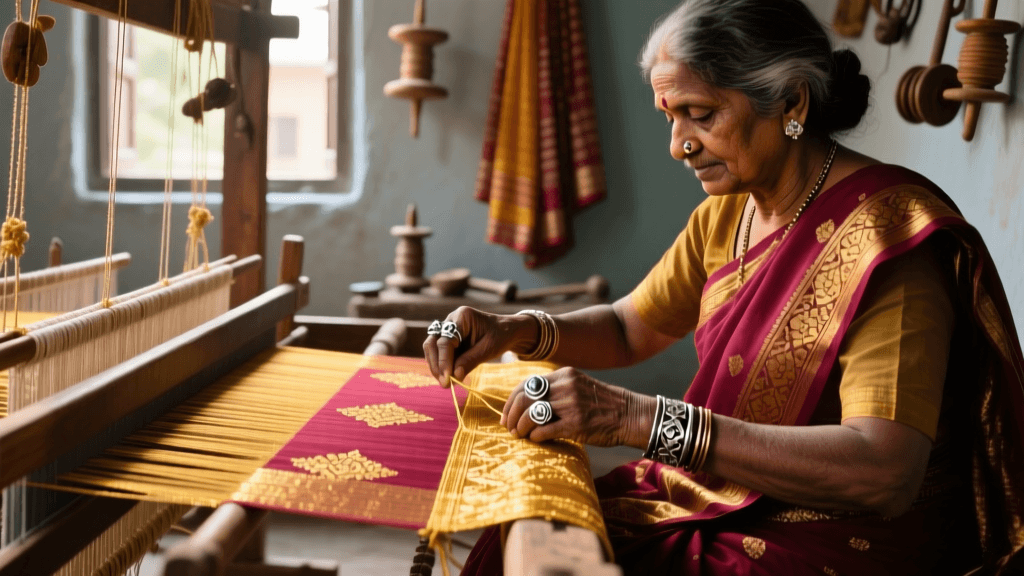
Before diving into specific marketplaces, it is crucial to understand the current threats in the online Banarasi market. The proliferation of high-speed, computerized powerlooms has flooded global e-commerce sites with synthetic saris masquerading as handwoven silk. In 2026, these replicas are more deceptive than ever, often utilizing advanced synthetic 'tested zari' (metallic yarn) that mimics the visual weight of real gold and silver threads. According to the Crafts Council of India, preserving the livelihood of traditional handloom artisans requires consumers to actively seek out verified cooperative marketplaces that guarantee fair wages and authentic raw materials. When you purchase a genuine handloom Banarasi, you are not just buying a garment; you are sustaining an ancient, mathematically complex weaving technique that can take anywhere from three weeks to six months to complete on a traditional pit loom.
Top Trusted Online Marketplaces for Banarasi Silk in 2026
1. Tilfi: The Premium Direct-to-Consumer Pioneer
For buyers seeking absolute certainty regarding authenticity and ethical sourcing, Tilfi Banaras remains the gold standard in 2026. Tilfi operates on a direct-to-weaver model, bypassing the traditional network of middlemen and wholesalers. Their online marketplace provides exhaustive documentation for every sari, including the specific weaver's name, the loom location, and high-resolution macro photography of the reverse side of the fabric. Tilfi specializes in pure Katan silk and authentic Sona Rupa (real gold and silver) zari. While their price point is premium, their digital storefront offers a bespoke customization service where international clients can commission specific color palettes and motif combinations, with live WhatsApp updates provided throughout the months-long weaving process.
2. Weaver Cooperative Portals and Government Emporiums
For those looking to support community-owned initiatives, several digital portals run by weaver cooperatives have modernized their e-commerce infrastructure in 2026. Platforms associated with the Banaras Hastkala Samiti and various government-backed handloom emporiums now offer global shipping and secure payment gateways. Shopping through these cooperative portals ensures that the highest percentage of your payment goes directly into the hands of the artisan community. The inventory here is often more traditional, featuring classic motifs like the kalga (paisley), bel (creeper vines), and intricate jaal (net) patterns. Buyers should be prepared for a more rustic online shopping experience—product descriptions may be brief, and shipping times can vary—but the authenticity and fair-trade impact are unparalleled.
3. Curated Global Artisan Platforms and Etsy
Global artisan platforms, particularly highly curated sections of Etsy and specialized fair-trade networks recognized by the World Crafts Council, offer a diverse range of Banarasi textiles. In 2026, the key to shopping on these open marketplaces is rigorous seller vetting. Look for sellers based directly in Varanasi or those who hold verifiable GI certifications. Many independent weavers now manage their own digital storefronts on these platforms, offering contemporary adaptations of the Banarasi weave, such as silk-cotton blends, organza (kora) Banarasis, and lighter, more drape-friendly saris designed for modern, everyday wear. Always demand a video call to see the sari in natural sunlight and inspect the reverse side of the pallu before finalizing a high-value transaction.
2026 Marketplace Comparison Chart
| Marketplace Type | Authenticity Guarantee | Price Range (USD) | Customization | Global Shipping |
|---|---|---|---|---|
| Premium D2C (e.g., Tilfi) | High (GI Tag + Weaver Profile) | $400 - $2,500+ | Extensive (Bespoke weaving) | Fast, Insured |
| Weaver Cooperatives | High (Community Verified) | $250 - $1,200 | Limited (Pre-loom dyeing) | Standard Postal |
| Curated Artisan Platforms | Medium (Requires Buyer Vetting) | $150 - $800 | None (Ready-to-ship) | Varies by Seller |
| Fast Fashion / Mega Malls | Low (High risk of powerloom) | $40 - $150 | None | Fast |
The 5-Step Online Verification Protocol
When shopping for a Banarasi sari online in 2026, you must act as your own authenticator. Relying solely on the word 'handloom' in a product title is no longer sufficient. Follow this strict verification protocol before adding a high-value item to your cart:
- Inspect the Reverse Side: Authentic handwoven Banarasi brocades feature heavy 'float' threads on the reverse side of the motifs. Powerloom replicas often use a binding technique that makes the back look almost as neat as the front, or they feature a messy, machine-cut backing. Demand high-resolution photos of the inside of the pallu.
- Check for the GI Certificate: The Geographical Indication tag is a legal certification that the textile was woven in the designated districts of Varanasi. Reputable online sellers will provide a scannable QR code or a physical GI certificate shipped with the garment.
- Request a Loom Video: For bespoke or high-value pure zari pieces, ask the seller for a timestamped video of the specific sari currently on the loom. In 2026, genuine weavers are highly accustomed to this request and use it as a badge of honor to prove their craft.
- Analyze the Zari Composition: Pure zari (Sona Rupa) contains a silk core wrapped in flattened silver wire and electroplated with pure gold. Tested zari uses a synthetic or cotton core with copper or synthetic metallic coatings. Ask the seller explicitly for the zari composition; pure zari will tarnish beautifully over decades, while tested zari will eventually turn black and brittle.
- Look for the Silk Mark: Administered by the Silk Mark Organisation of India, this holographic label guarantees that the base fabric is 100% natural silk. Ensure the online listing includes a clear image of this specific, serialized tag.
Understanding 2026 Pricing: Silk, Silver, and Labor
The pricing of authentic Banarasi saris in 2026 is heavily influenced by global commodities markets and the push for ethical weaver compensation. A genuine handwoven Banarasi sari made with pure Katan silk and tested zari (copper/synthetic blend) will typically start around $300 to $500 USD. However, if you are seeking a heritage piece featuring pure Sona Rupa zari, expect starting prices to range from $800 to well over $2,500 USD. This premium is directly tied to the current market value of silver and gold, as well as the immense labor cost; a single intricate bridal sari can require two master weavers working synchronously on a jacquard pit loom for over four months. If you encounter a 'handwoven pure zari' Banarasi sari listed online for under $150, it is mathematically impossible and undoubtedly a powerloom replica.
International Shipping and Garment Care
Once you have successfully navigated the online marketplaces and secured your authentic Banarasi, proper care is essential to preserve the metallic threads and silk fibers. Upon arrival, avoid the urge to steam or iron the sari directly, as high heat can melt the synthetic cores of tested zari or flatten the raised texture of the brocade. Always use a protective cotton cloth and a low-heat setting if pressing is necessary. For long-term storage, wrap the sari in unbleached muslin or pure cotton to allow the natural silk fibers to breathe, and store it in a cool, dark environment to prevent the metallic zari from oxidizing prematurely. By utilizing these trusted 2026 marketplaces and verification techniques, you ensure that your investment not only elevates your wardrobe but actively preserves one of Asia's most magnificent textile traditions for generations to come.