Authentic Banarasi Silk Saree Online Shopping Guide 2026
The Evolution of Banarasi Silk Shopping in 2026
The Banarasi saree is far more than a simple garment; it is a meticulously woven tapestry of South Asian history, culture, and artisanal mastery. Originating from the sacred city of Varanasi, these luxurious silk sarees have been a staple of Indian bridal trousseaus and ceremonial wear for centuries. However, as we navigate through 2026, the landscape of Asian traditional garment shopping has undergone a massive digital transformation. Today, buyers from New York to London can procure authentic, handloom-woven Banarasi silk directly from master weavers without ever stepping foot in the bustling lanes of Visheshwarganj. Yet, this digital convenience brings a significant challenge: the proliferation of mass-produced, powerloom counterfeits that flood major e-commerce platforms. For the discerning buyer, understanding how to navigate online marketplaces, verify authenticity, and comprehend modern pricing structures is essential to securing a genuine heritage piece.
Decoding the GI Tag and Blockchain Verification
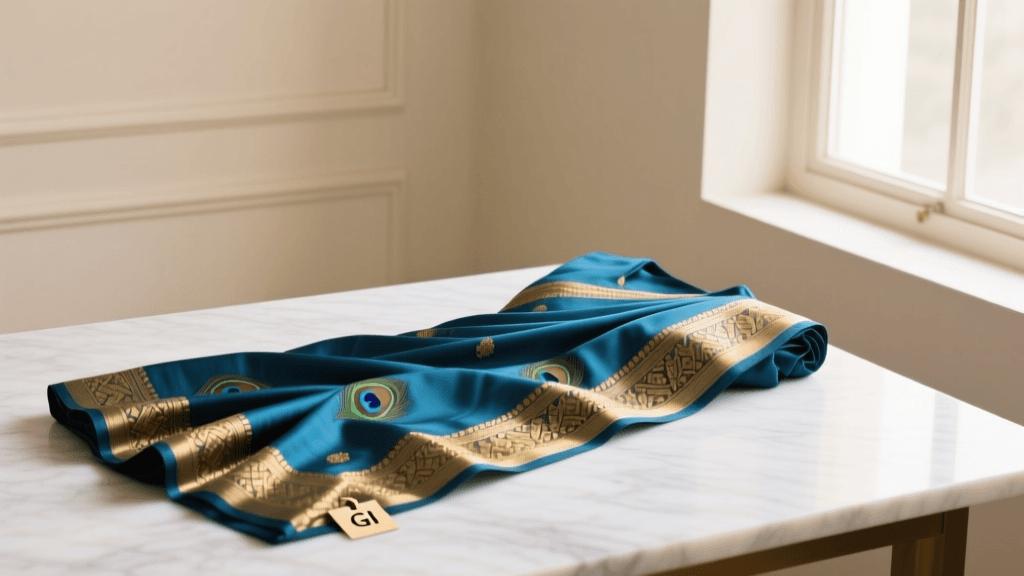
Your first and most formidable line of defense against counterfeit Banarasi sarees is the Geographical Indication (GI) tag. The GI certification legally ensures that only sarees woven in the specific districts of Varanasi, Bhadohi, Jaunpur, Azamgarh, and Mirzapur can be sold under the 'Banarasi' name. In 2026, the verification process has evolved far beyond a simple printed label. According to the Intellectual Property India GI Registry, recent initiatives have integrated blockchain-backed QR codes into the GI tags of authentic handloom sarees. When you scan this digital tag using your smartphone, it reveals an immutable ledger containing the weaver's name, the specific cooperative in Varanasi, the loom location, and the exact date of completion. When shopping online, always demand high-resolution images of the GI tag and the accompanying digital certificate. If a marketplace or seller cannot provide verifiable blockchain proof or a clear, scannable GI label, consider it an immediate red flag.
Top Specialized Online Marketplaces for 2026
To guarantee authenticity, bypass generic, mass-market aggregators in favor of specialized, curated platforms that maintain direct relationships with weaving cooperatives. In 2026, several niche marketplaces have set the gold standard for traditional Asian garment e-commerce:
- Tilfi: Operating on a direct-from-loom model, Tilfi has eliminated middlemen, ensuring that master weavers receive fair compensation. Their 2026 platform features high-definition macro photography that allows you to inspect the tension of the warp and weft threads before purchasing.
- Nalli: A legacy brand that has successfully transitioned into the digital age. Nalli's 2026 mobile application includes an Augmented Reality (AR) draping feature, allowing international buyers to visualize how the heavy silk and intricate zari borders will fall and drape on their specific body type before checkout.
- Tata CLiQ Luxury: For buyers seeking vintage or highly exclusive, museum-quality Banarasi pieces, this platform's curated 'Indian Heritage' section offers authenticated, premium-priced sarees with rigorous quality control checks and insured global shipping.
Understanding Fabric Types and Zari Purity
Not all Banarasi sarees are created equal, and the base fabric drastically alters both the price and the appropriate occasion for wear. Pure Katan silk is the most traditional, featuring a plain woven fabric with twisted silk threads that give it a sturdy, lustrous finish. Kora (Organza) is a sheer, lightweight fabric often heavily embroidered with zari, making it perfect for daytime summer weddings. Georgette and Tussar offer more contemporary, fluid drapes. Furthermore, the 'zari' (metallic thread) used in the brocade work is a major price determinant. In 2026, 'Real Zari' (Pure Zari) consists of a silk core wrapped in flattened silver wire and electroplated with pure gold. 'Tested Zari' uses a copper or synthetic core with gold polishing. While tested zari is more affordable and resistant to tarnishing in humid climates, pure zari remains the ultimate investment for heirloom garments.
2026 Price Benchmarks and Weaving Timelines
Pricing for authentic handloom Banarasi sarees has adjusted in 2026 to reflect the rising costs of raw silk, precious metals, and fair-wage labor mandates. If you encounter a 'pure silk Banarasi' priced under $100 USD on a mass e-commerce site, it is unequivocally a powerloom polyester blend. Below is the current benchmark table for authentic, handloom-woven pieces purchased directly from verified online cooperatives.
| Fabric Type | Zari Work Grade | Est. 2026 Price (USD) | Avg. Weaving Time |
|---|---|---|---|
| Pure Katan Silk | Real Zari (Gold/Silver) | $450 - $1,200+ | 3 to 6 Months |
| Pure Katan Silk | Tested Zari (Copper/Synthetic) | $180 - $350 | 1 to 2 Months |
| Kora (Organza) | Real Zari with Meenakari | $300 - $800 | 2 to 4 Months |
| Banarasi Georgette | Tested Zari / Resham (Silk Thread) | $120 - $250 | 3 to 6 Weeks |
| Banarasi Tussar | Tested Zari / Hand-Block Print | $150 - $300 | 4 to 8 Weeks |
Red Flags: Spotting Powerloom Counterfeits Online
Powerloom manufacturers can produce a saree in a matter of hours, mimicking traditional motifs like the 'kalga' (mango) and 'bel' (vine) with alarming precision. However, there are distinct visual cues you can spot even through digital product photographs. First, examine the reverse side of the saree in the provided images. A genuine handloom Banarasi will have a relatively clean back, with the weaver manually managing the thread interlacing. Powerloom fakes often leave a messy, tangled web of loose threads on the reverse side because the machines cannot replicate the manual 'cut-work' technique. Second, look at the symmetry of the motifs. Handwoven garments possess slight, beautiful irregularities that prove human involvement; machine-made sarees are flawlessly, unnaturally symmetrical. Finally, be wary of stiffness. Authentic silk is supple and molds to the body, whereas counterfeit sarees heavily starched with synthetic chemicals appear rigid and boxy in product listings.
Navigating AI-Assisted Custom Tailoring and Global Shipping
The traditional Banarasi saree is sold as an unstitched drape, accompanied by a running blouse piece and an inner petticoat. In 2026, leading online marketplaces have integrated AI-assisted body scanning technology to solve the challenge of remote tailoring. By using your smartphone camera to perform a 360-degree scan, the marketplace's algorithm generates precise measurements for a custom-fitted blouse, which is then stitched by in-house artisans before shipping. When ordering internationally, factor in customs duties and the specific export regulations regarding pure gold and silver zari. The Ministry of Textiles, Government of India provides clear export documentation for garments containing precious metals, ensuring your heirloom purchase is not delayed at international borders. Always opt for insured, tracked shipping when investing in high-value pure zari pieces.
Sustainable Care, Storage, and Maintenance Guidelines
Securing your authentic Banarasi saree is only the first step; preserving it for future generations requires meticulous care. The heavy zari work makes these garments susceptible to oxidation and tarnishing if exposed to moisture and direct sunlight. In 2026, the standard recommendation from textile conservationists and organizations recognized by UNESCO Intangible Cultural Heritage is to avoid traditional chemical dry cleaning, which can strip the natural oils from the silk and dull the metallic threads. Instead, opt for specialized, eco-friendly liquid carbon dioxide (CO2) cleaning services that are now widely available in major global cities. For storage, never use plastic covers or wire hangers. Wrap the saree in unbleached, acid-free muslin cloth to allow the natural fibers to breathe, and store it flat in a dark, climate-controlled cedar chest. Refold the saree every three months along different axes to prevent permanent creasing and fiber breakage along the fold lines.
Conclusion: Investing in Living History
Shopping for a Banarasi silk saree online in 2026 is an exercise in cultural appreciation and mindful consumerism. By leveraging modern verification technology, supporting specialized ethical marketplaces, and understanding the true cost of handloom artistry, you ensure that your purchase not only elevates your wardrobe but also sustains the ancient weaving communities of Varanasi. Treat your online search not merely as a transaction, but as the acquisition of a wearable masterpiece that bridges the gap between ancient Asian traditions and the modern digital world.