Banarasi vs Kanjeevaram Silk Saris: 2026 Buyer Guide
The Heritage Heavyweights: Navigating the 2026 Silk Sari Market
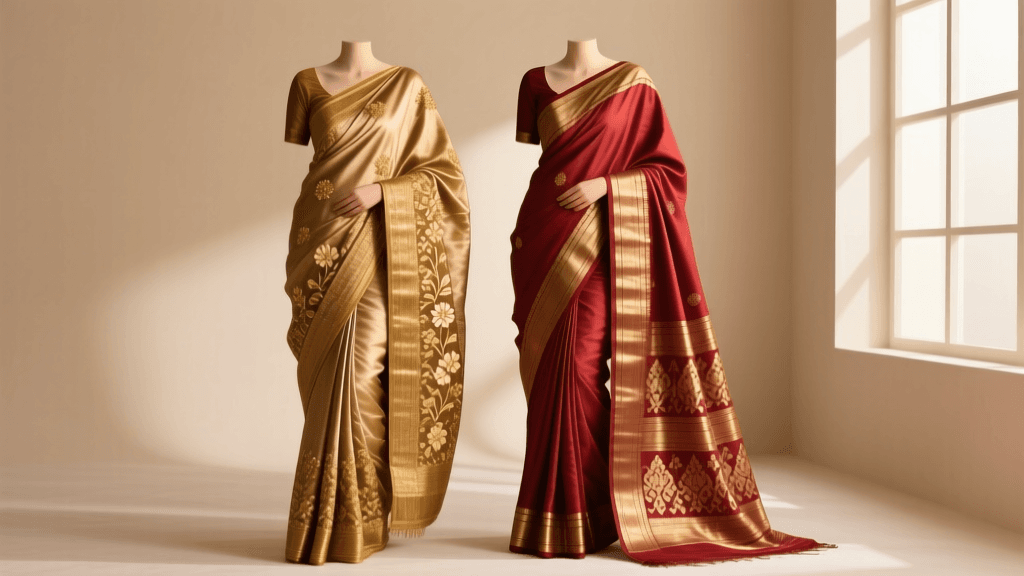
As we move through the 2026 wedding season, the Asian traditional garment market has witnessed a definitive shift toward conscious luxury and heritage preservation. Brides and textile collectors are increasingly bypassing mass-produced, heavily embellished contemporary lehengas in favor of authentic, hand-loomed silk saris. Among the myriad of South Asian textiles, two names stand as undisputed titans of ceremonial wear: the Banarasi silk sari from Varanasi and the Kanjeevaram silk sari from Kanchipuram. Both represent centuries of unbroken artisanal lineage, yet they are fundamentally different in their construction, drape, and cultural symbolism.
For the modern buyer, understanding the nuanced textile choices between these two iconic garments is crucial. Whether you are sourcing a trousseau piece, investing in an heirloom textile, or simply expanding your traditional wardrobe, knowing the structural differences, current market pricing, and authentication methods for 2026 is essential. This comprehensive guide breaks down the fabric and textile choices that define these masterpieces of Indian weaving.
The Anatomy of the Weave: Brocade vs. Korvai
The most profound difference between a Banarasi and a Kanjeevaram sari lies in the loom technology and the structural weaving technique employed by the artisan.
Banarasi: The Extra-Weft Brocade
Originating from the holy city of Varanasi in Uttar Pradesh, Banarasi silk is renowned for its opulent brocade work. The term 'brocade' refers to an extra-weft weaving technique. While the foundational fabric is woven using standard warp and weft threads, the intricate motifs—such as the iconic kalga (paisley), jaal (trellis), and Mughal-inspired architectural patterns—are created by introducing supplementary metallic or silk threads (the extra weft) into the weave. In 2026, master weavers still utilize traditional jacquard pit looms, where punch cards dictate the complex, raised patterns that give Banarasi silk its distinct, embossed texture. The resulting fabric is fluid, deeply textured, and visually luminous.
Kanjeevaram: The Interlocking Korvai Technique
Hailing from Tamil Nadu in South India, the Kanjeevaram (or Kanchipuram) sari is a marvel of structural engineering. Unlike the extra-weft method, Kanjeevaram weaving relies on the korvai technique. This involves an interlocking weft system where the body of the sari and the contrasting border are woven separately and then seamlessly interlocked together on the pit loom. A traditional Kanjeevaram requires three shuttles working simultaneously: one for the border and two for the body. This creates a remarkably strong joint that will not tear even if the fabric is cut. The motifs are heavily inspired by South Indian temple architecture, featuring peacocks, mangoes, and geometric checks, woven directly into the fabric structure rather than layered on top.
The Zari Economy: Metallic Threads in 2026
No discussion of Asian ceremonial textiles is complete without addressing zari, the metallic thread that provides the signature gleam to both Banarasi and Kanjeevaram saris. In 2026, the global market for precious metals has significantly impacted the pricing of pure zari.
Authentic pure zari consists of a silk core wrapped in flattened silver wire, which is then electroplated with pure gold. Due to the soaring costs of silver and gold in the mid-2020s, genuine pure zari saris have become premium investment pieces. Consequently, the market has seen a rise in 'tested zari' (which uses a copper or synthetic core with silver plating) and 'plastic zari' (metallized polyester). While tested zari offers a visually similar aesthetic at a fraction of the cost, it lacks the heirloom longevity and oxidation resistance of pure gold-plated silver zari. When investing in high-end textiles this year, verifying the zari composition is just as critical as verifying the silk base.
To combat counterfeit materials, the Indian government and textile boards have heavily promoted standardized authentication. The Silk Mark Organisation of India remains the paramount authority in 2026 for verifying that the base fabric is 100% natural mulberry silk, utilizing advanced holographic tagging and QR-code traceability to assure buyers of textile purity.
2026 Textile Comparison Matrix
To assist buyers in making informed decisions, the following table outlines the core differences between Banarasi and Kanjeevaram silks based on current 2026 market standards and textile properties.
| Feature | Banarasi Silk (Varanasi) | Kanjeevaram Silk (Kanchipuram) |
|---|---|---|
| Primary Weave | Brocade (Extra-Weft) | Korvai (Interlocking Weft) |
| Motif Inspiration | Mughal art, paisley, florals, jaal | South Indian temples, peacocks, checks |
| Fabric Weight | Medium to Heavy (350g - 600g) | Heavy to Very Heavy (500g - 900g+) |
| Drape Quality | Fluid, soft gathers, elegant pleats | Stiff, structured, regal architectural folds |
| Zari Integration | Often covers large surface areas (jaal) | Concentrated on borders and pallu (endpiece) |
| 2026 Price (Pure Zari) | $1,200 - $3,500 USD | $1,500 - $4,500+ USD |
Drape, Weight, and Ceremonial Suitability
The choice between these two textiles often comes down to the desired silhouette and the physical demands of the ceremony. Kanjeevaram silks are famously dense. A pure six-yard Kanjeevaram can weigh over a kilogram, providing a stiff, majestic drape that holds its shape impeccably. This makes it the undisputed choice for South Indian bridal muhurthams (auspicious wedding moments), where the sari must remain perfectly pleated and structured through hours of rigorous ritual.
Conversely, Banarasi silk offers a more forgiving, fluid drape. The fabric falls beautifully over the curves of the body and gathers softly at the waist. This makes Banarasi saris highly versatile, suitable not only for weddings but also for grand receptions, gala dinners, and multi-hour festivities where comfort and ease of movement are prioritized alongside opulence.
Securing Authenticity: GI Tags and Legal Protections
With the global demand for traditional Asian garments at an all-time high in 2026, the market is unfortunately flooded with power-loom imitations masquerading as hand-loomed heritage pieces. To protect the livelihoods of traditional artisans, both 'Banaras Brocades and Sarees' and 'Kanchipuram Silk' are protected under the Geographical Indications (GI) Act.
A GI tag legally mandates that only textiles woven within the specific geographic boundaries of Varanasi or Kanchipuram, using traditional methods and materials, can bear these names. When purchasing, buyers must look for the official GI certification label, which includes a unique holographic serial number. The Geographical Indications Registry provides a public database where buyers and collectors can verify the legal status and protected origins of these specific textile crafts, ensuring that their investment supports genuine artisan communities rather than mass-production syndicates.
2026 Styling Trends: Tissue, Organza, and Matte Finishes
While the classic heavy silks remain staples, the 2026 fashion landscape has seen a surge in innovative textile blends that honor traditional techniques while catering to modern aesthetics. 'Tissue' Banarasis, which use silk in the warp and pure zari in the weft, have become wildly popular for their translucent, golden sheen and lightweight feel. Similarly, Kanjeevaram weavers are increasingly experimenting with matte-finish silks and organza bases, applying the heavy korvai borders to gossamer-thin fabrics. These contemporary adaptations allow younger demographics to participate in heritage dressing without being weighed down by the traditional heaviness of the garments.
Heirloom Care and Preservation
Purchasing a pure silk sari with genuine zari is an investment meant to span generations. Proper textile care is non-negotiable. Both Banarasi and Kanjeevaram silks must be dry-cleaned for their first wash to set the metallic threads and remove loom starch. For long-term storage in 2026's varying climates, avoid plastic covers, which trap moisture and cause the silk to rot and the zari to tarnish. Instead, wrap the garments in unbleached, pure cotton muslin cloth. Crucially, the sari must be unfolded and refolded along different crease lines every three to four months. This prevents the metallic zari threads from cracking and breaking along permanent fold lines, ensuring the textile remains pristine for the next generation's wedding trousseau.