Banarasi vs Kanchipuram Silk: 2026 Bridal Fabric Guide
The 2026 Landscape of Heritage Silk Weaving
As we navigate the global fashion landscape of 2026, the demand for authentic, heritage Asian textiles has surged, driven by a collective appreciation for slow fashion, cultural preservation, and heirloom investments. When it comes to South Asian ceremonial and bridal wear, two undisputed titans of silk weaving dominate the conversation: Banarasi brocade from Varanasi and Kanchipuram silk from Tamil Nadu. While both are masterpieces of Indian handloom history, their structural anatomy, metallic thread composition, and draping qualities are vastly different. According to the Victoria and Albert Museum's comprehensive guide to Indian textiles, the regional variations in silk weaving are not merely aesthetic choices but reflections of distinct historical trade routes, local climates, and temple traditions. For the modern bride or textile collector in 2026, understanding these nuanced fabric choices is essential for making an informed, investment-grade purchase.
Anatomical Differences: Kadwa vs. Korvai Weaving
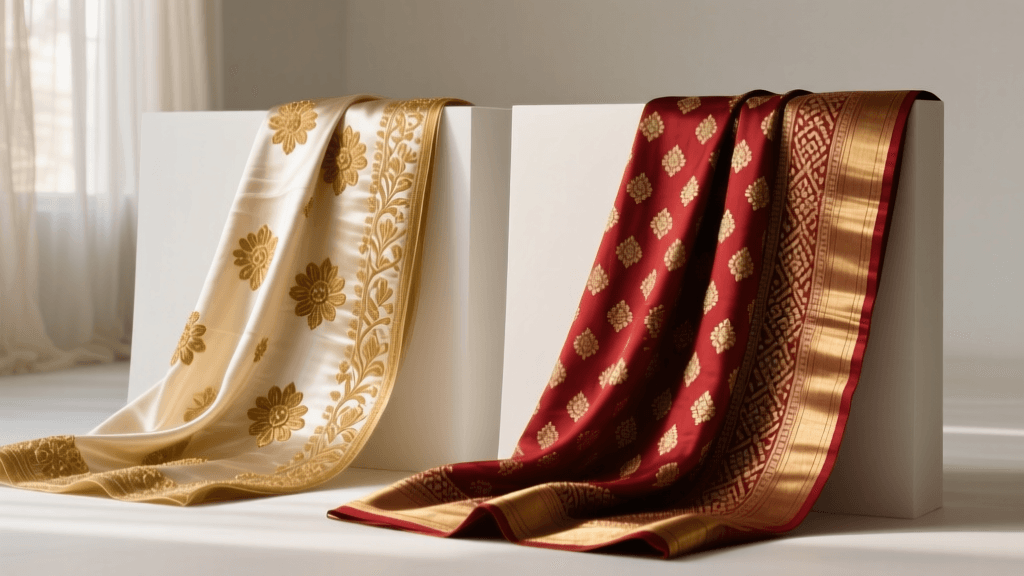
The most fundamental difference between these two heritage fabrics lies in their weaving architecture. Authentic Banarasi silk, particularly the highly coveted Katan Kadwa variety, utilizes a complex brocade technique. In the Kadwa method, each motif—be it a Mughal-inspired floral buti or an intricate jaali lattice—is woven individually with supplementary silk or zari threads. The weaver meticulously interlocks the weft thread at the edge of the motif, meaning the reverse side of the fabric remains remarkably clean, with no loose threads hanging behind the patterns. This painstaking process, often requiring two weavers working at a pit loom for several months, results in a fabric that is fluid, remarkably durable, and structurally unified.
Conversely, Kanchipuram silk relies on the legendary Korvai technique. A traditional Kanchipuram sari is woven in three distinct parts: the body, the border, and the pallu (the decorative end piece). Because the borders are typically contrasting in color and heavily woven with metallic threads, they must be created on separate shuttles. The master weaver interlocks the body and border threads using a zigzag joint, creating a bond so strong that even if the sari tears, the border will not detach. This structural interlocking gives Kanchipuram silk its signature stiffness, weight, and crisp drape, making it a heavily structured garment compared to the fluid grace of a Banarasi brocade.
The Zari Conundrum: Precious Metals vs. Synthetics in 2026
No discussion of South Asian heritage silks is complete without addressing zari, the metallic thread that gives these garments their iconic luminescence. In 2026, with global silver markets experiencing significant price fluctuations, the distinction between pure zari and synthetic alternatives has never been more critical for buyers. Pure zari, known as Asli Zari, consists of a silk core wrapped in flattened silver wire, which is then electroplated in pure gold. This creates a thread that is heavy, rich in color, and capable of developing a beautiful, antique patina over decades.
However, the modern market is saturated with Tested Zari (copper or alloy cores with silver plating) and Plastic Zari (synthetic cores with metallic paint). While tested zari offers a budget-friendly alternative for occasional wear, it lacks the archival longevity of pure zari and will tarnish or darken over time. Plastic zari, while cheap and shiny, degrades rapidly and lacks the structural weight required to properly anchor heavy silk weaves. For 2026 bridal trousseaus, textile experts universally recommend investing only in pure zari or high-grade tested zari, ensuring the garment remains a viable heirloom for future generations.
Comparative Textile Analysis
| Feature | Banarasi Silk Brocade (Katan Kadwa) | Kanchipuram Silk (Korvai) |
|---|---|---|
| Primary Silk Type | Soft, finely spun Mulberry Silk (Katan) | Heavy, tightly twisted Mulberry Silk (2-ply warp, 3-ply weft) |
| Weaving Technique | Kadwa (Brocade), Jacquard pit loom | Korvai (Interlocking border and body) |
| Motif Aesthetics | Mughal florals, paisleys, jaali, kalga | Temple borders, peacocks, mangoes, checks (kottadi) |
| Drape & Weight | Fluid, elegant, moderate to heavy | Stiff, structured, heavily weighted, crisp pleats |
| Reverse Side | Clean finish, no loose threads (if Kadwa) | Interlocking joints visible, heavier border sections |
| 2026 Avg. Bridal Price | $1,500 - $4,000+ USD (Pure Zari) | $800 - $2,500+ USD (Pure Zari) |
Drape, Weight, and 2026 Bridal Styling
The physical weight and drape of these textiles dictate how they are styled in contemporary 2026 fashion. Banarasi silk, with its softer hand-feel and fluid drape, is exceptionally versatile. Modern designers are increasingly utilizing Banarasi brocade not just for traditional saris, but for structured lehengas, tailored corsets, and sweeping floor-length anarkalis. The fabric's ability to gather and pleat softly makes it ideal for voluminous silhouettes that require movement and grace.
Kanchipuram silk, due to its tightly twisted yarns and heavy zari borders, is inherently rigid. It holds its shape beautifully, making it the premier choice for the classic, razor-sharp pleats of traditional sari draping. In 2026, a major trend among diaspora brides is the use of pre-stitched, architectural Kanchipuram drape gowns, where the fabric's natural stiffness is leveraged to create sculptural, avant-garde silhouettes that stand out in modern wedding photography. However, its weight can be fatiguing for all-day wear, prompting many to opt for lighter, single-ply Kanchipuram variants for daytime ceremonies.
Sourcing Authentically: Avoiding Powerloom Replicas
The proliferation of high-speed powerlooms capable of mimicking handloom textures has made authentic sourcing a challenge. To protect weavers and consumers, the Government of India has implemented strict Geographical Indication (GI) tags. As noted by the World Intellectual Property Organization (WIPO) Geographical Indications registry, GI tags legally certify that a product possesses specific qualities or a reputation due to its geographical origin. When purchasing in 2026, always demand a holographic GI tag and a Silk Mark certification, which guarantees 100% natural silk.
Beyond certifications, physical inspection is crucial. For Banarasi Kadwa, examine the reverse side; if you see long, floating threads or a messy web of yarn behind the motifs, it is likely a powerloom 'fake' utilizing a cheaper jacquard technique rather than true Kadwa. For Kanchipuram, look closely at the border joint. A genuine Korvai interlock will show a distinct, slightly raised zigzag line where the colors meet, whereas powerloom versions often print or weave the border continuously without structural interlocking.
Preservation and Archival Care for Heavy Silks
Investing in heritage silk requires rigorous preservation protocols. The Metropolitan Museum of Art's Heilbrunn Timeline of Art History highlights that the protein structure of silk is highly susceptible to environmental stressors, particularly light, moisture, and improper folding. Heavy zari threads can act like microscopic blades, cutting through the silk warp if the garment is left folded in the same position for extended periods.
To preserve your 2026 textile investments, adhere to the following archival care guidelines:
- Rolling over Folding: Whenever possible, roll heavy Banarasi and Kanchipuram silks around acid-free cardboard tubes covered in unbleached muslin. This prevents permanent creasing and protects the zari from snapping.
- Refolding Regimen: If you must fold the garments in a drawer, refold them along different lines every three months to redistribute the tension on the silk fibers.
- Chemical Avoidance: Never use naphthalene balls or synthetic mothballs, as their harsh chemicals can react with the metallic zari, causing irreversible blackening and tarnishing. Instead, use natural alternatives like dried neem leaves, cedar blocks, or whole cloves.
- Professional Maintenance: Avoid home washing or aggressive dry cleaning. Seek out specialized heritage textile conservators who use organic, pH-neutral solvents designed specifically for protein fibers and metallic threads.
By understanding the profound technical and historical differences between Banarasi and Kanchipuram silks, collectors and brides can make choices that honor centuries of Asian weaving traditions while securing a tangible piece of cultural art for the future.