Baltic Amber Jewelry & Slavic Vinok Headwear 2026
The 2026 Revival of Eastern European Folk Accessories
In recent years, the global appreciation for traditional European folk dress has surged, with 2026 marking a pivotal year for the revival of Eastern European accessories. Enthusiasts and cultural historians alike are moving away from mass-produced costume replicas, seeking instead the authentic craftsmanship of ancestral garments. Among the most iconic and visually striking elements of Slavic folk dress are the vinok (the traditional Ukrainian flower crown) and genuine Baltic amber jewelry. These accessories are not merely decorative; they are deeply embedded in the cultural, spiritual, and social fabric of Eastern Europe. As we navigate the 2026 folk festival season, understanding the historical significance, proper sourcing, and modern styling of these pieces is essential for any serious collector or practitioner of traditional dress.
The Vinok: Anatomy of the Traditional Slavic Flower Crown
The vinok is far more than a simple wreath of flowers. Historically worn by unmarried young women, it serves as a complex symbolic map of the wearer's intentions, regional origins, and hopes for the future. In 2026, authentic vinok crafting has seen a massive resurgence, with artisans returning to natural materials and abandoning the synthetic plastics that dominated the late 20th century.
A traditional vinok is constructed upon a sturdy base, historically made from flexible birch bark or willow branches, though modern 2026 artisans often use padded, cloth-wrapped aluminum wire for durability and comfort during long festival days. The floral arrangement is never random. Each flower carries specific meaning. The red poppy symbolizes beauty and youth, the blue cornflower represents simplicity and devotion, while the white chamomile stands for peace and innocence. Periwinkle (barvinok) is often used as the foundational greenery, symbolizing the enduring nature of life and the human soul.
The Ribbons (Strichky) and Their Symbolism
Trailing from the back of the vinok are the strichky, or silk ribbons, which are just as important as the flowers themselves. The colors of the ribbons are strictly codified in traditional Ukrainian ethnography. According to extensive archives documented by cultural institutions like Culture.pl (Adam Mickiewicz Institute), the light blue ribbon represents the sky, while yellow signifies the sun and prosperity. Green ribbons are woven in to represent youth and the blossoming of life, and silver or white ribbons are used to denote purity. In 2026, sourcing pure silk ribbons from European weavers has become the gold standard for authentic folk dress enthusiasts, ensuring the headwear moves and catches the light exactly as it would have centuries ago.
Sourcing Authentic Baltic Amber in 2026
No Eastern European folk ensemble is complete without the warm, golden glow of Baltic amber. Known as 'Baltic Gold,' this fossilized tree resin has been traded and crafted into jewelry for thousands of years. However, the 2026 market is flooded with imitations, including copal (young resin), glass, and various synthetic polymers. Sourcing genuine Baltic amber requires a keen eye and an understanding of current artisan markets.
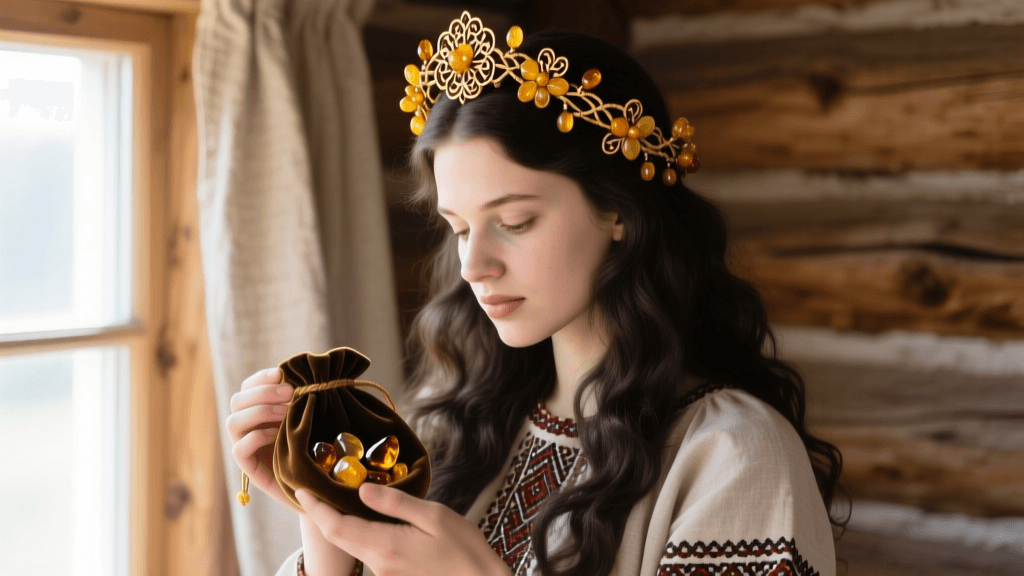
When shopping for amber jewelry to accompany your folk dress, always seek certification from recognized bodies. The International Amber Association provides strict guidelines and directories of certified artisans in Poland, Lithuania, and Latvia. In 2026, the most sought-after pieces for traditional dress are the heavy, multi-strand bead necklaces (known as namysto) and large, unpolished amber pendants that sit prominently against the white linen of a traditional vyshyvanka (embroidered shirt).
Identifying Genuine Baltic Amber
To ensure you are purchasing authentic Baltic amber rather than a modern synthetic, collectors in 2026 rely on several non-destructive testing methods:
- The Saltwater Test: Genuine amber is remarkably lightweight. In a solution of heavily salted water (approximately 1 part salt to 2 parts water), real amber will float, while glass and most heavy plastics will sink.
- The UV Light Test: Under ultraviolet light, authentic Baltic amber exhibits a distinct fluorescent glow, typically ranging from pale blue to milky green, whereas copal and plastic will appear dull or reflect a flat white light.
- The Electrostatic Test: When rubbed vigorously against a natural wool cloth, genuine amber develops a negative electrostatic charge and will attract small pieces of paper or dust.
- The Scent Test: If gently heated (such as by rubbing it rapidly between your palms), true Baltic amber releases a faint, pleasant scent of pine resin, a hallmark of its ancient coniferous origins.
Amber Color Grading and 2026 Market Trends
The value and aesthetic impact of amber jewelry depend heavily on its color and opacity. Below is a guide to the primary amber varieties used in folk dress accessories this year:
| Amber Variety | Color Profile | 2026 Market Rarity | Best Folk Dress Pairing |
|---|---|---|---|
| Cognac | Deep golden-brown, transparent | Common | White linen vyshyvanka |
| Cherry | Reddish-brown, rich tones | Moderate | Dark wool skirts and vests |
| Butterscotch | Opaque yellow to white | High | Heavily embroidered silk |
| Green | Earthy green tint, cloudy | Rare | Earth-toned regional folk dress |
In 2026, opaque 'butterscotch' amber commands the highest premium among collectors, often priced between $40 and $120 per gram for high-quality, unmodified beads.
Styling the Vinok and Amber for Modern Folk Festivals
Pairing the delicate, vibrant florals of the vinok with the heavy, ancient presence of Baltic amber requires a balanced approach to styling. The key to mastering the 2026 folk festival aesthetic is to let the accessories speak without overwhelming the foundational garments.
If you are wearing a highly embroidered vyshyvanka with dense red and black cross-stitch, opt for a vinok dominated by white chamomile and green periwinkle, allowing the bright red ribbons to echo the embroidery. Pair this with a moderate-length cognac amber necklace that rests just below the collarbone. Conversely, if your dress features simpler, monochromatic linen, you can afford to wear a larger, more opulent vinok with a mix of bright poppies and cornflowers, accompanied by a heavy, multi-strand butterscotch amber bib necklace.
Preservation and Care Guide for Folk Accessories
Proper care is vital to ensure these heritage pieces survive for future generations. Both natural amber and the organic materials used in a vinok are sensitive to environmental factors.
Caring for Baltic Amber
Amber is a soft gemstone (rating 2-2.5 on the Mohs scale) and can be easily scratched. Store your amber necklaces in soft cloth pouches, separate from harder gemstones or metal jewelry. Avoid exposing amber to harsh chemicals, perfumes, or hairsprays, as these can cloud the surface and degrade the natural oils. To clean amber, simply wipe it with a soft, damp cloth and dry it immediately. Never use ultrasonic cleaners or steamers.
Preserving the Vinok
If your vinok is crafted from preserved botanicals and pure silk ribbons, it must be kept away from direct sunlight, which will bleach the vibrant colors of the flowers and ribbons over time. Store the crown in a rigid, acid-free hat box with silica gel packets to control humidity and prevent mold growth on the organic materials. If the wire frame becomes misshapen, gently bend it back into a perfect circle, taking care not to snap the floral stems wrapped around it.
Conclusion
The accessories of Eastern European folk dress are profound testaments to the region's deep connection to nature, spirituality, and community. By investing in authentic Baltic amber and meticulously crafted vinok headwear, enthusiasts in 2026 are doing more than just assembling a beautiful outfit; they are actively participating in the preservation and evolution of a rich cultural heritage. Whether you are attending a midsummer Kupala Night celebration or a traditional folk dance festival, wearing these pieces with knowledge and respect ensures that the vibrant legacy of Slavic adornment continues to flourish.