Baltic Amber & Slavic Vinok: 2026 Folk Festival Styling Guide
The Renaissance of European Folk Accessories in 2026
As we navigate the 2026 European folk festival season, the revival of traditional garments has moved far beyond simple costume replication. Today’s cultural enthusiasts, historians, and artisans are demanding historical accuracy, ethical sourcing, and master-level craftsmanship. Nowhere is this more evident than in the realm of traditional accessories, specifically the intricate floral headwear of the Slavic regions and the ancient, sun-kissed amber jewelry of the Baltic coast. Whether you are attending a midsummer Kupala Night celebration, a Baltic heritage festival, or a Carpathian cultural showcase, understanding the nuances of these accessories is essential for an authentic and respectful presentation.
According to digital archives curated by Europeana, the preservation of regional dress relies heavily on the accurate transmission of accessory-making techniques. In this comprehensive guide, we will explore the botanical symbolism of the Ukrainian vinok, the geological authentication of Baltic amber, and the striking brass-and-coral zgarda necklaces of the Hutsul people, providing you with actionable sourcing and styling advice for the current year.
The Ukrainian Vinok: Symbolism, Structure, and Sourcing
The vinok is a traditional Ukrainian flower wreath, historically worn by unmarried women and deeply embedded in pre-Christian and Christian agrarian rituals. Far from a simple circle of daisies, an authentic vinok is a complex botanical and textile sculpture. According to traditional ethnography, a proper vinok incorporates up to twelve different flowers, each carrying specific symbolic weight: cornflowers for simplicity, chamomile for peace, and yarrow for beauty and health.
Anatomy of an Authentic Vinok
The foundation of the wreath is traditionally woven from periwinkle (barvinok), a resilient evergreen vine symbolizing eternal life and fidelity. In 2026, artisan cooperatives based in Kyiv and Lviv have pioneered sustainable harvesting methods, ensuring that wild periwinkle is cultivated rather than over-foraged from protected forest floors. The flowers are either carefully preserved silk or high-quality botanical replicas, as fresh flowers cannot withstand the rigors of a multi-day festival.
The most crucial structural element of the vinok is the stuzhky (ribbons). Traditionally, the ribbons should be cut to the exact height of the wearer or slightly longer, typically ranging from 120 to 150 centimeters. The color sequence of the ribbons is strictly codified: light blue for youth, yellow for the sun, green for beauty, and red for joy. When sourcing a vinok for the 2026 season, expect to pay between $85 and $160 for a hand-woven, silk-flower piece from a verified Ukrainian artisan, ensuring your purchase directly supports cultural preservation efforts.
Baltic Amber: Identifying and Sourcing the 'Gold of the North'
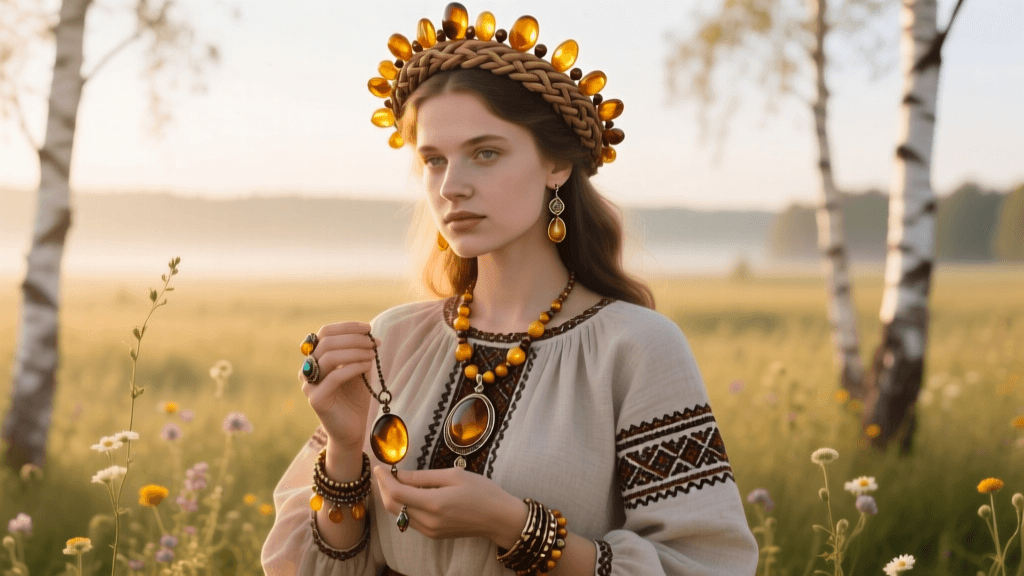
Baltic amber, or succinite, has been a cornerstone of Northern and Eastern European folk jewelry for over 10,000 years. Unlike the highly polished, uniform beads of mid-century costume jewelry, the 2026 trend in folk dress heavily favors raw, unpolished amber nuggets set in oxidized silver or strung on natural linen twine. This aesthetic reflects a broader movement toward organic, unrefined materials that honor the natural origins of the resin.
Authentication Techniques for the Modern Buyer
With the market flooded with copal (immature resin) and synthetic plastics, knowing how to authenticate Baltic amber is a critical skill for any collector or festival-goer. The International Amber Association provides stringent guidelines for certification, but you can perform several non-destructive tests at home or at the point of sale:
- The Saltwater Float Test: Mix one cup of room-temperature water with three tablespoons of table salt. Genuine Baltic amber will float in this dense saline solution, while most plastics and glass will sink.
- The UV Light Test: Under a standard ultraviolet flashlight, authentic Baltic amber will fluoresce a pale, milky blue or greenish-blue. Copal will fluoresce a dull white, and plastic will not react.
- The Static Electricity Test: Rub the amber vigorously against a natural wool cloth for ten seconds. Genuine amber will develop a static charge capable of picking up small pieces of tissue paper.
When purchasing in 2026, look for sellers who provide a certificate of origin from the Gdańsk or Vilnius amber exchanges. A high-quality, raw amber necklace featuring natural inclusions (such as ancient pine needles or tiny air bubbles) will typically cost between $120 and $350, depending on the size of the nuggets and the rarity of the inclusions.
Carpathian Zgarda: Brass, Coral, and Mountain Heritage
While amber dominates the northern plains, the mountainous Carpathian region boasts the zgarda, a striking and heavy folk necklace worn primarily by Hutsul women. The zgarda is composed of multiple strands of red coral beads interspersed with cast brass or silver crosses and coins. Historically, the weight and metallic content of a zgarda served as a portable display of a family’s wealth and social standing.
In 2026, authentic Mediterranean red coral is heavily regulated due to conservation efforts. Consequently, master Hutsul jewelers have pivoted to using ethically sourced bamboo coral dyed with natural madder root, or high-grade carnelian agates, which provide the same vibrant, protective red hue traditionally associated with the necklace. A modern, artisan-crafted zgarda features heavy, sand-cast brass pendants that develop a rich, dark patina over time, perfectly complementing the dense, geometric embroidery of a traditional Hutsul kyptar (sheepskin vest).
2026 Accessory Comparison and Sourcing Chart
| Accessory | Region of Origin | Primary Materials | 2026 Avg. Price | Best Paired Garment |
|---|---|---|---|---|
| Vinok (Floral Wreath) | Ukraine / Belarus | Periwinkle, Silk Flowers, Satin Ribbons | $85 - $160 | Embroidered Vyshyvanka Shirt |
| Raw Amber Hryvna | Lithuania / Poland / Latvia | Unpolished Succinite, Linen, Silver | $120 - $350 | Linen Tunic or Wool Vest |
| Zgarda Necklace | Carpathian Mountains | Carnelian, Cast Brass, Silver Coins | $200 - $450 | Hutsul Kyptar or Sheepskin Coat |
| Kokoshnik (Pearl) | Northern Russia | Velvet, Faux Pearls, Gold Thread | $150 - $300 | Sarafan Dress and Rubakha |
Styling Your Folk Accessories for All-Day Festival Wear
Wearing traditional accessories requires practical considerations, especially during long, active festival days. The vinok, for instance, is notoriously front-heavy. To secure it properly, modern wearers should use a hidden, elasticized headband base that matches their hair color, pinning the woven periwinkle base to the band with U-shaped hairpins. The trailing ribbons should be tied in a secure double knot at the nape of the neck, allowing them to cascade down the back without dragging on the ground.
When styling Baltic amber, layering is key to achieving a historically resonant look. Begin with a tight, collar-length string of small amber chips, followed by a mid-chest torque (hryvna) made of larger, raw nuggets. This layered approach mimics the archaeological finds of ancient Baltic chieftains and creates a stunning visual contrast against the stark white or unbleached linen of traditional peasant shirts. For a deep dive into the auditory and visual culture of these regions, the Smithsonian Folkways archives offer incredible multimedia resources that showcase how these garments move and sound during traditional dances.
Care and Preservation of Antique and Artisan Pieces
Proper maintenance is vital to preserve the integrity of your folk accessories. Amber is remarkably soft, rating only 2 to 2.5 on the Mohs hardness scale. Never clean amber jewelry in an ultrasonic cleaner or use harsh chemical solvents, as this will strip the natural oils and cause the resin to craze (develop microscopic cracks). Instead, wipe your amber gently with a soft, lint-free microfiber cloth dampened with warm water, and occasionally polish it with a drop of natural almond oil to restore its luster.
Silk flowers on a vinok must be protected from moisture and direct, prolonged sunlight, which will cause the dyes to bleed and fade. Store your wreath in a rigid, circular hatbox lined with acid-free tissue paper to prevent the wire armatures from bending out of shape. Brass elements of a zgarda should be allowed to patinate naturally, but if you prefer a bright shine, use a gentle paste of lemon juice and baking soda, applying it with a soft toothbrush and rinsing thoroughly to protect the adjacent coral or carnelian beads. By treating these accessories not as mere costumes, but as living artifacts of European heritage, you ensure their beauty and symbolism endure for generations to come.