Baltic Amber Jewelry & Lithuanian Wreaths: 2026 Guide
The Renaissance of Baltic Folk Accessories in 2026
European folk dress is experiencing a profound renaissance in 2026, driven by a global desire for sustainable heritage fashion, artisanal craftsmanship, and deep cultural connection. Among the most captivating elements of this revival are the intricate accessories of the Baltic and Slavic regions. Specifically, Lithuanian traditional headwear and Baltic amber jewelry stand out as masterclasses in symbolic adornment. Whether you are preparing for a regional folk festival, participating in the massive 2026 Dainų Šventė (Song and Dance Festival), or simply integrating heritage pieces into a modern wardrobe, understanding the nuances of these accessories is essential.
This comprehensive guide explores the historical significance, botanical accuracy, and 2026 market sourcing strategies for authentic Baltic amber and traditional Lithuanian wreaths. By the end of this article, you will possess the actionable knowledge required to identify genuine succinite, craft historically accurate floral crowns, and style these heritage pieces with confidence.
The Enduring Legacy of Baltic Amber in Folk Jewelry
Baltic amber, scientifically known as succinite, has been a cornerstone of Northern European adornment for millennia. Formed over 40 million years ago from the resin of prehistoric pine forests, amber was historically revered as 'Lithuanian gold.' In traditional folk dress, amber was not merely decorative; it was believed to possess protective and healing properties, often worn to ward off illness and bring fertility. In 2026, the demand for unmodified, natural Baltic amber has surged, with collectors and folk dress enthusiasts actively seeking raw, unpolished nodules and historically accurate cabochons over heavily treated modern variants.
Identifying Authentic Succinite in the 2026 Market
With the rise of sophisticated synthetic resins, identifying genuine Baltic amber requires a keen eye and an understanding of current market certifications. According to the International Amber Association, authentic Baltic amber must contain a specific concentration of succinic acid (typically between 3% and 8%). When sourcing amber for traditional folk necklaces (known as karoliai), buyers should look for pieces that exhibit natural inclusions, such as prehistoric air bubbles or botanical debris, which are hallmarks of genuine succinite.
In 2026, reputable sellers provide UV fluorescence certificates. Genuine Baltic amber will fluoresce a pale blue or milky green under long-wave UV light, whereas copal (immature resin) and modern plastics will either show no fluorescence or a stark, artificial white glow. Always request documentation from sellers operating out of the Curonian Spit or the Gdańsk region to ensure provenance.
Traditional Lithuanian Headwear: Vainikas and Nuometas
Headwear in Lithuanian folk dress (tautinis kostiumas) is strictly codified by age, marital status, and region. The two most prominent forms of headwear are the vainikas (the floral wreath) and the nuometas or kalpokai (the wrapped linen headcoverings for married women). Understanding the distinction is crucial for anyone participating in heritage events or curating a museum-quality collection.
Botanical Accuracy for the Vainikas
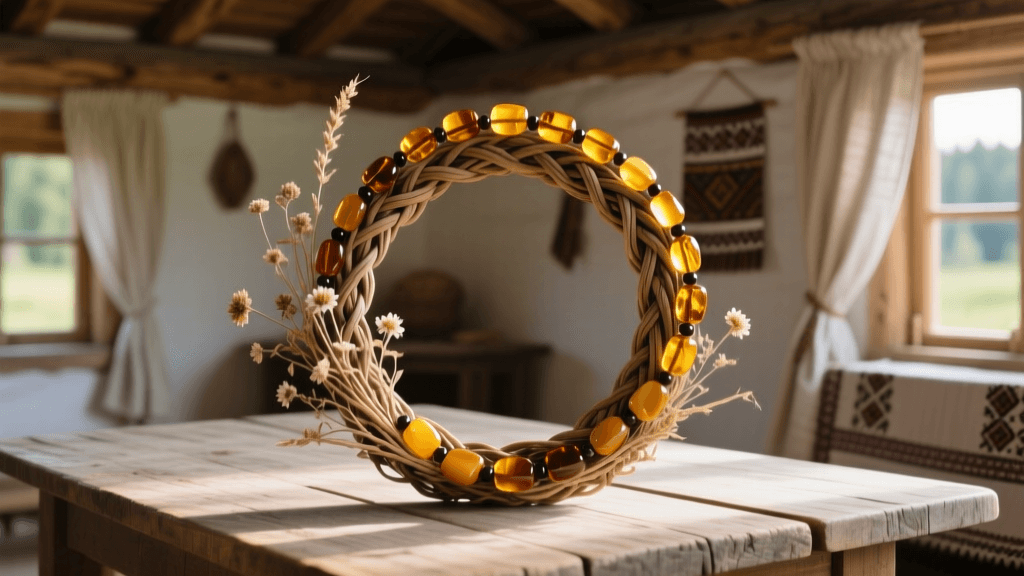
The vainikas is a wreath worn exclusively by unmarried women and girls. While modern festival-goers might use any available wildflowers, historical accuracy in 2026 demands specific botanical choices. The most sacred plant in Lithuanian folklore is rue (Ruta graveolens, or rūta), symbolizing virginity, youth, and maidenhood. A traditional wreath is heavily anchored by sprigs of rue, interwoven with cornflowers (rugiai), chamomile, and wild mint.
For the 2026 festival season, artisans are returning to hand-foraging these specific herbs rather than relying on commercial florists. If you are crafting a vainikas for a multi-day event, it is advisable to mist the botanical elements with a glycerin-water solution to prevent the delicate rue leaves from wilting under the summer sun. The base of the wreath should be constructed from flexible willow or birch twigs, bound tightly with unbleached linen thread to maintain structural integrity during traditional circle dances.
The Nuometas and Kalpokai for Married Women
Upon marriage, a woman transitions from the vainikas to covered headwear, signifying her new status. The nuometas is a remarkably complex, elongated piece of fine white linen that is wrapped intricately around the head and pinned with amber or silver brooches. In the Dzūkija region, the kalpokai (a stiffened, embroidered cap) is preferred. Sourcing antique linen nuometas in 2026 requires navigating specialized textile auctions in Vilnius, as the sheer yardage and fine weave of mid-19th-century linen are nearly impossible to replicate with modern commercial looms.
2026 Sourcing Guide and Price Comparison
Whether you are sourcing raw materials for crafting or purchasing finished heritage pieces, the 2026 market offers distinct tiers of quality and pricing. Below is a comparison chart detailing the current market landscape for Baltic amber and traditional headwear components.
| Accessory Type | Material / Specification | 2026 Avg. Market Price | Sourcing Recommendation |
|---|---|---|---|
| Raw Amber Nodules | Unpolished Baltic Succinite (10-20g) | €15 - €25 per gram | Direct from Palanga artisan guilds |
| Polished Amber Beads | Graduated barrel beads, natural honey hue | €120 - €300 per strand | Certified Gdańsk amber workshops |
| Antique Nuometas | Hand-woven 19th-century white linen | €450 - €1,200 (Auction) | Vilnius heritage textile auctions |
| Modern Vainikas Kit | Dried rue, cornflower, birch base, linen twine | €35 - €60 per kit | Lithuanian ethnographic craft fairs |
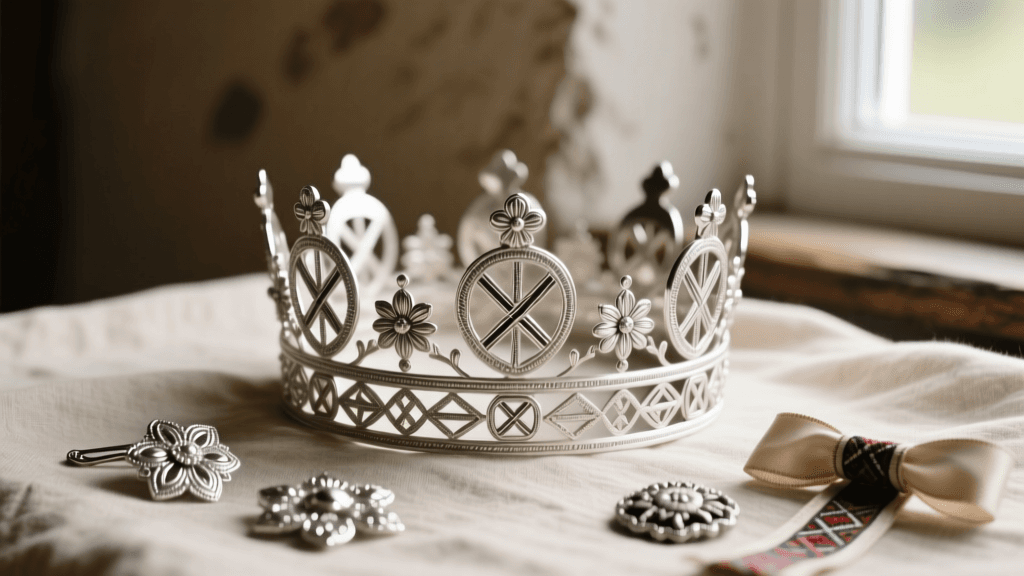
| Amber Penannular Brooch | Sterling silver setting with cabochon center | €180 - €400 per piece | Bespoke Baltic jewelers (custom order) |
Styling Heritage Accessories for Modern Festivals
Integrating these historical pieces into a cohesive 2026 folk dress ensemble requires an understanding of color theory, regional textiles, and proportion. The UNESCO-recognized Lithuanian Song and Dance Festival remains the premier venue for showcasing these accessories, and the styling standards remain rigorously traditional yet adaptable.
Pairing Amber with Linen Tautinis Kostiumas
Baltic amber shines brightest against the natural, unbleached tones of traditional linen garments. When wearing a multi-strand amber necklace, ensure the neckline of your blouse (palaidinė) is cut in a traditional square or rounded scoop to frame the stones. Avoid pairing heavy, raw amber nodules with heavily embroidered, dark wool vests, as the visual weight will clash. Instead, reserve dark wool bodices for delicate amber earrings or a single, large amber brooch pinned at the collar.
For headwear, ensure the botanical elements of your vainikas complement the embroidery threads of your skirt's apron. If your apron features blue cross-stitch patterns (common in the Suvalkija region), emphasize the blue cornflowers in your wreath. This level of regional coordination is highly respected by folk dress judges and cultural historians in 2026.
Caring for Antique Amber and Botanical Headwear
Preserving these organic materials requires specific environmental controls. Amber is relatively soft (2 to 2.5 on the Mohs scale) and can easily scratch if stored alongside metal jewelry. In 2026, conservationists recommend storing amber pieces in individual, unbleached cotton or velvet pouches. Never clean amber with ultrasonic cleaners, alcohol, or commercial jewelry dips; instead, gently wipe the stones with a damp microfiber cloth and occasionally polish them with a tiny drop of natural almond oil to maintain their luster.
Botanical headwear, particularly those incorporating dried rue and wildflowers, must be protected from high humidity and direct UV exposure, which will bleach the vibrant greens and blues of the flora. After a festival, carefully place the vainikas in an acid-free archival box layered with silica gel packets. This ensures the structural integrity of the dried herbs is maintained for future heritage events, allowing the botanical crown to become a lasting family heirloom.
Conclusion: Honoring the Craft of European Folk Adornment
The accessories of Baltic folk dress are far more than mere embellishments; they are wearable archives of prehistoric forests, ancient botanical wisdom, and deeply ingrained societal structures. As we navigate the heritage fashion landscape of 2026, prioritizing authentic succinite, historically accurate botanical wreaths, and respectful styling ensures that these traditions remain vibrant and relevant. Whether you are sourcing your first strand of raw Palanga amber or weaving your own linen nuometas, you are actively participating in the preservation of Europe's most profound textile and jewelry legacies. For further research on regional variations, the Lithuanian National Museum offers extensive digital archives detailing the evolution of these magnificent accessories across centuries.