Authenticating Baltic Amber & Slavic Vinok Headwear Guide 2026
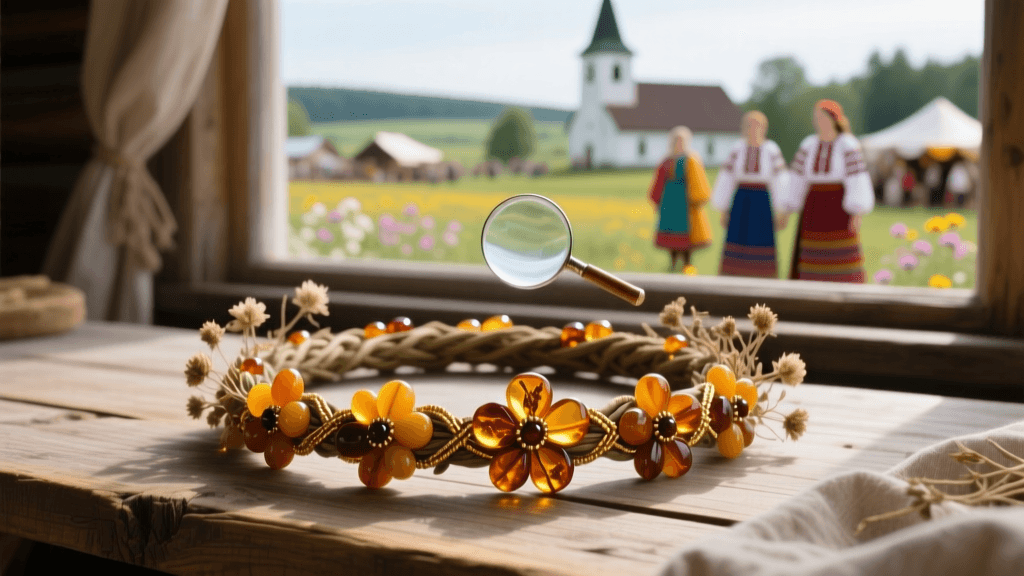
The resurgence of traditional European folk dress has reached new heights in 2026, with a profound appreciation for the intricate accessories that complete regional ensembles. Among the most iconic and culturally significant of these accessories are Baltic amber jewelry and the Slavic vinok (floral headwreath). Whether you are preparing for a modern Kupala Night festival, attending a traditional folk wedding, or simply curating an authentic heritage wardrobe, understanding the provenance, construction, and styling of these pieces is essential.
In this comprehensive 2026 guide, we explore the current market for natural succinite (Baltic amber), provide actionable authentication techniques, and offer a step-by-step masterclass on sizing and securing the traditional Slavic vinok. By mastering these elements, you ensure your folk dress accessories are not only historically resonant but also crafted for modern wearability.
The 2026 Market for Baltic Amber (Succinite)
Baltic amber, known scientifically as succinite, has been a cornerstone of Northern and Eastern European folk jewelry for millennia. In 2026, the global supply chain for natural amber has seen significant shifts. With stricter environmental regulations protecting the coastlines of Lithuania, Latvia, and the Kaliningrad region, ethically sourced, naturally washed amber commands a premium. Current 2026 pricing for museum-grade, unheated Baltic amber beads ranges from $40 to $120 per gram, depending on clarity, inclusions, and color rarity (such as the highly sought-after 'cherry' and 'butterscotch' hues).
Unfortunately, the high value of natural amber has led to a proliferation of sophisticated synthetics. Copal (immature tree resin), pressed amber (ambroid), and advanced UV-reactive polymers frequently flood the market. For folk dress enthusiasts, wearing authentic amber is not just about monetary value; it is about maintaining a genuine connection to the earth and the ancestral traditions of the Baltic and Slavic peoples. According to the International Amber Association, verifying the natural origin of your beads is the first step in ethical heritage collecting.
Authentication Techniques for Natural Amber
Before integrating amber beads into your traditional gintaro karoliai (amber necklace), you must verify their authenticity. While advanced spectroscopy is the only 100% foolproof method, several at-home tests can help you identify blatant fakes. The Gemological Institute of America (GIA) notes that natural amber possesses unique electrostatic and buoyancy properties that most modern plastics cannot replicate without specialized chemical treatments.
The Saltwater Buoyancy Test
Natural Baltic amber has a specific gravity of approximately 1.05 to 1.10. This means it will sink in fresh water but float in a saturated saltwater solution. To perform this test, mix 1 part salt to 2 parts warm water until the salt completely dissolves. Drop your unstrung beads into the solution. Genuine amber will float near the surface, while glass, most plastics, and copal will sink to the bottom.
The UV Fluorescence Test
Under a standard 365nm ultraviolet (UV) flashlight, natural Baltic amber exhibits a distinct pale blue, green, or milky white fluorescence. Copal typically shows a dull, chalky white glow, while modern polymers often absorb the light entirely or fluoresce in unnatural, bright purple or yellow hues.
Amber Authentication Methods & Reliability
| Test Method | Procedure | Result for Real Amber | Reliability in 2026 |
|---|---|---|---|
| Saltwater Buoyancy | Submerge in saturated NaCl solution | Floats | High (Fails on some pressed amber) |
| UV Fluorescence | Shine 365nm UV light in dark room | Pale blue/green/white glow | Very High |
| Electrostatic Rub | Rub vigorously on wool cloth | Attracts small paper scraps | Moderate (Some plastics also charge) |
| Hot Needle Test | Touch red-hot needle to hidden area | Emits pine/forest scent, smokes white | High (Destructive, use with caution) |
The Slavic Vinok: Anatomy of a Traditional Wreath
The vinok (Ukrainian) or vianok (Belarusian) is far more than a simple flower crown. Historically, it was a complex semiotic device worn by unmarried women, with every flower, herb, and ribbon conveying specific messages regarding the wearer's marital status, regional origin, and familial wealth. In 2026, the vinok has experienced a massive revival, transitioning from rural folk festivals to high-fashion editorial shoots and modern bohemian weddings.
A traditional vinok consists of three main components: the structural base (historically birch bark or stiffened linen, now often floral wire), the botanical elements (fresh or high-quality silk flowers and medicinal herbs like periwinkle, mint, and chamomile), and the trailing ribbons (strichky). According to curators at the State Ethnographic Museum, the integration of periwinkle (barvinok) is non-negotiable in authentic Ukrainian wreaths, as it symbolizes eternal life and enduring love.
Step-by-Step Vinok Sizing and Construction
Creating a vinok that stays secure during active festival dancing requires precise sizing and modern structural adaptations. Here is how to construct a durable, authentic-feeling headwreath for the 2026 festival season.
- Measure the Head: Use a flexible tailor's tape measure. Wrap it around the head where the wreath will sit—typically just above the eyebrows and resting on the occipital bone at the back. Add 1.5 inches to this measurement to allow for overlap and padding.
- Select the Wire Base: For a sturdy base that can support heavy silk flowers and trailing ribbons, use 16-gauge or 18-gauge galvanized floral wire. Cut the wire to your measured length.
- Create the Padding: Wrap the wire tightly with floral tape, then overlay it with a 1-inch wide strip of velvet or moleskin fabric. This padding prevents the wire from slipping on the hair and protects the forehead from abrasion during long wear.
- Attach the Botanicals: Using 24-gauge paddle wire, bind your flowers and herbs to the base. Group elements in odd numbers (threes or fives) for visual harmony. Ensure the front of the wreath features smaller, delicate buds, while larger, voluminous blooms are placed toward the sides and back to frame the face.
- Secure the Fastening: Instead of traditional tying, attach a small, heavy-duty lobster clasp to one end of the wire base and a jump ring to the other. This allows for a secure, adjustable fit that won't come undone during vigorous folk dancing.
Ribbon Symbolism and Length Guidelines
The ribbons trailing from the back of the vinok are vital to its historical accuracy. In 2026, authentic silk ribbons measuring 1.5 inches in width and 24 to 36 inches in length are the standard for adult festival wear. The colors you choose carry deep traditional meanings:
- White: Purity, innocence, and spiritual light. Often placed closest to the center back.
- Red: Vitality, health, and protection against the evil eye. A mandatory color in almost all regional variations.
- Blue: The sky, water, and physical healing.
- Green: Youth, spring, and the awakening of nature.
- Gold/Yellow: The sun, wealth, and agricultural abundance.
- Black: Historically used to signify mourning or a connection to the spirit world; rarely used in celebratory festival wreaths.
'The ribbons of the vinok are the roots of the maiden, connecting her earthly beauty to the flowing waters of her ancestors.' — Traditional Slavic Folk Proverb
Styling Amber and Vinok Together
Pairing heavy Baltic amber jewelry with a voluminous vinok requires a careful eye for proportion. The visual weight of the headwear must be balanced by the neckline of your traditional blouse (vyshyvanka or rubakha) and the scale of your beads.
If your vinok is highly elaborate, featuring large sunflowers or dense peonies, opt for a shorter, choker-style amber necklace (16 to 18 inches) featuring large, unpolished 'baroque' beads. This draws the eye upward and frames the face without competing with the intricate embroidery of your garment. Conversely, if your wreath is a delicate, minimalist band of periwinkle and chamomile, you can layer multiple strands of smaller, polished amber beads in a princess or matinee length (20 to 24 inches) to create a cascading effect over a linen tunic.
Care and Preservation for 2026 Heirlooms
Both amber and silk floral headwear require specific care to ensure they last for generations. Amber is an organic gemstone, measuring only 2 to 2.5 on the Mohs hardness scale, making it highly susceptible to scratching and chemical damage.
- Cleaning Amber: Never use ultrasonic cleaners, steam, or harsh chemical solvents. Simply wipe your amber beads with a soft, lint-free microfiber cloth dampened with warm water and a drop of mild, pH-neutral soap. Dry immediately.
- Storing Amber: Keep amber away from prolonged exposure to direct sunlight and extreme heat, which can cause the resin to craze (develop surface cracks) or darken excessively over time. Store in a soft velvet pouch separate from harder gemstones.
- Preserving the Vinok: If your wreath utilizes high-quality silk flowers, store it in a rigid, acid-free hat box. Stuff the crown with acid-free tissue paper to maintain its circular shape. Keep the trailing ribbons loosely coiled to prevent permanent creasing.
By respecting the materials and the profound cultural history behind these accessories, you participate in the living tradition of European folk dress. Whether you are sourcing ethical Baltic amber or carefully wiring your own vinok for the upcoming solstice celebrations, these 2026 practices ensure your heritage garments are worn with authenticity, pride, and enduring elegance.