2026 Burgundian Houppelande Guide: Tailoring & Fabric Sourcing
The Resurgence of the Burgundian Houppelande in 2026
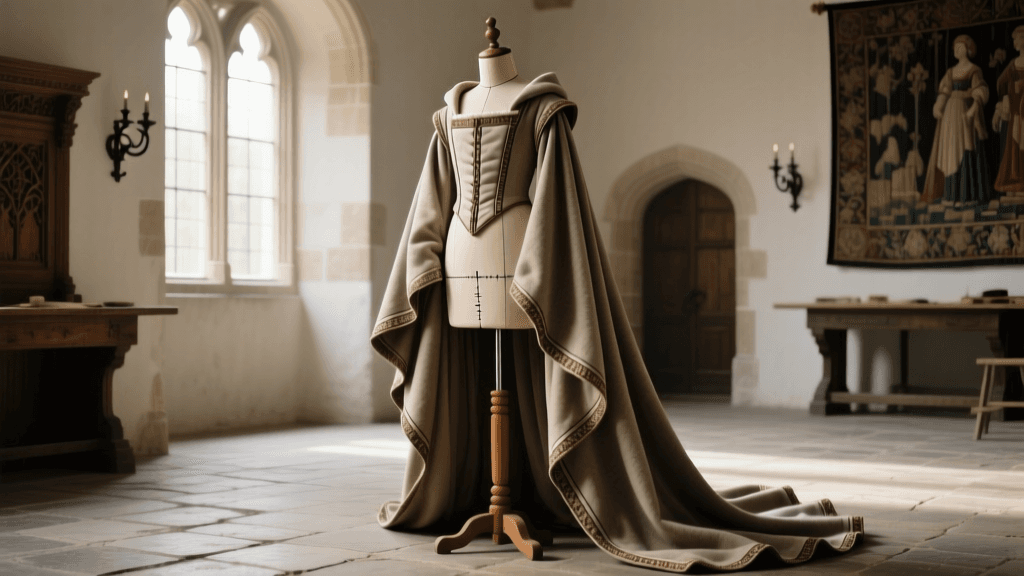
As we navigate the 2026 historical reenactment and European folk festival season, the demand for uncompromising accuracy in medieval garments has reached an all-time high. Among the most iconic and structurally complex garments of the late medieval period is the Burgundian houppelande. Emerging in the late 14th century and dominating aristocratic fashion through the mid-15th century, this voluminous outer garment represents the pinnacle of medieval textile opulence. According to the Metropolitan Museum of Art's Heilbrunn Timeline of Art History, the houppelande was characterized by its sweeping floor-length skirts, high stiffened collar, and massive bombard sleeves, serving as a canvas for displaying immense wealth through sheer yardage and luxury linings.
For modern tailors, historical costumers, and folk dress enthusiasts, recreating the houppelande in 2026 requires more than just sewing a large robe. It demands an understanding of historical geometry, period-accurate fabric weights, and advanced tailoring techniques like cartridge pleating. This comprehensive guide will walk you through the precise anatomy, modern fabric sourcing, and step-by-step drafting required to construct an authentic 15th-century Burgundian houppelande for contemporary wear.
The Anatomy of the Burgundian Silhouette
Before cutting into expensive wool, one must understand the structural pillars that define the houppelande. Unlike the fitted cotehardie that preceded it, the houppelande relied on volume and strategic belting to create its silhouette. The garment was typically worn over a linen chemise and a fitted kirtle. The defining features include:
- The High Collar: A stiffened band collar that stands high against the neck, often dagged (cut into decorative scallops or leaf shapes) at the top edge.
- The Bombard Sleeve: Extremely wide, floor-dragging sleeves that are narrow at the shoulder seam but expand dramatically toward the wrist, often lined with contrasting silk or fur.
- The Belted Waist: The immense fabric of the torso is gathered and secured by a wide, ornate leather belt worn high on the natural waist for women, and slightly lower on the hips for men.
- The Skirt Volume: Cut in deep gores or semi-circles to create heavy, tubular folds that pool on the ground.
2026 Fabric Sourcing: Achieving Historical Accuracy
The historical textile market has evolved significantly, with 2026 bringing stricter sustainability standards and a renewed focus on heritage weaving techniques. To achieve an authentic drape, you must avoid modern, lightweight costume wools. A true houppelande requires heavy, fulled wool broadcloth or high-quality worsted wool that can hold deep pleats without collapsing. For the elite look, silk damasks and brocades are appropriate for linings and collars.
Below is a curated comparison of the most reliable heritage textile suppliers for the 2026 season, detailing their specialty fabrics and current market pricing.
| Supplier Name | Specialty Fabric | 2026 Price per Yard | Best Application |
|---|---|---|---|
| Burnley & Trowbridge | Fulled Wool Broadcloth (14oz) | $48.00 | Main garment body, heavy pleating |
| Sartor Bohemia | Silk Damask & Brocade | $65.00 | Collar facings, sleeve linings |
| Historical Emporium | Heavyweight Linen Canvas | $22.00 | Internal collar stiffening, base linings |
| Wm. Booth Draper | Wool Flannel & Baize | $34.00 | Winter linings, contrasting trims |
When ordering, always request a swatch to test the fabric's 'memory.' The wool must spring back when crushed in your hand; if it remains wrinkled, it will not support the deep cartridge pleats required at the waist.
Pattern Drafting and Measurement Guide
Drafting a houppelande does not rely on modern fitted slopers. Instead, it utilizes geometric shapes—primarily rectangles, triangles (gores), and semi-circles. The most historically supported method for the skirt is the semi-circular cut, which provides maximum hem circumference with minimal side seams.
Step 1: Calculating the Skirt Radius
To draft the skirt, you must first determine the waist circumference where the belt will sit. Because the houppelande is heavily pleated, your cut waist circumference should be at least three to four times your actual belted waist measurement. For a 30-inch belted waist, you need roughly 100 inches of fabric to pleat down. Using the circle skirt formula (Radius = Circumference / 6.28), a 100-inch circumference requires a radius of approximately 16 inches from your center point. From that 16-inch radius line, measure down to your desired floor length, adding an extra 4 inches for the hem and ground pooling.
Step 2: Drafting the Bombard Sleeve
The bombard sleeve is drafted as a modified rectangle. Measure from your shoulder point down to the floor, and add 12 inches to allow for the dramatic drape when the arm is raised. The top of the sleeve (the armscye) should be relatively narrow, around 16 to 18 inches, to fit smoothly into the shoulder. However, the bottom edge (the wrist opening) should flare out to a massive 40 to 60 inches. When cutting the fabric, ensure the grainline runs vertically down the center of the sleeve to allow the heavy fabric to drape in clean, tubular folds rather than twisting.
Advanced Tailoring: Cartridge Pleating and Linings
The secret to the houppelande's iconic tubular folds lies in the pleating technique. Standard knife pleats or gather stitches will not provide the structured, organ-pipe look seen in 15th-century illuminated manuscripts. As noted by textile historians at the Victoria and Albert Museum's Medieval and Renaissance Collections, the drape of late medieval garments relied heavily on internal structuring and specialized pleating methods that maximized the visual impact of heavy wools.
Executing Cartridge Pleats
- Mark the Grid: On the wrong side of your skirt waistline, use a fabric pen or tailor's chalk to mark a grid of dots. Space the dots 1/2 inch apart horizontally and 1/2 inch apart vertically, creating at least three parallel rows of dots.
- Run the Threads: Using heavy-duty upholstery thread or waxed linen thread, run a running stitch through each row of dots. Do not pull the threads tight yet; leave long tails at both ends.
- Gather and Align: Pull all threads simultaneously to gather the fabric. The heavy wool will naturally fold into tight, rounded cylinders resembling artillery cartridges.
- Whipstitch to the Bodice: Pin the gathered edge to your finished waistband or belt backing. Using a strong whipstitch, secure the very top of each individual pleat to the band, taking two stitches per pleat to ensure it can bear the immense weight of the wool skirt.
Ethical and Historical Linings
Historically, the houppelande was lined with expensive furs like miniver, sable, or ermine to provide warmth and display status. In 2026, ethical reenactment standards strongly discourage the use of new wild-caught furs. Fortunately, modern textile engineering has produced exceptional faux-fur alternatives that mimic the dense, short pile of medieval sheared furs. Look for high-pile acrylic-modacrylic blends in off-white or spotted patterns. When sewing faux fur, always use a walking foot on your machine and cut the backing with a razor blade to avoid shearing the pile, ensuring the lining remains lush and historically convincing.
The Steeple Hennin and Accessory Integration
No Burgundian houppelande is complete without its crowning accessory: the steeple hennin. This towering conical headdress, often draped with a sheer silk veil, balances the massive volume of the gown's skirts and sleeves. To construct a hennin for modern wear, avoid heavy cardboard. Instead, use millinery buckram or thermoplastic felt (like Worbla) molded over a foam cone, covered in silk dupioni. The veil should be made of lightweight silk organza or fine linen voile, pinned to the tip of the cone and allowed to trail down the back.
For the waist, commission or craft a wide leather belt (at least 2 inches thick) with a long trailing end. The belt should feature a decorative metal plaque or cast brass buckle. The trailing end of the belt is often knotted or weighted with a metal chape to hang straight down the front of the gown, providing a vertical line that breaks up the horizontal volume of the pleats.
Conclusion: Wearing History in the Modern Era
Constructing a 15th-century Burgundian houppelande is a labor of love that bridges the gap between historical research and modern craftsmanship. By sourcing heavy, period-appropriate wools, mastering the geometry of the bombard sleeve, and executing precise cartridge pleats, you can create a garment that not only survives the rigors of the 2026 festival circuit but also honors the immense sartorial legacy of the medieval era. Whether you are attending a high-end historical immersion event or curating a living history exhibit, the houppelande remains a breathtaking testament to the power of textile and tailoring.