Balkan Koha Coin Headdresses & Silver Filigree Care 2026
The Resurgence of Balkan Heritage Jewelry in 2026
Across the diverse tapestry of European folk dress, few accessories command as much visual and historical authority as the coin-laden headdresses and intricate silver filigree of the Balkans. In 2026, the global appreciation for traditional European garments has moved beyond mere museum preservation, entering a vibrant era of cultural revival and heritage fashion. Collectors, cultural historians, and descendants of the Balkan diaspora are increasingly seeking authentic traditional accessories to complement regional folk costumes, particularly the Albanian, Kosovar, and Macedonian ensembles. At the very heart of this revival are the Koha (coin headdress) and the Đerdan (multi-strand coin and filigree necklace), masterpieces of silversmithing that serve as both stunning adornments and historical ledgers of family wealth.
Understanding the construction, market value, and proper conservation of these pieces is essential for any serious collector or cultural enthusiast navigating the 2026 heritage market. This comprehensive guide explores the anatomy of Balkan coin jewelry, the delicate art of silver filigree, and actionable maintenance strategies to preserve these artifacts for future generations.
Anatomy of the Koha: Velvet, Chains, and Currency
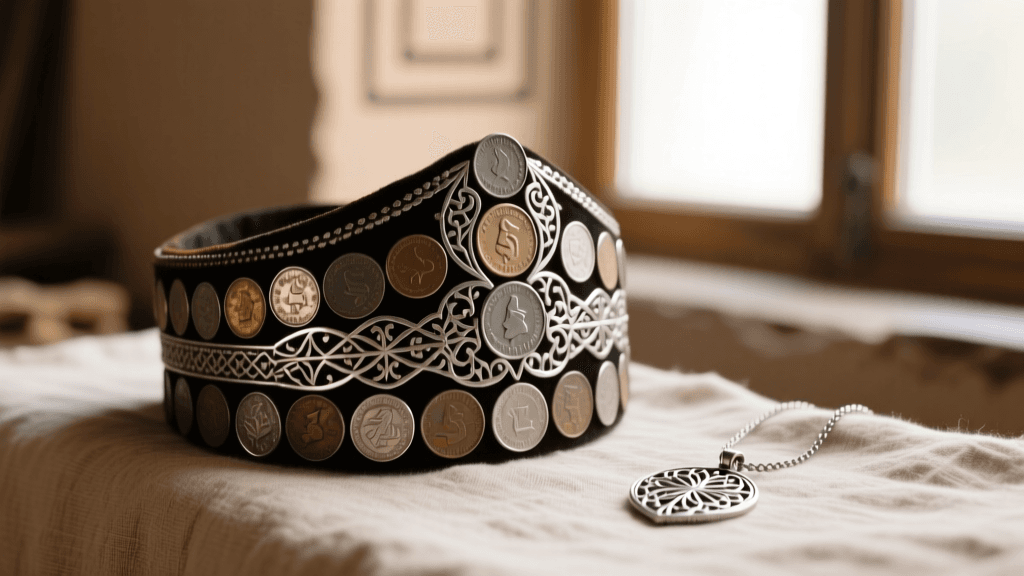
The Koha is arguably the most iconic piece of headwear in traditional Albanian and broader Balkan dress. Historically, it was not merely a decorative accessory but a portable bank account and a profound status symbol. A bride’s Koha displayed her family's dowry, with the weight and purity of the coins directly reflecting her social standing and financial security.
The foundation of a traditional Koha is typically a structured cap, often crafted from deep red or black velvet, which provides a sturdy base to support the immense weight of the metalwork. Attached to this velvet base are rows of coins, meticulously linked by delicate silver chains and interwoven with silver filigree rosettes. Historically, the coins used were actual circulating currency. The most prized was the Maria Theresa Thaler, an Austro-Hungarian silver coin renowned for its consistent .833 silver purity and striking portrait of the Empress. Ottoman gold and silver Majidi coins, as well as Venetian ducats, were also frequently incorporated, reflecting the complex trade routes and shifting empires that defined the Balkan peninsula.
According to The Metropolitan Museum of Art's Heilbrunn Timeline of Art History, the integration of minted currency into regional dress was a widespread practice across the Islamic world and Eastern Europe, serving as an amulet against the evil eye as much as a display of wealth. In 2026, authentic antique coins are exceedingly rare and heavily regulated by international antiquities laws. Consequently, master artisans in Prizren and Tirana now utilize high-fidelity, ethically sourced silver castings that perfectly replicate the weight, diameter, and relief of historical 19th-century coinage, ensuring the headdress maintains its authentic drape and acoustic chime without depleting archaeological reserves.
The Art of Balkan Silver Filigree
Connecting the coins and framing the face is the exquisite silver filigree, known locally as telkar. Balkan filigree is distinct from its Western European counterparts, characterized by incredibly dense, lace-like geometric and floral motifs. Artisans achieve this by pulling silver into wires as thin as a human hair. These wires are then twisted, curled, and soldered onto a silver backing or woven into freestanding three-dimensional structures.
The cities of Prizren (Kosovo) and Peja have been the undisputed capitals of this craft for centuries. Today, in 2026, a new generation of silversmiths is combining ancestral hand-twisting techniques with modern 3D-scanning technology. This allows them to study and replicate the exact soldering patterns of surviving 18th-century museum pieces, ensuring that the structural integrity of the filigree rosettes—which bear the brunt of the tension from the heavy coin chains—is mathematically perfect while remaining entirely handcrafted.
2026 Market Guide: Authentic vs. Artisan Reproduction
Navigating the market for European folk dress accessories requires a discerning eye. The surge in demand for Balkan heritage jewelry in 2026 has led to a stratified market. Below is a comparative analysis of the current landscape to help buyers make informed decisions.
| Category | Material & Purity | Average Price (USD) | Best For |
|---|---|---|---|
| Antique Original (19th Century) | Mixed silver (800-925), original historical coins, aged velvet | $4,500 - $15,000+ | Museums, serious antiquities collectors |
| Master Artisan Reproduction | 925 Sterling Silver, high-fidelity cast replica coins, new velvet | $1,200 - $3,500 | Heritage fashion, cultural festivals, bridal wear |
| Modern Simplified Filigree | 925 Sterling Silver, minimal coin accents, lightweight | $300 - $800 | Everyday ethnic-inspired jewelry, tourists |
| Mass-Produced Costume | Base metals, silver plating, stamped tin 'coins' | $50 - $150 | Theatrical props, budget costumes |
For those participating in traditional folk dance ensembles or attending cultural festivals in 2026, the Master Artisan Reproduction category offers the best balance of historical accuracy, durability, and ethical sourcing. With the spot price of silver stabilizing in the mid-2020s, investing in solid 925 sterling silver pieces remains a sound financial decision, as the intrinsic metal value provides a baseline of security.
Sourcing Authentic Pieces in 2026
If you are seeking genuine artisan work, bypass generic online marketplaces that are often flooded with mass-produced imports. Instead, look directly to the source. The Old Bazaar in Prizren remains the beating heart of the telkar tradition. Many family-run workshops there, such as the renowned Filigree Artisan Cooperatives, accept direct international commissions via their verified digital storefronts. In Albania, specialized heritage boutiques in Tirana's historic center offer certified Đerdan necklaces and Koha headdresses, complete with documentation of the silver's origin and the artisan's hallmark.
As emphasized by UNESCO's Intangible Cultural Heritage frameworks, supporting these direct-to-artisan cooperatives is vital. It ensures that the economic benefits of the 2026 heritage revival flow directly back into the communities that have safeguarded these complex metallurgical techniques for centuries, encouraging young apprentices to take up the soldering iron rather than seeking unrelated industrial work.
Expert Care and Maintenance for Antique Silver and Coins
Owning a piece of Balkan folk jewelry is a custodial responsibility. The combination of porous velvet, delicate silver filigree, and oxidized coin relief requires a specialized approach to conservation. The Victoria and Albert Museum Conservation Department advises extreme caution when dealing with mixed-material historical garments, particularly when organic textiles are married to reactive metals.
Cleaning Silver Without Destroying Patina
The dark oxidation (tarnish) that settles into the crevices of filigree and the stamped relief of the coins is not dirt; it is a protective layer that highlights the three-dimensional craftsmanship. Aggressive polishing will flatten the visual depth of the piece and destroy its historical character.
- Dust Removal: Use a soft, natural-bristle makeup brush or a can of compressed air held at a distance to gently dislodge dust from the intricate wirework. Never use stiff brushes that can snag and bend the micro-wires.
- Targeted Polishing: If the high points of the coins or filigree rosettes have lost their luster, use a dry, untreated microfiber cloth to gently buff only the raised surfaces. Avoid liquid silver dips or chemical pastes entirely, as these will seep into the velvet base and cause irreversible staining and textile degradation.
- Velvet Care: The velvet base of a Koha is highly susceptible to moth damage and humidity-induced mildew. Never wash the velvet. If it becomes soiled, consult a professional textile conservator. To refresh the pile, gently steam the velvet from a distance of at least six inches, allowing the moisture to lift the crushed fibers without wetting the silver chains.
Proper Storage Protocols
When the headdress or necklace is not being worn, it must be stored correctly to prevent the silver chains from tangling and the velvet from crushing. Wrap the entire piece in acid-free, unbuffered tissue paper. Place it in a rigid, archival-quality cardboard box lined with unbleached cotton. Include a few silica gel packets to maintain a stable relative humidity of around 45-50%, which is the optimal environment to slow silver tarnishing while preventing the velvet from becoming brittle. Store the box in a dark, climate-controlled interior room, avoiding attics or basements where temperature fluctuations can accelerate metal fatigue and textile decay.
Conclusion
The Balkan Koha and its accompanying silver filigree jewelry are far more than mere accessories; they are wearable archives of European history, reflecting centuries of trade, artistry, and cultural resilience. As we move through 2026, the renewed interest in European folk dress offers a unique opportunity to support traditional artisans and preserve these magnificent techniques. By understanding the intricate anatomy of these pieces, making ethical sourcing choices, and adhering to strict museum-grade conservation practices, collectors and cultural enthusiasts can ensure that the bright chime of silver coins and the delicate lace of filigree continue to resonate for generations to come.