2026 Guide to Kimono Secondhand Auctions and Appraisal
The Evolution of the Secondhand Kimono Market in 2026
The global appetite for sustainable, culturally rich fashion has propelled the secondhand kimono market into a highly sophisticated arena in 2026. No longer just a niche pursuit for local collectors, acquiring vintage Japanese garments through online auctions and specialized estate sales has become a cornerstone of the circular fashion movement. According to recent industry analyses by the Ellen MacArthur Foundation, the shift toward heritage garments has significantly reduced the carbon footprint associated with new textile production, making vintage kimono not only a cultural investment but an environmentally conscious one.
For international collectors and fashion historians, navigating platforms like Yahoo! Auctions Japan (Yahuoku), Rakuten, and specialized digital auction houses requires a keen eye for textile appraisal. In 2026, the integration of AI-assisted textile scanning and high-resolution macro photography has made remote appraisal more accurate than ever. However, understanding the traditional markers of value, authenticity, and condition remains the most critical skill for any serious bidder.
Core Pillars of Kimono Value Appraisal
Appraising a kimono is a multidisciplinary process that involves evaluating the fabric, the dyeing technique, the presence of artisan credentials, and the overall structural integrity of the garment. The Metropolitan Museum of Art's Heilbrunn Timeline of Art History notes that the kimono is a canvas for Japan's most refined textile arts, meaning the technique used often dictates the baseline value.
Fabric and Material Mastery
The foundation of any appraisal begins with the textile. Pure silk (shoken) is the standard for high-value vintage pieces, but specific regional variations command massive premiums in 2026 auctions:
- Oshima Tsumugi: A mud-dyed, hand-woven pongee silk from Amami Oshima. Authentic pieces feature complex kasuri (ikat) patterns that are woven, not printed. Mint condition Oshima Tsumugi with original certificates frequently exceed $1,500 USD at auction.
- Yuki Tsumugi: Designated as an Important Intangible Cultural Property by the Japanese government. The hand-spun silk floss and intricate tie-dye patterns make this one of the most expensive and sought-after textiles globally. The Ministry of Economy, Trade and Industry (METI) strictly regulates the certification of Yuki Tsumugi, making the presence of an authentic shikishi (certificate board) mandatory for top-tier appraisal.
- Chirimen: A crepe silk that provides a textured, matte finish. Heavy Chirimen is highly prized for formal garments like kurotomesode (black crested kimono) because it drapes beautifully and takes Yuzen resist-dyeing exceptionally well.
Artisan Signatures and Certificates
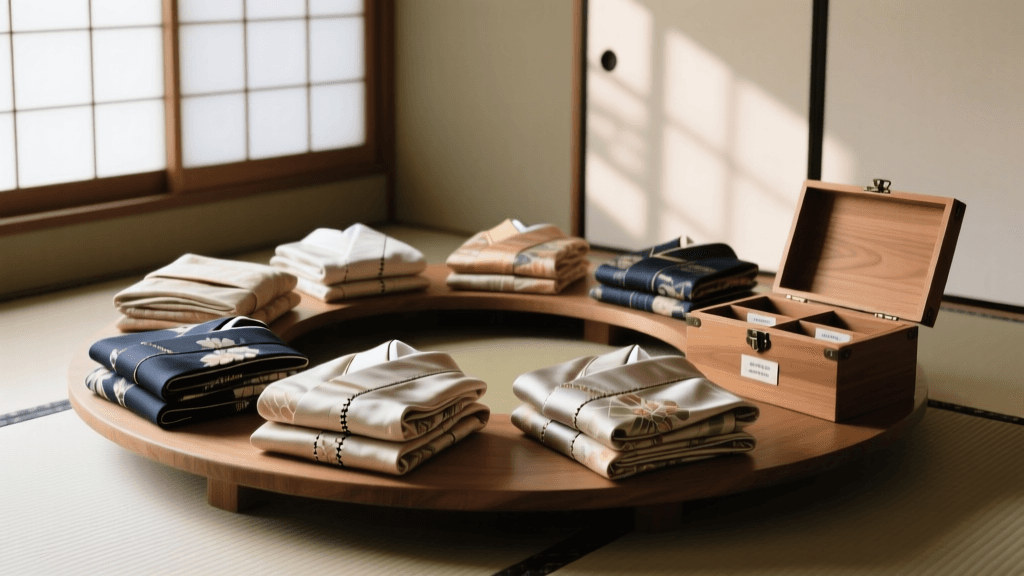
In the secondary market, provenance is everything. When browsing auction listings, look for mentions of a shikishi (a rigid board containing the artisan's signature, seal, and fabric details) or an oriki (the original wooden storage box). A kimono accompanied by its original shikishi and the physical shohi (woven authentication seal) attached to the bolt end can see its auction value increase by 40% to 60% compared to an identical, uncertified piece.
Evaluating Condition and Flaws
Vintage textiles are inherently fragile, and auction listings in 2026 rely on a standardized grading system. Appraisers must meticulously scan high-resolution photos for the following common flaws:
- Shimi: Age spots or water stains. Small, faint shimi near the hem can be hidden when worn, but shimi on the upper bodice drastically reduces value.
- Kise: Professional mending or reweaving. Expert kise is nearly invisible and preserves the garment's structural integrity, whereas amateur stitching ruins the drape and value.
- Hikkake: Snags or pulled threads, particularly common in loose-weave Tsumugi or embroidered Houmongi.
- Asayake: Fading or discoloration, usually found on the shoulders or back where the silk has been exposed to decades of UV light or improper storage.
Navigating Online Kimono Auctions in 2026
For international buyers, direct access to Japanese domestic auctions is typically facilitated through proxy bidding services like Buyee, Neokyo, and ZenMarket. In 2026, these platforms offer automated keyword translation and AI-driven bid tracking, but manual keyword searches still yield the best hidden gems.
Essential Japanese Search Keywords
To bypass the inflated prices of curated vintage export shops, serious collectors search domestic auctions using native terminology:
- 本場 (Honba): Meaning 'authentic' or 'original产地'. Used to denote regional specialties like Honba Oshima or Honba Kihachijo.
- 証紙 (Shohi): The authentication seal. Searching this ensures you are looking at certified traditional crafts.
- アンティーク (Antique): Generally refers to pre-1940s Taisho and early Showa era garments, highly prized for their bold, modernist 'Taisho Roman' aesthetics.
- リサイクル (Recycle): The Japanese term for the secondhand market. 'Recycle shop' lots often contain unappraised estate clear-outs where massive bargains can be found.
2026 Secondhand Kimono Value Comparison Chart
The following table outlines the average 2026 auction values for various kimono types, assuming standard proxy bidding fees and excluding international shipping costs. Values are estimated in USD based on realized auction data from Q1 2026.
| Garment Type | Material & Technique | Condition Grade | Est. 2026 Auction Value (USD) |
|---|---|---|---|
| Oshima Tsumugi | Pongee Silk, Mud-Dyed Kasuri | Mint (Shikishi included) | $650 - $1,800 |
| Kurotomesode | Heavy Chirimen Silk, 5 Crests | Excellent (Minor kise at hem) | $180 - $400 |
| Meisen Kasuri | Ikat Silk, Taisho Era | Good (Faint shimi, vibrant color) | $90 - $220 |
| Furisode | Yuzen Dye, Gold Leaf, Embroidery | Mint (Unworn estate stock) | $450 - $1,100 |
| Komon | Edo Komon Micro-Pattern Silk | Fair (Visible asayake on shoulders) | $35 - $85 |
Authenticating Vintage vs. Modern Reproductions
As the demand for vintage kimono has surged, so has the market for modern, digitally printed polyester reproductions designed to mimic antique aesthetics. In 2026, distinguishing between a genuine 1920s Meisen silk and a 2024 polyester replica requires a multi-sensory approach.
First, utilize the macro-lens capabilities of modern smartphones. Genuine Yuzen dyeing features a characteristic 'ito-me' (white outline) where the rice-paste resist was applied before dyeing. Digital prints lack this physical barrier, resulting in blurred or pixelated edges upon extreme magnification. Second, evaluate the drape and sound. Pure silk Chirimen produces a distinct, soft 'scroop' (a rustling sound) when compressed, whereas synthetic blends emit a sharper, plastic-like crinkle.
While the traditional 'burn test' (where a pulled thread is burned to check for the smell of singed hair, indicating protein-based silk) is definitive, it is destructive and not permitted on auction items. Instead, 2026 collectors rely on portable, non-destructive digital microscopes and AI textile identification apps that analyze the weave structure and light refraction of the fibers through high-resolution macro photography provided by the seller.
Conclusion: Investing in Cultural Heritage
Participating in the 2026 kimono secondhand market is an exercise in cultural preservation as much as it is a fashion pursuit. By understanding the intricate appraisal metrics—from the mud-dyed threads of Oshima Tsumugi to the meticulous mending of a vintage Houmongi—collectors can navigate online auctions with confidence. Whether you are bidding on a rare Taisho-era Meisen piece for your archive or seeking a certified Yuki Tsumugi for formal wear, mastering these appraisal techniques ensures that you are investing in genuine, enduring Japanese artistry.