Authentic Zapotec Huipils: 2026 Weaving & Buying Guide
The Enduring Legacy of the Zapotec Huipil
The Zapotec huipil is far more than a simple garment; it is a wearable manuscript of indigenous Mesoamerican history, cosmology, and identity. Originating from the vibrant valleys and rugged sierras of Oaxaca, Mexico, these traditional tunics have been woven by Indigenous women for centuries. As we navigate the sustainable fashion landscape in 2026, the demand for ethically sourced, authentic indigenous textiles has surged dramatically. However, this heightened global interest has also led to an influx of mass-produced imitations. For collectors, cultural enthusiasts, and conscious consumers, understanding the intricate details of authentic Zapotec weaving is essential to appreciate the artistry and ensure fair compensation for the master weavers who keep this heritage alive.
Anatomy and Measurements of a Traditional Huipil
A traditional Zapotec huipil is typically constructed from three separate panels of handwoven cotton or silk, which are meticulously joined together using a decorative embroidery stitch known as a randa. This joining technique not only provides structural integrity but also adds a secondary layer of artistic expression. The standard width of each panel on a backstrap loom is dictated by the weaver's arm span and hip width, usually measuring between 18 to 24 inches per panel. Consequently, a finished three-panel huipil generally spans 54 to 72 inches in total circumference, allowing for a graceful, flowing drape.
In 2026, contemporary weavers are increasingly offering customized lengths to accommodate global buyers, though the traditional hip-length or knee-length silhouettes remain the most culturally significant. When purchasing a vintage or newly commissioned piece, it is crucial to verify the presence of the randa. Machine-made knockoffs often simulate this look with printed lines or flat, serged seams, completely lacking the raised, tactile quality of hand-embroidered panel joins.
Natural Dyes in 2026: Climate Impacts and Verification
The color palette of an authentic Zapotec huipil is derived from the rich biodiversity of the Oaxacan landscape. The most prized dye is cochineal (Dactylopius coccus), a tiny insect that lives on nopal cacti, which yields brilliant shades of crimson, magenta, and deep purple when mixed with acidic or alkaline mordants. Indigo (añil) provides rich blues, while marigold (cempasúchil) and pecan shells offer vibrant yellows and deep browns.
The 2025-2026 agricultural season in Oaxaca experienced unseasonal humidity, which slightly delayed the indigo fermentation process and reduced the marigold yield. As a result, the market price for naturally dyed blue and yellow cotton threads has increased by approximately 15% in early 2026. This natural fluctuation is a hallmark of authentic, eco-conscious textile production. Conversely, synthetic aniline dyes remain cheap and unaffected by climate, making them the primary tool for counterfeiters.
How to Test for Authentic Natural Dyes
- The Scent Test: Authentic cochineal and indigo threads retain a faint, earthy, and slightly organic scent. Synthetic threads often smell faintly of chemicals or processed petroleum.
- The Friction Test: Rub a white, damp cotton cloth vigorously against a brightly colored section of the huipil. Natural dyes, when properly mordanted, should not bleed heavily onto the white cloth, whereas cheap synthetic surface dyes will immediately transfer.
- Color Variation: Look closely at the dyed threads. Natural dyeing results in subtle, beautiful variances in color saturation along the length of the yarn. Perfectly uniform color is a strong indicator of synthetic, factory-made dyes.
Decoding the Brocade Motifs
The patterns woven into the bodice and hem of a Zapotec huipil are not merely decorative; they are a complex visual language. The most prominent motif is the diamond, which represents the four corners of the cosmos and the cyclical nature of the sun's journey. You will frequently see interlocking diamonds framing the neckline, symbolizing the weaver's connection to the universe.
Other common motifs include the frog (rape), which is deeply associated with rain, fertility, and the agricultural cycle, and the double-headed eagle, a motif that reflects the complex syncretism between pre-Columbian mythology and Spanish colonial heraldry. In 2026, master weavers from the village of San Bartolo Yautepec are particularly renowned for their intricate, raised brocade work that incorporates these ancient symbols using supplementary weft threads, creating a textured, almost three-dimensional surface on the cotton base.
The Backstrap Loom: Labor and Technique
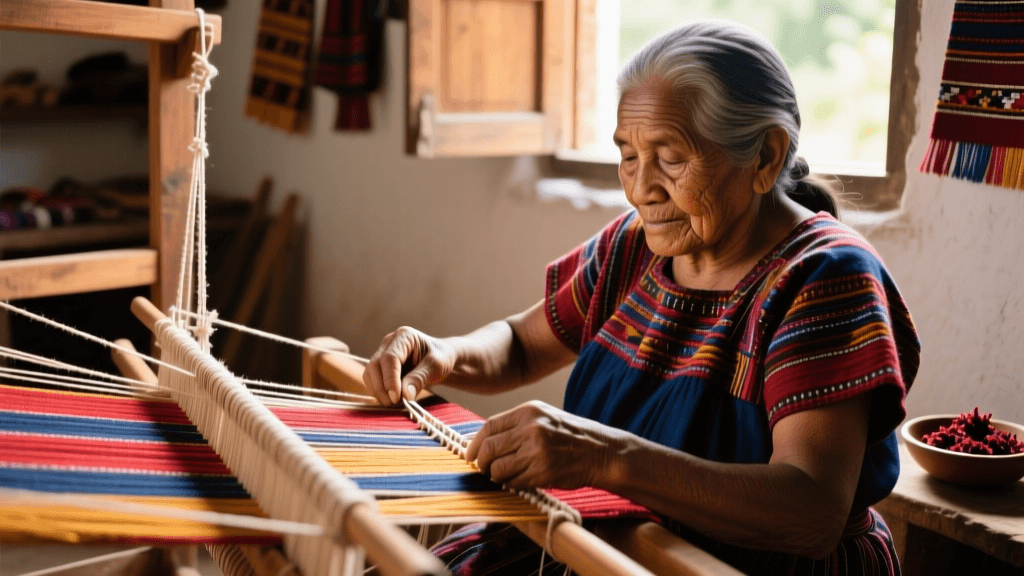
The authentic Zapotec huipil is woven on a telar de cintura, or backstrap loom. This ancient, highly portable device consists of a series of wooden rods and heddles, with one end tied to a sturdy post or tree and the other secured around the weaver's lower back via a leather or woven strap. The weaver controls the tension of the warp threads entirely through the subtle shifting of her body weight.
This intimate connection between the artisan and the loom requires immense physical stamina and technical precision. Creating the complex brocade patterns of a high-grade ceremonial huipil involves manually picking and raising individual warp threads with a bone or wooden pick. It is a painstakingly slow process. In 2026, a master weaver dedicating six to eight hours a day to a single ceremonial garment will typically spend between three to five months completing the piece. Understanding this immense labor investment is critical for buyers to recognize why authentic huipils command premium prices.
2026 Market Pricing and Authenticity Guide
Navigating the textile markets in Oaxaca City, or browsing online artisan marketplaces, requires a discerning eye. The push for fair-trade compensation, championed by global artisan advocacy groups, has helped establish baseline pricing that ensures weavers earn a living wage. Below is a comparative guide to help you understand the current 2026 market tiers for Zapotec huipils.
| Garment Category | Weaving Technique | Materials & Dyes | Estimated 2026 Price (USD) | Production Time |
|---|---|---|---|---|
| Mass-Market Souvenir | Machine-woven, embroidered | Synthetic poly-blend, chemical dyes | $25 - $60 | Minutes (Factory) |
| Semi-Handmade (Pedal Loom) | Pedal loom base, hand-embroidered | Commercial cotton, mixed dyes | $80 - $180 | 1 - 2 Weeks |
| Authentic Everyday Huipil | Backstrap loom, simple brocade | Hand-spun cotton, some natural dyes | $250 - $450 | 4 - 8 Weeks |
| Master Ceremonial Huipil | Backstrap loom, complex raised brocade | Premium cotton/silk, 100% natural dyes | $600 - $1,200+ | 3 - 6 Months |
If you encounter a vendor selling a 'handwoven, naturally dyed' backstrap loom huipil for under $150 in 2026, it is almost certainly a misrepresentation. True fair-trade practices dictate that the artisan's time, the cost of organic materials, and the cooperative's overhead must be factored into the final retail price.
Where to Source Authentic Pieces Ethically
To ensure your purchase directly supports Indigenous communities and preserves traditional knowledge, it is highly recommended to buy directly from weaving cooperatives or verified fair-trade organizations. Institutions like the Museo Textil de Oaxaca play a vital role in preserving these techniques and often host pop-up markets featuring vetted, master artisans from remote villages.
Additionally, international nonprofits such as Nest work extensively to connect Oaxacan weaving cooperatives with global markets while ensuring strict adherence to fair-wage and ethical labor standards. Purchasing through Nest-certified partners or directly from village cooperatives in Santo Tomás Jalieza, San Bartolo Yautepec, and Santa María Tlahuitoltepec guarantees that your investment empowers the women who are the custodians of this UNESCO-recognized intangible cultural heritage.
Garment Care and Preservation
An authentic, naturally dyed Zapotec huipil is an heirloom piece that requires specialized care to maintain its structural integrity and color vibrancy. Never machine wash or dry clean a handwoven backstrap loom garment. The harsh agitation and chemical solvents will destroy the delicate tension of the weave and strip the natural mordants from the cochineal and indigo dyes.
Instead, hand wash the huipil in cold water using a pH-neutral, gentle detergent specifically formulated for delicate natural fibers. Submerge the garment gently and avoid wringing or twisting the fabric, which can warp the brocade patterns. Rinse thoroughly in cold water and lay the garment flat on a clean, dry towel in a shaded, well-ventilated area. Direct sunlight will rapidly fade natural dyes, particularly the delicate yellows derived from marigold. Once dry, store the huipil flat or loosely rolled in acid-free tissue paper inside a cedar chest to protect it from humidity and textile pests. With proper care, a master-woven huipil will remain a vibrant, wearable piece of history for generations.