Jingle Dress Regalia: 2026 Sourcing & Materials Guide
The Healing Origins of the Jingle Dress
The Jingle Dress, known in the Ojibwe language as ziibaaska'iganagadewin, is far more than a visually striking piece of Native American regalia; it is a profound medicine dress rooted in healing and spiritual resilience. Originating among the Anishinaabe people in the early 20th century—often attributed to the Mille Lacs Band of Ojibwe in Minnesota—the dress was born from a vision of healing during a time of widespread illness. According to the Smithsonian Institution, the rhythmic, rain-like sound created by the metal cones striking one another is considered a healing frequency that connects the dancer to the earth and the spirit world. As we navigate the vibrant powwow circuits of 2026, the Jingle Dress remains a staple of Indigenous cultural expression, demanding both deep cultural respect and specialized material sourcing.
Traditional vs. Contemporary Silhouettes in 2026
When planning your regalia project, it is vital to understand the distinction between the traditional and contemporary Jingle Dress silhouettes, as this dictates your fabric yardage, cone count, and structural requirements.
The Traditional Straight Dress
The original iteration of the dress features a straight, modest cut with long sleeves and a high neckline. Tradition dictates the use of exactly 365 rolled metal cones, representing one for each day of the year. The base fabric is typically a solid, dark color like navy, black, or deep green, heavily adorned with geometric ribbon appliqué. The footwork is kept close to the ground, emphasizing a gentle, continuous swishing sound rather than a loud crash.
The Contemporary Flared Dress
Modern powwow dancing has given rise to the contemporary Jingle Dress, which features a flared skirt, shorter sleeves, and a more dynamic range of motion to accommodate the rapid 'sidestep' and 'toe-heel' footwork seen in competition. Dancers in 2026 often incorporate between 400 and 700 cones to create a louder, more continuous wall of sound. The fabric choices are also more varied, incorporating vibrant satins, metallic broadcloths, and intricate beaded yokes, often featuring jewel tones accented with metallic gold or silver ribbons.
Sourcing Metal Cones: Materials and Sound Profiles
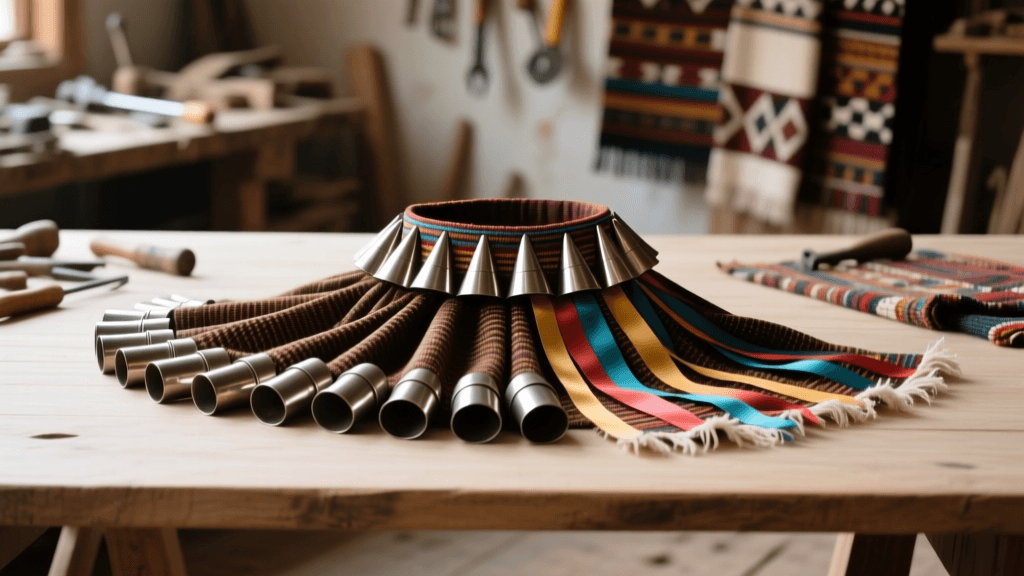
The heart of the Jingle Dress lies in its cones, historically rolled by hand from the lids of baking powder tins and snuff cans. Today, while some traditionalists still hand-roll their own cones from sheet metal, most dancers source pre-rolled cones from specialized Native American trading posts and Indigenous metalworkers. The material you choose will drastically alter the acoustic profile, weight, and maintenance needs of your dress.
Below is a comprehensive comparison of the most popular cone materials available to regalia makers in 2026:
| Cone Material | Sound Profile | Durability & Rust Resistance | 2026 Avg. Cost (per 100) |
|---|---|---|---|
| Rolled Tin (Traditional) | Soft, muted, rain-like | Low (highly prone to rust) | $45 - $60 |
| Stainless Steel | Bright, sharp, piercing | High (completely rust-proof) | $85 - $110 |
| Brass | Warm, resonant, deep | Medium (tarnishes, no rust) | $95 - $125 |
| Aluminum | Light, high-pitched, crisp | High (lightweight, rust-proof) | $55 - $70 |
For dancers traveling extensively on the 2026 summer powwow trail, stainless steel or aluminum are highly recommended due to their resistance to humidity and sweat-induced rust. However, for traditional social dances and healing ceremonies, the softer, mellower tone of rolled tin or brass is often preferred by elders and traditional judges.
Selecting Base Fabrics and Appliqué Ribbons
A fully loaded contemporary Jingle Dress can weigh anywhere from 10 to 20 pounds, depending on the cone count and the density of the beadwork. Because of this extreme weight, selecting the right base fabric is a matter of structural engineering as much as aesthetics.
The Foundation Layer
Never use standard quilting cotton or lightweight poly-blends as your primary foundation; the sheer weight of the metal cones will tear through the fabric within a single powwow season. In 2026, experienced regalia makers recommend using a heavy-duty cotton canvas, denim, or tightly woven upholstery-grade cotton as the hidden structural base to bear the load of the hardware.
The Visible Outer Layer
Over the heavy foundation, you will drape your visible fabric. Wool-blend broadcloth remains the gold standard for traditional dresses, offering a rich, matte texture that honors historical aesthetics. However, global supply chain shifts have made high-quality wool broadcloth more expensive, pushing many artisans toward premium, heavy-weight matte satin or crushed velvet for contemporary dresses. When sourcing broadcloth, look for a minimum weight of 8 ounces per square yard to ensure proper drape and durability.
Ribbon Appliqué
The striking geometric patterns on the hem, yoke, and sleeves are typically achieved using 3/8-inch or 1/2-inch double-faced satin ribbon. When sourcing ribbon, always buy from the same dye lot to ensure color consistency across the entire garment. For a standard adult dress, expect to purchase between 40 and 60 yards of appliqué ribbon across three or four contrasting colors. Popular 2026 colorways include deep emerald green paired with metallic copper, or navy blue with bright crimson and silver accents.
Essential Construction Tools and Techniques
Constructing a Jingle Dress requires heavy-duty equipment. Standard sewing machine needles will snap when attempting to secure the reinforced cone ties or sew through multiple layers of canvas and wool.
- Heavy-Duty Shears: Invest in titanium-coated fabric shears capable of cutting through multiple layers of canvas and broadcloth simultaneously without fraying the edges.
- Leather and Denim Needles: Use size 16/100 or 18/110 machine needles for the structural seams. For hand-tying cones, a heavy glover's needle or an upholstery needle is essential.
- Waxed Sinew or Braided Nylon Thread: Do not use standard cotton thread to tie your cones. Braided nylon fishing line (20 lb test) or heavily waxed artificial sinew will withstand the violent swinging motion of the dance without snapping or fraying.
- Cone Spacing Guides: Cones are typically spaced 1.5 to 2 inches apart horizontally, and staggered vertically so that the top row overlaps the bottom row. This overlapping ensures they strike each other with every movement, creating the signature sound.
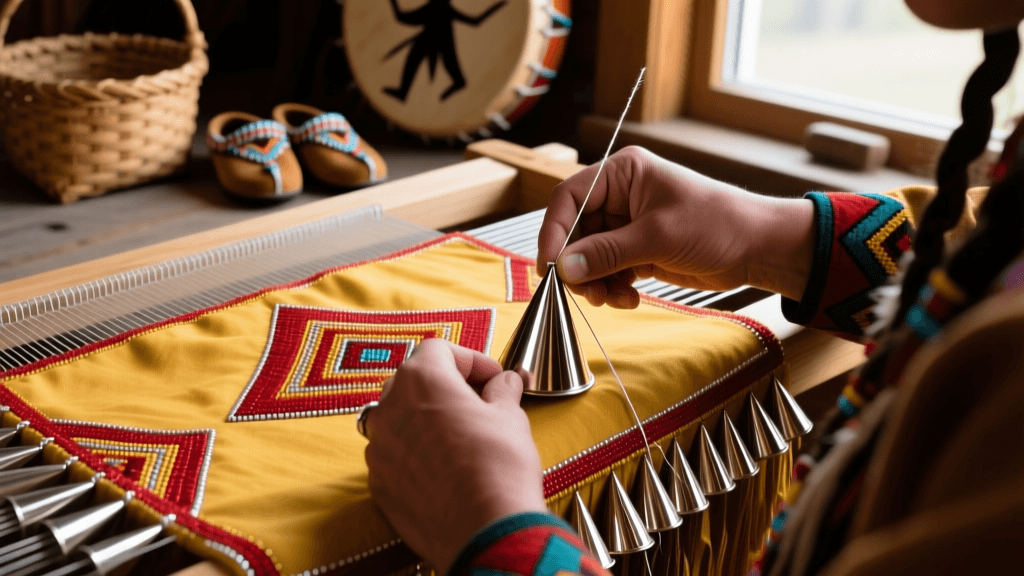
To attach the cones, fold a piece of heavy ribbon or bias tape into a small loop, push it through the top hole of the cone from the inside out, and securely stitch the loop to the dress. This method allows the cone to hang freely and swing independently, maximizing the acoustic resonance. For deeper cultural and linguistic insights into Anishinaabe regalia terminology, the Ojibwe People's Dictionary maintained by the University of Minnesota remains an invaluable, culturally authoritative resource for makers seeking to honor traditional naming conventions and concepts.
Caring for and Storing Your Regalia
Proper maintenance of your Jingle Dress is critical, especially during the humid summer months of the powwow season. Moisture is the natural enemy of metal cones and delicate broadcloth.
- Aeration: After every dance, hang your dress in a well-ventilated, climate-controlled room. Never store a damp dress in a plastic garment bag, as this will trap moisture and cause rapid rusting or mildew on the base fabrics.
- Rust Prevention: If you are using traditional tin cones, lightly wipe them down with a dry microfiber cloth after wearing to remove sweat and humidity. For long-term winter storage, consider placing silica gel desiccant packets in your storage tub.
- Hanging vs. Folding: Due to the extreme weight of the dress, hanging it on a standard wire hanger will distort the shoulders and stress the seams. Use a heavily padded, wide-shoulder wooden hanger, and support the bottom hem with a secondary hanger or a specialized regalia storage box to distribute the weight evenly.
Honoring the Tradition in 2026
As you source materials and stitch your Jingle Dress, remember that you are participating in a living, breathing tradition of Indigenous resilience. Whether you are purchasing stainless steel cones from a Native-owned metalworking cooperative or carefully hand-rolling tin in the style of your ancestors, the intention and respect you weave into the garment are just as vital as the materials themselves. The Jingle Dress continues to heal, protect, and inspire across Turtle Island, proving that the medicine of the Anishinaabe remains as powerful in 2026 as it was at its sacred inception. By investing in high-quality, authentic materials and employing time-honored construction techniques, you ensure that your regalia will not only look stunning in the arena but will also serve as a lasting testament to Native American artistry and spiritual endurance.