Plains & Southwest Native Regalia: 2026 Sourcing Guide
Indigenous North American Dress Traditions: A 2026 Sourcing and Styling Guide
As we move through the 2026 powwow season and cultural ceremony calendar, the creation of Indigenous regalia remains a profound expression of identity, history, and artistic innovation. Across North America, traditional garments are not static relics of the past; they are living, evolving traditions. For artisans, cultural practitioners, and respectful enthusiasts, understanding the regional nuances of Indigenous dress—and knowing how to ethically source the correct materials in today's market—is essential. This guide explores the distinct dress traditions of the Plains (focusing on Lakota and Cree) and the Southwest (focusing on the Diné/Navajo), providing actionable, up-to-date sourcing advice for 2026.
Plains Traditions: Lakota and Cree Regalia
The Plains region is globally recognized for its intricate beadwork, striking ribbon shirts, and elaborate feathered regalia. The garments of the Lakota and Cree peoples emphasize movement, geometric precision, and a deep spiritual connection to the natural world. In 2026, contemporary Plains artisans are blending historical techniques with sustainably sourced modern materials.
The Ribbon Shirt: Fabric and Appliqué
The ribbon shirt is a staple of modern Pan-Indian and Plains dress, originating from the fur trade era when European silk ribbons and cotton cloth were introduced to Native communities. Today, a high-quality ribbon shirt requires specific materials to ensure the garment drapes correctly and withstands the rigorous movement of powwow dancing.
- Broadcloth: For the base of the shirt, 100% cotton broadcloth remains the gold standard. In 2026, artisans are increasingly seeking out deadstock or organically milled cotton broadcloth to align with environmental sustainability movements. Look for 45-inch to 60-inch widths, which provide enough yardage for the generous, flowing cuts typical of Lakota and Cree designs. Expect to pay between $12 and $18 per yard for premium, colorfast broadcloth this year.
- Ribbons: While historical shirts used silk, modern makers rely on high-quality polyester satin ribbons for their durability and vibrant color retention. The most common widths used for appliqué are 3/8-inch, 5/8-inch, and 1-inch. When sourcing, ensure the ribbons have tightly woven edges to prevent fraying during the appliqué process. A 100-yard spool of premium 5/8-inch satin ribbon currently averages $35 to $45 from specialized indigenous craft suppliers.
Plains Beadwork: Stitches and Seed Beads
Plains beadwork is characterized by bold geometric patterns and specific stitching techniques. The lazy stitch (or lane stitch) is iconic to the Lakota, creating a ribbed, textured surface ideal for covering large areas on moccasins, vests, and cuffs. The two-needle appliqué (or spot stitch) is favored for laying down smooth, continuous lines and curves.
For authentic Plains beadwork in 2026, Japanese seed beads (like Miyuki or Toho) are often avoided because their uniform, perfectly cylindrical shape lacks the traditional aesthetic. Instead, artisans seek out Czech Preciosa glass seed beads, specifically in sizes 11/0 and 13/0. The slight irregularity of Czech glass mimics the historical look of early trade beads. A standard hank (approximately 12 strands) of size 11/0 Czech beads costs around $18 to $24 in 2026. For threading, waxed nylon beading threads like Nymo (size D) or braided gel-spun polyethylene lines like Fireline (6 lb test) are the contemporary standards, replacing traditional sinew for most non-ceremonial pieces due to their superior tensile strength and resistance to moisture.
Southwest Traditions: Diné (Navajo) Dress
Southwest Indigenous dress, particularly that of the Diné (Navajo), presents a striking contrast to the Plains. Diné traditional clothing is heavily influenced by the Spanish colonial period and the subsequent introduction of silversmithing. The silhouette is elegant, grounded, and heavily adorned with turquoise and silver.
Velvet Shirts and Tiered Skirts
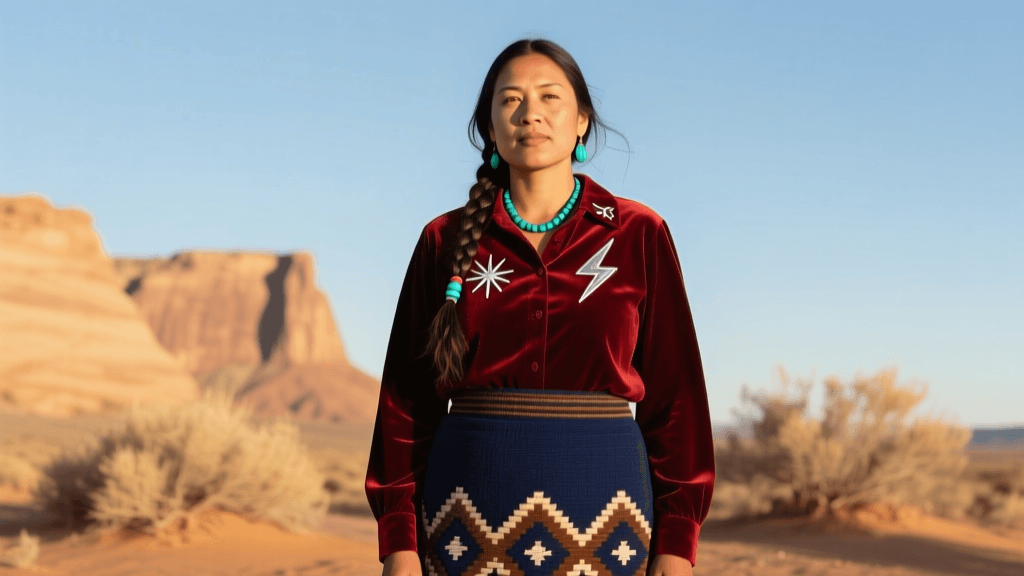
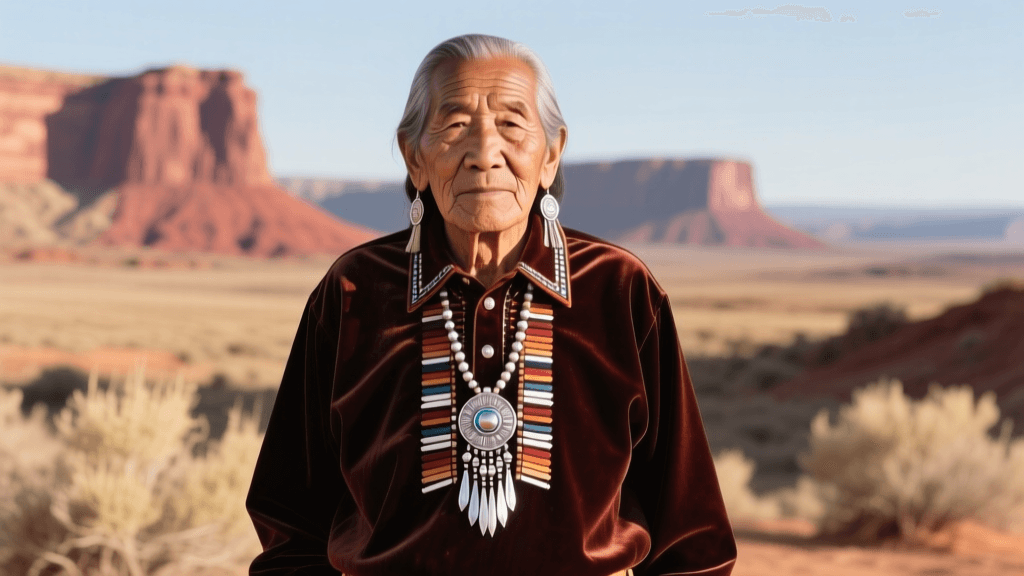
The transition from hand-woven wool and cotton to velvet occurred in the late 19th century, and velvet has remained the definitive fabric for Diné traditional formal wear. A classic Diné woman's outfit consists of a long-sleeved velvet blouse and a multi-tiered velvet skirt, often accessorized with a concho belt and a squash blossom necklace.
- Velvet Sourcing: In 2026, sourcing the correct velvet is critical. Traditionalists prefer a heavy, matte-finish cotton velvet or a high-grade panne velvet that does not reflect too much light, allowing the silver jewelry to stand out. Avoid cheap, thin synthetic velvets that crush easily and lack the structural weight needed for tiered skirts. Premium apparel-weight velvet currently ranges from $22 to $35 per yard. A full tiered skirt can require up to 12 to 15 yards of fabric, making material sourcing a significant investment.
- Embellishments: While Plains regalia relies on glass beads, Diné velvet garments are often embellished with silver conchos, buttons, and turquoise cabochons. Modern Diné seamstresses also incorporate subtle ribbon trim along the hems and cuffs, typically using 1/4-inch grosgrain or velvet ribbons in complementary jewel tones.
The Anatomy of Southwest Silverwork
No discussion of Diné dress is complete without addressing the metallurgy and jewelry that define the Southwest aesthetic. The squash blossom necklace is perhaps the most recognizable piece of Native American jewelry. It consists of a central naja (a crescent-shaped pendant with origins in Moorish and Spanish horse tack), flanked by silver beads and 'squash blossom' pendants (which actually resemble pomegranate blossoms introduced by the Spanish).
When sourcing silver components or commissioning pieces in 2026, it is vital to understand the market value of raw materials. With the spot price of sterling silver fluctuating around $28 to $32 per troy ounce in early 2026, hand-stamped, solid sterling silver naja pendants and concho belts represent a substantial financial investment. Authentic, hand-forged concho belts crafted by master Diné or Zuni silversmiths can range from $3,500 to over $15,000, depending on the quality of the turquoise (such as rare, closed-mine Bisbee or Lander Blue) and the complexity of the repoussé and stamp work.
2026 Material Sourcing and Cost Comparison
To assist makers and collectors in budgeting for regional regalia, the table below outlines the primary materials, their traditional applications, and the estimated 2026 market costs.
| Material | Region / Tribe | Primary Application | 2026 Estimated Cost |
|---|---|---|---|
| 100% Cotton Broadcloth | Plains (Lakota/Cree) | Ribbon shirts, dress bases | $12 - $18 / yard |
| Polyester Satin Ribbon | Plains (Pan-Indian) | Shirt appliqué, hair ties | $35 - $45 / 100yd spool |
| Czech Seed Beads (11/0) | Plains / Woodlands | Lazy stitch, moccasins | $18 - $24 / hank |
| Apparel-Weight Velvet | Southwest (Diné) | Tiered skirts, blouses | $22 - $35 / yard |
| Sterling Silver Sheet | Southwest (Diné/Zuni) | Conchos, naja pendants | $28 - $32 / troy ounce |
| Brain-Tanned Deerhide | Plains / Southwest | Moccasins, pouches | $120 - $180 / hide |
Footwear: Moccasins Across Regions
Moccasins are the foundational footwear of Indigenous North America, yet their construction varies wildly by geography, dictated by the terrain and available fauna.
Plains Moccasins
Plains moccasins, particularly those of the Lakota, typically feature a soft sole or a slightly hardened rawhide sole, heavily beaded on the vamp (the top of the foot) and often featuring a beaded cuff. In 2026, while commercial leather is widely available, traditionalists continue to seek out brain-tanned deerhide and elk hide. Brain-tanning is a labor-intensive, smoke-cured process that results in a remarkably soft, water-resistant, and breathable leather. A single, high-quality brain-tanned deer hide costs between $120 and $180 today. The soles are traditionally cut from thicker rawhide, which is soaked, shaped, and allowed to dry into a rigid, protective base.
Southwest Moccasins
Diné and Pueblo moccasins are distinctly different, characterized by a hard, thick rawhide sole designed to protect the foot from the harsh, rocky desert terrain and cacti. The upper is typically made of soft buckskin or deerhide, often dyed a deep rust or red using natural earth pigments or modern aniline dyes. Instead of extensive glass beadwork, Southwest moccasins are frequently fastened with silver concho buttons or turquoise-encrusted metal toggles, bridging the gap between footwear and high-end jewelry.
Ethical Sourcing and Authenticity in 2026
As interest in Indigenous fashion and regalia continues to grow globally, the importance of ethical sourcing has never been more critical. The line between cultural appreciation and cultural appropriation is defined by respect, consent, and economic support for Native communities.
When purchasing Indigenous garments, jewelry, or raw materials, always verify that you are supporting Native-owned enterprises. The survival of these traditional arts depends on the economic sovereignty of Indigenous artisans.
In the United States, the Indian Arts and Crafts Board (IACB) enforces the Indian Arts and Crafts Act, a truth-in-advertising law that prohibits misrepresentation in marketing American Indian or Alaska Native arts and crafts. When buying finished regalia, silverwork, or beadwork, always look for documentation of the artist's tribal enrollment or certification. The IACB provides excellent resources and directories for finding verified Native artisans and cooperatives.
Furthermore, institutions like the Smithsonian National Museum of the American Indian (NMAI) offer vast digital archives that serve as invaluable reference points for makers. Before cutting fabric or laying out a beadwork pattern, studying the historical garments preserved in the NMAI collections ensures that contemporary makers are honoring the structural integrity and symbolic meanings of their ancestors' designs.
Supporting Native-Owned Supply Chains
Beyond finished goods, the raw material supply chain is seeing a push for Native ownership. In 2026, several Indigenous-owned cooperatives have emerged to supply traditional materials—from ethically harvested porcupine quills and naturally dyed sinew to commercially milled broadcloth sold at fair-trade prices. Sourcing from these cooperatives not only guarantees material authenticity but also ensures that the foundational economy of regalia-making remains within the community.
Conclusion
The dress traditions of the Plains and Southwest are testaments to Indigenous resilience, adaptability, and artistic brilliance. Whether you are a Lakota beadworker mastering the lazy stitch, a Diné silversmith forging a new naja, or a cultural enthusiast seeking to understand the profound weight of these garments, the materials matter. By prioritizing authentic, high-quality, and ethically sourced materials in 2026, we ensure that these vibrant textile and metallurgical traditions continue to walk proudly into the future.