Woodlands Indigenous Ribbonwork And Regalia Trends 2026
Introduction to Woodlands and Great Lakes Regalia
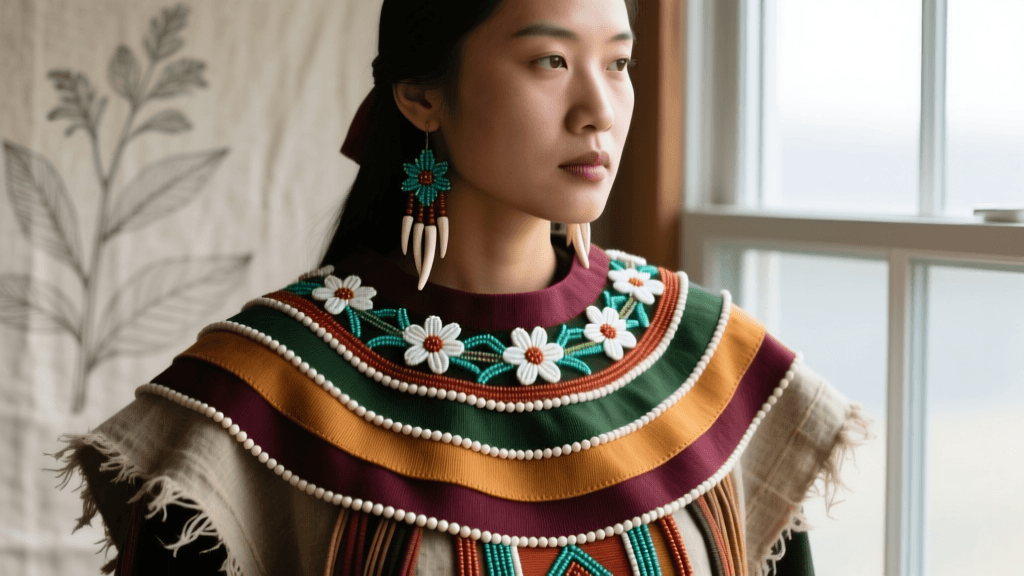
The Indigenous peoples of the Great Lakes and Woodlands regions—including the Ojibwe, Potawatomi, Menominee, Ho-Chunk, and Odawa—have cultivated some of the most intricate and recognizable textile arts in North America. Far from being static historical artifacts, these traditions are living, breathing practices that continue to evolve. As we move through the 2026 powwow season and contemporary art markets, Woodlands regalia remains a profound expression of cultural resilience, identity, and artistic innovation. The hallmark of this region’s dress is the breathtaking floral beadwork and the vibrant, geometric precision of silk ribbonwork appliqué. According to the National Museum of the American Indian, these textile traditions represent a continuous thread connecting pre-contact adornment with post-contact material adaptations, resulting in a uniquely Indigenous aesthetic that is highly sought after by collectors and deeply revered within Native communities.
Regional Variations in Floral Beadwork
While the untrained eye might group all Woodlands beadwork under a single 'floral' umbrella, artisans and cultural historians recognize distinct regional and tribal variations. The motifs, stitch techniques, and color palettes serve as a visual language that can often identify the maker’s specific community or family lineage.
Ojibwe and Anishinaabe Symmetrical Florals
The Ojibwe (Anishinaabe) are widely celebrated for their symmetrical, highly stylized floral motifs. Often featuring the 'strawberry' or 'fire' motif, these designs are typically worked in a two-needle appliqué technique. The vines and stems are laid down first, with the floral elements branching off in balanced, harmonious proportions. In 2026, contemporary Ojibwe beadworkers are increasingly experimenting with high-contrast colorways, pairing deep indigo and charcoal velvets with neon or metallic-lined seed beads to create regalia that stands out vividly in modern dance arenas.
Ho-Chunk and Menominee Asymmetrical and Raised Beadwork
In contrast, the Ho-Chunk (Winnebago) and Menominee traditions often embrace a more naturalistic, asymmetrical approach to floral design. The Ho-Chunk are particularly renowned for their raised beadwork, sometimes referred to as 'puff' or 'embossed' beadwork. By using a backing thread to create tension and stuffing the beadwork with cotton or using multiple layers of beads, artisans create a three-dimensional, tactile surface that mimics the actual physical depth of blooming flowers and curling leaves. The National Park Service notes that these raised techniques require an exceptional mastery of thread tension, a skill passed down through generations of matriarchal lineages.
Potawatomi Bandolier Bag Traditions
The Potawatomi have historically excelled in the creation of elaborate bandolier bags. These heavily beaded, non-functional bags were originally inspired by European military cartridge pouches but were transformed into prestigious items of ceremonial dress. Today, a fully beaded Potawatomi-style bandolier bag remains one of the most time-intensive and expensive pieces of regalia an artisan can produce, often requiring over 500 hours of meticulous spot-stitch beadwork.
| Tribe / Nation | Primary Motif | Signature Technique | Preferred Base Material |
|---|---|---|---|
| Ojibwe (Anishinaabe) | Symmetrical Florals, Strawberries | Two-Needle Appliqué, Spot Stitch | Black or Navy Wool Broadcloth, Velvet |
| Ho-Chunk (Winnebago) | Naturalistic Florals, Vines | Raised / Puff Beadwork | Dark Velvet, Stroud Cloth |
| Potawatomi | Geometric Borders, Large Florals | Spot Stitch, Lazy Stitch | Heavy Wool, Trade Cloth |
| Menominee | Asymmetrical Vines, Leaves | Overlay Stitch, Edge Beading | Brain-Tanned Hide, Broadcloth |
The Art of Silk Ribbonwork (Appliqué)
Ribbonwork is a quintessential Woodlands art form that emerged in the late 18th and early 19th centuries when French and British traders introduced silk ribbons to the region. Indigenous women ingeniously adapted this material, cutting, folding, and layering the ribbons to create complex, negative-space geometric patterns on broadcloth skirts, leggings, and shirts.
The process of traditional ribbonwork is remarkably precise. Artisans use a technique where layers of different colored ribbons are folded under and sewn down to create sharp, contrasting lines. In the 2026 textile market, there has been a massive pushback against synthetic polyester ribbons, which melt when ironed and lack the historical drape of natural fibers. Master ribbonworkers now insist on 100% silk taffeta or silk moiré ribbons. The crispness of silk taffeta allows for the razor-sharp folds required for intricate 'cross-stitch' or 'negative-space' ribbon appliqué, a technique where the background fabric shows through the cut-out ribbon layers to form the design.
Sourcing Authentic Materials in 2026
For emerging artisans and those looking to commission authentic regalia, understanding the current landscape of material sourcing is critical. The supply chain for traditional Native American beadwork and sewing materials has shifted significantly by 2026, with a strong emphasis on ethical sourcing and historical accuracy.
- Czech Glass Seed Beads: The gold standard for Woodlands floral beadwork remains the Czech glass seed bead, specifically sizes 13/0 and 15/0. The 'Charlotte' cut (a single-facet bead) is highly prized for its ability to catch the light. As of early 2026, a standard hank of authentic Czech Charlotte beads averages between $11.50 and $16.00, reflecting global shipping adjustments and the specialized nature of the glass factories in Jablonec nad Nisou.
- Silk Ribbons: Sourcing 100% silk taffeta ribbon in traditional widths (3/8-inch, 1/2-inch, and 5/8-inch) requires specialized suppliers. Artisans frequently order from dedicated historical sewing suppliers or direct from European silk mills, as mainstream craft stores predominantly stock polyester. Expect to pay $0.80 to $1.20 per yard for high-quality silk taffeta ribbon.
- Base Fabrics: Wool broadcloth and melton wool remain the preferred bases for leggings and skirts due to their non-fraying edges and heavy drape. In 2026, premium Melton wool costs approximately $35 to $45 per yard. For beadwork bases, cotton velveteen or silk velvet is preferred over synthetic velvet, which tends to crush and distort under the weight of heavy beadwork.
- Thread and Needles: English beading needles in sizes 12 and 13 are essential for passing through 15/0 beads multiple times. Pre-waxed braided nylon threads (like Nymo or FireLine in 4lb test) have largely replaced traditional sinew for everyday regalia due to their superior tensile strength and resistance to humidity.
Contemporary Adaptations and Powwow Regalia in 2026
The modern powwow arena is a dynamic runway where historical techniques meet contemporary fashion. Institutions like the Institute of American Indian Arts have been instrumental in fostering a new generation of Indigenous designers who seamlessly blend traditional Woodlands floral patterns with modern silhouettes. In 2026, it is common to see Woodlands floral beadwork applied to denim jackets, high-top sneakers, and even haute couture evening gowns worn at major events like the Santa Fe Indian Market.
Furthermore, the 'Fancy Shawl' and 'Jingle Dress' categories continue to be heavily influenced by Woodlands aesthetics. Many Jingle Dress dancers from the Great Lakes region are incorporating subtle floral beadwork into their yokes and cuffs, bridging the gap between the Ojibwe origins of the healing dance and the pan-Indian nature of modern competition powwows. This cross-pollination ensures that the floral motif remains a dominant, unifying symbol of Indigenous North American identity.
Caring for and Preserving Heirloom Regalia
Whether you are a museum curator, a collector, or an Indigenous family safeguarding ancestral pieces, the preservation of Woodlands regalia requires strict environmental controls. The organic materials used—silk, wool, cotton, and glass—are highly susceptible to environmental degradation.
For long-term archival storage in 2026, experts recommend maintaining a relative humidity (RH) of 45% to 55% and a stable temperature of 65°F to 70°F (18°C to 21°C). Fluctuations in humidity can cause the wool broadcloth to expand and contract, which may snap the rigid cotton or nylon threads used in the beadwork. Silk ribbons are particularly vulnerable to 'shattering' (where the silk fibers break down and turn to dust) if exposed to high heat, direct sunlight, or acidic environments.
When storing beaded garments, never hang them on standard wire or wooden hangers, as the immense weight of the glass beads will distort the fabric and tear the seams over time. Instead, garments should be gently padded with unbuffered, acid-free tissue paper (such as Lineco brand) and stored flat in archival-grade polyethylene or polypropylene boxes. By adhering to these modern conservation standards, we ensure that the brilliant colors and intricate stitches of Woodlands regalia will continue to inspire and educate for generations to come.