Eastern European Embroidered Blouses: 2026 Buyer Guide
The Renaissance of Slavic and Balkan Folk Dress in 2026
As the global slow fashion movement matures in 2026, collectors, designers, and cultural enthusiasts are increasingly turning to the rich textile traditions of Eastern Europe and the Balkans. At the forefront of this revival are the iconic embroidered blouses of the region: the Ukrainian Vyshyvanka and the Romanian/Balkan Ia. Far from being mere historical artifacts, these garments have become highly sought-after wardrobe staples, celebrated for their intricate geometry, natural materials, and deep cultural symbolism.
However, the surge in demand has also flooded the market with mass-produced, machine-embroidered imitations. For the serious collector or the conscious consumer, navigating the 2026 market requires a keen eye for traditional construction, an understanding of regional motifs, and knowledge of current artisan pricing. This comprehensive guide will help you authenticate, source, and care for genuine Eastern European folk blouses this year.
Decoding the Ukrainian Vyshyvanka
The Vyshyvanka is far more than a traditional shirt; it is a wearable codex of Slavic history. In 2026, authentic Vyshyvankas are prized for their regional diversity, with each village or province historically utilizing distinct stitches, color palettes, and protective symbols. According to the encyclopedic archives of the Vyshyvanka, the placement of embroidery was never arbitrary—it was strategically located on the neckline, cuffs, and hem to protect the wearer's vital energy points from malevolent spirits.
Key Regional Variations to Look For
- Poltava Region: Famous for its sophisticated white-on-white embroidery (bila po bilomu). Artisans use complex cutwork and satin stitches to create subtle, textured geometric stars and the "tree of life" motif. In 2026, authentic Poltava pieces are among the most expensive due to the immense time required for cutwork.
- Hutsulshchyna (Carpathian Mountains):strong> Characterized by dense, vibrant geometric patterns. The Hutsul style heavily utilizes cross-stitch and nyz (a darning stitch executed from the reverse side of the fabric). Expect striking combinations of black, red, and yellow threads, often accented with small glass beads or metallic threads in contemporary 2026 artisan revivals.
- Bukovyna: Known for heavy, ornate floral and geometric motifs that often cover the entire sleeve. Traditional Bukovynian blouses frequently incorporate wool threads alongside cotton, giving the embroidery a raised, three-dimensional texture.
The Romanian and Balkan Ia: A Masterclass in Geometry
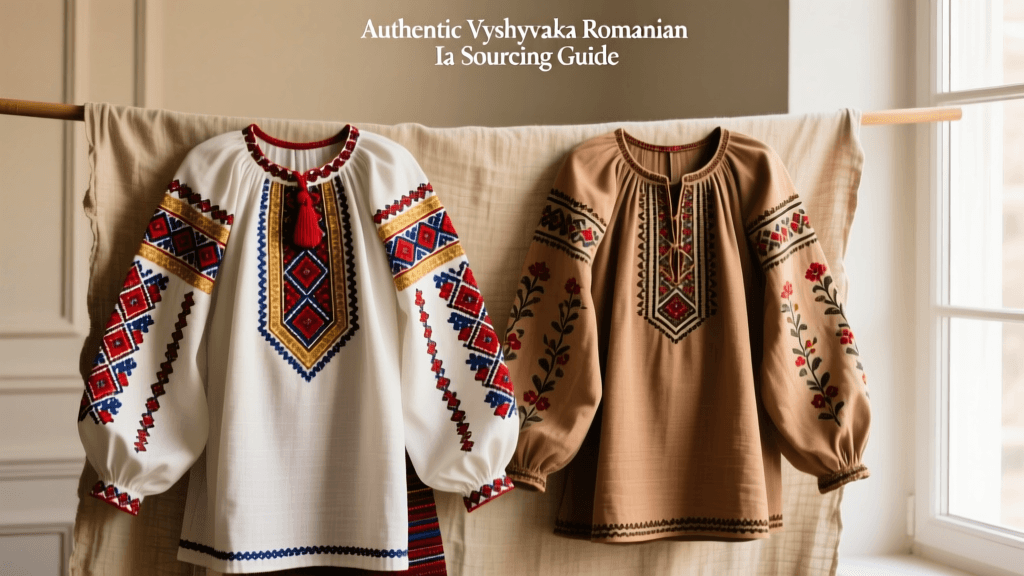
The Ia (pronounced "ee-ah") is the traditional blouse of Romania, Moldova, and parts of the broader Balkan peninsula. Its global recognition skyrocketed over the last decade, but the 2026 market is defined by a return to strict historical accuracy and natural fibers. According to the UNESCO Intangible Cultural Heritage registry, the traditional skills required for the production of the Romanian blouse with shoulder embroidery (altiță) are recognized as a vital cultural practice, sparking a massive revival among young Balkan artisans.
Anatomy of the Authentic Ia
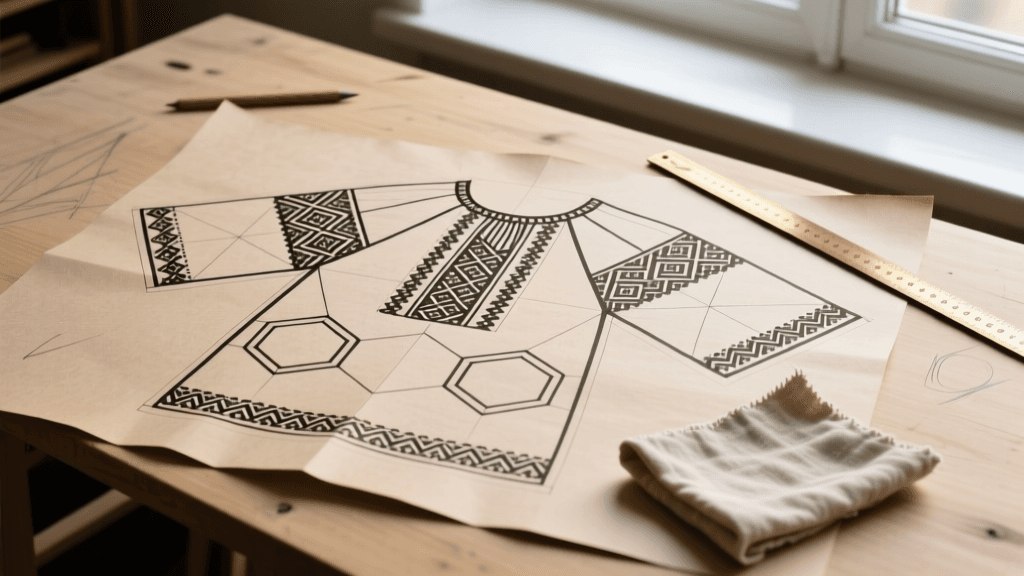
To authenticate an Ia in 2026, you must understand its strict structural anatomy. A genuine traditional Ia is constructed from rectangular panels of hand-woven hemp or linen, joined by delicate crocheted lace or needleweave seams. The embroidery is divided into three mandatory zones:
- Altiță (The Shoulder): The most densely embroidered part of the blouse, featuring a wide, rectangular band of complex geometric or solar motifs. It represents the sky and the heavens.
- Încreț (The Neckline): A small, square or rectangular motif located just below the altiță, traditionally stitched in yellow or gold thread, symbolizing the sun and agricultural fertility.
- Râuri (The Rivers): Diagonal or vertical bands of embroidery that flow down the sleeves from the altiță to the cuff. The angle and density of the "rivers" often indicated the wearer's marital status and village of origin.
2026 Sourcing Guide: Handmade vs. Machine Embroidery
The most critical skill for a buyer in 2026 is distinguishing between hand-stitched heritage pieces and computerized machine embroidery. While machine-made blouses are perfectly fine for casual festival wear (typically costing between $40 and $85 USD), they hold no value for serious collectors and lack the cultural soul of the garment.
How to Authenticate Hand-Embroidery
Always examine the reverse side of the fabric. In authentic hand-embroidery, particularly the Romanian altiță and Ukrainian nyz stitches, the back of the work is nearly as neat and identical to the front as the obverse side. Machine embroidery, conversely, leaves a chaotic web of jump stitches, stabilizer backing, and loose threads on the reverse. Furthermore, authentic 2026 artisan pieces will feature slight, human irregularities in stitch tension, whereas machine stitches are mathematically flawless.
For historical context and visual comparisons of 19th-century Balkan textiles, digital archives like Europeana provide access to thousands of high-resolution scans, allowing buyers to verify if a modern artisan's pattern is historically accurate to a specific region.
2026 Market Comparison: Regional Styles and Pricing
| Region / Garment | Primary Stitch Technique | Dominant Motifs & Colors | 2026 Artisan Price Range (USD) |
|---|---|---|---|
| Poltava, Ukraine (Vyshyvanka) | White-on-white satin stitch, cutwork | Geometric stars, tree of life (White/Cream) | $320 - $650 |
| Hutsulshchyna, Ukraine (Vyshyvanka) | Cross-stitch, nyz (reverse darning) | Dense geometry, rhombuses (Red/Black/Yellow) | $250 - $480 |
| Muscel, Romania (Ia) | Altiță (shoulder), râuri (rivers) | Floral, solar symbols (Red/Blue/Gold) | $300 - $750 |
| Olt, Romania (Ia) | Cross-stitch, Romanian stitch | Alternating geometry (Deep Red/Black) | $240 - $450 |
| Bukovyna, Ukraine (Vyshyvanka) | Seed stitch, wool-blend embroidery | Heavy florals, grapevines (Multi-colored) | $280 - $500 |
Styling Heritage Blouses in 2026
The beauty of the Vyshyvanka and the Ia lies in their versatility. In 2026, the trend has moved away from pairing these blouses with other traditional folk elements (which can look costumey) and toward stark, modern contrasts.
- For the Ia: Tuck a delicate, white linen Muscel Ia into high-waisted, wide-leg tailored trousers in charcoal or navy. The voluminous sleeves of the Ia provide a striking silhouette against structured, modern tailoring.
- For the Vyshyvanka: A Hutsul cross-stitch blouse pairs beautifully with raw, dark-wash denim or a minimalist leather midi skirt. Because the embroidery is so visually dense, keep accessories minimal—opt for simple gold hoops or a single, handcrafted ceramic pendant.
Care and Maintenance for Heritage Textiles
Authentic Eastern European blouses are investments. The fabrics are typically unbleached linen or hemp, and the threads may be dyed with natural botanicals like madder root (red), woad (blue), or weld (yellow). To preserve your garment:
- Washing: Never machine wash. Hand wash in cool water (maximum 30°C / 86°F) using a pH-neutral detergent designed for delicate natural fibers. Hot water will cause unbleached linen to shrink and natural dyes to bleed.
- Drying: Roll the blouse in a clean, dry towel to press out excess water. Never wring the fabric, as this will distort the embroidery tension. Lay flat to dry away from direct sunlight, which can fade natural dyes rapidly.
- Ironing: Iron the garment while it is still slightly damp. Always iron on the reverse side over a thick, soft towel. This prevents the embroidery from being crushed and ensures the stitches maintain their three-dimensional relief.
By understanding the deep cultural roots, regional variations, and proper care techniques, you can confidently navigate the 2026 market for Eastern European folk dress. Whether you are sourcing a Poltava cutwork masterpiece or a vibrant Olt Ia, you are not just buying a garment; you are preserving a living, breathing thread of European history.