Sourcing Authentic Vyshyvanka and Ia Blouses in 2026
The Renaissance of Eastern European Folk Dress in 2026
As we navigate the global fashion landscape of 2026, the appreciation for authentic, handcrafted Eastern European folk dress has evolved from a niche interest into a celebrated pillar of sustainable, heritage-driven wardrobes. Among the most sought-after garments are the Ukrainian vyshyvanka and the Romanian ie (often referred to as the ia blouse). These masterpieces of Slavic and Balkan textile art are not merely historical artifacts; they are living traditions. In 2026, a new generation of artisan cooperatives and independent weavers are preserving centuries-old techniques while adapting to modern ethical fashion standards.
For collectors, cultural enthusiasts, and conscious consumers, sourcing an authentic piece requires a discerning eye. The market is currently saturated with mass-produced, machine-embroidered imitations that lack the structural integrity and symbolic depth of true folk art. This comprehensive guide will walk you through the regional variations, authentication methods, current market pricing, and contemporary styling techniques for Eastern European embroidered blouses this year.
The Ukrainian Vyshyvanka: Regional Patterns and Heritage
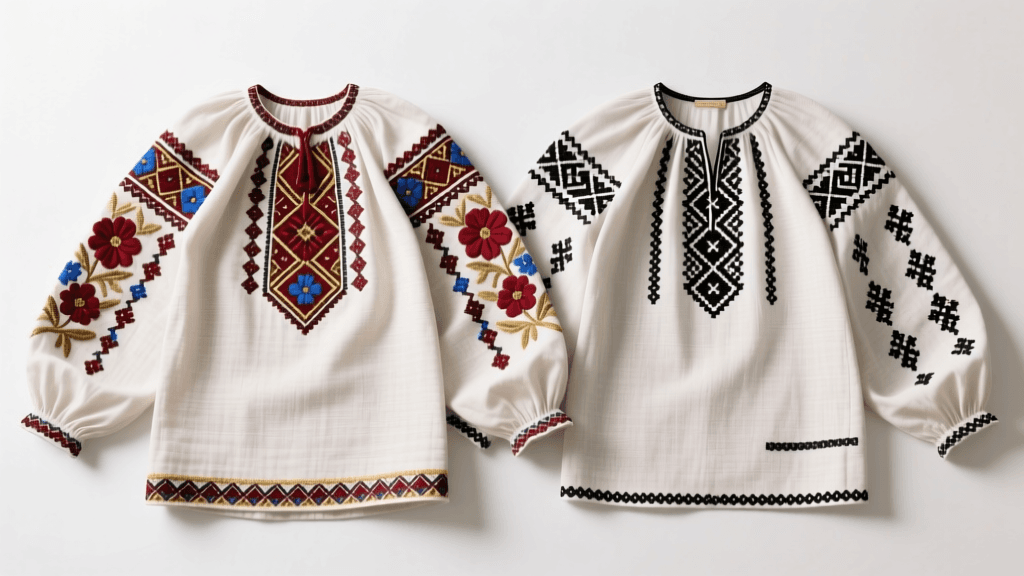
The vyshyvanka is far more than a simple embroidered shirt; it is a wearable codex of Ukrainian history, spirituality, and regional identity. According to the Encyclopedia of Ukraine, the techniques and motifs vary drastically from the Carpathian Mountains to the eastern steppes. In 2026, collectors are placing a premium on garments that utilize historically accurate natural dyes and hand-spun hemp or linen bases.
Understanding the regional distinctions is critical when evaluating a piece. The stitching techniques alone—ranging from the intricate nyz (running stitch on the reverse) to the elaborate lyshva (cutwork)—dictate the value and origin of the blouse.
Key Regional Variations of the Vyshyvanka
| Region | Primary Motifs | Color Palette | Signature Stitch Technique |
|---|---|---|---|
| Poltava | Geometric and floral, delicate vines | White-on-white, pale gray, soft blue | Lishva (cutwork), glad (satin stitch) |
| Hutsulshchyna | Dense geometric, rhombuses, stars | Vibrant orange, green, yellow, black | Khrestyk (cross-stitch), beadwork |
| Volyn | Strict geometric, repeating zigzags | Deep red, black on raw linen | Zavolikannya (weaving stitch) |
| Bukovyna | Floral rosettes, stylized leaves | Black, red, metallic gold/silver threads | Heavy cross-stitch, nyz |
The Romanian Ia: Symbolism and the Altiță
The traditional Romanian blouse, known as the ie, is renowned for its sophisticated structure and profound symbolic embroidery. The defining feature of the authentic ie is the altiță—a wide, heavily embroidered rectangular band on the shoulder. This element is not just decorative; historically, it served as a protective talisman and a marker of the wearer's marital status and village of origin.
The global recognition of this garment was solidified when the art of the traditional blouse with shoulder embroidery was inscribed on the UNESCO Representative List of the Intangible Cultural Heritage of Humanity. In 2026, authentic ii from regions like Muscel, Argeș, and Vrancea are highly prized. The Muscel blouses, characterized by their metallic gold and silver thread interwoven with black silk on white hemp, represent the pinnacle of Balkan folk luxury and command top-tier prices in the current vintage and artisan markets.
Beneath the altiță, you will find the încreț (a small geometric band that gathers the fabric) and the râuri (vertical or diagonal bands of embroidery flowing down the sleeve). A true artisan in 2026 will ensure that the râuri align perfectly with the structural seams, a hallmark of bespoke folk tailoring that mass manufacturers consistently fail to replicate.
How to Authenticate Handmade vs. Machine Embroidery
With the rise of automated embroidery machines capable of mimicking complex folk patterns, distinguishing a genuine hand-stitched garment from a factory-made replica is an essential skill for the 2026 buyer. Here are the definitive tests used by textile appraisers and museum curators.
1. The "Wrong Side" Test
Turn the garment inside out. Machine embroidery relies on a continuous bobbin thread, resulting in a messy, chaotic back with long jump stitches and a synthetic mesh stabilizer. Hand embroidery, particularly the traditional Ukrainian nyz stitch or the Romanian altiță, is executed by counting threads on the front. The reverse side of a hand-stitched piece will look almost identical to the front, with neat, deliberate thread paths and absolutely no jump threads or stabilizer backing.
2. Thread Composition and Luster
Authentic contemporary pieces from reputable 2026 artisan cooperatives use high-grade cotton mouline, silk, or historically accurate wool. Machine-made replicas often use polyester or rayon threads, which possess an unnatural, plastic-like sheen under direct light. Run your fingers over the embroidery; hand-spun threads will have slight, organic irregularities in thickness, whereas synthetic machine threads are perfectly uniform.
3. Fabric Grid Alignment
Traditional Slavic and Balkan embroidery is a form of counted-thread work. The artisan counts the warp and weft threads of the woven linen or hemp to ensure perfect geometric symmetry. If you examine the edges of the motifs and notice the stitches cutting across the fabric's natural grid at arbitrary angles, the piece was likely generated by a computerized embroidery machine and transferred onto the fabric without regard for the textile's structural grain.
2026 Pricing Guide: What to Expect to Pay
The market for Eastern European folk dress has matured significantly. Buyers in 2026 are investing in slow fashion, and prices reflect the hundreds of hours required to complete a single blouse by hand. Below is the current market valuation for authentic pieces sourced directly from artisan guilds or reputable heritage dealers.
| Garment Category | Material Base | Embroidery Type | 2026 Estimated Price (USD) |
|---|---|---|---|
| Standard Artisan Vyshyvanka | Machine-woven Linen | Hand Cross-stitch (Cotton) | $250 - $450 |
| Heritage Hutsul Blouse | Hand-spun Hemp | Dense Geometric + Beadwork | $600 - $950 |
| Everyday Romanian Ia | Cotton/Linen Blend | Hand-stitched Altiță (Cotton) | $350 - $550 |
| Muscel Ceremonial Ia | Woven Hemp/Silk | Silk & Metallic Gold Thread | $1,200 - $2,500+ |
| Antique/Vintage (Pre-1950) | Hand-loomed Linen | Museum-quality Counted Thread | $800 - $3,500+ |
Note: When purchasing antique textiles, always request a condition report detailing any oxidative stains, thread rot, or previous restoration work, as these factors heavily influence the final valuation.
Styling Eastern European Folk Blouses for Modern Wear
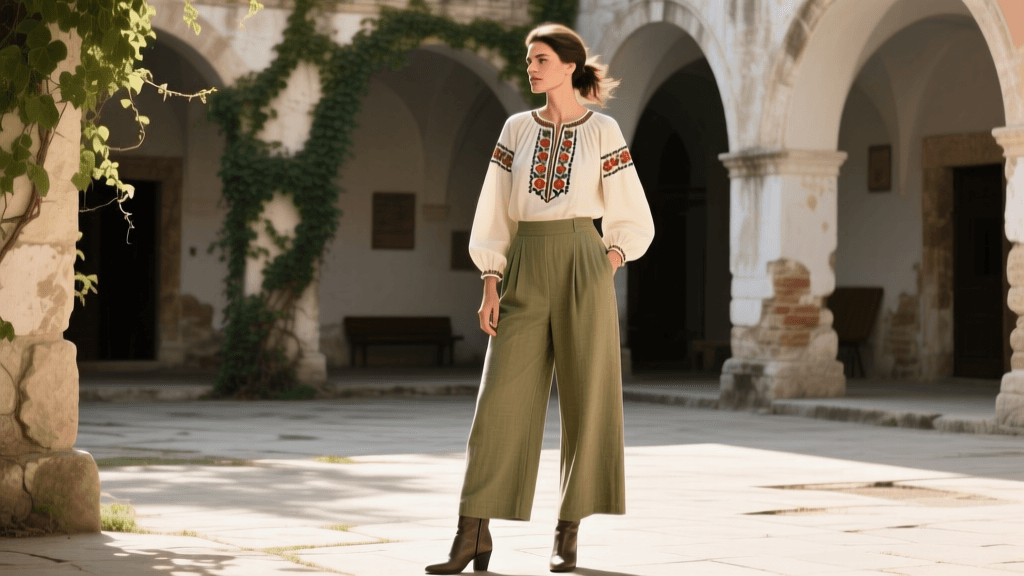
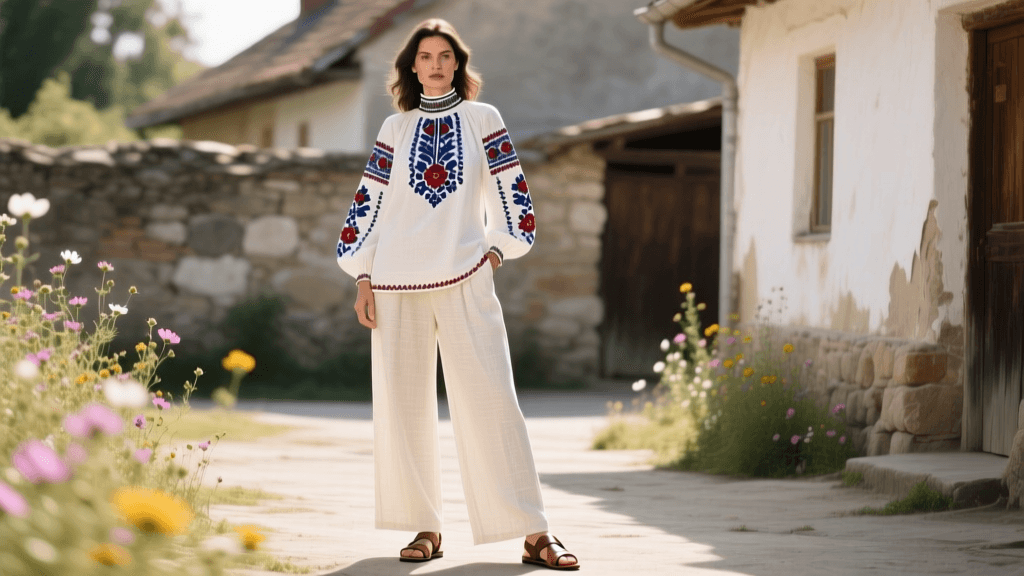
The key to styling the vyshyvanka or ia in 2026 is juxtaposition. Because these blouses are inherently voluminous and rich in visual texture, they should be grounded with minimalist, tailored, and structured contemporary pieces. Avoid pairing them with other folk elements (like peasant skirts or floral head wreaths) outside of specific cultural festivals, as this can easily veer into costume territory.
- The Tailored Contrast: Pair a white-on-white Poltava vyshyvanka with high-waisted, wide-leg charcoal wool trousers and sleek leather loafers. The sharp tailoring of the trousers balances the romantic volume of the linen sleeves.
- Evening Elegance: A black Muscel ie with gold metallic embroidery serves as a stunning alternative to a standard evening blouse. Tuck it into a floor-length, bias-cut silk skirt and accessorize with modern, architectural gold jewelry that echoes the geometric motifs on the altiță.
- Layering for Transitional Weather: Wear a heavily embroidered Hutsul blouse under a structured, oversized blazer. Allow the intricate cuffs and the neckline to peek out, providing a subtle nod to heritage dressing while maintaining a sharp, urban silhouette.
Caring for Handmade Linen and Hemp Textiles
Proper maintenance is crucial to preserving the integrity of natural fibers and hand-dyed threads. The Metropolitan Museum of Art's textile conservation guidelines emphasize the importance of gentle, non-chemical cleaning methods for historical and artisanal garments.
Never machine wash or tumble dry an authentic vyshyvanka or ia. The agitation will cause the hand-woven fibers to shrink unevenly and can snap the delicate embroidery threads. Instead, hand wash the garment in cool water using a pH-neutral detergent specifically formulated for delicate textiles. Submerge the blouse gently, avoid wringing or twisting the fabric, and roll it in a clean, dry towel to press out excess moisture. Always dry the garment flat, away from direct sunlight, to prevent the natural dyes from fading. When storing, wrap the blouse in acid-free tissue paper and keep it in a cool, dry environment to prevent moisture buildup and fiber degradation.
Conclusion
Investing in an authentic Ukrainian vyshyvanka or Romanian ia in 2026 is an act of cultural preservation and a commitment to sustainable, slow fashion. By understanding the regional dialects of the embroidery, rigorously authenticating the stitch work, and caring for the natural textiles, you ensure that these extraordinary garments continue to tell their stories for generations to come. Whether sourced from a rural cooperative in the Carpathians or a heritage dealer in Kyiv, a genuine Eastern European folk blouse remains a timeless masterpiece of human ingenuity.