2026 Guide to Sourcing Authentic Vyshyvanka and Ie Blouses
The Enduring Legacy of Slavic and Balkan Embroidery
In 2026, the global slow fashion movement has brought unprecedented attention to heritage textiles, with Eastern European and Balkan folk dress experiencing a massive renaissance. Among the most sought-after garments are the Ukrainian Vyshyvanka and the Romanian and Moldovan Ie. These traditional embroidered blouses are not merely clothing; they are wearable manuscripts of regional history, encoding ancient protective symbols, social status, and geographic origins into every stitch. For collectors, cultural enthusiasts, and conscious consumers, navigating the modern market requires a discerning eye. Mass-produced imitations have flooded e-commerce platforms, making it essential to understand the structural and aesthetic hallmarks of authentic, artisan-crafted pieces.
This comprehensive guide will walk you through the distinct characteristics of these iconic garments, how to authenticate hand-stitched embroidery in the current market, where to source ethical and authentic pieces in 2026, and the archival conservation methods required to preserve these delicate natural fibers for generations.
Deconstructing the Garments: Vyshyvanka vs. Ie
While both garments share a foundation of hand-woven linen or cotton and intricate embroidery, their structural anatomy and regional motifs differ significantly. Understanding these differences is the first step in becoming an informed collector.
The Ukrainian Vyshyvanka
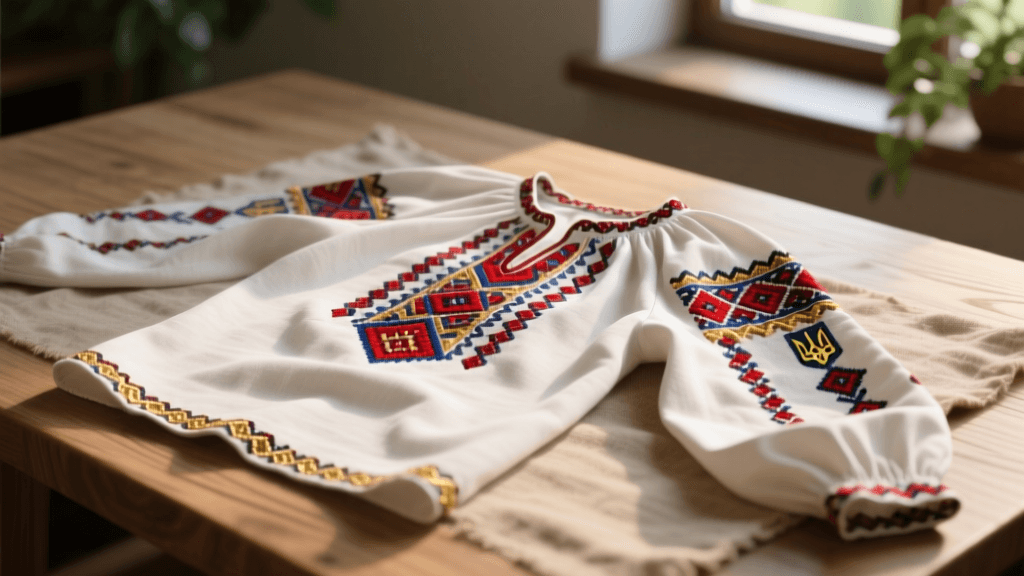
The Vyshyvanka is a traditional Ukrainian embroidered shirt, historically worn by both men and women. The embroidery is typically concentrated on the neckline, cuffs, and chest. In 2026, artisan cooperatives continue to preserve highly specific regional techniques. For instance, the Poltava region is famous for its lyshva (cut-work and white-on-white embroidery), which relies on shadow and texture rather than color. Conversely, the Hutsul region in the Carpathian Mountains produces densely packed geometric patterns in vibrant red, black, and yellow threads, often incorporating seed beads. The Bukovina region frequently features heavy wool thread and metallic accents. Authentic vintage and modern artisan pieces will always reflect the specific mathematical geometry of their region, avoiding the randomized, asymmetrical floral patterns often found in machine-made commercial knockoffs.
The Romanian and Moldovan Ie
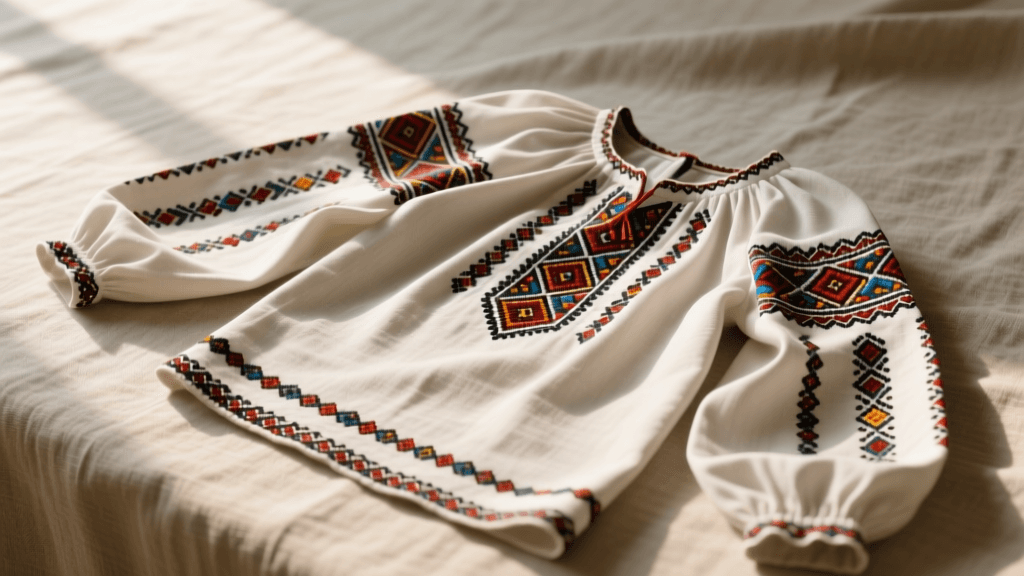
The Ie (pronounced 'ee-eh') is the traditional blouse of Romania and Moldova, characterized by its distinctive gathering at the neckline and specific embroidery placement. The anatomy of an authentic Ie is strictly defined by three main components: the altiță (a wide, heavily embroidered band on the upper shoulder), the increț (the gathered, smocked neckline), and the râuri (literally 'rivers', which are vertical or diagonal bands of embroidery flowing down the sleeves). The motifs are predominantly botanical and solar, featuring stylized leaves, wheat, and sun wheels. In 2026, master embroiderers from the Muscel and Argeș regions continue to use the iconic black and red thread on white linen, while pieces from Olt and Vâlcea often incorporate vibrant polychrome silk threads and metallic silver tinsel.
Authenticating Hand-Stitched Textiles in the 2026 Market
With the rise of advanced computerized embroidery machines, distinguishing between a genuine hand-stitched heirloom and a factory-made replica requires careful inspection. While some high-end machines can mimic hand-stitching, there are several telltale signs that experts and institutions, such as the Victoria and Albert Museum's textile archives, use to verify provenance and craftsmanship.
First, examine the reverse side of the fabric. Hand-embroidery, particularly traditional cross-stitch (cruciuliță) and satin stitch, will show a nearly identical pattern on the back, with thread carries that are neat but exhibit slight, human variations in tension. Machine embroidery often leaves a chaotic web of bobbin thread on the reverse side. Second, check the thread composition. Authentic 2026 artisan pieces and historical garments use mercerized cotton, silk, or wool. If the thread has a high synthetic sheen or melts when carefully tested with a pin flame, it is a modern synthetic blend. Finally, look for the 'imperfections' of the human hand. A slight variation in stitch length or a minor deviation in a complex geometric border is a hallmark of human artistry, whereas machine embroidery is mathematically flawless.
| Feature | Authentic Hand-Stitched (Artisan/Vintage) | Machine-Made (Commercial Replica) |
|---|---|---|
| Reverse Side | Neat, pattern mirrors the front, slight tension variations | Messy bobbin threads, backing paper or stabilizer remnants |
| Thread Material | Mercerized cotton, silk, wool, natural dyes | Polyester, rayon, high synthetic sheen |
| Motif Symmetry | Mathematical but with minor human deviations | Perfectly uniform, pixelated curves on complex florals |
| Fabric Base | Hand-loomed or high-quality slub linen/cotton | Mass-produced, uniform poly-blend or cheap cotton |
| Neckline/Cuff Finish | Hand-smocked, crochet lace edging, buttonhole stitch | Serged edges, machine-attached synthetic lace |
Where and How to Source Authentic Pieces in 2026
Sourcing authentic Eastern European folk dress in 2026 requires moving away from fast-fashion marketplaces and connecting directly with artisan guilds, verified heritage boutiques, and specialized antique dealers. The market has shifted heavily toward transparency, with many cooperatives now utilizing blockchain-verified digital tags to prove the garment's origin, the artisan who made it, and the hours spent on the embroidery.
For modern, newly commissioned pieces, seek out verified artisan cooperatives based in Kyiv, Lviv, Bucharest, and Sibiu. Platforms that specialize in global slow fashion now feature direct-to-consumer storefronts for these cooperatives. Expect to pay a premium for true hand-embroidery; as of early 2026, a fully hand-stitched linen Vyshyvanka from a Carpathian artisan typically ranges from $250 to $500 USD, while a complex, silk-threaded Romanian Ie can command between $350 and $700 USD due to the hundreds of hours of labor required.
For vintage and antique pieces (early to mid-20th century), specialized online auction houses and dedicated textile dealers are your best resources. When consulting archives and historical references, institutions like The Ukrainian Museum's permanent collection provide excellent visual benchmarks for authentic regional patterns and historical construction methods. Always request high-resolution macro photos of the embroidery's reverse side and the fabric's selvedge before purchasing vintage items online.
Archival Care and Conservation for Heritage Linens
Whether you have invested in a contemporary artisan piece or a century-old antique, proper conservation is vital. Eastern European folk blouses are predominantly made from natural cellulosic fibers like linen and cotton, which are highly susceptible to acid degradation, UV fading, and mold if improperly stored.
Washing and Cleaning
Never use standard commercial laundry detergents, as their high pH and optical brighteners will degrade natural fibers and cause vintage dyes to bleed. In 2026, textile conservators recommend using specialized, pH-neutral conservation detergents. Hand-wash the garment in cold water (never exceeding 20°C or 68°F). Do not wring or twist the fabric, as this can break the delicate embroidery threads and distort the linen's warp and weft. Instead, gently press the water out and roll the garment in a clean, white cotton towel to absorb excess moisture.
Drying and Ironing
Lay the blouse flat to dry on a mesh rack, away from direct sunlight, which will rapidly fade natural dyes and yellow white linen. Iron the garment while it is still slightly damp. Always iron on the reverse side, placing a clean cotton pressing cloth between the iron and the embroidery to prevent crushing the three-dimensional texture of the stitches. Use a steam setting appropriate for linen, but avoid heavy pressure on the embroidered zones.
Long-Term Storage
For long-term archival storage, never hang heavy embroidered blouses on wire or wooden hangers, as the weight of the embroidery will cause the shoulder seams to tear over time. Instead, fold the garment loosely with acid-free, unbuffered tissue paper to prevent hard creases. Store the piece in a breathable, unbleached cotton muslin bag or an acid-free archival box. Keep the storage environment climate-controlled, ideally at 65-70°F (18-21°C) with a relative humidity of 45-55%, to prevent the growth of mildew and the desiccation of natural fibers.
Conclusion
The Vyshyvanka and the Ie are profound expressions of Slavic and Balkan identity, surviving centuries of cultural shifts to remain relevant in the modern wardrobe. By understanding the anatomical differences, learning to authenticate hand-stitched craftsmanship, and committing to proper textile conservation, you can responsibly participate in the 2026 revival of Eastern European folk dress. Investing in these garments not only preserves a vital cultural heritage but also supports the living artisans who continue to weave history into every thread.