Viking Smokkr Apron Dress: 2026 Authentic Wool Guide
The Resurgence of Authentic Viking Textiles in 2026
The landscape of historical European reenactment and traditional garment crafting has undergone a massive transformation as we move through 2026. Gone are the days of cheap cotton-polyester blends, fantasy-inspired leather armor, and inaccurate synthetic dyes. Today's Viking reenactors, living historians, and traditional textile enthusiasts demand rigorous archaeological authenticity. Major European heritage festivals, including the Moesgård Viking Moot and the Lofotr Viking Festival, have implemented strict 2026 textile guidelines that require participants to wear historically accurate weaves and natural fibers. At the forefront of this movement is the Smokkr, the iconic Viking Age apron dress. This comprehensive guide explores the construction, material sourcing, and historical context of the Smokkr, providing actionable advice for crafting your own historically accurate garment using the best resources available today.
Understanding the Smokkr: Archaeological Evidence
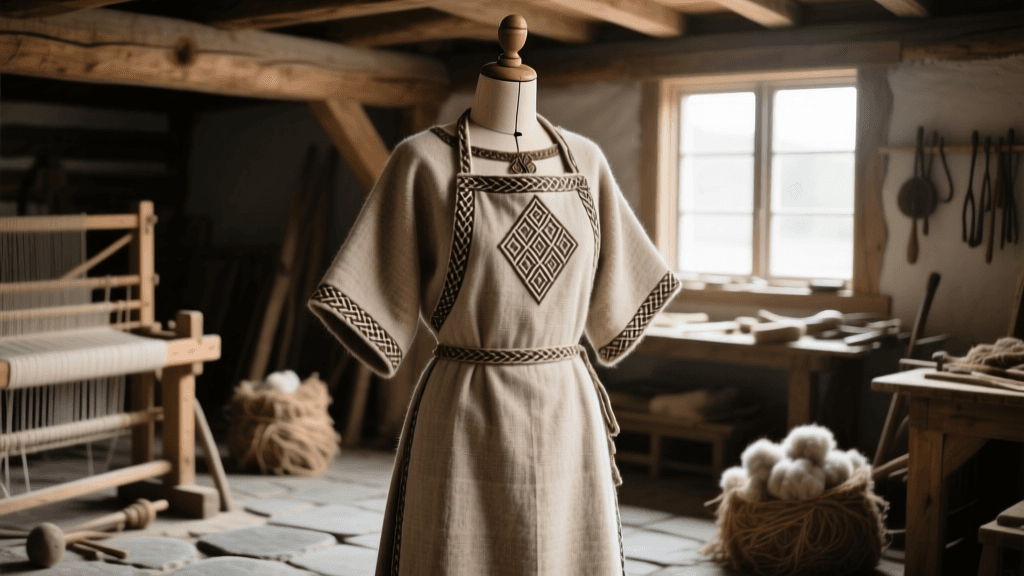
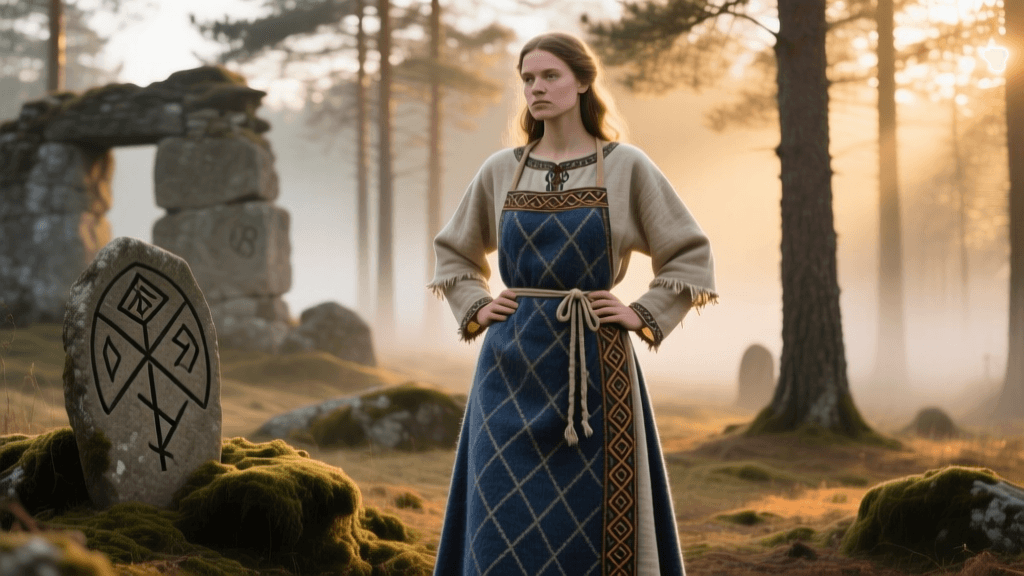
The Smokkr, often referred to as a suspended or apron dress, was a staple of the female Viking wardrobe from the 8th to the 11th centuries. Our understanding of this garment relies heavily on textile fragments preserved by the corrosion of metal jewelry, specifically the oval tortoise brooches used to fasten the dress at the shoulders. Major archaeological sites such as Birka in Sweden, Hedeby in modern-day Germany, and Køge in Denmark have yielded invaluable data regarding its construction. According to extensive research curated by the National Museum of Denmark, the Køge find is particularly revolutionary. It revealed a smokkr with a heavily pleated front panel, challenging older, simpler tube-dress theories that dominated 20th-century reenactment. Furthermore, collections housed at the National Museums Scotland highlight the widespread trade networks that brought diverse textile patterns, silk trims, and exotic dyes to Norse settlements across the British Isles and Scandinavia, proving that Viking dress was far more varied and sophisticated than popular media suggests.
Sourcing Authentic Wool: Diamond Twill and Herringbone
To create an authentic Smokkr in 2026, you must abandon modern commercial fabrics and seek out specialized heritage weavers. The Viking Age textile industry relied heavily on sheep's wool, woven on warp-weighted looms. The most prized and historically accurate weaves for a high-status Smokkr are diamond twill and herringbone twill. These weaves not only provide excellent insulation and water resistance but also drape beautifully, mimicking the fluid folds seen in historical artifact depictions. Below is a comparison of historical weaves and their current market availability for modern crafters.
| Weave Type | Historical Status | 2026 Market Availability | Avg. Cost (per meter) |
|---|---|---|---|
| Diamond Twill | High Status / Elite | Limited (Specialist Mills) | $85 - $140 |
| Herringbone Twill | Medium-High Status | Moderate (Heritage Weavers) | $60 - $95 |
| Tabby (Plain Weave) | Common / Everyday | High (Widely Available) | $40 - $65 |
| Broken Diamond Twill | Royal / Ceremonial | Rare (Custom Commission) | $150 - $220 |
When sourcing your wool, look for mills that utilize short-tailed Nordic sheep breeds, such as the Icelandic, Spelsau, or Shetland sheep. These breeds produce a dual-coated fleece with a long, water-resistant outer coat (tog) and a soft, insulating inner coat (thel), which perfectly replicates the texture of Viking Age textiles.
Pattern Drafting and Construction Techniques
Drafting the pattern for a Smokkr requires an understanding of historical fabric economy. The basic Smokkr is constructed from rectangular panels, minimizing fabric waste—a crucial economic factor in the Viking Age when every thread was spun and woven by hand. The front and back panels are typically cut from a single width of fabric, usually 50 to 60 centimeters wide, matching the historical warp-weighted loom width. Side gores are inserted to provide flare, mobility, and a graceful drape. For those attempting the pleated front inspired by the Køge find, you will need an additional 1.5 to 2 meters of fabric to create the tightly gathered pleats, which are then secured at the top with a woven linen or wool band.
Period-Accurate Hand Sewing
Machine sewing is strictly forbidden in high-level 2026 reenactment circles. You must use period-accurate hand-sewing techniques to ensure the garment passes strict authenticity checks. The running stitch is used for long, non-stress seams, while the backstitch provides structural integrity for stress points like armholes and gore insertions. Thread should be spun wool or linen, never modern cotton-poly. Z-spun/S-twist thread is the historical standard, as it mimics the natural spin direction of historical drop-spindles. Seam allowances should be folded inward and secured with a whip stitch or overcast stitch to prevent fraying, a technique well-documented in the Hedeby harbor finds.
Natural Dyeing in the Modern Era
Color was a major indicator of wealth and social standing in the Viking Age. While the working class wore undyed sheep's wool in natural shades of white, grey, brown, and black, the elite utilized complex dye baths to achieve vibrant hues. Woad (Isatis tinctoria) was the primary source for blues, madder (Rubia tinctorum) for reds, and weld or dyer's greenweed for brilliant yellows. In 2026, sustainable and historically accurate natural dyeing has seen a massive resurgence among textile artisans. You can now source organic, historically cultivated woad and madder from specialized heritage botanical farms across Europe. When dyeing your Smokkr fabric, remember to use alum as a mordant to fix the colors. Iron modifiers were historically used in copper or iron cauldrons to darken shades, creating deep purples, greens, and blacks. Achieving these colors today requires careful temperature control and an understanding of historical chemistry.
Essential Accessories: Oval Brooches and Undergarments
The Smokkr cannot exist without its defining hardware: the oval brooches. Often called tortoise brooches due to their domed, oval shape, these were cast in bronze, silver, or gold, and featured intricate knotwork or animal motifs, such as the Borre, Jelling, or Mammen styles. In 2026, artisan metalworkers utilize both traditional lost-wax casting and advanced 3D-printed investment molds to create museum-quality replicas that are indistinguishable from historical artifacts. When purchasing brooches, ensure the pin mechanism is a simple coil and pin, rather than a modern safety-pin clasp, to maintain historical integrity.
Equally important is what goes beneath the Smokkr. The foundational layer is the serk, a linen underdress. The serk was typically long-sleeved, featuring a keyhole neckline, and reached the ankles. For 2026 summer reenactment events, a lightweight, unbleached linen serk is essential for comfort, acting as a moisture-wicking barrier beneath the heavy, insulating wool Smokkr. Linen was a luxury import in many parts of Scandinavia, so a high-quality, evenly woven linen serk also serves as a subtle indicator of historical wealth.
Caring for Your Handwoven Wool Garments
Proper maintenance of your Smokkr is vital to its longevity. Wool is naturally antibacterial, odor-resistant, and water-repellent due to its lanolin content. Avoid modern commercial detergents, which strip these natural oils and leave the fabric brittle. Instead, air out your Smokkr outdoors after events to let the fibers breathe. For spot cleaning, use cold water and a mild, lanolin-rich wool soap. Never wring or twist the fabric; gently press the water out and lay it flat to dry. During the off-season, store your Smokkr flat or rolled in a cedar chest with dried lavender or wormwood to prevent moth damage, avoiding plastic bins which trap moisture and promote mildew.
Conclusion
The year 2026 represents a pinnacle of historical accuracy in European folk dress and Viking reenactment. By understanding the archaeological evidence, sourcing authentic diamond twill wool, mastering period-accurate hand-sewing techniques, and utilizing natural dyes, you can craft a Smokkr that is not only a beautiful garment but a living tribute to the ingenuity and artistry of the Viking Age. Whether you are attending a major heritage festival or simply preserving traditional textile arts, your dedication to authenticity ensures that the legacy of the Norse weavers continues to thrive in the modern era.