Viking Apron Dress Reconstruction: 2026 Textile Guide
The Resurgence of Historical Accuracy in 2026
The Viking Age (c. 793–1066 AD) left a profound legacy on European textile history, yet for decades, popular media and early reenactment groups relied on highly inaccurate, anachronistic representations of Norse clothing. As we move through 2026, the historical reenactment and living history communities have experienced a massive paradigm shift toward strict archaeological accuracy. Modern enthusiasts, textile artists, and historians are no longer satisfied with generic 'Viking costumes.' Instead, they demand rigorous adherence to surviving textile fragments, grave goods, and experimental archaeology.
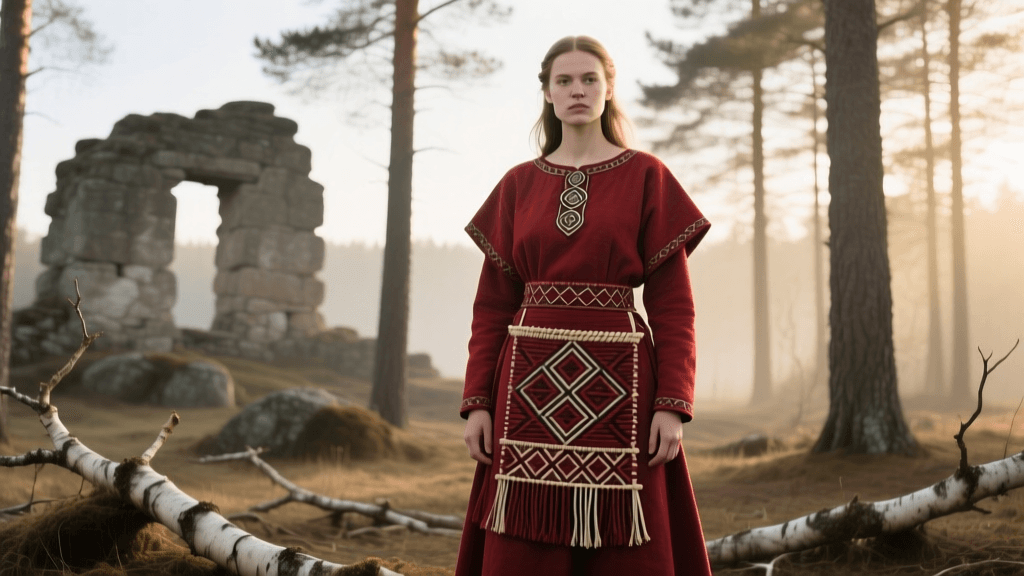
At the center of this revival is the iconic Viking apron dress, historically referred to as the smokkr or hangerock. This garment, suspended from the shoulders by a pair of oval brooches, is the most recognizable element of female Norse attire. However, constructing a truly authentic smokkr requires a deep understanding of historical weaving structures, natural dye chemistry, and period-correct tailoring techniques. This comprehensive guide will walk you through the precise methods for sourcing, dyeing, and constructing a museum-quality Viking apron dress in 2026.
The Anatomy of the Smokkr: Beyond the Modern Myth
For years, a popular but historically unsupported theory suggested that the smokkr was a simple, single-piece apron tied around the waist. Archaeological evidence, particularly the textile fragments found in the Oseberg ship burial and the graves of Birka, completely dismantles this myth. According to extensive research compiled by historical organizations like Hurstwic, the apron dress was a sophisticated, tube-like or wrapped garment that encased the torso, suspended entirely by shoulder loops attached to heavy metal brooches.
The debate among 2026 textile historians largely centers on whether the smokkr was a closed tubular dress or an open-sided wrap. Evidence from the Køge find in Denmark suggests that high-status women wore closed, pleated, or tailored tubular dresses made of fine diamond twill wool, while working-class women may have utilized simpler, open-sided wraps for ease of movement and nursing. Regardless of the specific cut, the structural integrity of the garment relies heavily on the tension provided by the bronze or silver oval brooches, which act as both functional fasteners and prominent status symbols.
Sourcing Authentic Textiles: The 2026 Market
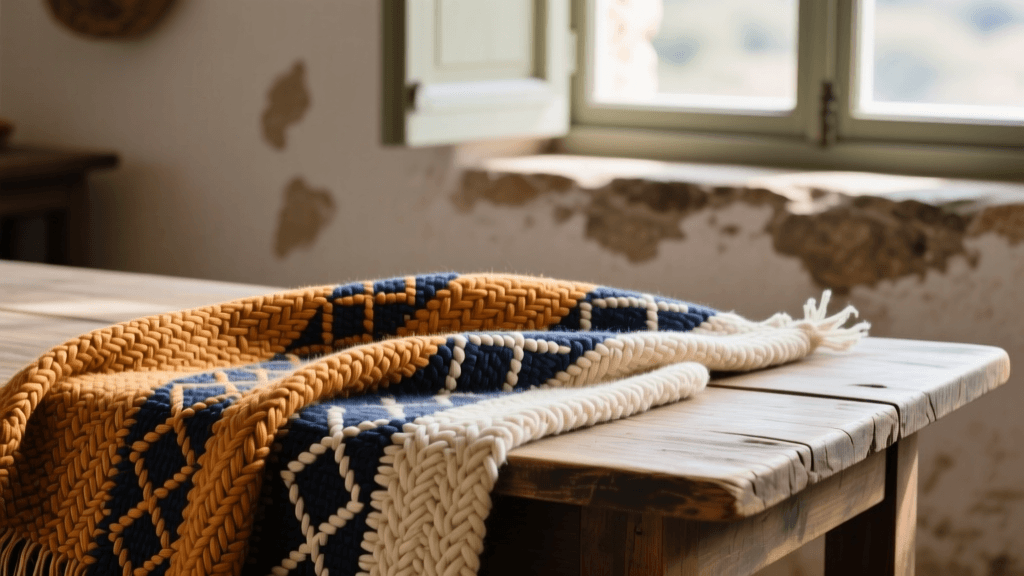
The foundation of any authentic Norse garment is the fabric. The Vikings were master weavers, and their woolen textiles were highly prized across medieval Europe. The gold standard for a high-status smokkr is diamond twill (a 2/2 twill variant), while herringbone (broken twill) and plain tabby weaves were common for everyday wear. In 2026, the market for historically accurate, handwoven wool has matured significantly, with specialized mills in Scandinavia, the Baltics, and the UK catering specifically to the living history community.
When sourcing fabric, you must avoid modern commercial wools that contain synthetic blends, machine-perfected evenness, or chemical dyes. Authentic Viking wool was spun from the fleece of Northern European short-tailed sheep, resulting in a yarn with a distinct halo and a slightly uneven, rustic texture. Below is a comparative breakdown of the most historically accurate textiles available on the 2026 market for your reconstruction project.
| Textile Type | Weave Pattern | Historical Accuracy | 2026 Avg. Cost (per meter) | Best Use Case |
|---|---|---|---|---|
| Handwoven Diamond Twill | 2/2 Twill Variant | Exceptional | €65 - €95 | High-status Smokkr |
| Herringbone Wool | Broken Twill | High | €40 - €60 | Everyday Smokkr |
| Tabby Weave Wool | Plain Weave | Moderate | €25 - €35 | Winter Underdress |
| Handwoven Linen | Plain Weave | High | €30 - €45 | Summer Serk (Shift) |
Natural Dyeing: Recreating the Norse Palette
A common misconception is that Viking clothing was uniformly drab, brown, or gray. In reality, the Norse were passionate about vibrant colors, which served as immediate indicators of wealth and social standing. According to the National Museum of Denmark, surviving textile fragments reveal a rich palette achieved through complex natural dyeing processes using plant matter, lichens, and mineral mordants.
To achieve an authentic blue, 2026 dyers utilize woad (Isatis tinctoria), which requires a meticulous, oxygen-deprived fermentation vat process. Woad blue was incredibly expensive and highly sought after. For reds, madder root (Rubia tinctorum) is the historical standard, yielding colors ranging from pale brick to deep crimson depending on the mordant used. Yellows were commonly achieved using weld (Reseda luteola) or onion skins, while rare purples were derived from specific lichens like Orchil, which required ammonia (often sourced from stale urine) to activate.
Before dyeing, the wool must be mordanted to ensure colorfastness. Historically, alum (aluminum potassium sulfate) and iron were used. Clubmoss (Lycopodium complanatum) was also used by Norse dyers as a natural alum accumulator to help fix the dyes. When commissioning or dyeing your own diamond twill in 2026, insist on these historically documented botanical sources rather than modern synthetic equivalents like indigo crystals or synthetic acid dyes.
Step-by-Step Construction of the Apron Dress
Constructing the smokkr requires a departure from modern tailoring. Viking garments were designed to minimize fabric waste, utilizing rectangular and triangular panels cut directly from the narrow width of the warp-weighted loom. Here is a step-by-step guide to constructing a closed, pleated tubular apron dress, widely considered the most accurate interpretation for high-status 10th-century reenactment.
Step 1: Measurements and Panel Cutting. Measure the wearer's bust and waist. A standard closed smokkr requires a main rectangular panel that wraps around the body, plus additional triangular gores inserted into the sides to allow for walking and sitting. Cut your diamond twill wool using pinking shears or by carefully pulling a thread and cutting along the line to prevent fraying, as the Vikings did not have access to modern sergers or zigzag stitches.
Step 2: Seam Finishing. All internal seams must be finished using period-correct techniques. The most common Viking seam is the flat-felled seam or the overcast stitch. Use a fine, worsted-spun wool thread and a bone or iron needle. Avoid cotton or polyester threads entirely, as they will rot at a different rate than the wool and are immediately recognizable as anachronistic to trained eyes.
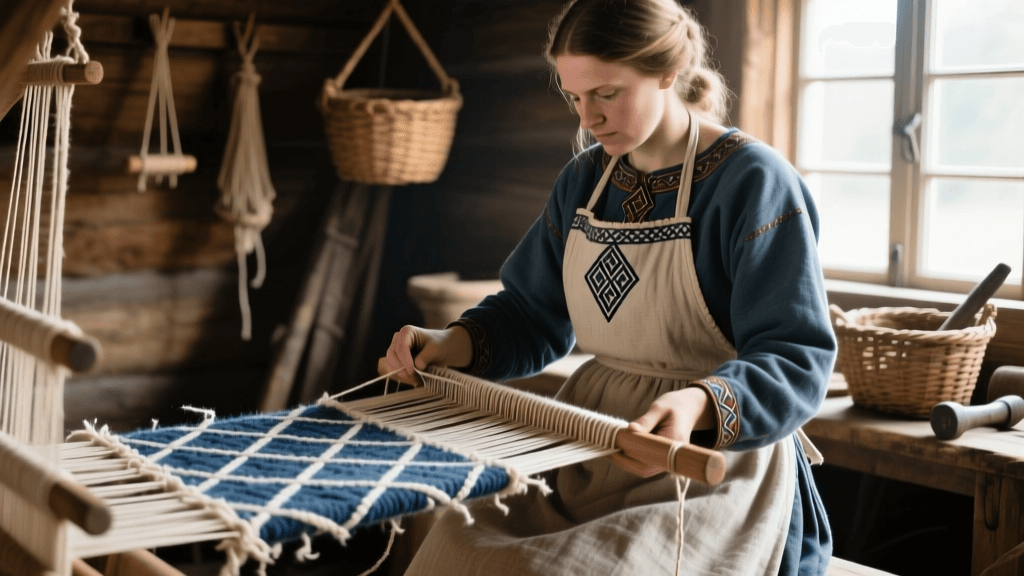
Step 3: Tablet Weaving the Trim. The top edge of the smokkr was almost always reinforced and decorated with tablet-woven bands. Using 20 to 30 wooden or bone tablets, weave a narrow band using fine wool or silk threads in geometric Norse patterns. This band is then whip-stitched to the top edge of the apron dress, providing both structural reinforcement for the heavy brooches and a brilliant splash of contrasting color.
Step 4: Creating the Loops. The shoulder loops are critical. They should be made from the same diamond twill wool or a sturdy linen, folded and sewn into narrow tubes or woven bands. The length of the loops must be carefully calculated so that the top edge of the dress sits just above the bust, allowing the oval brooches to rest securely on the collarbone without dragging the garment down.
Accessorizing: Brooches, Beads, and Belts
The smokkr is incomplete without its hardware. The oval brooches, often colloquially called 'tortoise brooches,' are non-negotiable for an authentic silhouette. In 2026, specialized historical metalworkers utilize lost-wax casting to create exact replicas of Birka and Gotland finds in bronze, brass, or silver. When purchasing brooches, ensure the pin mechanism is historically accurate; modern safety-pin clasps or glued-on pins will instantly ruin the garment's authenticity.
Between the brooches, high-status Norse women wore swags of beads. Glass beads imported from the Mediterranean and Islamic world, combined with native Baltic amber, were strung on linen or wool thread. A historically accurate bead swag should feature a mix of millefiori, plain glass, and amber, hanging in a gentle curve between the brooches. Finally, while the smokkr itself is not belted, a woven tablet-weave belt or a leather belt with a period-correct bronze buckle is worn around the waist over the underdress (serk) or the apron dress to secure tools, a seax (knife), and a chatelaine.
Conclusion: Honoring the Norse Textile Tradition
Reconstructing a Viking apron dress in 2026 is more than just a sewing project; it is an act of experimental archaeology that bridges a millennium of history. By investing in handwoven diamond twill, mastering the chemistry of woad and madder, and employing period-correct seam finishes, you do more than wear a costume—you step into the meticulously crafted world of the Norse people. As the living history community continues to elevate its standards, the dedication to these authentic textile traditions ensures that the true brilliance of Viking craftsmanship is finally given the respect it deserves.