Real Ukrainian Vyshyvanka Guide 2026: Patterns & Sourcing
The Enduring Legacy of the Vyshyvanka in 2026
As we navigate the global fashion and heritage landscape in 2026, the Ukrainian vyshyvanka stands as one of the most powerful and recognizable symbols of Eastern European folk dress. Far transcending its origins as a regional peasant garment, this meticulously embroidered shirt has become a cornerstone of cultural identity and sustainable fashion. For collectors, cultural enthusiasts, and advocates of slow fashion, understanding the nuances of authentic Slavic and Balkan textile traditions is more important than ever. The surge in demand for heritage garments has unfortunately led to a market flooded with mass-produced, machine-embroidered imitations. This comprehensive guide will help you navigate the 2026 market, decode regional patterns, and source genuine, handcrafted Eastern European folk dress with confidence.
The Structural Anatomy of the Traditional Sorochka
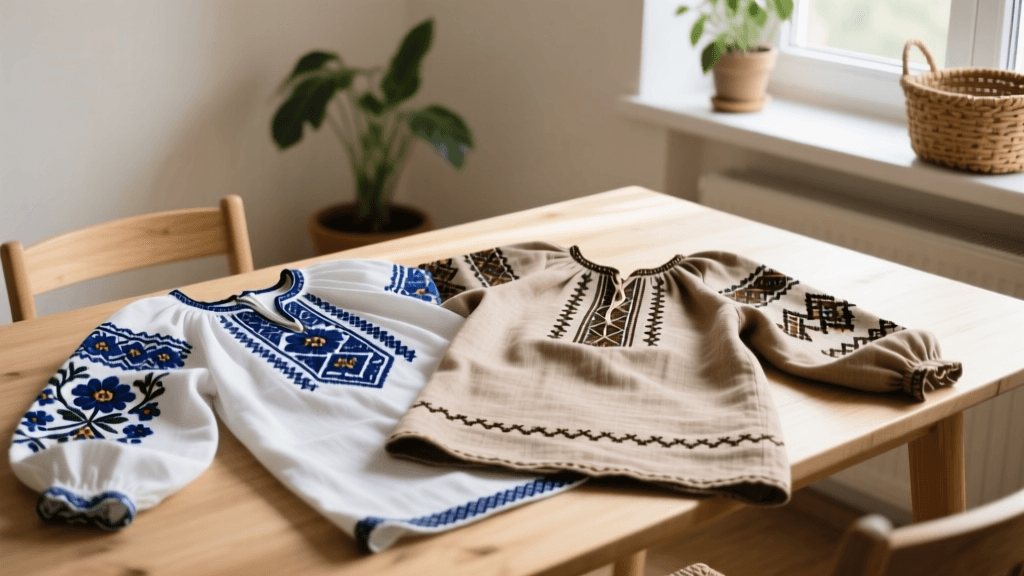
Before examining the embroidery, one must understand the canvas. The traditional Ukrainian shirt, or sorochka, is constructed using a rectilinear cutting method that wastes virtually no fabric. Unlike modern tailored garments, authentic historical and high-end contemporary reproductions feature no sloped shoulder seams. Instead, the front and back panels are cut from a single continuous length of woven linen or hemp, folding over the shoulder. This creates a distinctive, comfortable drape that has remained largely unchanged for centuries.
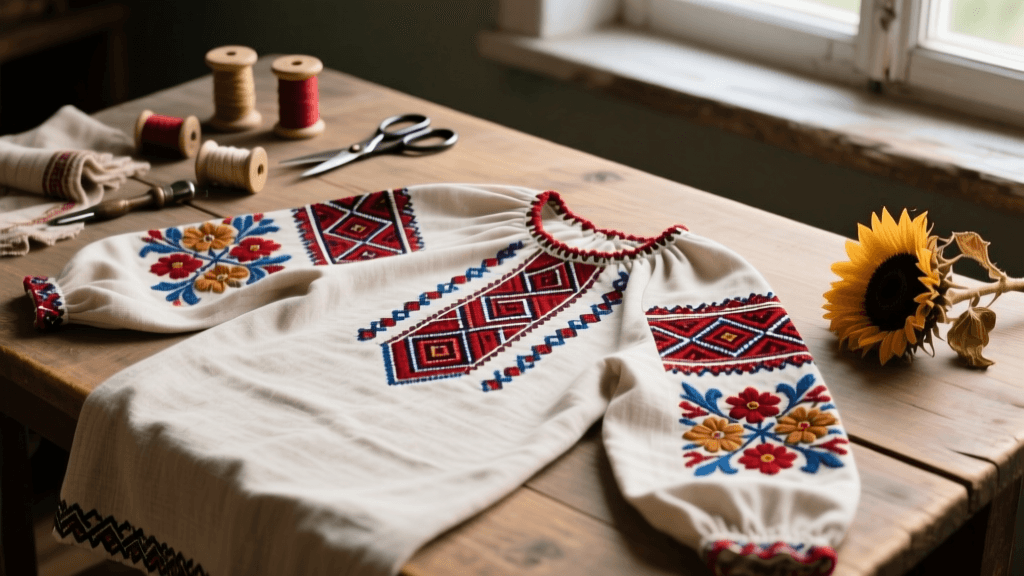
To allow for mobility, traditional tailors insert diamond-shaped gussets, known as lastky, under the arms. The sleeves are often gathered into a narrow cuff or a wide, ruffled wristband. The placement of the embroidery is never purely decorative; it is deeply symbolic and protective. In Slavic folk belief, the openings of the garment—where evil spirits could enter the body—must be guarded. Therefore, authentic embroidery heavily concentrates on the collar, the cuffs, the hem, and the central chest placket. When evaluating a piece in 2026, check for these structural hallmarks. A garment with modern darting, sloped shoulder seams, and synthetic blends is immediately identifiable as a modern, non-traditional adaptation.
Decoding Regional Motifs: 2026 Collector's Chart
Ukraine and the broader Eastern European region encompass vast geographical diversity, and this is vividly reflected in regional embroidery styles. The motifs, color palettes, and stitch techniques vary dramatically from the Carpathian Mountains to the central steppes. Below is a comparative chart detailing the primary regional styles you will encounter in the 2026 collector's market.
| Region | Dominant Colors | Key Motifs & Stitches | 2026 Authentic Market Value (USD) |
|---|---|---|---|
| Poltava | White-on-white, pale ash, soft grey | Delicate floral vines, geometric stars; cut-work, satin stitch, 'white-on-white' technique | $450 - $1,200 |
| Hutsulshchyna | Vibrant red, black, yellow, orange, green | Dense geometric patterns, rhombuses, crosses; heavy cross-stitch, nyzynka (darning stitch) | $350 - $900 |
| Bukovyna | Deep red, black, metallic gold/silver | Heavy beadwork, wool appliqué, coin embellishments, stylized florals | $500 - $1,500+ |
| Volyn | Stark red and black | Minimalist geometric stars, zig-zags, protective 'ram's horns'; simple cross-stitch | $250 - $600 |
Deep Dive into Regional Techniques
The Poltava region is world-renowned for its 'white-on-white' embroidery. This technique relies on the interplay of light and shadow across different textured stitches rather than contrasting colors. Mastering this style takes artisans years of practice, making authentic Poltava shirts some of the most expensive and sought-after pieces in 2026. As noted in Britannica's comprehensive guide to folk art, the cultural transmission of such highly specialized motifs serves as a vital link to ancestral heritage, elevating these garments from mere clothing to wearable museum pieces.
Conversely, the Hutsul region in the Carpathian Mountains favors bold, high-contrast colors and dense, almost tapestry-like geometric coverage. The Hutsul nyzynka stitch is a form of surface darning that creates a woven appearance on the face of the fabric, while the reverse side shows the intricate path of the needle. Bukovynian shirts are instantly recognizable by their sheer weight and opulence; artisans frequently integrate glass beads, metallic threads, and sometimes even small metal coins into the cuffs and collar, reflecting historical trade routes and regional wealth.
Authenticating Handwork vs. Machine Embroidery
With the rise of computerized multi-head embroidery machines, mass-produced imitations have saturated the global market. Distinguishing a genuine, hand-embroidered vyshyvanka from a factory-made replica requires a trained eye and a tactile approach. Here are the definitive authentication steps for buyers in 2026:
- The Reverse Side Test: Turn the garment inside out. Hand embroidery is executed with meticulous care on both sides; the back should look nearly as neat as the front, with thread carried tightly along the pattern lines. Machine embroidery, however, leaves a chaotic web of 'jump threads,' bobbin loops, and synthetic stabilizer backing.
- Thread Composition: Authentic pieces utilize cotton, wool, or silk threads. Rub the thread between your fingers; natural fibers will warm up and feel slightly textured. Machine fakes often use high-sheen polyester or rayon, which feels unnaturally slick and cold.
- Fabric Weave Inspection: Traditional embroidery requires a fabric with a countable weave to ensure geometric precision. Hold the linen up to the light. Authentic hand-woven or high-quality heritage linen will show slight irregularities (slubs) in the yarn. Perfectly uniform, paper-thin fabric is a hallmark of modern, mass-market manufacturing.
- The 'Living' Motif: Because human hands cannot replicate the exact mathematical tension of a machine, hand-stitched crosses and geometric shapes will have microscopic variations in tension and alignment. These 'flaws' are the hallmark of human artistry and cultural authenticity.
Sourcing Authentic Pieces in the 2026 Market
Sourcing a genuine vyshyvanka in 2026 requires bypassing generic souvenir shops and connecting directly with heritage brands, artisan cooperatives, and specialized textile curators. Reputable organizations such as Etnodim and Folk Motif have established rigorous vetting processes, working directly with master embroiderers in rural villages to ensure fair compensation and historical accuracy. When purchasing from independent artisans on global platforms, always request close-up photographs of the reverse side of the embroidery and ask specific questions about the stitch techniques used.
Pricing is a strong indicator of authenticity. A genuine hand-embroidered shirt requires anywhere from 40 to over 150 hours of intensive labor. If you encounter a 'handmade' shirt priced under $150 in 2026, it is almost certainly machine-embroidered or produced in a sweatshop under false pretenses. Expect to invest between $350 and $800 for a high-quality, authentic everyday piece, while museum-grade, white-on-white Poltava shirts or heavily beaded Bukovynian garments routinely command $1,200 to $2,500 from specialized collectors.
Archival Care for Heritage Linens
Investing in authentic Eastern European folk dress means taking on the responsibility of textile preservation. According to the conservation guidelines maintained by the Victoria and Albert Museum's textile archives, historical and artisanal linens require highly specific care routines to prevent fiber degradation and color bleeding. Never machine-wash a hand-embroidered vyshyvanka. The aggressive agitation will distort the tension of the hand-stitches and cause the base linen to warp.
Instead, hand-wash the garment in cool water using a pH-neutral, conservation-grade textile soap. Avoid soaking the piece for extended periods, especially if it features red or black natural dyes, which can bleed into the white linen base. After washing, gently press the water out by rolling the shirt in a clean, dry cotton towel. Never wring or twist the fabric. For long-term storage of natural fibers, conservators at the Metropolitan Museum of Art's textile department recommend wrapping the garment in acid-free tissue paper and storing it in a breathable cotton bag in a cool, dark, and humidity-controlled environment. By respecting the structural integrity and historical significance of the vyshyvanka, collectors in 2026 ensure that these masterpieces of Slavic folk art survive for generations to come.