Slavic Vyshyvanka & Folk Blouses 2026: Sourcing Guide
The Enduring Legacy of Eastern European Folk Dress
The landscape of European folk dress is vast and deeply storied, but few garments carry the profound cultural weight and intricate artistry of the Slavic and Balkan embroidered blouse. In 2026, the global appreciation for heritage textiles has reached new heights, driven by a collective desire for sustainable, slow fashion and cultural reclamation. Whether you are a dedicated collector of ethnographic textiles, a fashion historian, or simply someone looking to integrate authentic Eastern European folk dress into a modern wardrobe, understanding the nuances of these garments is essential. This comprehensive guide explores the regional variations, authentication techniques, and current market realities of sourcing traditional Slavic and Balkan blouses in 2026.
Cultural Significance and Intangible Heritage
Historically, the embroidered blouse was not merely a piece of clothing; it was a wearable manuscript. Every stitch, color, and geometric motif served as a protective talisman, a marker of regional identity, and an indicator of the wearer's social or marital status. The creation of these garments was a communal, deeply spiritual practice passed down through generations of women. Today, the traditional skills required to spin, weave, and embroider these textiles are recognized globally. According to the frameworks established by UNESCO Intangible Cultural Heritage, the preservation of such traditional craftsmanship is vital for maintaining cultural diversity and human creativity in an increasingly homogenized world. When you purchase an authentic, hand-loomed piece today, you are directly supporting the continuation of these endangered artisanal practices.
Regional Variations: Ukraine, Romania, and the Balkans
To source intelligently in 2026, one must first understand the distinct anatomical and stylistic differences across Eastern Europe and the Balkans. While Western consumers often group these garments under the broad umbrella of 'peasant blouses,' the regional distinctions are stark and highly specific.
The Ukrainian Vyshyvanka
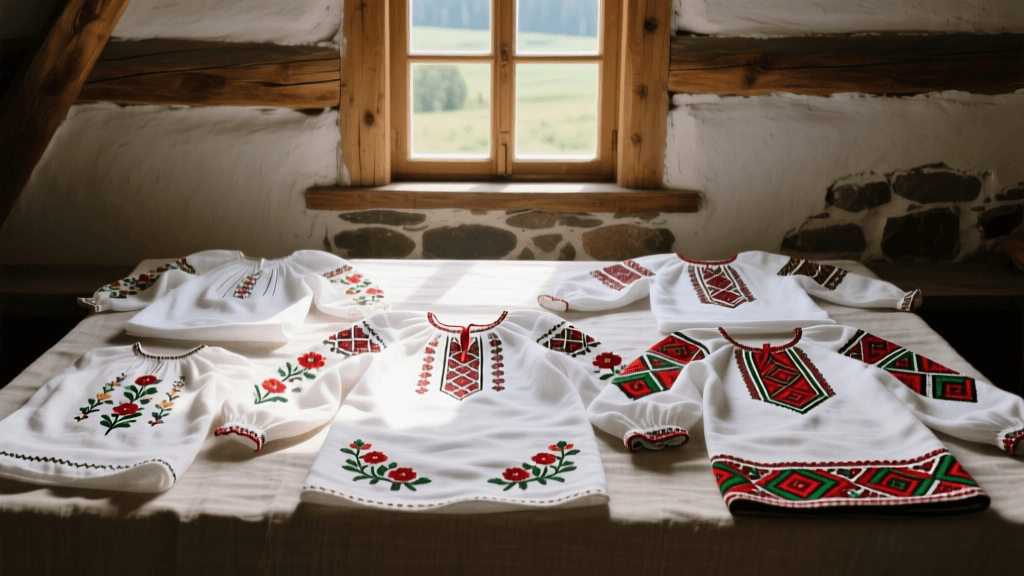
The vyshyvanka is perhaps the most globally recognized Slavic folk garment. However, authentic regional variations are vastly different from the mass-produced souvenirs found in tourist shops. In the Poltava region, traditional blouses are famous for their bil (whitework) and intricate cutwork, where threads are pulled from the linen base to create delicate, lace-like geometric patterns. Conversely, the Hutsul region in the Carpathian Mountains is renowned for dense, vibrant cross-stitch embroidery utilizing deep reds, blacks, and yellows, often supplemented with metallic threads and glass beads. In 2026, authentic Hutsul blouses woven on traditional wooden looms and embroidered with hand-spun wool are highly sought after by serious collectors.
The Romanian and Moldovan Ie
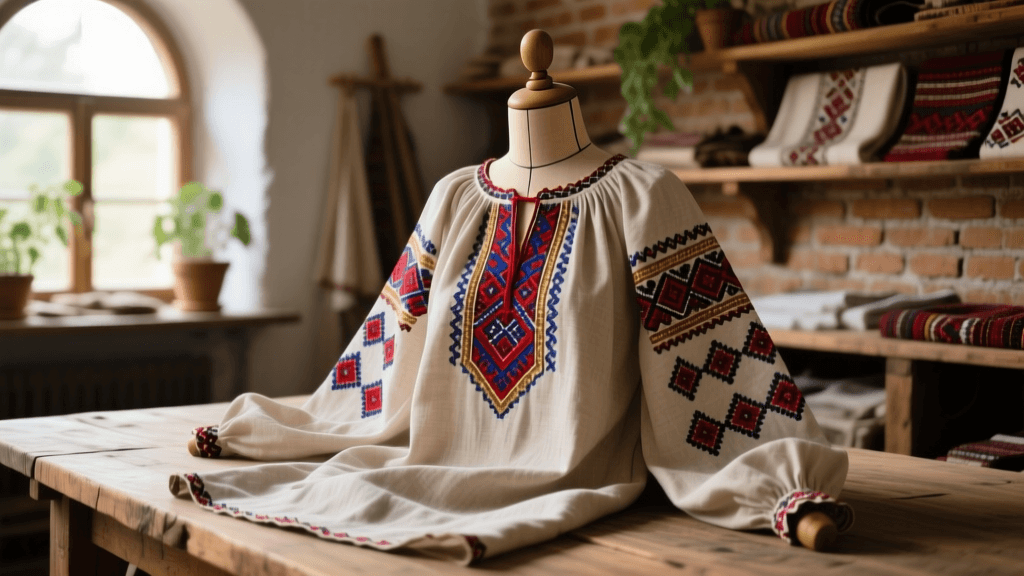
The Romanian ie (pronounced 'ee-eh') is a masterpiece of structural embroidery. Unlike the all-over patterns of some Slavic blouses, the ie follows a strict, ancient tripartite structure. The most critical element is the altiță, a dense, heavily embroidered rectangular panel on the shoulder that historically indicated the wearer's wealth and region. Below the altiță sits the increț, a narrow band that transitions into the râuri (rivers)—vertical stripes of embroidery that flow down the sleeve. The ie from the Argeș and Muscel regions, characterized by its fine gold and silver metallic thread work interwoven with black silk, remains the pinnacle of Romanian textile art.
The Serbian and Croatian Košulja
In the Balkans, the košulja serves as the foundational layer of the folk costume. Serbian and Croatian blouses often feature embroidery concentrated around the neckline, cuffs, and the lower hem. While northern regions like Vojvodina favor delicate floral motifs influenced by Central European aesthetics, the southern and Dinaric regions utilize bold, striking geometric patterns in deep red and black wool. The Dinaric blouses are often paired with heavy woven woolen aprons and silver pafta (belt buckles), creating a silhouette that is both formidable and deeply elegant.
Identifying Authenticity: Handcrafted vs. Mass-Produced in 2026
The 2026 market is flooded with factory-made replicas that mimic the aesthetics of Eastern European folk dress without utilizing traditional techniques. Distinguishing between a genuine heritage piece and a modern factory reproduction requires a trained eye. The Victoria and Albert Museum's textile archives emphasize that true hand-embroidery possesses a distinct tactile and visual rhythm that machines cannot perfectly replicate.
| Feature | Authentic Handmade Heritage Blouse | Modern Factory Replica (2026 Market) |
|---|---|---|
| Base Fabric | Hand-loomed linen, hemp, or cotton. Often features irregular slubs and a distinct, earthy texture. | Uniform, machine-woven cotton blend, polyester, or chemically treated rayon. Perfectly smooth. |
| Embroidery Back | The reverse side of the embroidery is nearly as neat as the front, with minimal loose threads or jump stitches. | The reverse side is messy, covered in white backing paper, or features long, continuous jump threads. |
| Thread Material | Hand-dyed wool, silk, or cotton. Colors may have slight, natural variations (abrash) due to natural dye baths. | Uniform synthetic threads (polyester/rayon) with high, artificial sheen and perfectly consistent coloring. |
| Construction | Assembled using traditional straight seams, gussets under the arms, and hand-finished hems. | Serged (overlocked) internal seams, modern darts, and machine-rolled hems. |
| Price Range (2026) | $180 to $650+ depending on region, age, and complexity of the altiță or cutwork. | $25 to $75, typically sold in bulk by fast-fashion or costume retailers. |
Where to Source Authentic Pieces in 2026
Sourcing authentic Slavic and Balkan folk blouses requires moving away from mainstream e-commerce platforms and engaging directly with specialized networks. In 2026, the most reliable avenues for acquisition include:
- Verified Artisan Cooperatives: Many rural cooperatives in Ukraine, Romania, and Serbia have established direct-to-consumer digital storefronts. Purchasing from these cooperatives ensures that the artisans are paid fairly and that the techniques used are strictly traditional.
- Ethnographic Textile Dealers: Specialized dealers who focus exclusively on antique and vintage Eastern European textiles are invaluable. They provide provenance, accurately date the garments (often using the specific chemical composition of the dyes or the weave count of the linen), and guarantee authenticity.
- Heritage Boutiques in Major Cities: Cities with large Eastern European diasporas, such as Chicago, Toronto, and Vienna, host specialized boutiques that import directly from master embroiderers in the Carpathian and Balkan regions.
- Direct Commissioning: For those willing to wait, commissioning a bespoke vyshyvanka or ie directly from a master artisan is the ultimate investment. In 2026, wait times for a fully hand-loomed and embroidered blouse can range from four to eight months, reflecting the hundreds of hours of labor required.
Caring for Heritage Linen and Natural Dyes
Once you have acquired an authentic piece, proper preservation is critical. Heritage linen is incredibly durable, but the natural dyes and antique embroidery threads require specific care. Never machine-wash a hand-embroidered folk blouse. Instead, soak the garment in cool water with a pH-neutral, conservation-grade textile detergent. Avoid wringing or twisting the fabric, as this can distort the hand-loomed weave and cause the embroidery threads to snap. Dry the blouse flat, away from direct sunlight, which can rapidly fade natural dyes like madder root and woad. When storing, wrap the blouse in acid-free tissue paper and keep it in a breathable cotton bag in a cool, climate-controlled environment to prevent moisture buildup and textile degradation.
Conclusion
The Slavic and Balkan embroidered blouse is far more than a historical artifact; it is a living, breathing testament to the resilience and artistry of Eastern European cultures. As we navigate the fashion landscape of 2026, choosing to invest in authentic, handcrafted folk dress is a powerful statement against the disposability of modern fast fashion. By understanding the regional nuances, knowing how to identify genuine hand-looming and embroidery, and sourcing responsibly, you not only enrich your own wardrobe but also play a crucial role in preserving these magnificent textile traditions for future generations.